




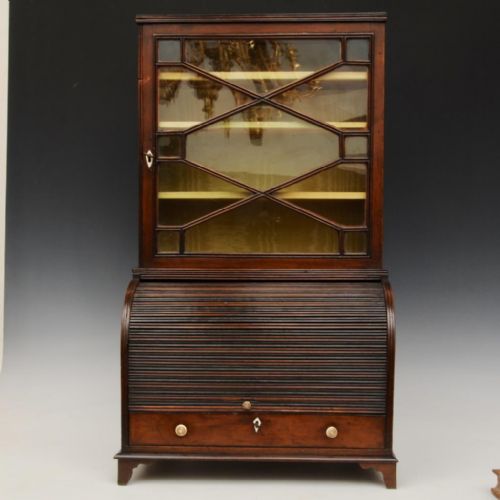


Mahogany Cylinder Cabinet
A mahogany cylinder cabinet brings together fine cabinet-making and practical workspace security in a curved, enclosed form.
Mahogany Cylinder Cabinet
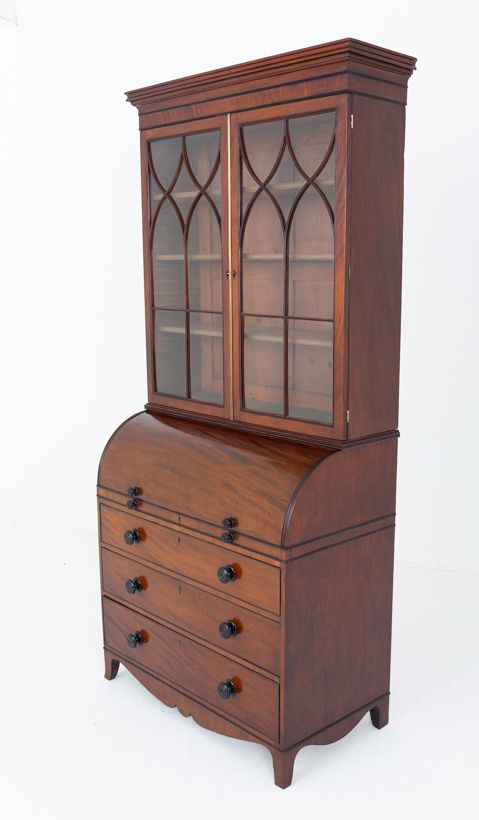
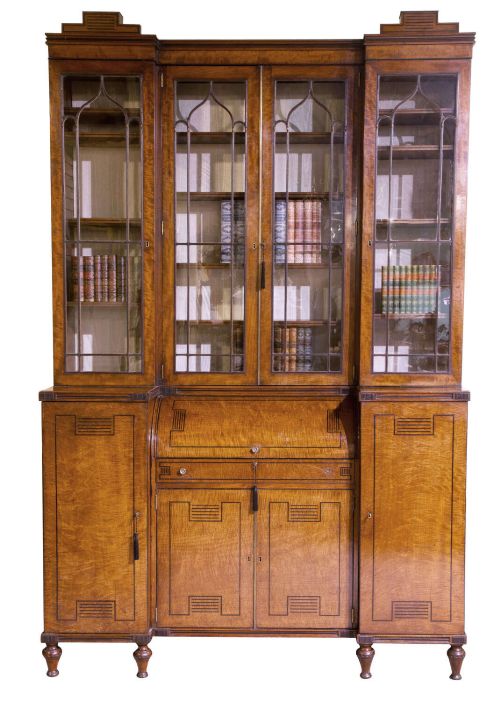
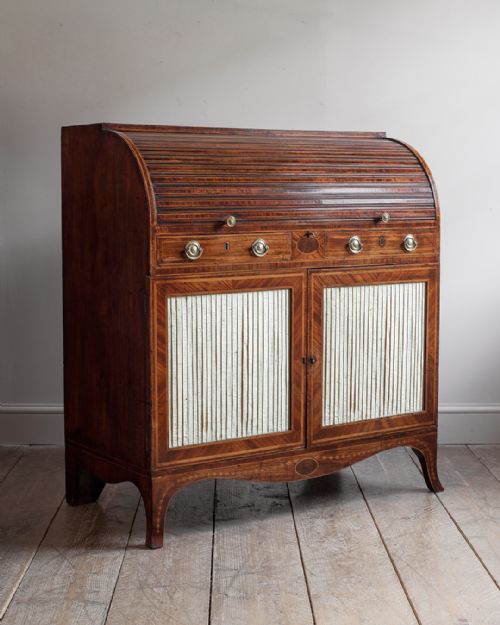
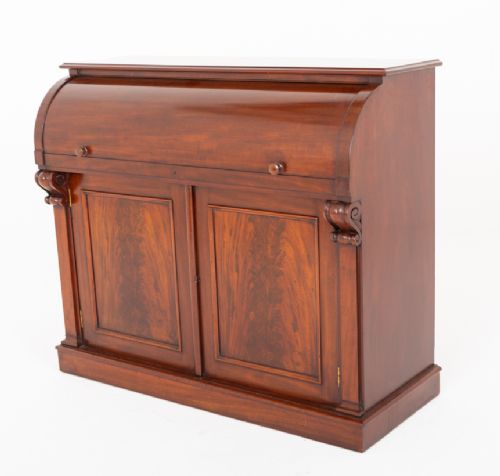
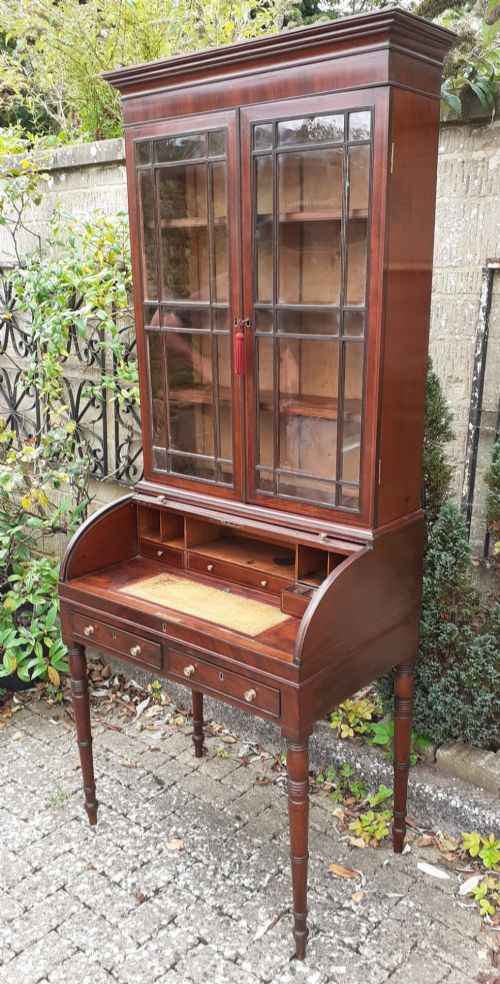
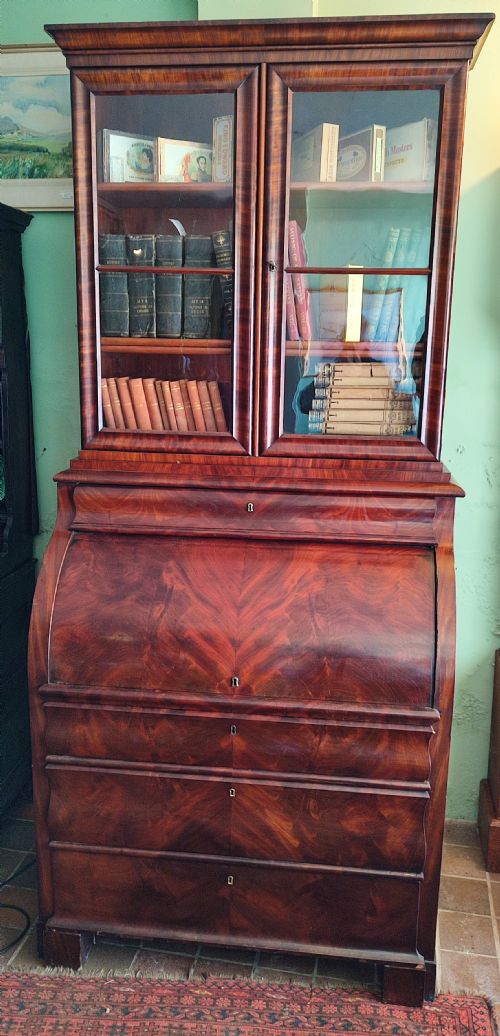
A mahogany cylinder cabinet is a fitted piece of furniture featuring a curved wooden shutter that rolls back to reveal a writing surface and internal pigeonholes. These pieces span the 18th century, Georgian, Regency and Victorian eras, taking forms from compact bedside cupboards to large bureau bookcases.
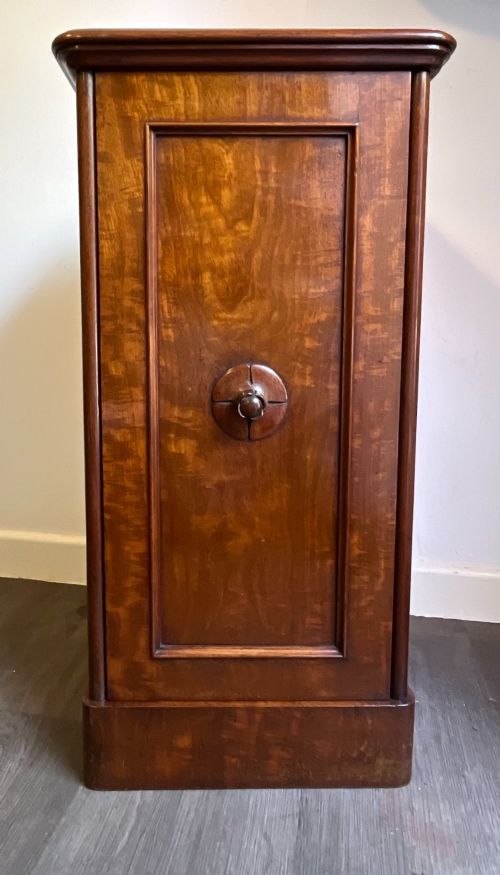
You will most commonly meet Victorian and 19th-century iterations on this page, alongside earlier Georgian and Regency examples. The selection includes desks, bureau bookcases and bedside variants shaped from rich timber.
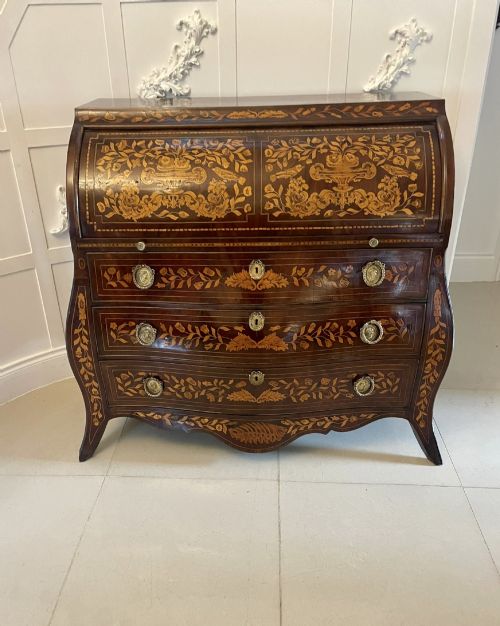
Many of these cabinets incorporate delicate stringing, marquetry or tambour panels alongside their primary rolling mechanism. They serve equally as functional writing desks and handsome display storage for domestic settings.
How they were made
Cabinet-makers constructed the rolling cylinder from narrow vertical strips of mahogany glued to a flexible canvas or leather backing, allowing the curved shutter to slide smoothly within internal tracks. Timber selection mattered greatly, with craftsmen frequently employing flame mahogany veneer to achieve striking figured grain patterns across the curved surface.
Secondary timbers and decorative details relied on contrasting woods such as satinwood and ebony for inlay, while structural mounts utilised brass. Finer examples integrated marble tops and glazed upper bookcase sections to elevate the visual weight of the piece.
Mahogany Cylinder Cabinet Retail Price Guide 2026
Typical asking prices for mahogany cylinder cabinet among the pieces listed under this phrase on Sellingantiques today, from the lower quarter to the upper quarter. They describe what is for sale here now, not the wider market.
Materials documented across the pieces include solid mahogany, flame mahogany veneer, satinwood, ebony, brass, marble, and glass.
What varies in quality
Quality rests principally on the precision of the joinery in the cylinder mechanism and the selection of the timber veneer. Superior pieces display seamless movement in the rolling shutter and book-matched flame mahogany that flows naturally across the front drawers and cylinder.
The sophistication of the interior fit-up also separates standard production from finer workshop output. Well-executed satinwood stringing, original brass hardware and well-proportioned secret drawers elevate a cabinet's standing.
Tudor & Burrey
The Mahogany Cylinder Cabinet Glossary
- Cylinder
- A curved wooden shutter that rolls back into the body of the desk to cover the writing surface and pigeonholes. It provides a neat method of concealing paperwork without clearing the desk.
- Tambour
- A sliding shutter made from narrow strips of wood glued to fabric, allowing it to follow a curve around a corner or cylinder. It operates on a similar principle to a roll-top desk.
- Marquetry
- Decorative veneer work forming pictures or patterns using different coloured woods, ivories or metals. Eighteenth-century examples often feature elaborate floral marquetry.
- Secretaire
- A piece of furniture containing a built-in writing drawer or fold-down writing flap. In these cabinets, it combines with a bookcase or cylinder desk.
- Stringing
- Thin inlaid lines of contrasting wood used to outline drawers, doors or tabletops. It adds linear definition to mahogany surfaces.
Mahogany Cylinder Cabinet: Frequently Asked Questions
How does the cylinder mechanism work?
The curved wooden shutter slides within recessed tracks cut into the sides of the cabinet housing. When pushed upwards or backwards, it disappears entirely into the upper section of the carcase.
This movement typically connects to an automatic locking system for the lower drawers. Pulling out the interior writing slide often releases the cylinder shutter to permit operation.
Where should I place a cylinder cabinet?
These cabinets suit studies, living rooms or bedrooms depending on their overall scale and whether they incorporate a bookcase top. Ensure the room maintains stable humidity to protect the mahogany veneer and the flexible backing of the cylinder.
Allow sufficient clearance above and behind the piece if doors or folding elements are present. Compact bedside variants fit neatly beside traditional bed frames.
How do I date an antique mahogany cylinder cabinet?
Dating relies on secondary woods, construction techniques, and stylistic markers such as inlay and hardware. Georgian and Regency pieces often display lighter satinwood contrasts and refined proportions.
Victorian iterations tend to be heavier in scale and occasionally incorporate walnut alongside mahogany. Drawer linings and backboards provide further clues regarding the period of manufacture.
Can I use the cylinder desk for daily work?
These cabinets were built for writing and correspondence, making them entirely suitable for modern laptop use or paperwork. The pull-out writing surface provides a dedicated desk area that can be hidden away instantly.
Care should be taken with historical leather writing inserts, which may require a protective blotter. The sliding cylinder protects your work from dust when closed.