
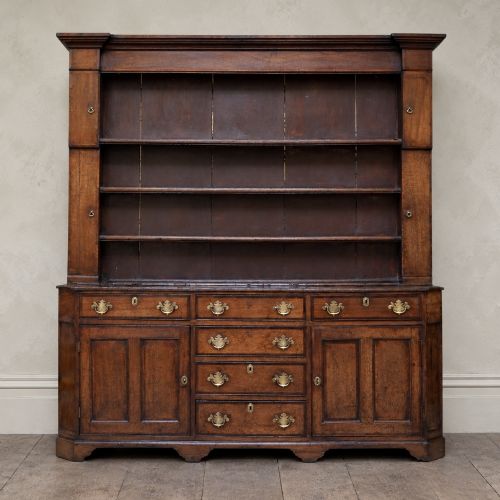
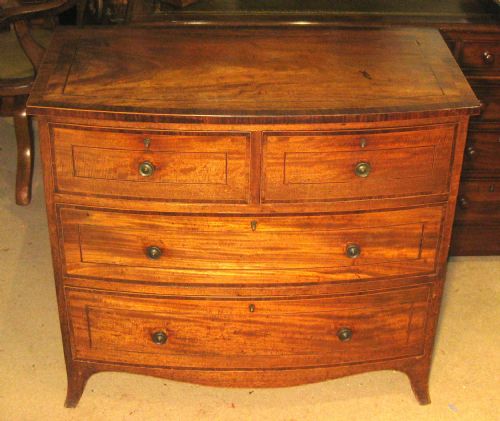
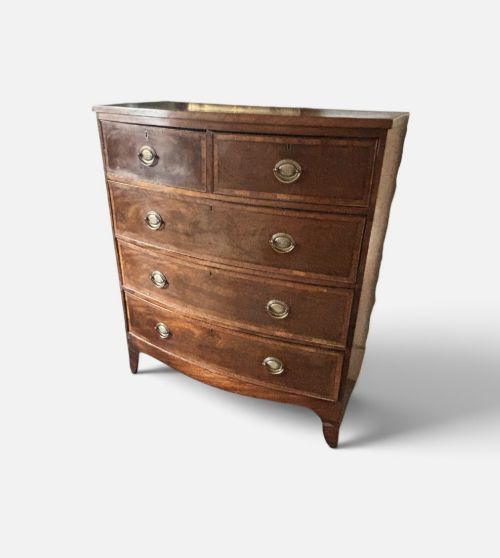
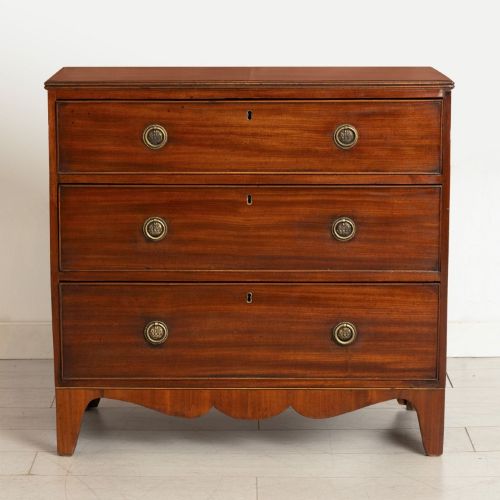
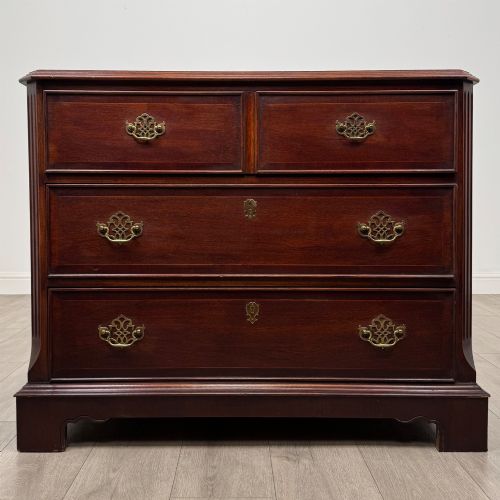
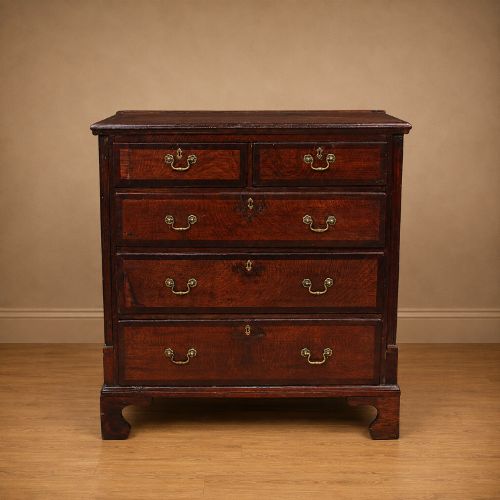

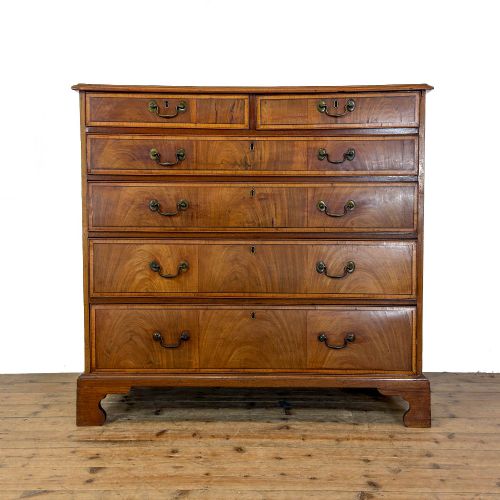
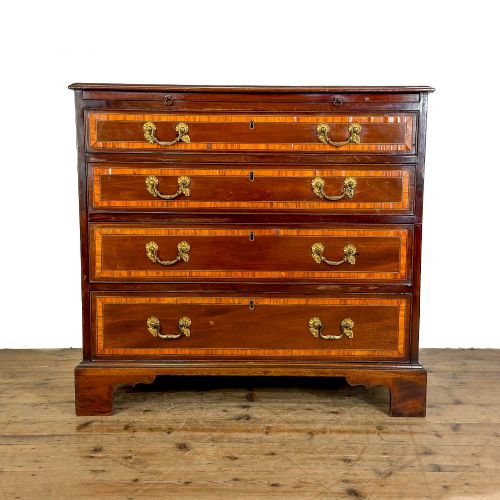


Mahogany Crossbanded Dresser
A mahogany crossbanded dresser pairs deep timber with contrasting borders, offering timeless storage built from Georgian oak and later mahogany traditions.
Mahogany Crossbanded Dresser
A mahogany crossbanded dresser combines robust oak or rich mahogany carcases with contrasting grain borders across surfaces like tops and drawer fronts. These pieces span centuries of cabinetmaking, stretching from early Georgian forms through the Regency and Victorian eras into the Sheraton Revival.
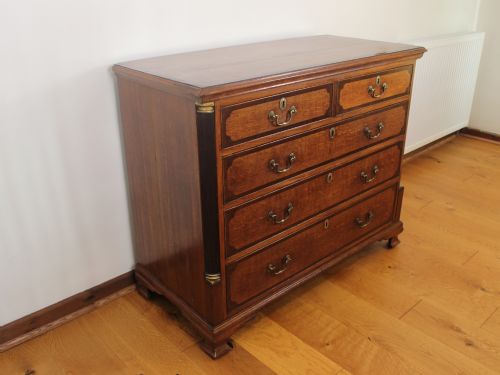
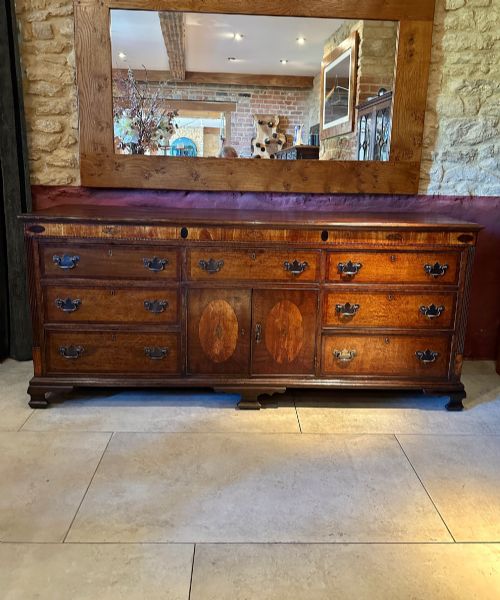
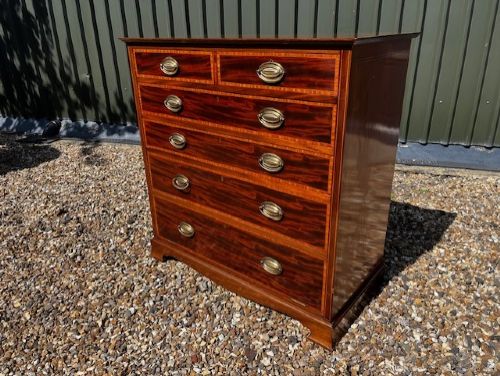
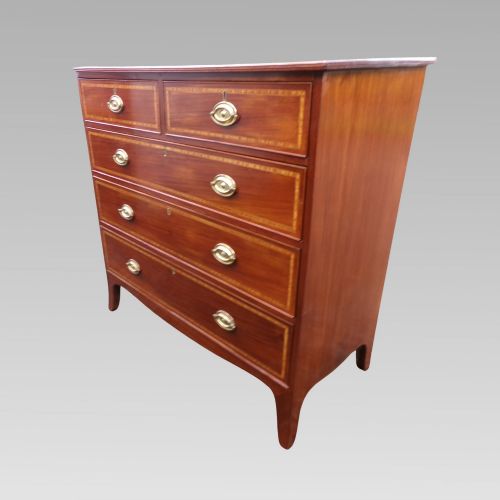
Buyers seeking a mahogany crossbanded dresser encounter both plate-rack dressers and various forms of chests of drawers featuring crossbanded decoration. The selection includes items ranging from compact bow fronts to large Lancashire dresser bases and tall chests.
Originating primarily across Georgian and 19th-century workshops, these examples utilise secondary timbers such as oak alongside decorative veneers including satinwood, walnut, and boxwood inlay. The resulting furniture balances functional storage with disciplined decorative borders.
Materials and construction methods
Makers constructed these pieces using solid timbers like oak and mahogany for structural integrity, applying fine veneers across prominent surfaces. Crossbanding involved laying grain strips perpendicular to the main panel, creating a bordered frame that required precise timber selection.
Inlayers incorporated satinwood, walnut, and boxwood details to accentuate the boundaries of the crossbanded panels. Brass handles and drawer furniture completed the construction, fastened securely to hand-dovetailed drawer carcases.
Early cabinetmakers thoughtfully crossbanded drawer edges so the grain met precisely at the corners, defying the natural urge of wood to warp.
Distinctions in construction and material quality
The sophistication of the timber figure and the precision of the crossbanding separate standard examples from finer works. Select pieces display tightly figured mahogany paired with crisp boxwood or satinwood stringing that remains flush with the surrounding surface.
Secondary wood selection and interior drawer construction reveal the underlying standard of the workshop. Superior examples maintain structural integrity through carefully fitted joints and original brass hardware without excessive restoration.
The Mahogany Crossbanded Dresser Glossary
- Crossbanding
- A decorative border of veneer laid with the wood grain running perpendicular to the main surface. This technique frames drawer fronts and tabletops to create visual contrast.
- Bow front
- A convex, curved front on a chest of drawers or dresser base. This shape emerged strongly during the Georgian and Regency periods.
- Stringing
- A narrow strip of contrasting wood inlay used to line drawer fronts and borders. It often accompanies crossbanding on refined furniture.
- Sheraton Revival
- A late nineteenth-century style drawing inspiration from the lighter neoclassical designs of the eighteenth century. Pieces from this movement often utilise satinwood and mahogany veneers.
- Plate rack
- The upper shelving superstructure designed to display ceramic plates above a dresser base. This component defines traditional kitchen and dining room storage.
Mahogany Crossbanded Dresser: Frequently Asked Questions
How do I identify a Georgian chest?
Georgian chests typically display solid timber construction, hand-dovetailed drawer joints, and proportions characteristic of the eighteenth century. Details such as bracket feet and brass drop handles help indicate this period.
Many examples combine an oak carcase with mahogany drawer fronts and crossbanded borders, reflecting the materials common to the era.
What woods were used in these pieces?
Cabinetmakers relied primarily on mahogany and oak for the main structure and carcase of the furniture. Secondary timbers provided strength while face veneers added colour.
Decorative elements frequently incorporated satinwood, walnut, and boxwood inlay to form contrasting borders and stringing around the primary mahogany surfaces.
How do I care for antique mahogany?
Antique mahogany benefits from stable room environments away from direct heat sources and sudden humidity changes. Regular dusting with a soft, dry cloth preserves the finish without requiring heavy polishes.
Applying natural wax occasionally helps nourish the timber and maintain the soft sheen developed over centuries of handling.
What is a Sheraton Revival piece?
Sheraton Revival furniture represents late nineteenth-century interpretations of eighteenth-century neoclassical design. These items often feature lighter proportions, mahogany primary woods, and delicate satinwood crossbanding.
Makers during the Edwardian period utilised this style to recreate the elegance of earlier Georgian cabinetmaking traditions.