
Mahogany Credenza Buffet
When you search for a mahogany credenza buffet, you are looking at substantial dining furniture designed to store silver, linen and serving dishes.
Mahogany Credenza Buffet
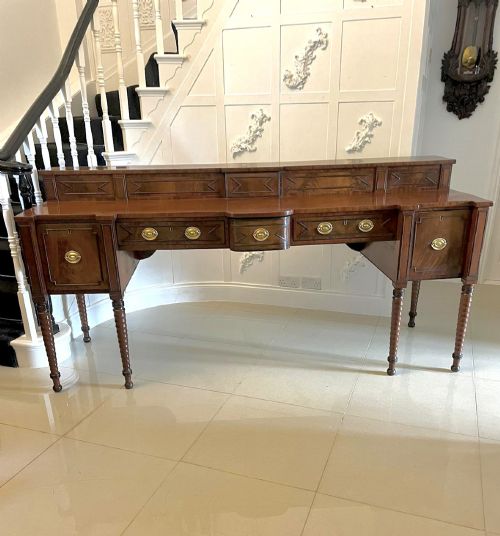
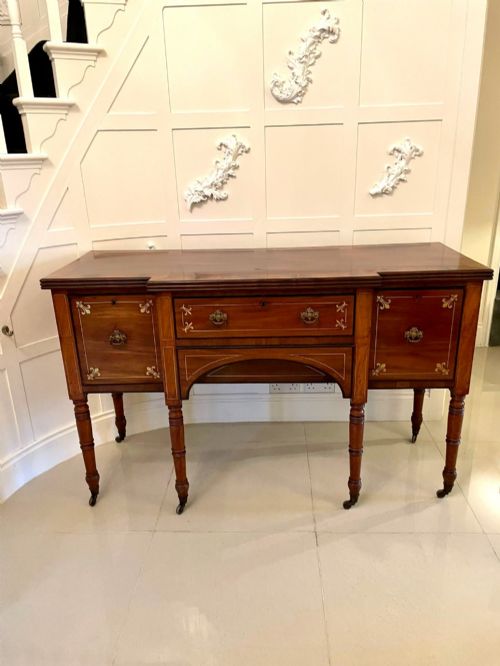
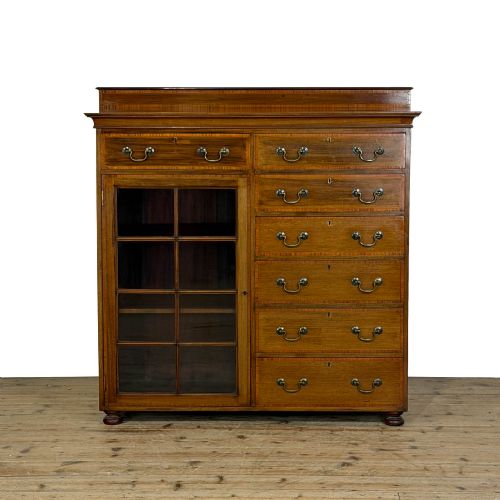
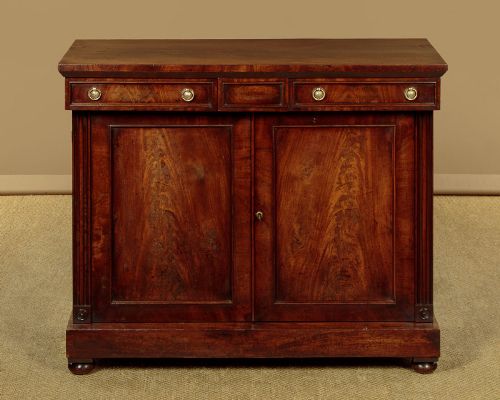
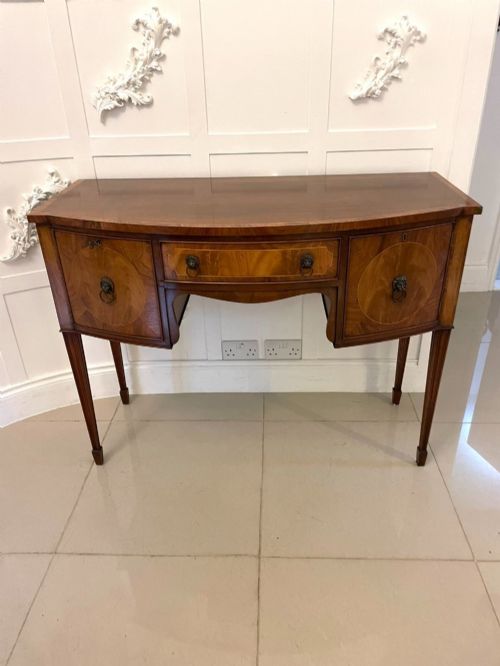
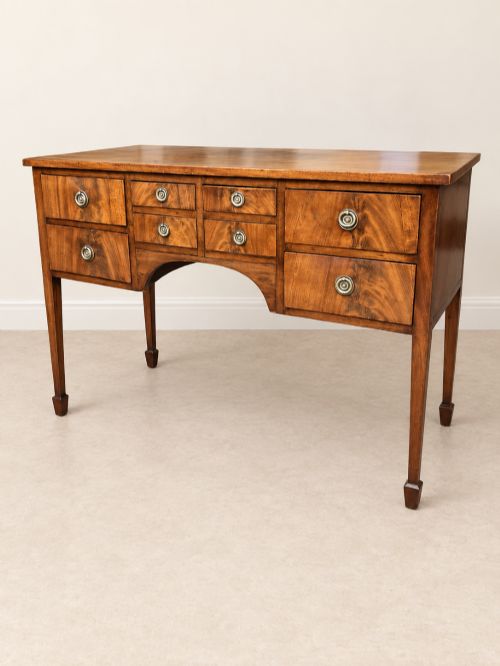
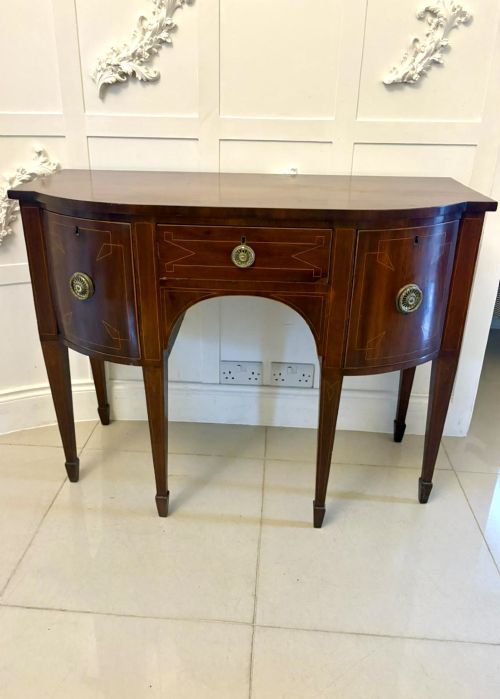
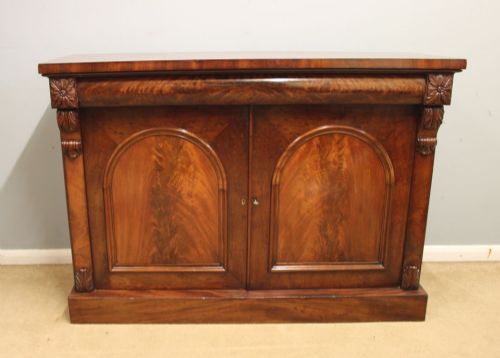
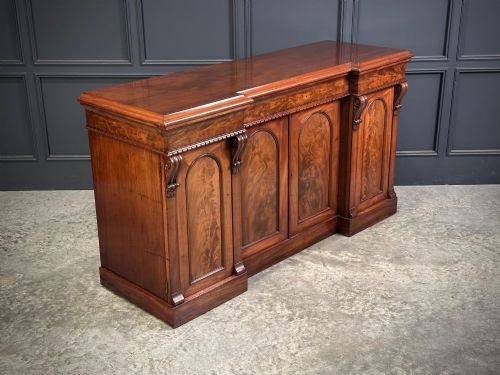
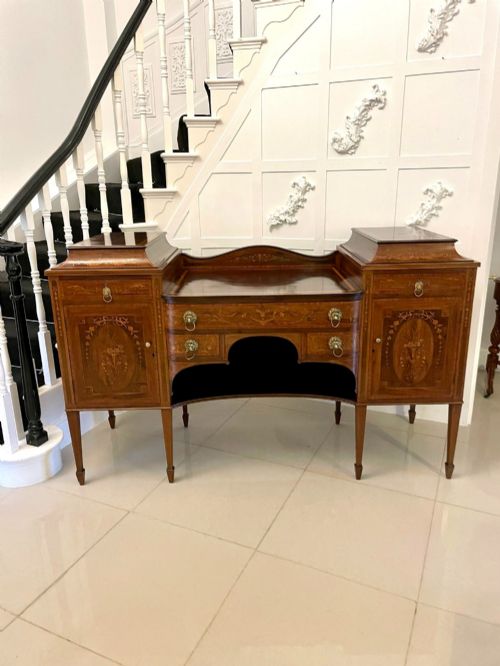
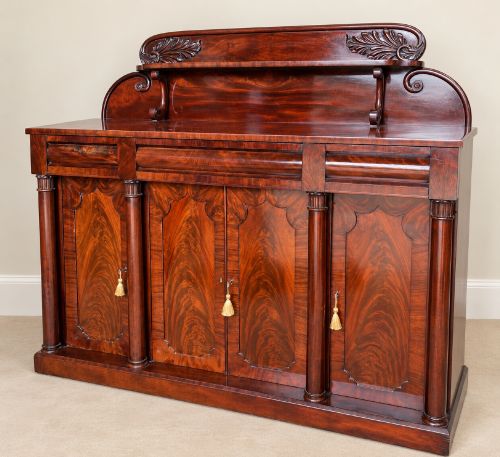
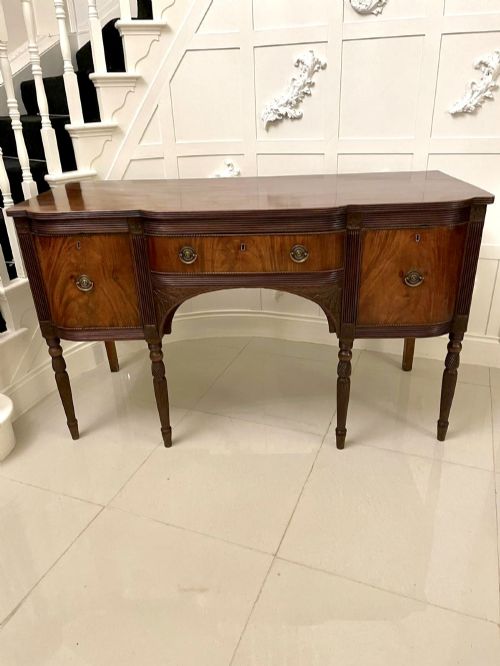
A mahogany credenza buffet functions primarily as a dining room server, sideboard or cabinet, offering generous surface space and interior storage behind doors. The listings gathered here for a mahogany credenza buffet span several key eras, including the 18th century, Georgian period, Regency era and Victorian times.
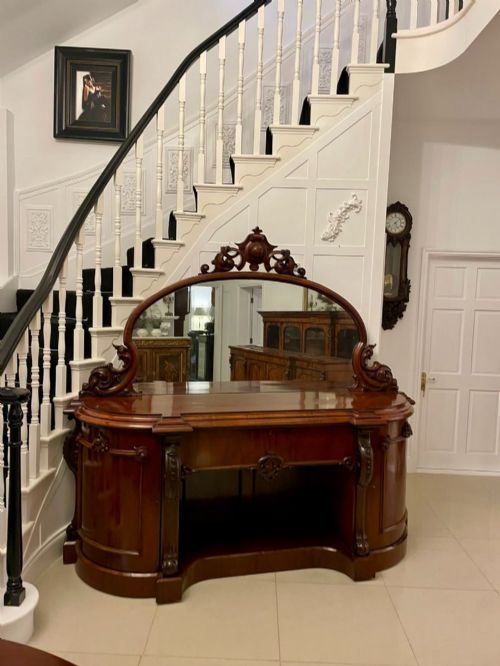
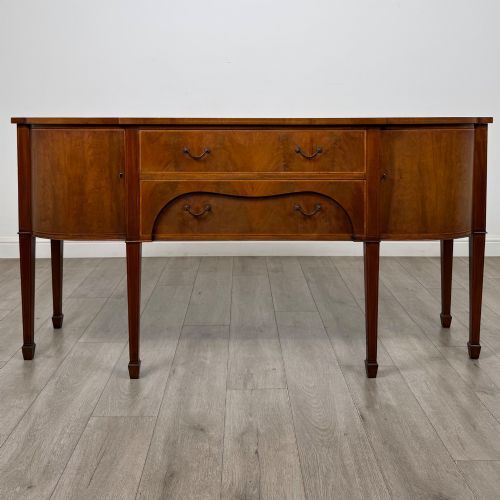
The versions you will most commonly encounter on this page take the form of bow-fronted, serpentine or breakfront sideboards rather than low cabinets. These pieces often feature pedestals, cupboards, or mirror backs, reflecting diverse regional British cabinet-making traditions from Scotland to London.
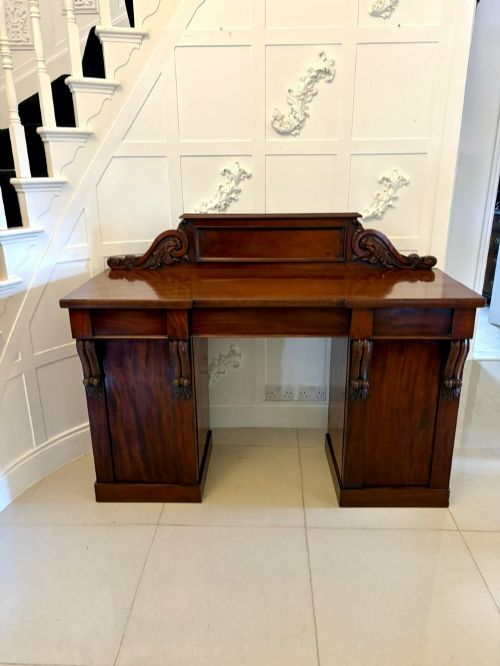
Makers and workshops of the 18th and 19th centuries built these items to anchor formal dining spaces, utilising varied configurations from simple two-door cupboards to grand pedestal designs. Buyers encounter forms ranging from compact Georgian sideboards to large Victorian exhibition pieces.
Materials and construction methods
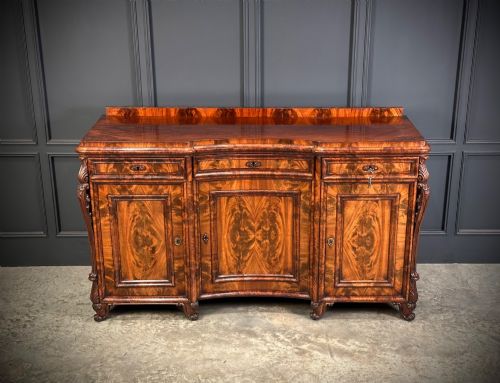
Cabinet-makers relied heavily upon solid mahogany and flame mahogany veneer, chosen for deep figuring and rich grain patterns that caught the candlelight in formal dining rooms. Workshops enhanced these surfaces with contrasting stringing and banding in satinwood, boxwood and various lighter timbers.
Structural embellishments frequently incorporated carved details, brass mounts, and occasionally lion paw feet or marble tops paired with grill fronts. Construction techniques evolved from strict George III cabinet-making standards into the heavier, ornate mirror-back forms common in the Victorian era.
Several dining pieces stand proudly on carved lion paw feet, ready to pounce across your dining room.
Judging quality and craftsmanship
Quality rests upon the selection of timber veneers, where symmetrical flame mahogany and finely matched grain patterns distinguish superior pieces from plain timber boards. The precision of inlaid marquetry and stringing, particularly on Sheraton Revival and Georgian examples, signals the hand of a skilled workshop.
Carved details such as lion paw feet, mouldings and mirror-back frames demonstrate the depth of labour invested by the original cabinet-maker. Structural integrity, clean internal drawer construction and the original state of brass hardware separate high-end dining furniture from standard production.
Hewetsons London
The Mahogany Credenza Buffet Glossary
- Bow-front
- A cabinet front curved outward in a convex sweep. This shape gained immense popularity during the Georgian and Regency periods to soften rigid room corners.
- Serpentine
- A front design featuring a gentle convex curve flanked by two concave curves. It requires supreme woodworking skill to shape accurately.
- Breakfront
- A large cabinet form where the central section projects forward from the flanking outer cupboards. It creates architectural depth in dining rooms.
- Chiffonier
- A low sideboard or cabinet featuring shelves or a mirror back. These pieces often served smaller dining or drawing rooms during the Victorian era.
- Marquetry
- Decorative patterns formed by inserting thin veneers of different coloured woods into a primary surface. Craftsmen used satinwood and boxwood for striking contrast.
Mahogany Credenza Buffet: Frequently Asked Questions
What is a mahogany credenza buffet used for?
These large case pieces were designed for dining rooms to store heavy silver, table linen and serving platters.
The wide top surface also served as a staging area for serving food and displaying silver urns or decanters during formal meals.
How do I tell a Georgian sideboard from a Victorian one?
Georgian and Regency pieces tend to feature cleaner architectural lines, subtle string inlay, and elegant tapered legs or pedestal ends.
Victorian examples often introduce heavier proportions, extensive carving, and large superstructure mirror backs designed to reflect light.
What is flame mahogany?
Flame mahogany is a highly figured wood veneer harvested from the fork where branches join the main trunk.
Cabinet-makers sliced this timber to create dramatic, flickering grain patterns that defined high-status dining furniture.
Where should I place a large sideboard?
These substantial items require adequate wall space in a dining room, hallway or large living area to anchor the room.
Ensure clearance allows doors and drawers to open fully without obstructing movement through the space.