


Mahogany Chair Back Bench
A mahogany chair back bench brings together individual chair proportions into a unified seating form, offering refined woodwork and classic period styling.
Mahogany Chair Back Bench
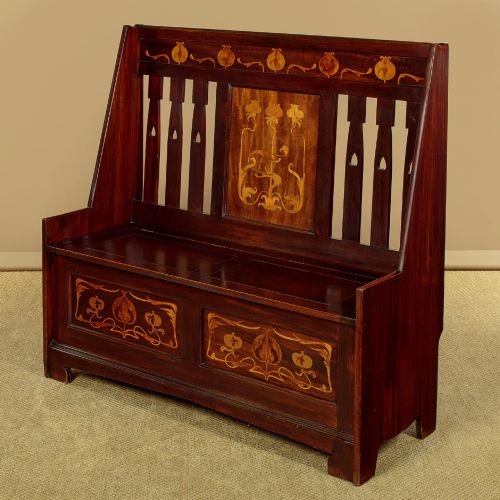
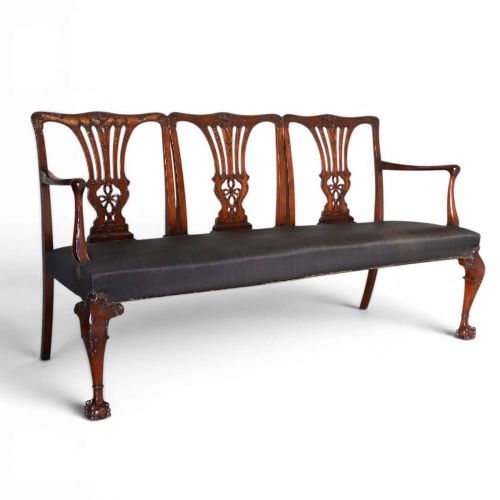
When you search for a mahogany chair back bench, you are looking at multi-seat furniture where the backrest resembles a row of joined dining or hall chairs. These pieces take various forms, including double-seat settees, triple-back sofas, and window seats, originating predominantly from the eighteenth, nineteenth, and early twentieth centuries.
The version you are most likely to meet on this page is an Edwardian or Victorian revival piece, often drawing on Georgian, Hepplewhite, or Chippendale designs. These items utilise traditional timber framing to create extended seating that maintains the distinct vertical divisions of individual chair backs.
Makers adapted classic chair motifs into elongated seating for halls, drawing rooms, and bedrooms. The resulting forms range from simple ladderback frames to elaborate shield backs and carved splats.
Materials and construction
Craftsmen built these benches primarily using solid mahogany and timber frames, often selecting dense grain for structural durability in the interconnected backrests. Joinery relied on traditional mortise and tenon methods to support the continuous stress placed on multi-unit frames.
Decorative surface work frequently incorporated satinwood and boxwood inlay to accent the crest rails and stiles. Upholstered variants integrated fabric, velvet, and fabric upholstery over padded seats, secured with traditional tacks.
Current listings feature mahogany chair back benches spanning the eighteenth, nineteenth, and early twentieth centuries, including Victorian and Edwardian revivals.
Assessing quality and execution
The distinction between standard production and superior craftsmanship rests in the depth and crispness of the wood carving. Fine examples display hand-carved splats, well-defined interlaced ribbons or strapwork, and precise joinery where the individual chair sections merge.
Material selection also dictates overall merit, particularly the grain figure of the mahogany and the symmetry of contrasting satinwood or boxwood inlay. Pieces with well-preserved original timber colour and minimal structural alteration command greater appreciation.
James Shoolbred & Co.
The Mahogany Chair Back Bench Glossary
- Chair back bench
- A multi-seat piece of furniture featuring a backrest composed of two or more conjoined chair backs. This design mimics the appearance of several chairs placed side by side.
- Splats
- The vertical wooden slats positioned in the centre of a chair back, often shaped, pierced, or carved. In these benches, multiple splats form the continuous decorative backing.
- Shield back
- A chair back design shaped like an upturned shield, popularised by Hepplewhite in the eighteenth century. This silhouette appears frequently in revival settees.
- Inlay
- A technique where contrasting woods like satinwood or boxwood are inserted into recesses within the primary mahogany surface to create decorative patterns.
- Stiles
- The upright vertical side posts of a chair back or bench frame that flank the central splat.
Mahogany Chair Back Bench: Frequently Asked Questions
What is a chair back bench?
A chair back bench is a piece of seating furniture designed with a backrest that replicates the appearance of multiple individual chairs joined together in a single row.
These items range from two-seat and three-seater settees to window seats and salon sofas, providing extended seating while retaining distinct vertical back divisions.
Where were these benches placed?
Historically, these benches served various interior spaces depending on their specific construction and decorative finish. Lighter inlaid models suited drawing rooms and bedrooms as window seats or end-of-bed furniture.
Sturdier timber frames with plain wooden seats often functioned as hall chairs or corridor seating where durable surfaces were necessary.
How do I identify a revival piece?
Revival pieces are identified by construction traits, timber characteristics, and stylistic revivals associated with nineteenth and early twentieth-century manufacturing periods. Makers frequently copied Georgian, Hepplewhite, and Chippendale aesthetics during the Victorian and Edwardian eras.
Examination of the interior joinery, secondary woods, and wear patterns helps distinguish an original eighteenth-century piece from a later nineteenth or twentieth-century interpretation.
Are these benches upholstered?
Many examples feature drop-in or fixed upholstered seats covered in fabric or velvet, while others rely on plain wooden timber surfaces. Upholstery styles often reflect the period of manufacture or subsequent reupholstery by later owners.
Open-framed window seats and hall chairs generally prioritise exposed mahogany woodwork over padding.