



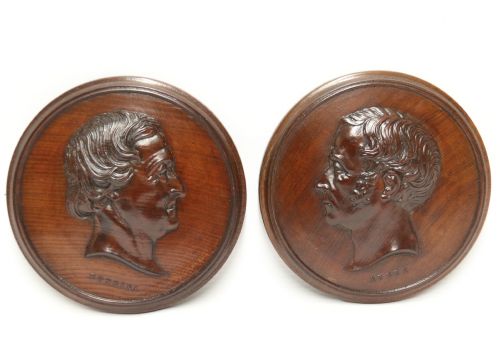


Mahogany Carvings
These mahogany carvings span centuries of master joinery, bringing rich timber texture and intricate sculptural depth into your room.
Mahogany Carvings
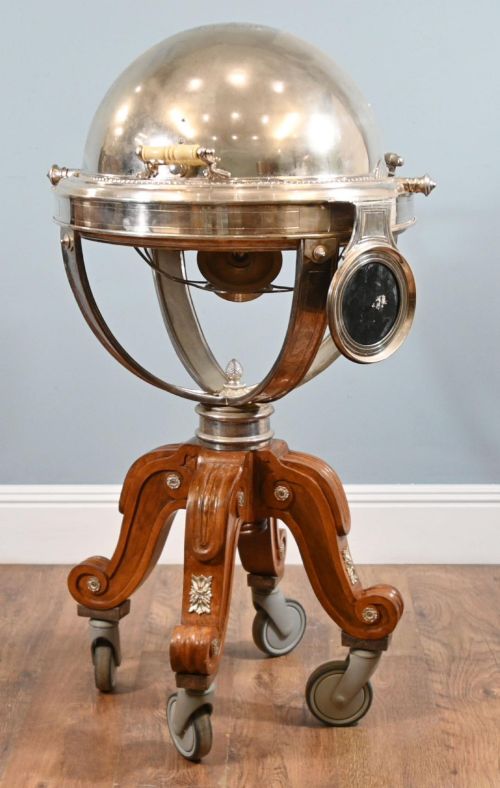
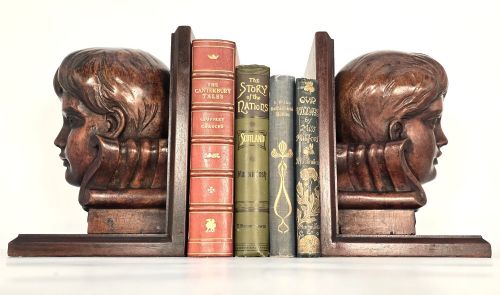
Mahogany carvings encompass a diverse range of objects, from library bookends and wall plaques to seating and architectural panels. When searching for mahogany carvings, you encounter pieces that bridge functional furniture and decorative sculpture.
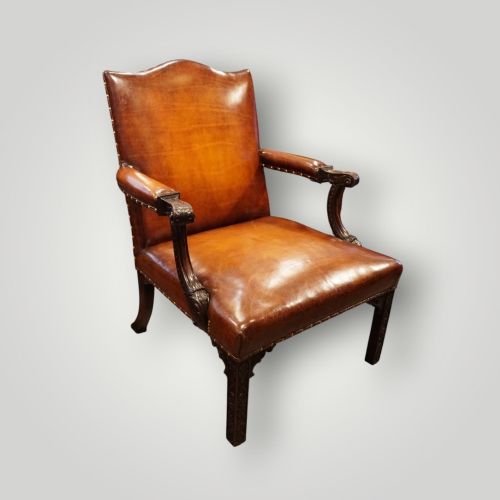
The selections on this page draw from periods spanning the Georgian era through the Victorian epoch and into the early twentieth century. Common forms include ecclesiastical bookends, portrait wall plaques, and substantial armchairs accented with blind fretwork.
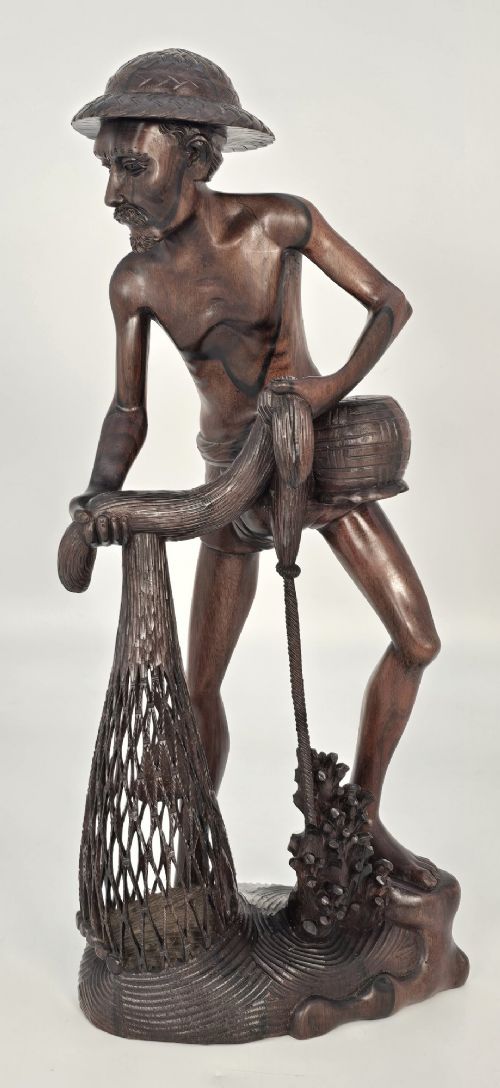
Origins stretch across European and Asian traditions, taking in English domestic workshops as well as Italian and Sri Lankan studios. This variety means every piece displays a distinct regional approach to handling dense tropical timber.
Materials and construction
Makers utilised solid mahogany and related dense hardwoods, taking advantage of the timber's stability and rich grain to hold sharp chisel lines. Secondary elements like English hide leather, brass fittings, and silver plate appear where functional items demand mixed media.
Surface work relies entirely on hand carving, utilising gouges and chisels to model figures, animals, and classical motifs in relief or in the round. Finishers applied traditional hand-polishing techniques that enhance the natural reddish-brown depth of the wood without masking its grain.
Mahogany Carvings Retail Price Guide 2026
Typical asking prices for mahogany carvings among the pieces listed under this phrase on Sellingantiques today, from the lower quarter to the upper quarter. They describe what is for sale here now, not the wider market.
Among the stoic gentlemen and religious figures, a Belgian draught horse stallion stands ready to pull imaginary carts across your sideboard.
Assessing quality
The distinction between ordinary and exceptional pieces lies in the precision of the chisel work and the depth of the relief. Master carvers achieved anatomical conviction and crisp drapery folds that lesser hands rendered stiffly.
Proportion and wood selection also dictate standard; superior items use well-figured timber free from awkward repairs, maintaining structural integrity across complex joinery like Chippendale style frames and heavy bookends.
The Mahogany Carvings Glossary
- Blind carving
- Carved ornamentation applied to a flat surface in low relief, often imitating more complex fretwork without piercing the wood completely. This technique appears frequently on Georgian chair rails and library fittings.
- Animalier
- A nineteenth-century artistic style focusing on the realistic depiction of animals in sculpture and carving. Works in this vein capture musculature and movement with keen observation.
- Ecclesiastical
- Relating to the Christian church or clergy, often describing woodwork produced for chapels or monastic libraries. These pieces frequently incorporate Gothic Revival motifs and heavy religious iconography.
- Giltwood
- Wood that has been prepared and coated with a thin layer of gold leaf or powder. It provides a bright contrast against dark mahogany frames and mirrors.
- Hardwood
- Timber from broad-leaved angiosperm trees, valued for its dense cellular structure and durability. Mahogany and related species provide the stable canvas required for fine cabinet work.
Mahogany Carvings: Frequently Asked Questions
What periods do these carvings cover?
The available selection spans from the Georgian era through Victorian production into the early twentieth century. You will find items representing distinct historical revivals alongside regional folk art.
Each period brought its own stylistic preferences, influencing how carvers handled subjects ranging from classical figures to working animals.
How were these wooden pieces used originally?
Many items served practical domestic or institutional functions while displaying ornamental skill. Library bookends supported heavy volumes, while armchairs provided seating for wealthy households.
Other objects, such as wall plaques and figural sculptures, existed purely to decorate private interiors and public spaces.
How do I care for mahogany woodwork?
Keep items away from direct heat sources and rapid humidity shifts to prevent the timber from splitting. Dust regularly with a dry, soft cloth and avoid silicone-based polishes.
Occasional application of appropriate wax feeds the grain and preserves the historic sheen of the surface.
How can I tell different regional styles apart?
Look closely at the choice of subject matter and the tool marks left by the maker. European workshops often favoured classical portraiture and Gothic revival motifs, while Asian studios utilised distinct local iconography and wood species.
Comparing the depth of relief and finishing techniques helps clarify where a piece originated.