




Mahogany Campaign Tallboy
These mahogany campaign tallboy pieces are robust, modular chests built for travel, offering deep storage and sturdy brass fittings.
Mahogany Campaign Tallboy
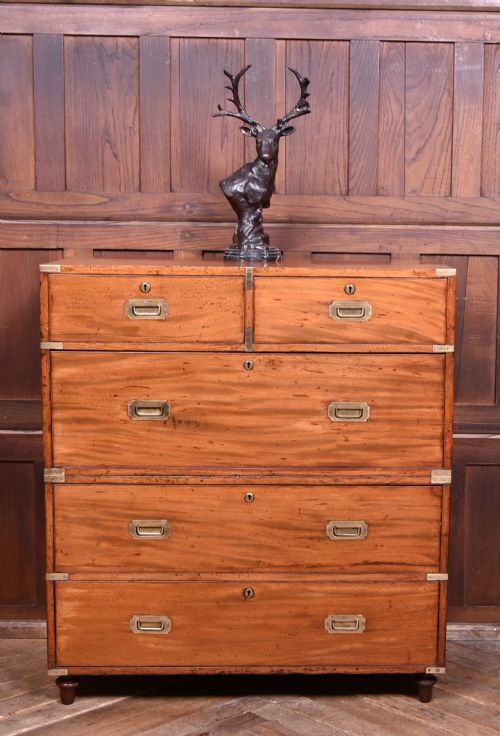
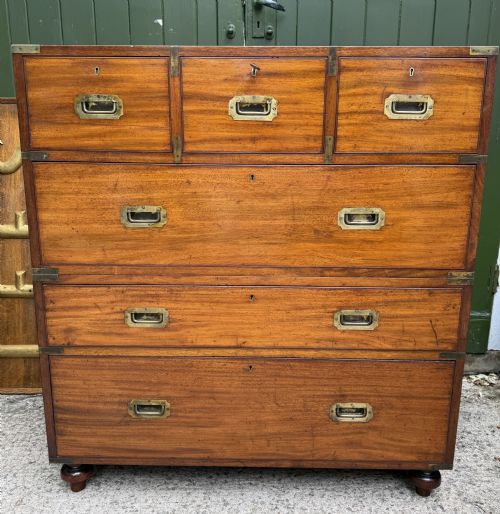
A mahogany campaign tallboy combines the height of a vertical storage unit with the dismantling nature of travel furniture, designed for officers on the move. When searching for a mahogany campaign tallboy, buyers encounter practical two-part chests, wardrobes, and secretaire variants built during the nineteenth century and the Regency, Victorian, and Edwardian periods.
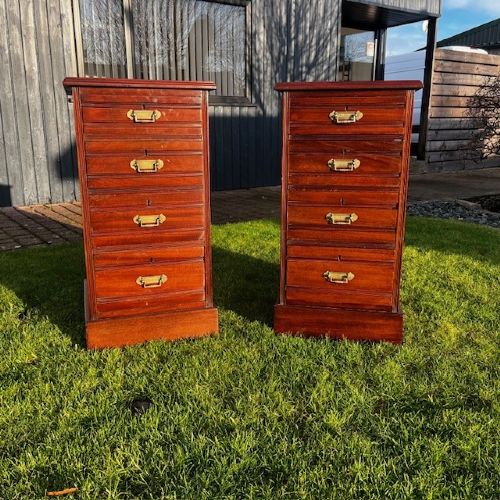
The inventory includes tall configurations such as campaign cabinets on secretaire chests, alongside paired bedside chests and folding designs. These pieces derive from military utility, engineered to separate into manageable sections for transport across vast distances.
How They Were Made
Constructed primarily from dense mahogany, and occasionally padauk or teak, these pieces utilise sturdy timber capable of withstanding rough journeys. Wood inlay adds subtle decoration while maintaining structural integrity.
Makers integrated heavy brass corners, straps, and recessed flush handles to protect the edges and prevent snagging during transit. Two-part designs rely on hidden brass pins and brackets to lock stacked sections securely together.
Listings feature mahogany, teak, and padauk timbers alongside brass hardware across nineteenth-century Victorian and Edwardian periods.
What Varies in Quality
The caliber of a piece depends on the precision of its dismantling mechanism and the snugness of the brass hardware fit. Superior examples maintain smooth drawer operation within stacked sections that align without wobble.
The Mahogany Campaign Tallboy Glossary
- Campaign chest
- A modular chest of drawers built in two or more stackable sections for military transport. These units feature recessed brass handles and corner brackets to endure rough travel.
- Secretaire chest
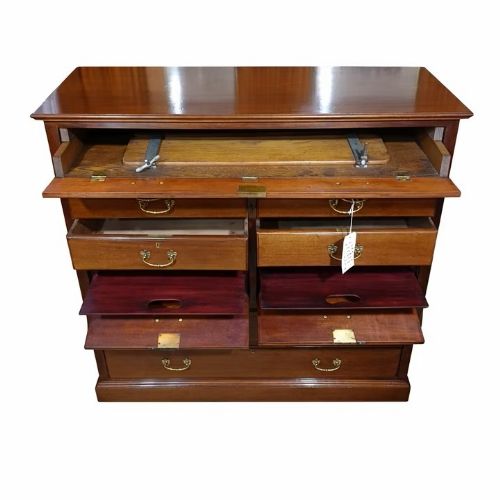
- A chest of drawers incorporating a fitted writing desk drawer with a drop-down front. Inside, small pigeonholes and letter drawers provide clerical storage.
- Two-part design
- A construction method where a tall cabinet or chest splits horizontally into separate stacked boxes. This allows officers to carry lighter individual segments.
- Brass-bound
- Furniture reinforced with brass strips and corner plates secured by numerous small screws. This reinforcement prevents splitting along the wood grain during transit.
- Wellington chest
- A tall, narrow chest of drawers secured by a vertical locking bar on one side. The hinged locking flap fastens with a key to hold all drawers shut simultaneously.
Mahogany Campaign Tallboy: Frequently Asked Questions
Why do these chests split in half?
Modular two-part construction allowed officers and travellers to divide heavy wardrobes and tall chests into manageable loads for pack animals and ships. Each section lifts off independently for easier packing on the move.
Once reassembled at a destination, metal brackets and internal pins locked the stacked units securely back into a single tall chest.
How do I spot a real campaign piece?
Authentic campaign pieces feature recessed brass handles that sit flush with the drawer face so nothing catches during transit. Look for corner brass brackets, carrying side handles, and a split-carcase design.
Many genuine examples also exhibit secondary timbers used on drawer linings and backboards, consistent with nineteenth-century workshop practices.
Where were these chests used?
British officers, diplomats, and colonial administrators utilised these sturdy chests during overseas postings and military campaigns. The furniture travelled across colonies and provinces to provide domestic order in temporary quarters.
Their robust construction ensured personal belongings remained organised despite the dust and damp of field conditions.
How do I care for mahogany campaign wood?
Maintain mahogany surfaces with a gentle application of beeswax rather than modern silicon sprays. Regular buffing preserves the deep colour and natural sheen of the timber.
Keep the brass fittings clean with a soft cloth, taking care not to let abrasive polishes stain the surrounding wood grain.