

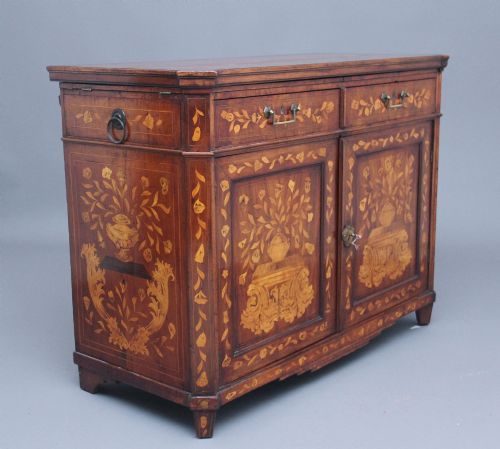
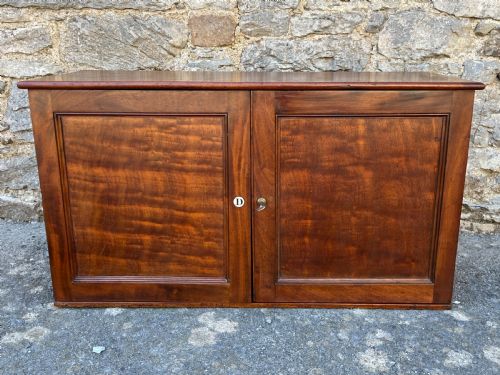
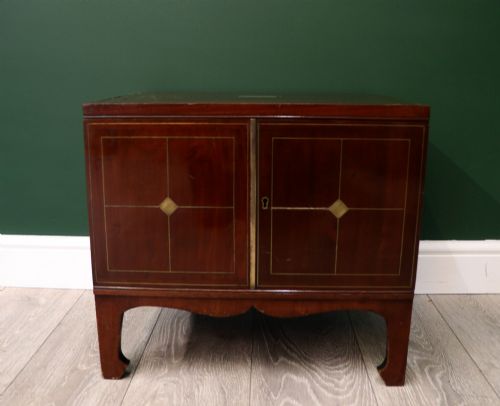
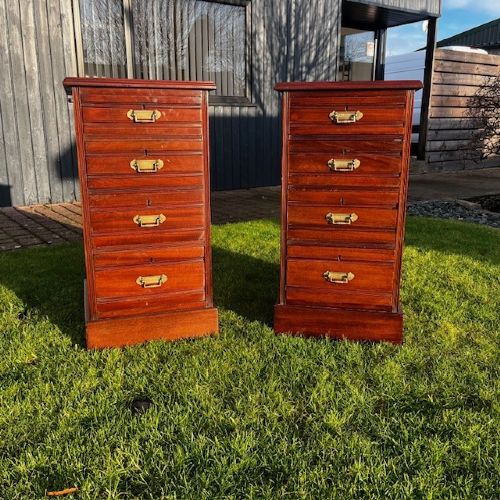


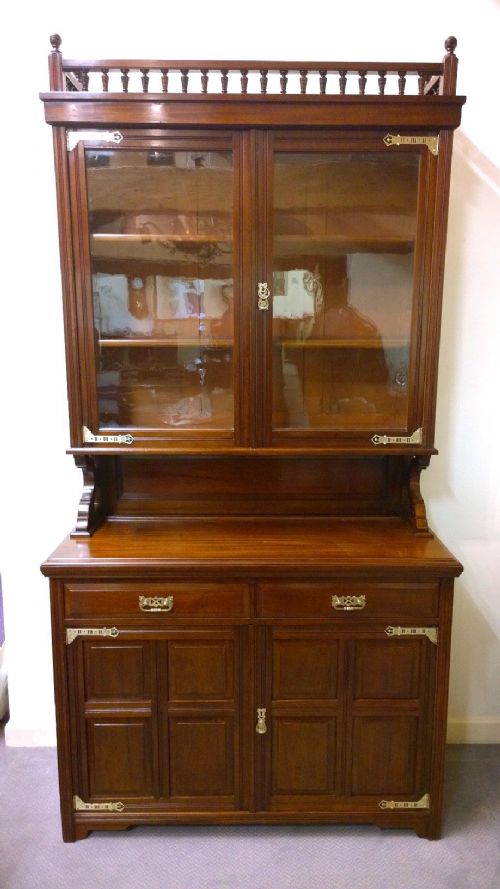


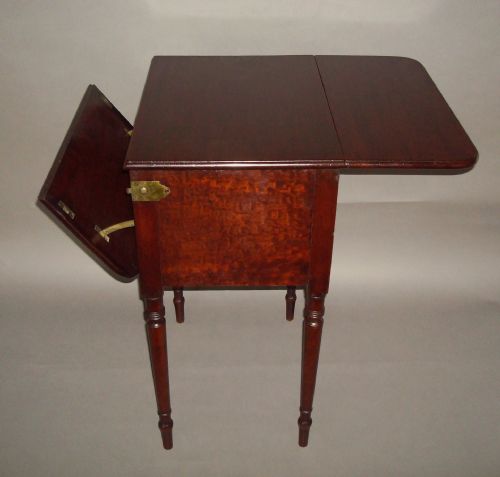
Mahogany Campaign Cupboard
These mahogany campaign cupboards are portable pieces designed for officers on the move, combining sturdy timber with brass hardware to withstand travel.
Mahogany Campaign Cupboard
A mahogany campaign cupboard represents practical officer furniture built for mobility during the eighteenth, nineteenth, and early twentieth centuries. These forms appear as military filing cabinets, bedside chests, secretaire cabinets, and compact travelling cupboards.
The pieces on this page span Georgian, Victorian, Edwardian, and later periods, reflecting the enduring utility of modular storage. Construction often involves fitted compartments, brass flush handles, and robust timbers designed to dismantle or travel securely.
Materials and construction
Makers relied primarily on solid mahogany and flame mahogany veneers, sometimes pairing the dark wood with satinwood, fruitwood, or walnut details. Brass corners, recessed drop handles, and escutcheons reinforced the joints against the rigours of transport.
Internal elements frequently incorporate bone or brass fittings, while specific examples integrate cast iron elements such as internal safes. Construction prioritises structural resilience, featuring tight joinery and modular sections that allowed officers to pack and move their belongings efficiently.
Mahogany Campaign Cupboard Retail Price Guide 2026
Typical asking prices for mahogany campaign cupboard among the pieces listed under this phrase on Sellingantiques today, from the lower quarter to the upper quarter. They describe what is for sale here now, not the wider market.
Some officers carried portable desks with hidden compartments, ensuring their private journals stayed secret even from inquisitive subordinates.
Assessing quality and craftsmanship
Quality rests in the precision of the brass hardware integration and the selection of the mahogany timber. Superior examples display crisp flush-fitting handles, carefully aligned dovetail joints, and well-figured grain without excessive restoration.
Provenance and original functional elements elevate a piece, such as intact secretaire drawers, fitted interiors, or documented military association. Lesser examples show mismatched replacement brassware or crude alterations to the internal configuration.
The Mahogany Campaign Cupboard Glossary
- Campaign style
- Furniture constructed for military officers and travellers, characterised by portability, dismantling sections, and protective brass mounts. This design allowed heavy timber pieces to travel across the British Empire without sustaining damage.
- Flush handle
- A metal handle set into a recessed plate so it does not project beyond the surface of the drawer or door. This prevents snagging during transit.
- Secretaire
- A cabinet or chest featuring a pull-down writing drawer fitted with small pigeonholes and letter compartments. It provided a portable desk for administrative duties on posting.
- Flame mahogany
- Timber cut from the fork of the mahogany tree to produce a distinctive, flickering flame pattern. Cabinet makers used these veneers on primary display surfaces.
Mahogany Campaign Cupboard: Frequently Asked Questions
What is a campaign cupboard?
A campaign cupboard is a portable storage piece built for military officers on active service.
These items were constructed to withstand frequent transport, featuring sturdy timbers and recessed brass hardware.
How do I identify a Victorian campaign piece?
Victorian examples generally show denser mahogany timbers alongside standardised brass corner brackets and flush drop handles.
Construction details and period locks help distinguish these nineteenth-century items from later reproductions.
Where were these cupboards used?
Officers utilised them on military campaigns, naval postings, and colonial service to keep personal papers and equipment organised.
The modular design allowed the furniture to be packed onto carts or ships with minimal risk.
How do I care for mahogany campaign furniture?
Keep the timber away from direct heat sources and sudden humidity changes to prevent the mahogany and veneers from splitting.
Apply a traditional beeswax polish occasionally to nourish the wood and maintain the finish.