
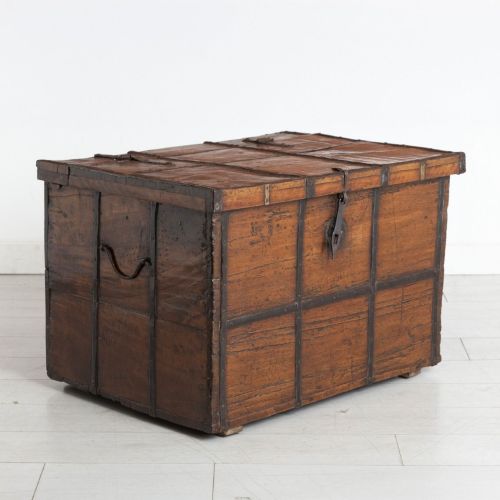
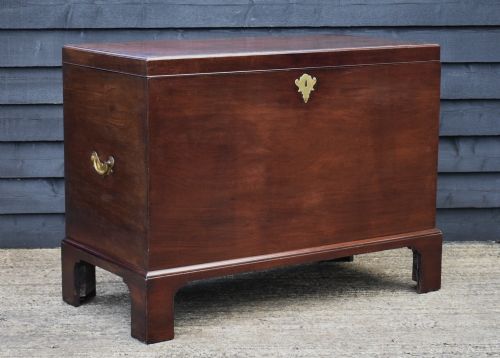


Mahogany Campaign Coffer
These mahogany campaign coffer pieces are robust travelling chests built for officers on the move, offering sturdy storage with enduring character.
Mahogany Campaign Coffer
A mahogany campaign coffer is a portable storage chest designed for military travel, officer use, and colonial transport during the Georgian and Victorian eras. These pieces surface in various forms including military travelling chests, travel trunk chests, dowry chests on stands, and travelling boxes.
The most likely version to meet on this page is a Victorian or Georgian mahogany trunk, frequently reinforced with iron or brass. Examples span from the mid eighteenth century through to the early twentieth century, incorporating British military styles as well as Chinese hongmu travelling pieces.
Object types associated with these items include trunks and chests, storage chests, cabinets and cupboards, and coffers. They bridge the gap between utilitarian travel gear and domestic furniture, serving as practical storage with a distinct historical provenance.
Materials and construction
Construction relies heavily on dense timbers such as mahogany and hongmu wood, selected for their resilience during transit. Iron and brass feature prominently as binding materials, corner braces, and hardware to protect edges and withstand rigorous handling on campaigns.
Specialised interiors appear in specific examples, such as zinc linings designed to protect contents from moisture during long journeys by sea or land. These structural and protective elements reflect the utilitarian demands placed on campaign furniture.
Listings feature mahogany, hongmu wood, brass, iron, and zinc across Georgian and Victorian military styles.
Assessing quality and craftsmanship
Quality in a mahogany campaign coffer is determined by the integrity of the timber framing and the robustness of the metal reinforcements. Superior examples display precise joinery and substantial brass or iron hardware that integrates cleanly with the mahogany body.
The sophistication of the internal layout and the presence of specialised elements, such as zinc linings or integrated stands, separate standard travelling boxes from high-status naval and military cabinet pieces. Provenance and historical association also elevate the standing of individual chests.
The Mahogany Campaign Coffer Glossary
- Campaign coffer
- A portable chest or trunk built for military officers or travellers on active service. These pieces typically feature durable timbers and protective metal mounts.
- Hongmu wood
- A dense hardwood category used in Chinese furniture making. It provides exceptional durability for travelling boxes.
- Dowry chest
- A storage trunk traditionally used to hold household linens and personal possessions for a marriage. Examples can be raised on stands for ease of access.
- Zinc lining
- A protective internal metal sheet fitted inside trunks to keep contents dry. This feature was essential for maritime and tropical travel.
Mahogany Campaign Coffer: Frequently Asked Questions
What is a mahogany campaign coffer?
A mahogany campaign coffer is a portable storage chest designed for military officers and travellers during the Georgian and Victorian periods. These trunks combine sturdy mahogany or hongmu construction with protective metal mounts.
They were built to endure long journeys by land and sea while keeping uniforms and equipment secure. Today they function as distinctive storage furniture in modern homes.
How were campaign chests used?
Officers utilised these chests to transport clothing, documents, and personal valuables during military campaigns and overseas postings. Their robust construction protected contents from rough handling and adverse weather.
Many featured reinforced corners and secure locking mechanisms to safeguard important items on the move. Afterwards, officers often brought them home as practical domestic furniture.
How do I style a campaign chest at home?
These chests work well as coffee tables, end tables, or blanket boxes in living rooms and bedrooms. Their dark timber and metal hardware add industrial and traditional texture to a space.
Keeping the top clear allows the grain and brass or iron bindings to serve as a focal point. They also provide hidden storage for books, blankets, and household items.
How do I tell Georgian and Victorian pieces apart?
Georgian pieces, dating from the eighteenth century, often exhibit finer cabinet-making details and proportions. They may include specialised forms like dowry chests on stands.
Victorian examples from the nineteenth century tend towards heavier iron or brass binding and robust utilitarian construction. Examining the hardware and timber finish helps clarify the period of manufacture.