
Mahogany Cabriole Leg Desk
These mahogany cabriole leg desk pieces combine deep timber with scrolling supports, offering practical writing surfaces shaped by Georgian and later revival hands.
Mahogany Cabriole Leg Desk
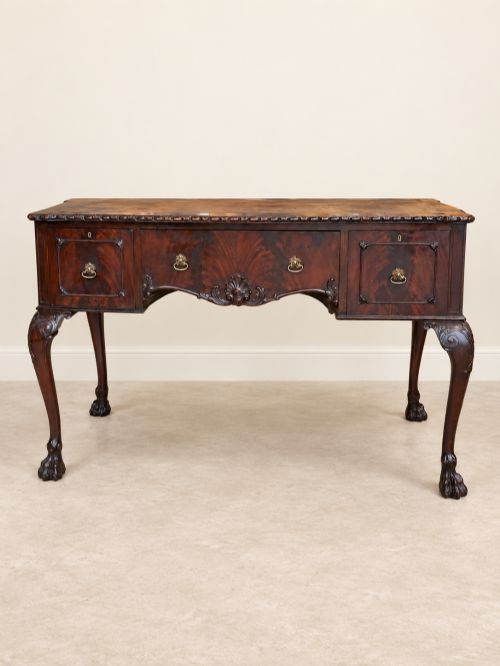
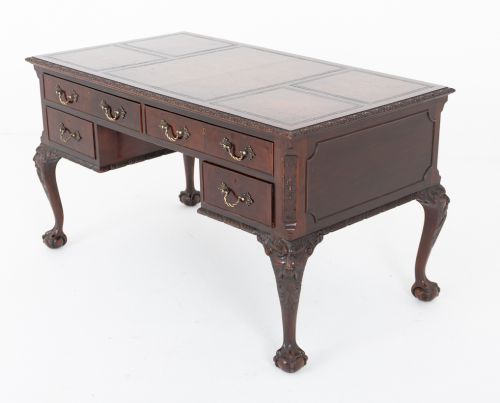
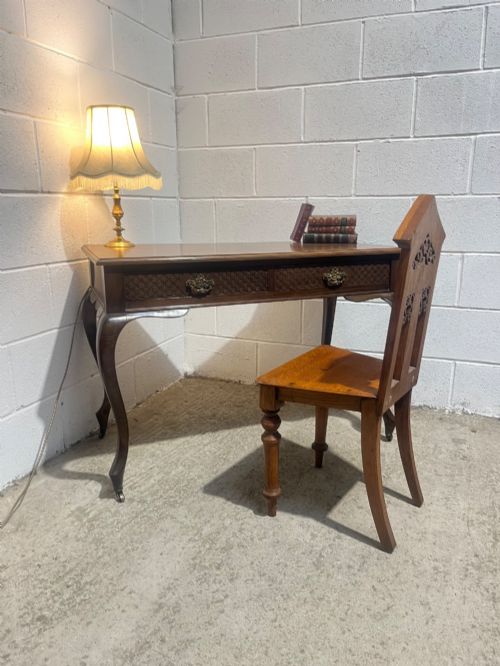
A mahogany cabriole leg desk brings together durable tropical hardwood and the distinctive double-curved leg form seen across eighteenth-century and revival periods. Buyers searching this phrase look for writing tables, pedestal desks, and lowboys resting on graceful curved supports.
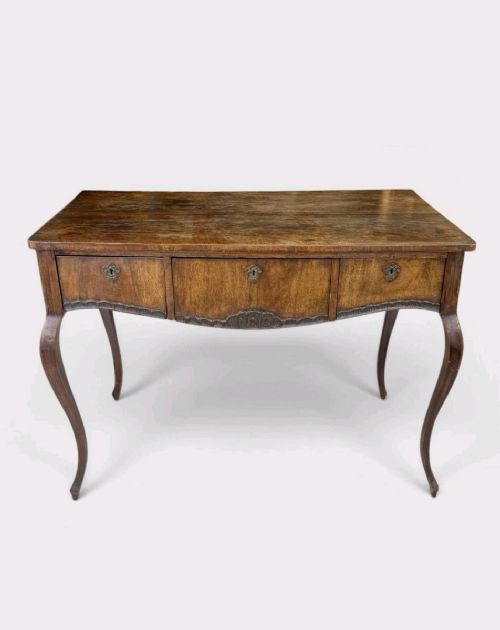
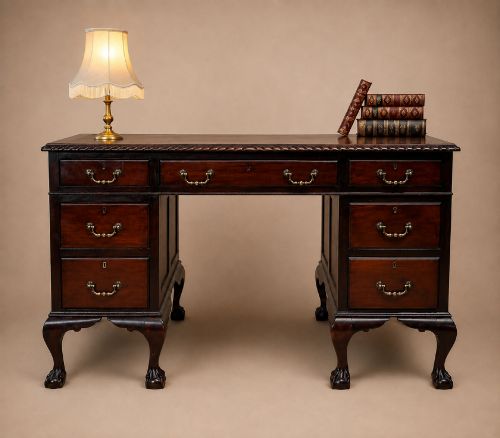
The pieces appearing on this page span the Georgian era through to Edwardian and later revivals, alongside French bureau plat forms and writing tables. Surviving examples demonstrate how makers adapted the curving leg profile to writing furniture across different centuries.
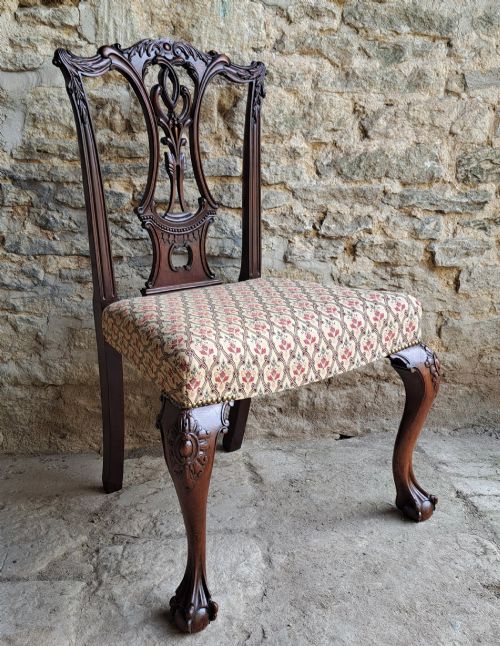
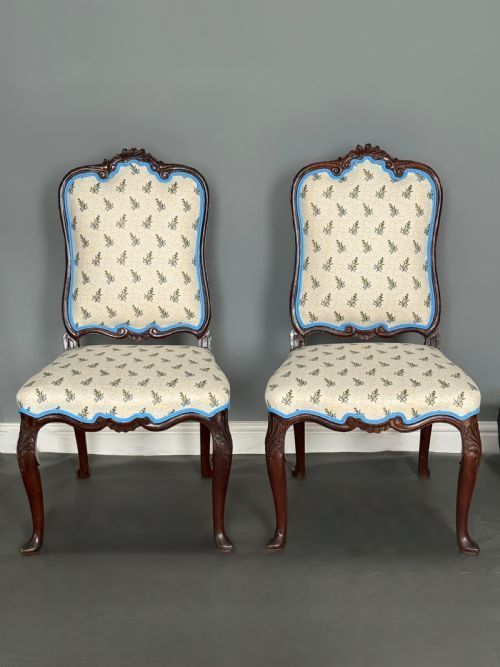
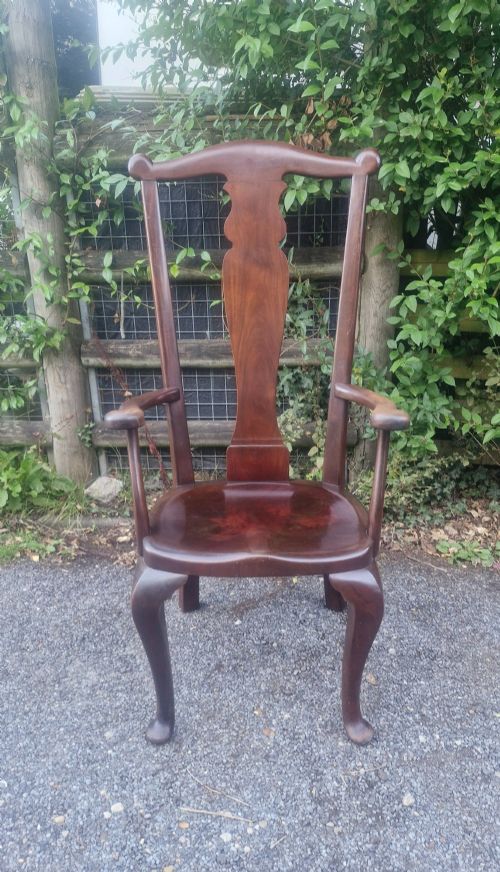
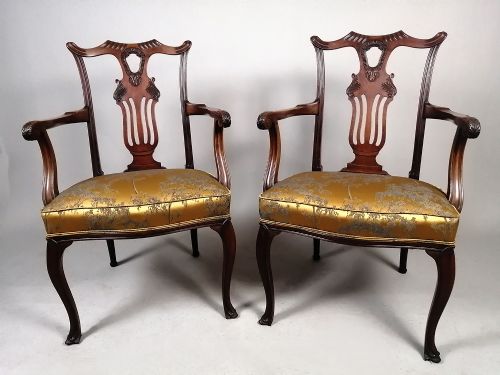
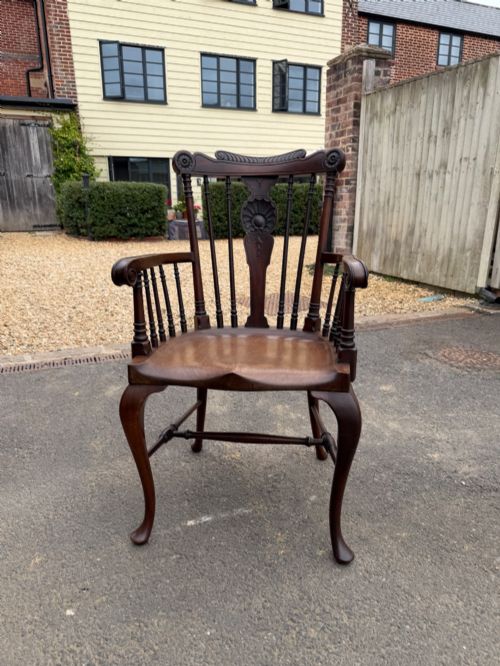
Writing tables and desks dominate the selection, accompanied by related forms like lowboys and writing chairs that share the same characteristic leg profile and mahogany construction.
Materials and construction
Makers built these pieces primarily from solid mahogany and flame mahogany veneers, sometimes pairing the timber with secondary woods for internal framing. The dense grain allowed cabinetmakers to carve crisp details into drawer fronts and legs.
Brass handles, leather writing inserts, and gilt ormolu mounts frequently complete the construction, particularly on French writing tables and bureau plat forms. Upholstery fabric and leather provide the traditional writing surfaces and seating pads recorded in the listings.
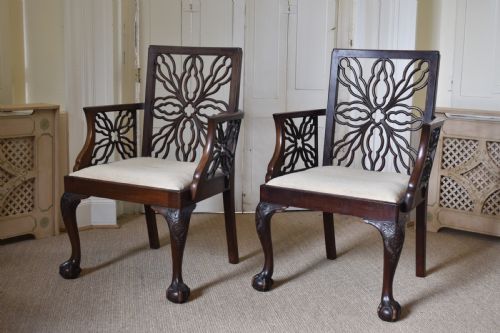
Several chairs double as spider web back desk seats, proving that arachnids occasionally found their way into Victorian joinery.
What separates the best from the rest
The distinction between ordinary and superior pieces rests on the fluency of the carved cabriole legs and the selection of the mahogany timber. Well-executed knee carvings and balanced proportions distinguish finer Georgian and revival work from simpler utility pieces.
Attention to secondary details such as dovetailed drawer construction, original brass hardware, and finely tooled leather inserts separates higher quality examples. The depth of colour and figuring in the flame mahogany veneer further elevates the standing of an individual desk.
François Linke·Edwards and Roberts·Gillows
The Mahogany Cabriole Leg Desk Glossary
- Cabriole leg
- A furniture leg that curves out at the knee and tapers inward to the ankle, mimicking an animal limb. This distinctive shape frequently terminates in a claw and ball or pad foot.
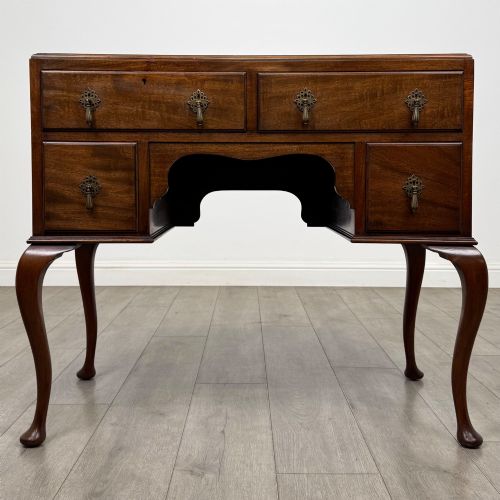
- Lowboy
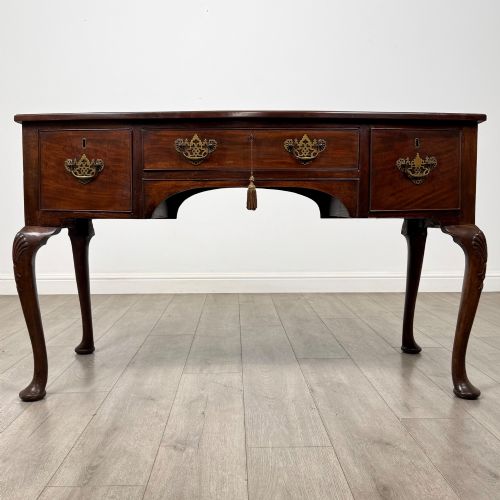
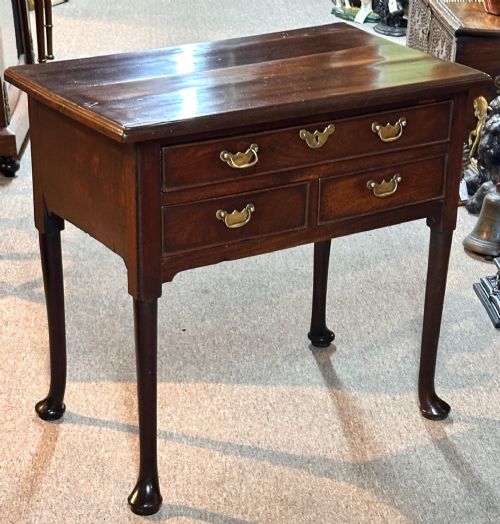
- A small eighteenth-century dressing table or writing table featuring one or more rows of drawers beneath a flat top. They typically stand on four cabriole legs.
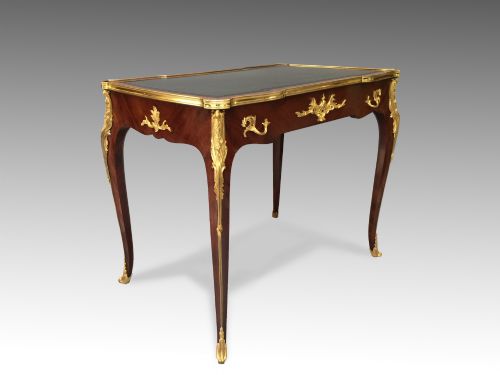
- Bureau plat
- A freestanding French writing table featuring a rectangular top, often inset with leather, set above one or more drawers. These tables commonly rest on cabriole legs with ormolu mounts.
- Flame mahogany
- A veneer cut from the branch junction of the mahogany tree, producing a distinctive rippled pattern resembling flickering flames. Cabinetmakers applied this timber to prominent surfaces like desk tops and drawer fronts.
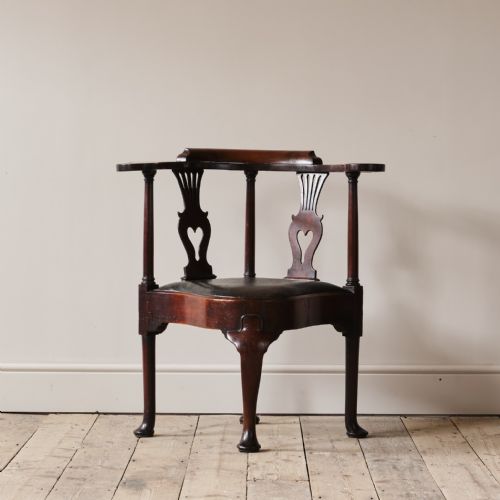
- Corner chair
- An armchair designed to fit into the corner of a room, featuring a curved backrest supported by multiple spindles and a square seat placed diagonally.
Mahogany Cabriole Leg Desk: Frequently Asked Questions
What is a cabriole leg?
A cabriole leg is a curving furniture support that swells outward at the knee and tapers inward toward the foot. It draws inspiration from animal limbs and defines much of the seating and desk furniture from the Georgian period onward.
Cabinetmakers shaped these legs from solid mahogany to provide both structural strength and visual grace. The form appears frequently on desks, lowboys, and chairs across several centuries of British and European design.
How do I identify a Georgian desk?
Georgian desks display proportions and timber use characteristic of the eighteenth century, often utilising solid mahogany or finely figured veneers. They rely on traditional joinery methods such as hand-cut dovetails within the drawers.
Revival pieces from later centuries sometimes imitate these earlier forms, making wood maturity, construction methods, and wear patterns key indicators of original period manufacture.
Where were lowboys used?
Lowboys served as versatile tables in eighteenth-century homes, functioning variously as dressing tables, side tables, or compact writing desks. Their modest proportions allowed them to fit into bedchambers and smaller reception rooms.
Today, these pieces easily adapt as hallway console tables or small writing surfaces within contemporary living spaces.
What is flame mahogany?
Flame mahogany is a decorative veneer harvested from the fork where a branch meets the main trunk of the tree. The cutting process reveals a dramatic, swirling grain pattern that resembles flickering fire.
Cabinetmakers reserved this prized timber for the most visible surfaces of desks and writing tables, enhancing the visual depth of the furniture.