

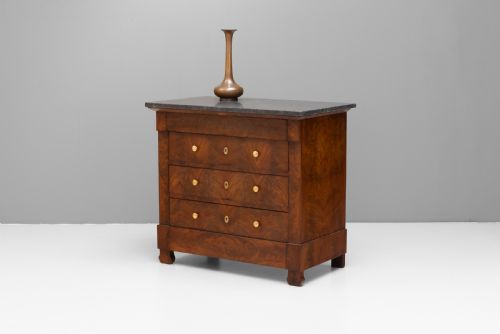
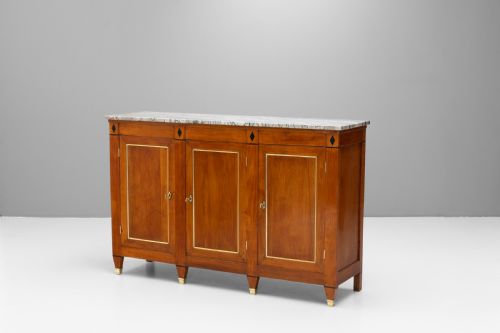
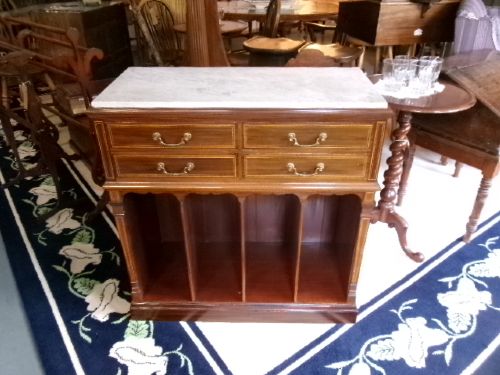
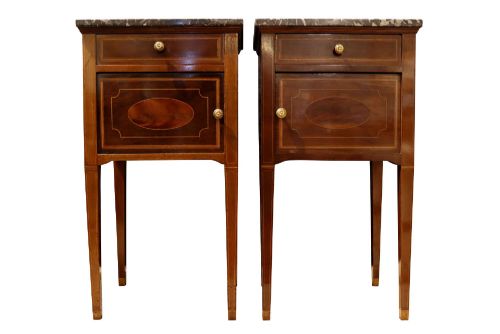
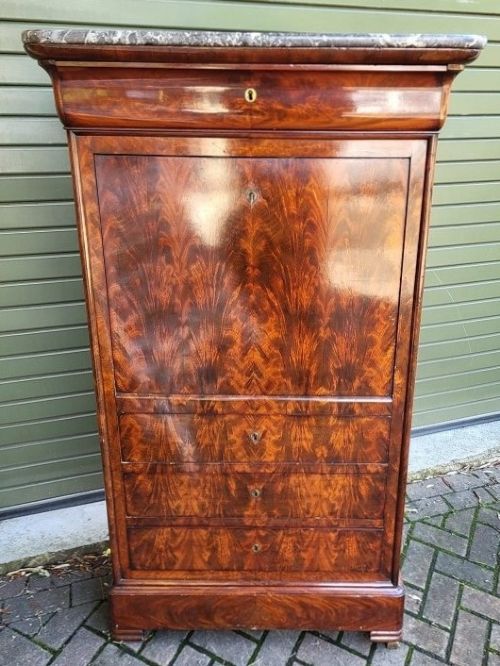
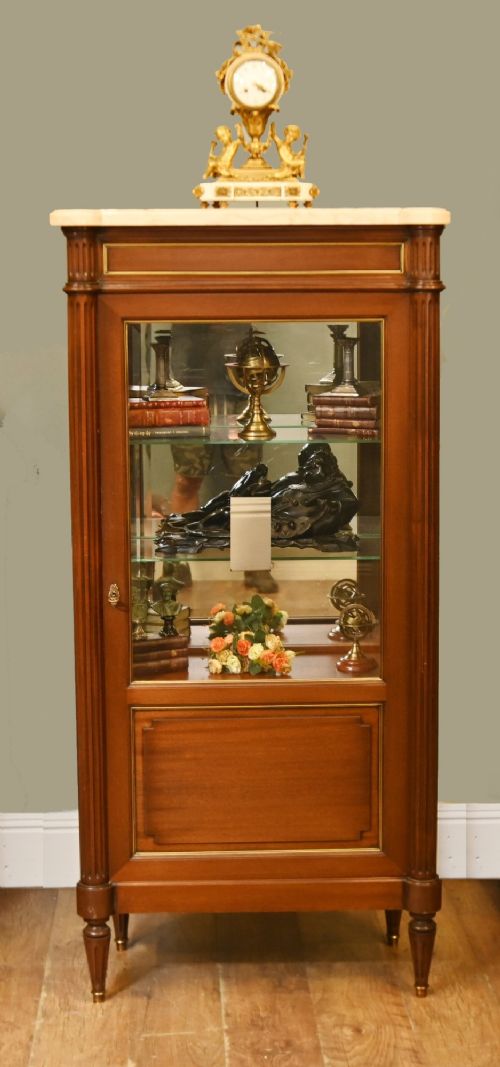
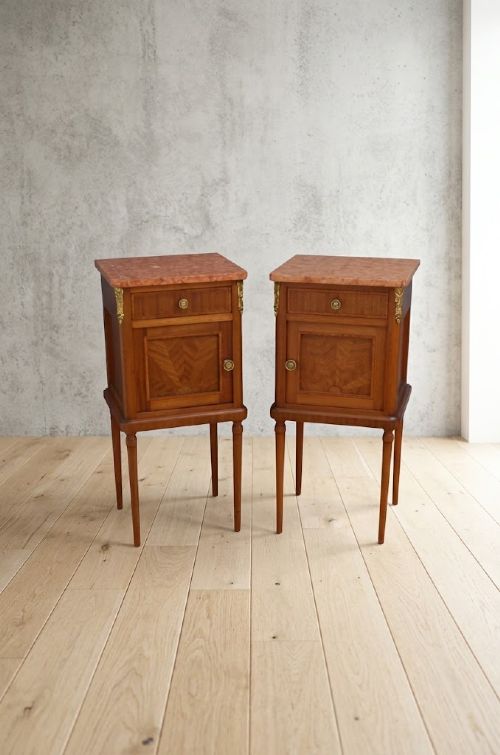
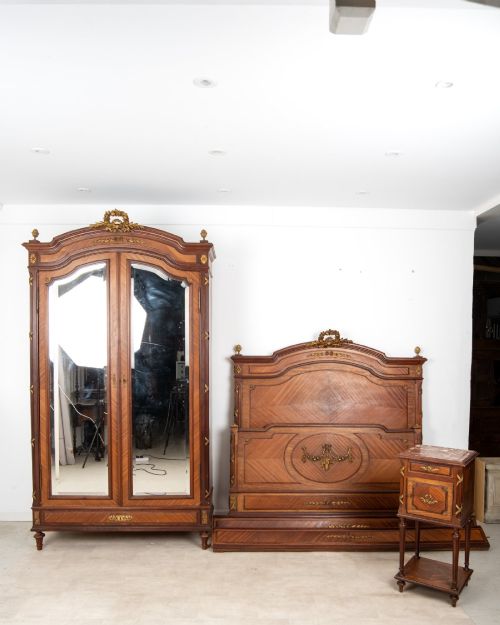
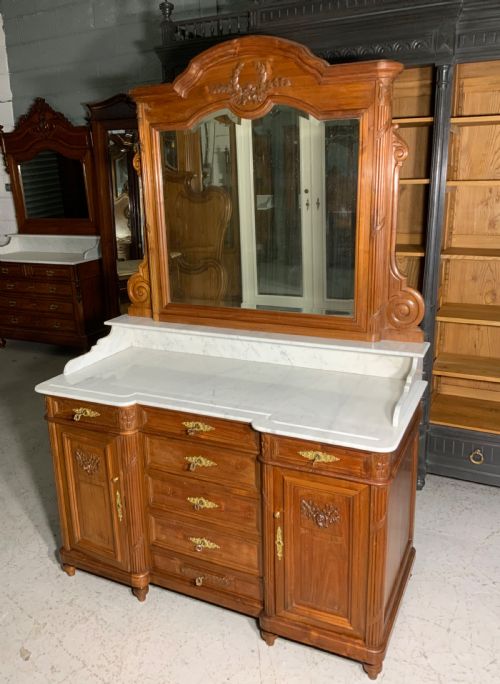
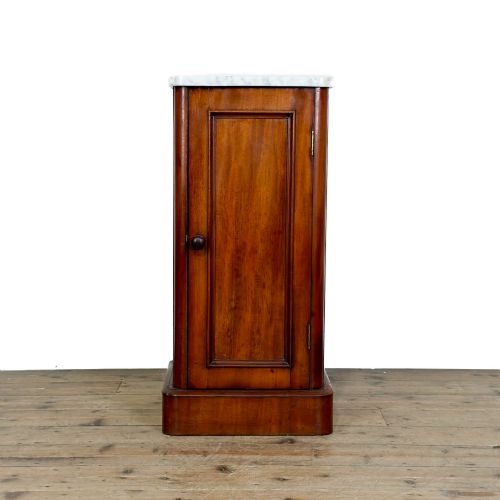
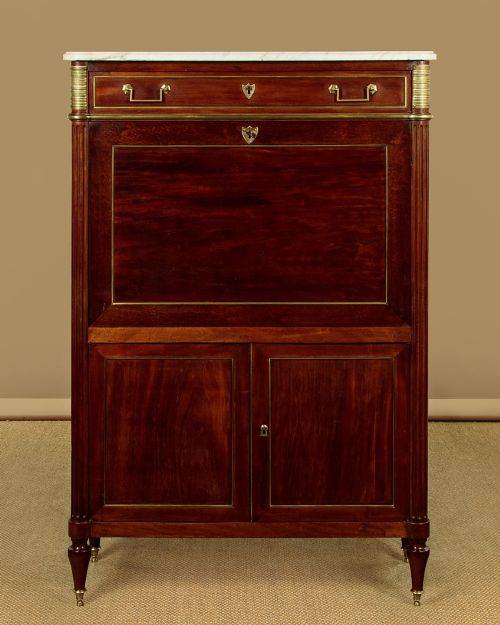
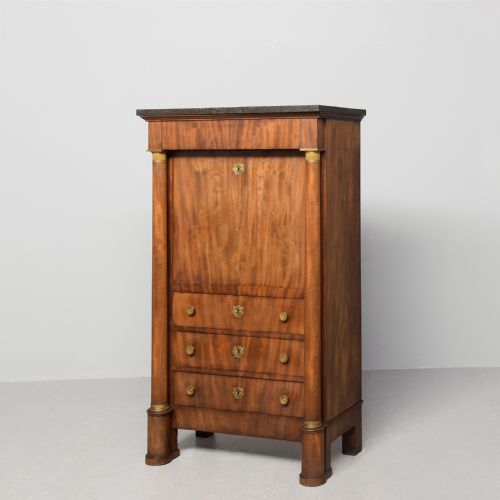
Mahogany Cabinet with Marble
A mahogany cabinet with marble combines rich timber with cool stone, offering a practical surface for display and storage in any room.
Mahogany Cabinet with Marble
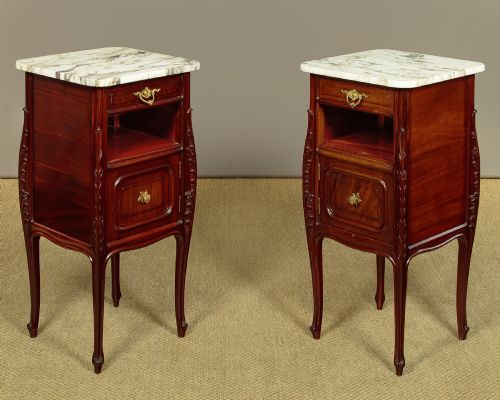
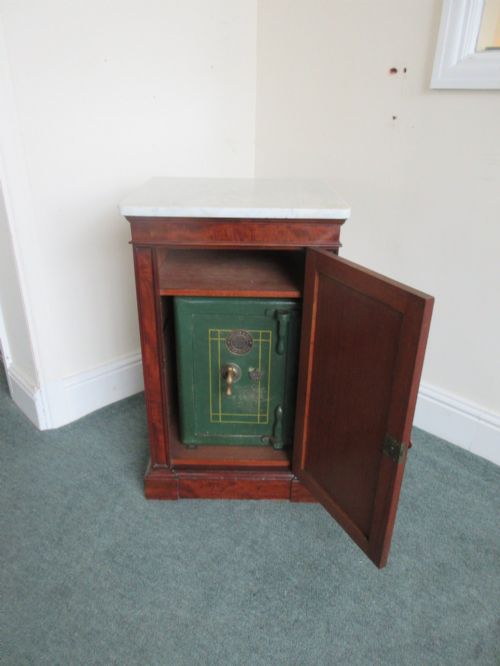
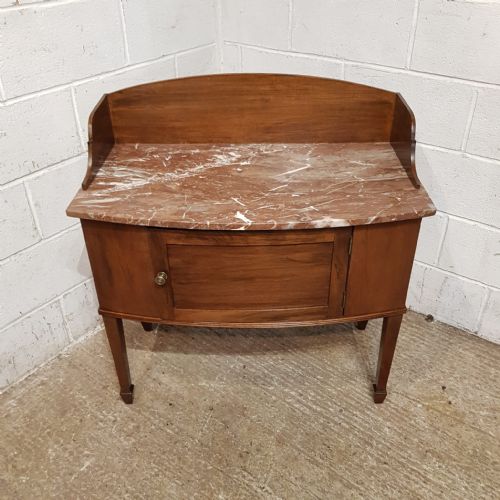
When you search for a mahogany cabinet with marble, you encounter a range of functional furniture pieces designed for everyday use and formal display. The selection on this page spans the nineteenth century, the Edwardian era, and the year nineteen hundred, taking forms such as side cabinets, commodes, vitrines, and washstands.
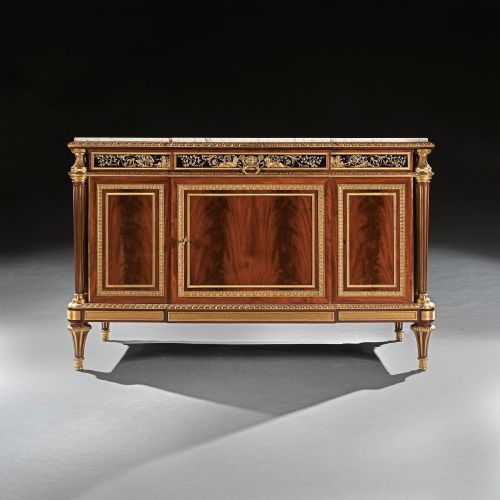
French revival styles heavily influence the selection, with Louis XVI, French Empire, and French Rococo Revival designs appearing frequently alongside traditional Victorian and Edwardian pieces. These items serve various domestic purposes, functioning as bedside tables, nightstands, sideboards, and display cabinets within domestic interiors.
How they were made
Construction relies primarily on solid and veneered mahogany, shaped into cabinets, commodes, and washstands that often incorporate brass, glass, and cast iron elements. Cabinetmakers built these pieces to withstand daily use while providing sturdy housings for stone surfaces.
Many examples feature decorative metalwork, utilising ormolu and gilt bronze mounts to accent the mahogany structures in the manner of French cabinetmaking. Polished marble slabs sit atop these timber frames, secured to serve as durable, water-resistant surfaces on washstands and side cabinets.
Mahogany Cabinet with Marble Retail Price Guide 2026
Typical asking prices for mahogany cabinet with marble among the pieces listed under this phrase on Sellingantiques today, from the lower quarter to the upper quarter. They describe what is for sale here now, not the wider market.
Listings feature mahogany cabinetry paired with marble across periods spanning Victorian, Edwardian, and nineteenth-century eras.
What varies in quality
The sophistication of the decorative mounts and the intricacy of any applied bronze or ormolu distinguish different tiers of production. Pieces bearing workshop attributions or detailed marquetry demonstrate higher levels of artisanal skill than standard utilitarian items.
The selection and cut of the mahogany timber, alongside the thickness and natural figuring of the marble top, dictate the overall refinement of each cabinet. Finer examples maintain crisp detailing in their carved elements and secure, well-fitted joints across doors and drawers.
Maison Krieger·François Linke
The Mahogany Cabinet with Marble Glossary
- Ormolu
- Gilded bronze mounts applied to furniture for decorative effect. This technique was widely employed by French cabinetmakers during the nineteenth century.
- Commode
- A low standing cabinet or chest of drawers. In continental pieces, these often feature marble tops and hinged doors rather than standard drawers.
- Vitrine
- A glass-fronted display cabinet intended for porcelain and curiosities. These pieces frequently incorporate marble tops and elaborate gilt metal mounts.
- Vernis Martin
- A specialised lacquer technique mimicking Japanese finishes, applied to European furniture. Pieces utilising this method often date from the nineteenth century.
- Chiffonier
- A tall sideboard or cabinet with shelves or drawers. Nineteenth-century examples frequently pair mahogany construction with fitted marble surfaces.
Mahogany Cabinet with Marble: Frequently Asked Questions
How do I clean the marble top?
Use a soft cloth dampened with warm water and mild, non-acidic soap to wipe the stone surface gently. Avoid harsh chemical cleaners that can etch or dull the polished finish of the marble.
Dry the surface thoroughly with a clean towel after washing to prevent water spots. Regular dusting keeps grit from scratching the stone during daily use.
Where should I place this cabinet?
These cabinets suit living rooms, hallways, and bedrooms depending on the specific form, whether it functions as a bedside table, vitrine, or commode. Ensure the piece sits away from direct heat sources and strong sunlight to protect the mahogany timber.
Allow adequate clearance around doors and drawers for smooth operation. The marble top provides a resilient surface that handles decorative objects or daily essentials with ease.
Are these pieces strictly French?
The selection includes a significant number of French items, particularly those reflecting Louis XVI and Empire revivals, alongside Victorian and Edwardian pieces from British traditions. Stylistic influences often cross borders, with French cabinetmaking techniques appearing on pieces made for various markets.
Examine the construction details and timber choices to understand the likely origin of each item. Dealers often note specific regional design traits in the individual listings.
How do I date an Edwardian piece?
Edwardian furniture typically dates from the early twentieth century, showing lighter proportions and revival styles such as Sheraton influences alongside traditional Edwardian designs. These pieces often lack the heavier ornamentation seen in earlier Victorian or French Empire furniture.
Look for machine-assisted woodworking marks alongside traditional hand craftsmanship, which became common during this period. The combination of mahogany with simpler brass fittings often points toward this twentieth-century era.