
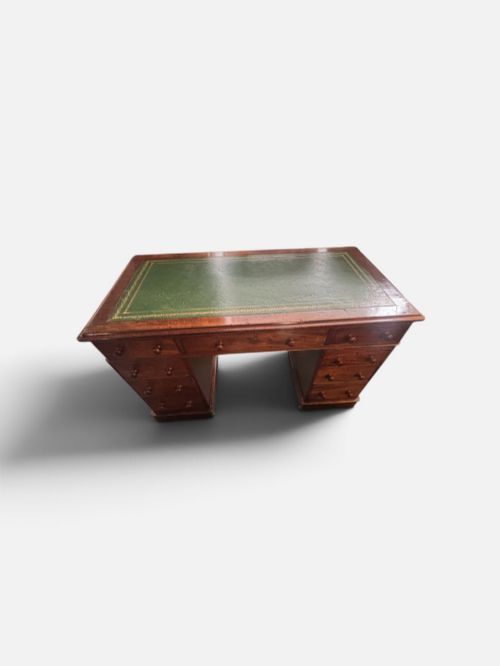
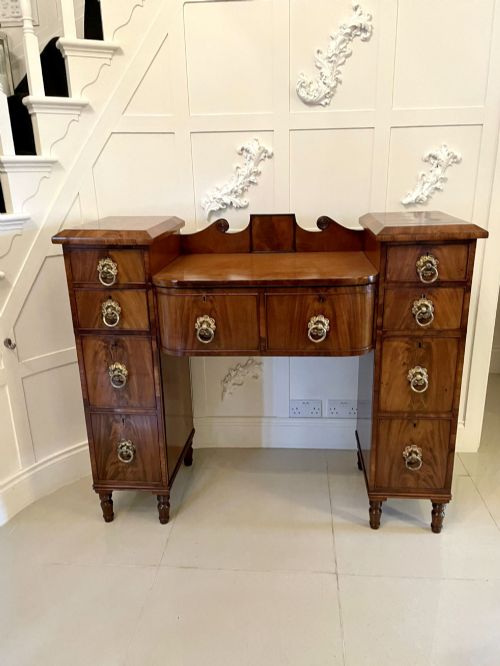
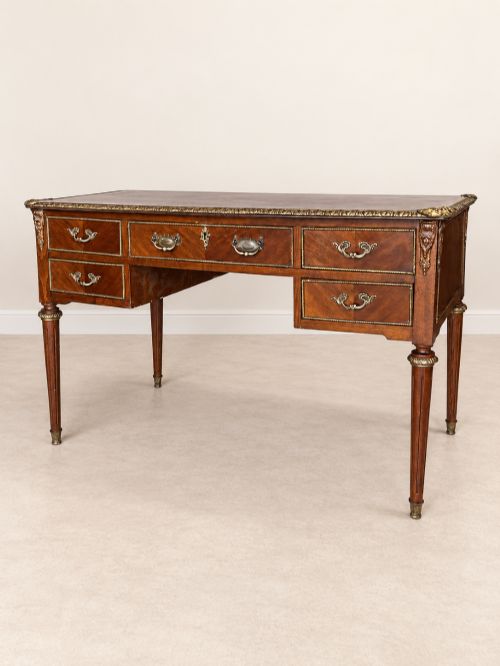
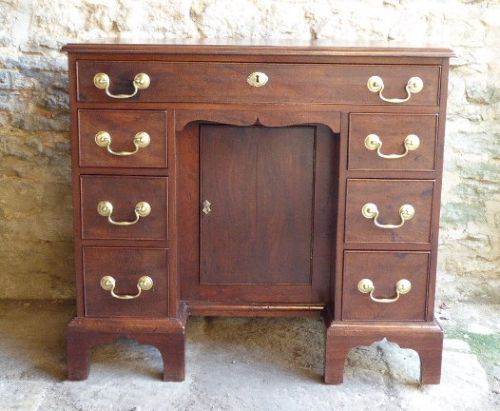
Mahogany Bureau Table
A mahogany bureau table combines the practical surface of a writing table with the enclosed compartments of a traditional bureau, offering a refined workspace for the home.
Mahogany Bureau Table
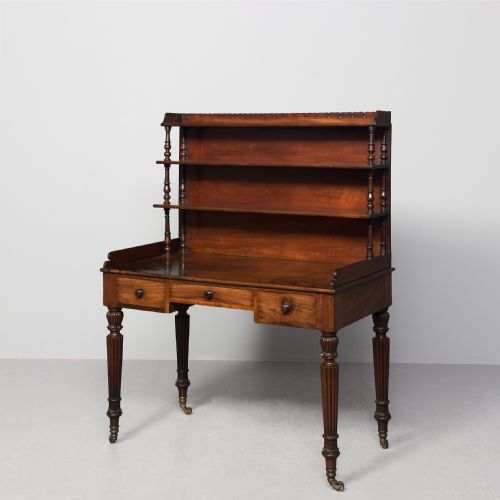
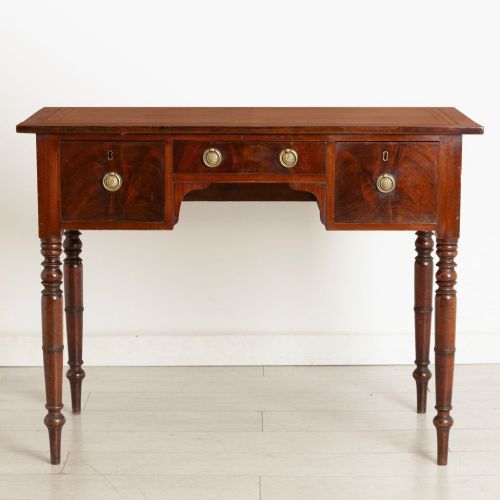
When searching for a mahogany bureau table, buyers encounter a variety of forms designed for correspondence and storage. These pieces date from the 18th century through the Edwardian period, reflecting shifting domestic habits and cabinet-making fashions.
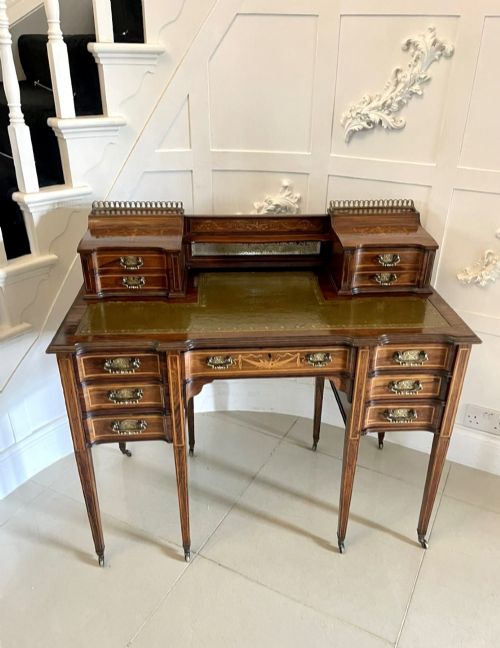
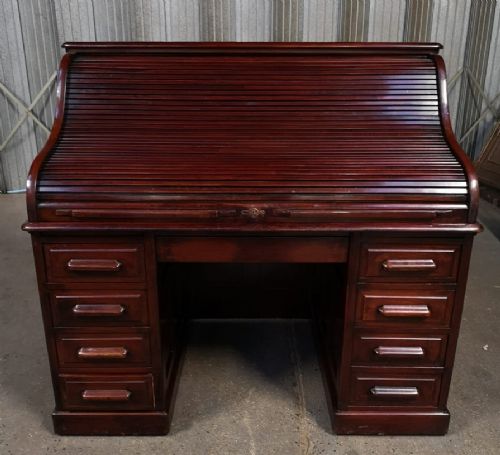
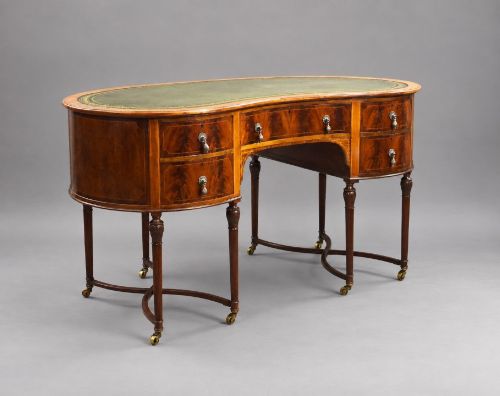
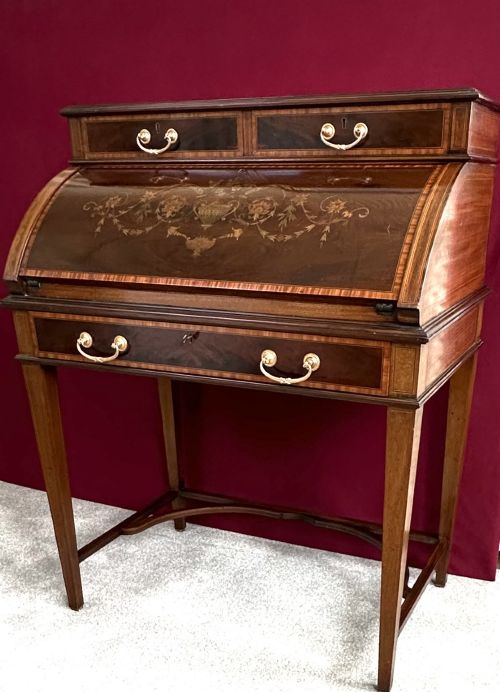
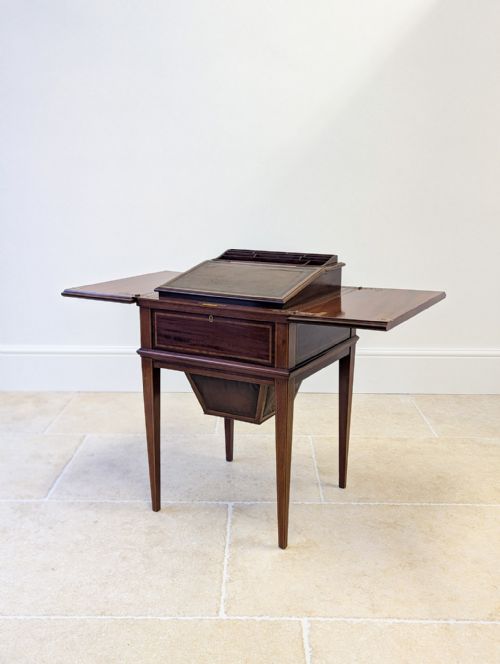
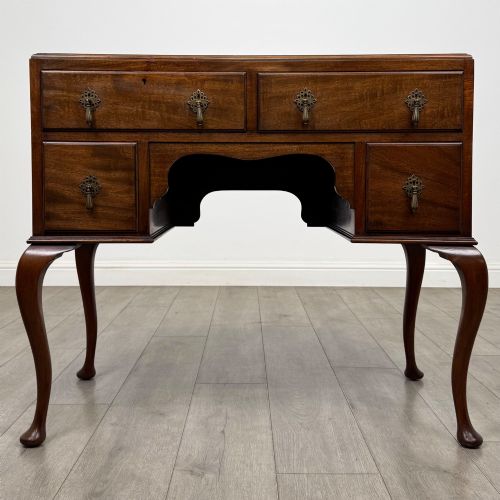
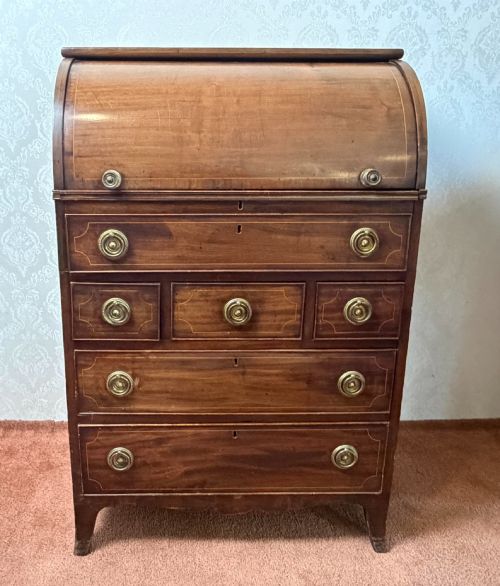
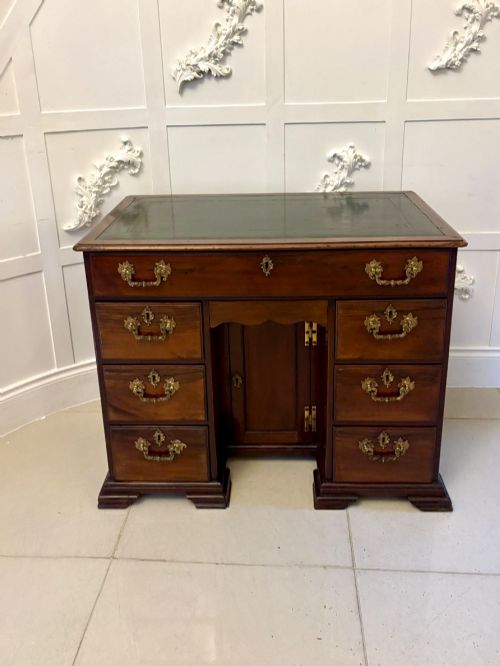
The selection ranges from compact Georgian kneehole desks and tambour writing tables to elaborate Edwardian kidney-shaped desks and revival pieces. Most examples found here combine solid timber and rich veneers to create a dedicated station for writing.
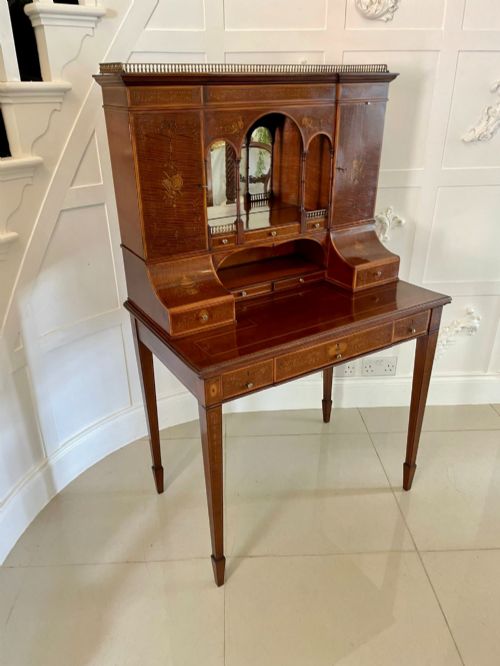
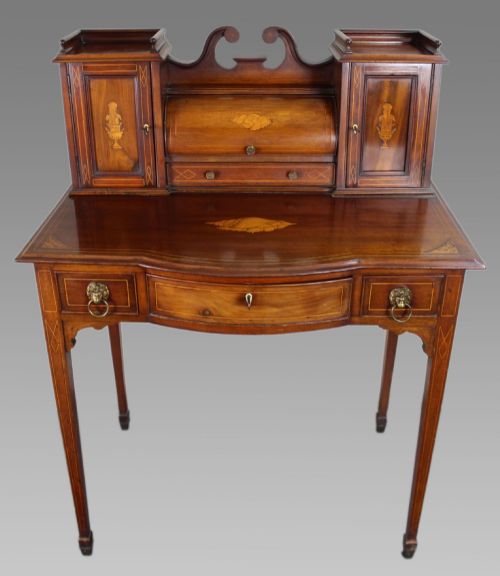
Early forms often feature drop-front flaps or pigeonholes concealed beneath cylinders, while later Edwardian versions utilise satinwood inlay and graceful curved lines. Each piece provides a surface for reading and writing alongside drawers or compartments for paper.
What Varies in Quality
Quality rests in the selection of timber and the precision of the cabinet work, particularly in how veneers match across large surfaces like cylinder tops and fall-fronts. Superior examples display carefully chosen flame mahogany grains that align seamlessly when drawers or flaps are closed.
Internal fittings reveal the hand of the maker through fine dovetailing in the small stationery drawers and tidy pigeonhole arrangements. Secondary woods used for drawer linings and the crispness of any inlaid satinwood or cast ormolu mounts further distinguish finer pieces.
Materials recorded across these pieces include flame mahogany, satinwood, brass, leather, and ormolu mounts.
Maple and Co·Edwards and Roberts·James Mein of Kelso·Thomas Shearer·Alphonse Tahan·Hobbs and Co·Gillows
The Mahogany Bureau Table Glossary
- Bureau table
- A hybrid form combining a writing surface with enclosed storage compartments such as drawers or pigeonholes. These pieces evolved to serve domestic correspondence needs.
- Tambour
- A flexible sliding shutter formed of narrow vertical strips of wood glued to a canvas backing. This mechanism conceals the writing surface and interior compartments on cylinder desks.
- Flame mahogany
- A veneer cut from the branch junction of the mahogany tree, producing a distinctive flickering flame pattern. Cabinet makers reserved this timber for prominent surfaces.
- Kneehole desk
- A compact desk featuring a recessed central space for the user's legs, flanked by pedestals of small drawers. Georgian examples often include a small concealed drawer above the recess.
- Ormolu
- Gilded bronze mounts applied to furniture for decorative effect, frequently seen on French revival bureau plats. The metal is chased and cast to provide intricate surface detail.
Mahogany Bureau Table: Frequently Asked Questions
What is a bureau table?
A bureau table is a piece of furniture designed for writing, typically featuring an enclosed compartment with small drawers or pigeonholes alongside a flat working surface. These tables evolved to hold writing materials and correspondence neatly out of sight when not in use.
Examples span several centuries, with Georgian and Victorian iterations prioritising sturdy timber construction, while Edwardian pieces often incorporate lighter satinwood inlay and graceful revival styling.
How do I use one today?
These tables function well as compact writing desks, laptop stations, or hallway side tables in modern rooms. The enclosed compartments and small drawers provide practical storage for stationery and modern administrative items.
Placing them in a study or living area allows you to utilise the writing surface while displaying the figured mahogany grain and decorative brass or ormolu mounts as part of your interior.
How do I tell periods apart?
Dating a mahogany bureau table involves examining the construction methods, timber selection, and stylistic details. Georgian pieces tend to show clean architectural lines and solid mahogany or subtle inlay, while Victorian examples often feature robust proportions and darker finishes.
Edwardian interpretations frequently display lighter satinwood banding, painted decoration, or revival styling inspired by Sheraton and Chippendale designs. Examining the secondary woods inside drawer linings also helps confirm the period of manufacture.
What is flame mahogany?
Flame mahogany is a decorative veneer obtained from the fork of the mahogany tree where the branches meet the trunk. This cut creates a swirling, flame-like grain pattern that cabinet makers prized for its visual movement and depth.
Makers arranged these veneers symmetrically across fall-fronts, drawer fronts, and cylinder tops to create striking visual effects on high-quality writing desks.