


Mahogany Buffet Storage
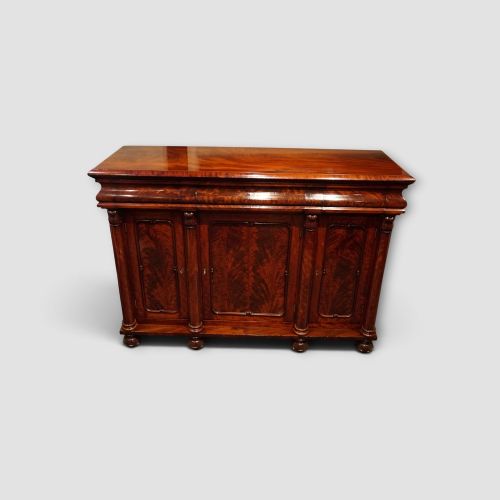
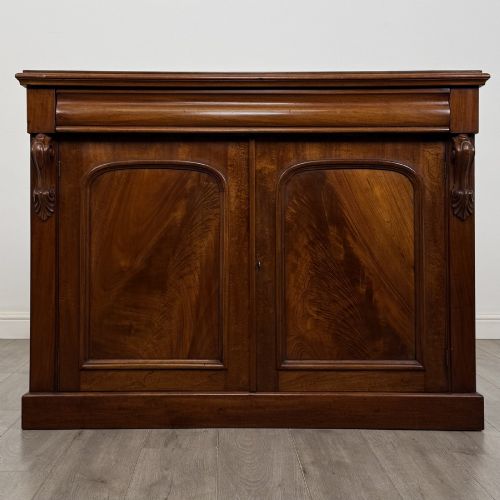
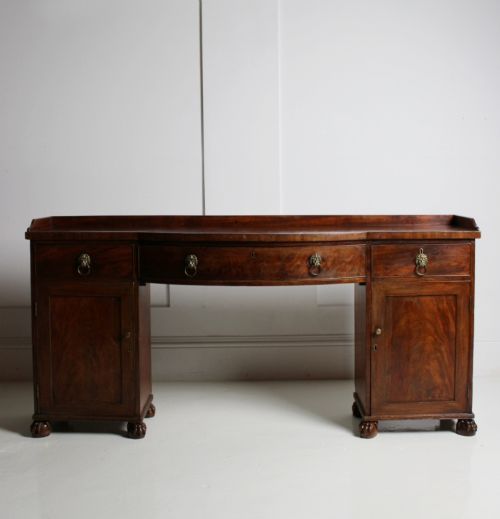
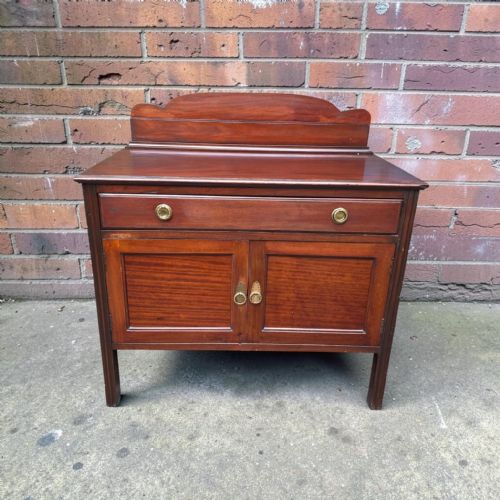
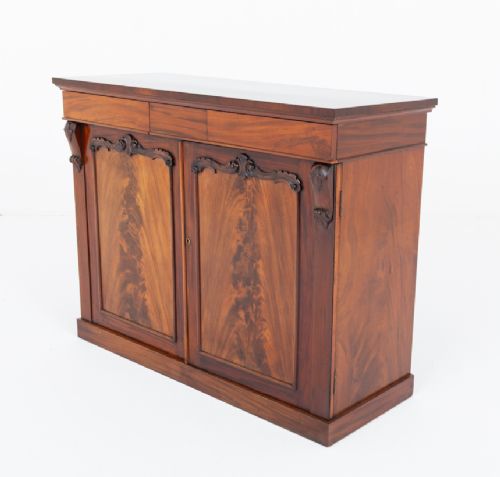
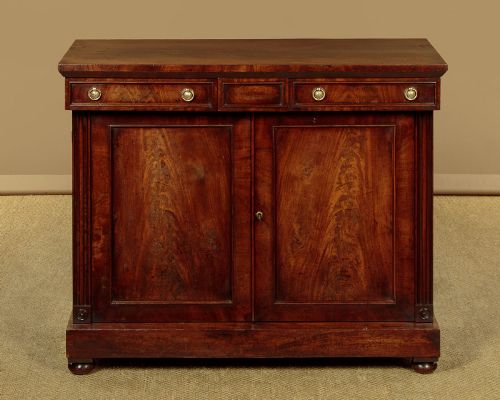
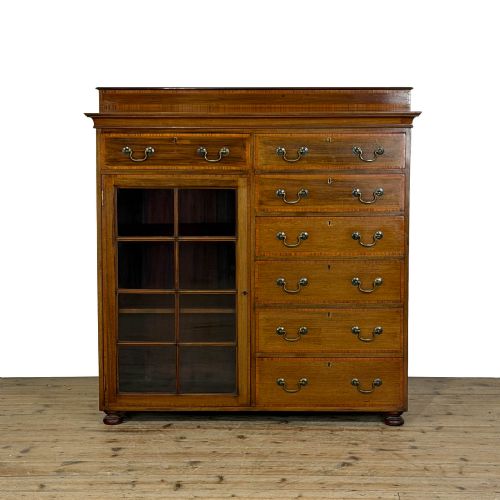
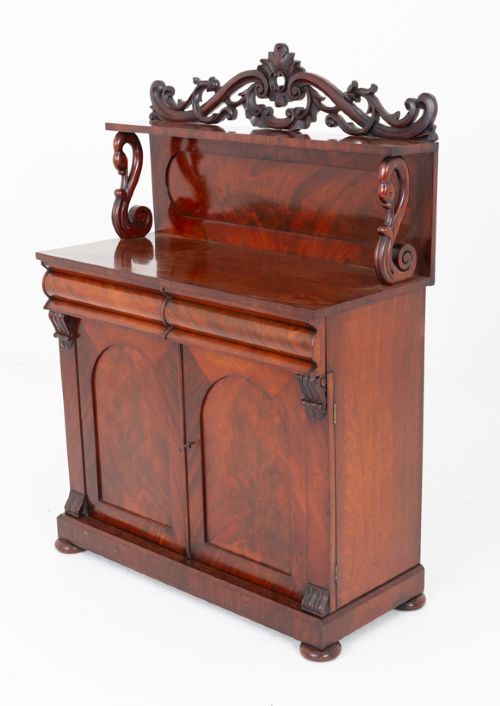
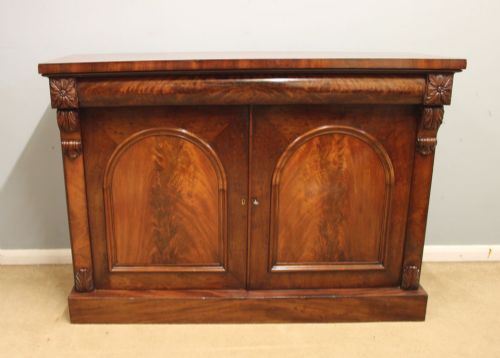
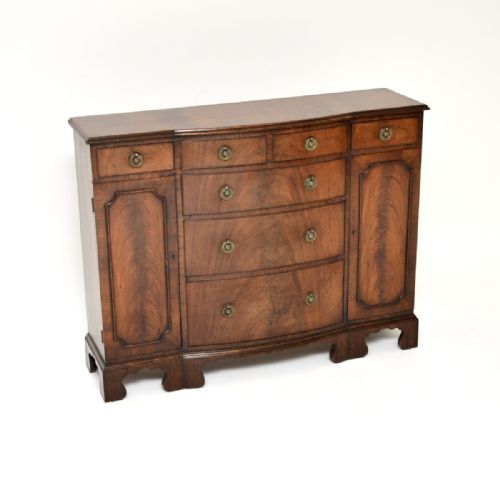
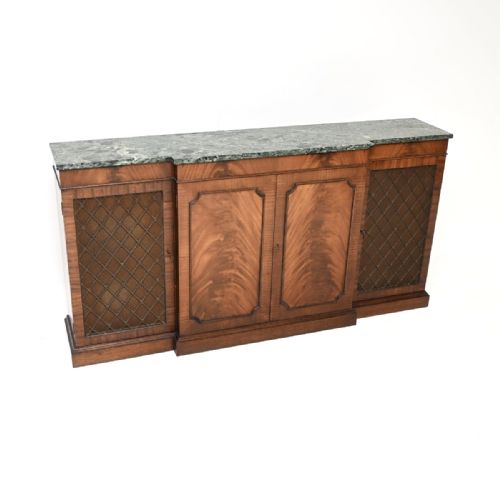
Mahogany buffet storage comprises heavy timber sideboards, cabinets, and chiffoniers designed to hold dining ware and household provisions.
Mahogany Buffet Storage
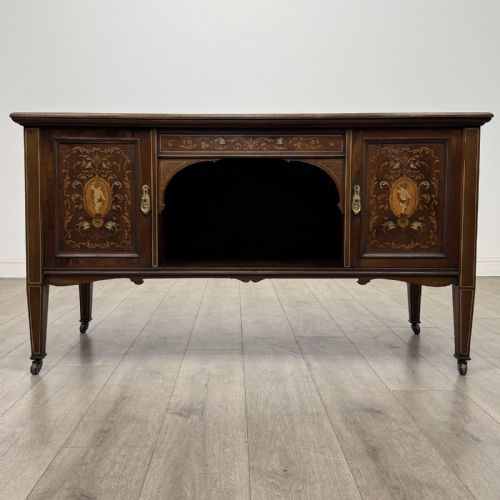
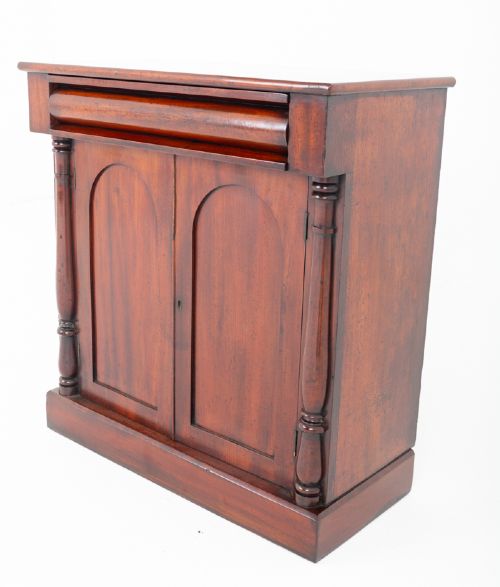
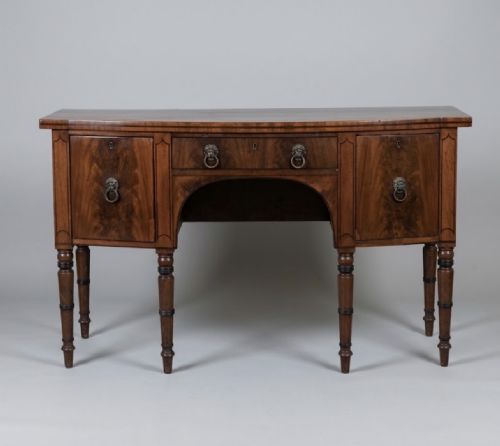
When searching for mahogany buffet storage, buyers encounter dining room furnishings spanning the Georgian, Regency, Victorian, and Edwardian periods. These pieces include substantial sideboards, smaller chiffoniers, bow-front cabinets, and servers designed to organise tableware and dining rooms.
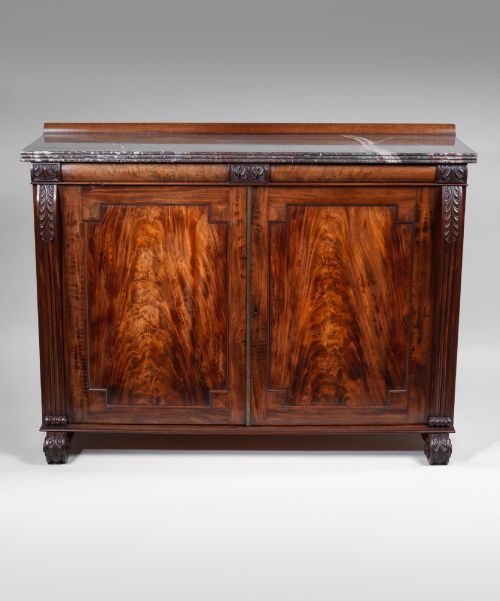
The inventory on this page relies heavily on Victorian and Edwardian examples alongside earlier Regency and George III forms. Sideboards with two or three doors dominate the offerings, often accompanied by enclosed cupboards, drawers, and occasionally mirror backs or marble tops.
Craftsmanship and Proportion
Quality separates ordinary utility pieces from superior items through the selection of timber figures, such as highly figured flame mahogany veneer. The precision of inlaid boxwood stringing and the crispness of carved mouldings further distinguish finer examples.
Proportion and scale dictate the desirability of these storage items, particularly when makers achieved unusually small dimensions or balanced breakfront layouts. Original brass hardware, integrated marble tops, and intact mirror backs elevate the standing of a piece.
Mahogany Buffet Storage Retail Price Guide 2026
Typical asking prices for mahogany buffet storage among the pieces listed under this phrase on Sellingantiques today, from the lower quarter to the upper quarter. They describe what is for sale here now, not the wider market.
Listings feature mahogany storage pieces from the Georgian, Regency, Victorian, Edwardian, and Art Deco eras, incorporating marble, glass, and brass.
M. D. Miller & Sons·Edwards and Roberts·Bowman Brothers
The Mahogany Buffet Storage Glossary
- Chiffonier
- A low sideboard or cabinet, typically featuring enclosed shelves below and sometimes a small shelf or mirror above, developed during the Regency and Victorian periods.
- Bow front
- A convex curved cabinet front that projects outward in a smooth arc, frequently seen on Georgian and Edwardian sideboards.
- Flame mahogany
- A veneer cut from timber where the branch meets the trunk, producing a distinctive flickering, flame-like grain pattern.
- Breakfront
- A piece of furniture where the central section projects forward from the flanking outer cabinets or drawers.
- Stringing
- A narrow strip of contrasting wood inlaid into the surface of furniture to create decorative borders and linear outlines.
Mahogany Buffet Storage: Frequently Asked Questions
What is the difference between a sideboard and a chiffonier?
Sideboards generally served large dining rooms for carving meats and storing extensive dinner services during the eighteenth and nineteenth centuries.
Chiffoniers are typically smaller and include enclosed cupboards beneath, making them suitable for more compact living spaces.
How do I identify a Regency period mahogany cabinet?
Regency pieces often display classical architectural influences, restrained brass mounts, and dark, dense mahogany timber.
Makers from this era favoured clean geometric lines and minimal carving, letting the natural grain of the wood provide visual texture.
Where were mahogany buffet cabinets used in the home?
These items were principally housed in dining rooms to keep silverware, linens, and serving dishes close at hand during meals.
Victorian and Edwardian iterations also found places in drawing rooms and large parlours as general display and storage furniture.
Are marble tops original to nineteenth century sideboards?
Marble tops appear on specific server and cabinet forms, particularly those influenced by French designs or intended for heavy food and drink preparation.
They provide a durable, wipe-clean surface that complements the darker tones of flame mahogany.