



Mahogany Breakfront Table
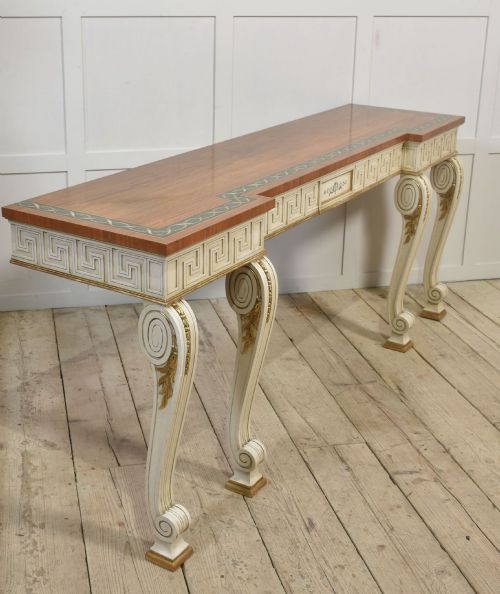
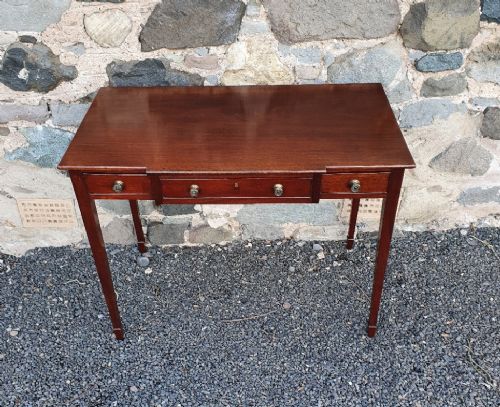
A mahogany breakfront table brings architectural rhythm and rich timber grain to a room, offering a prominent central section that extends forward.
Mahogany Breakfront Table
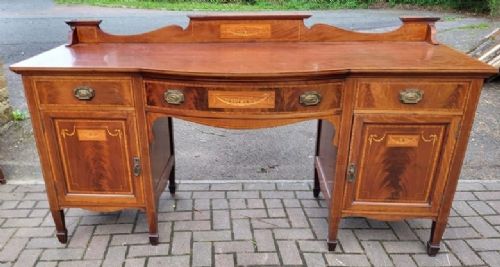
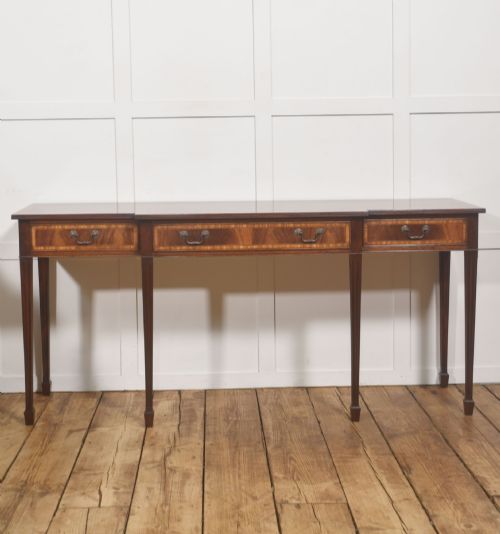
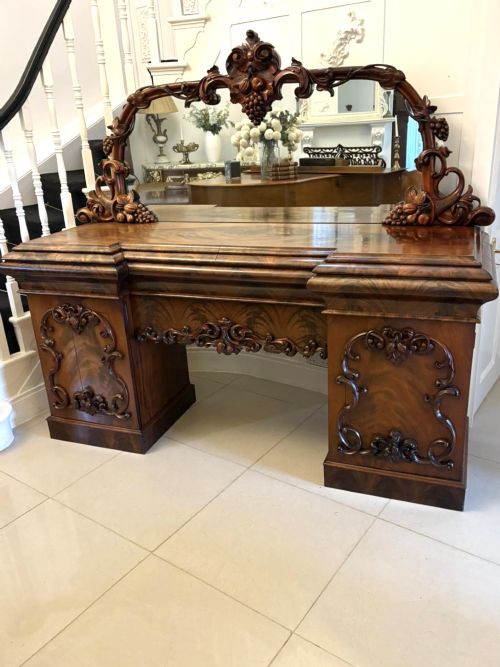
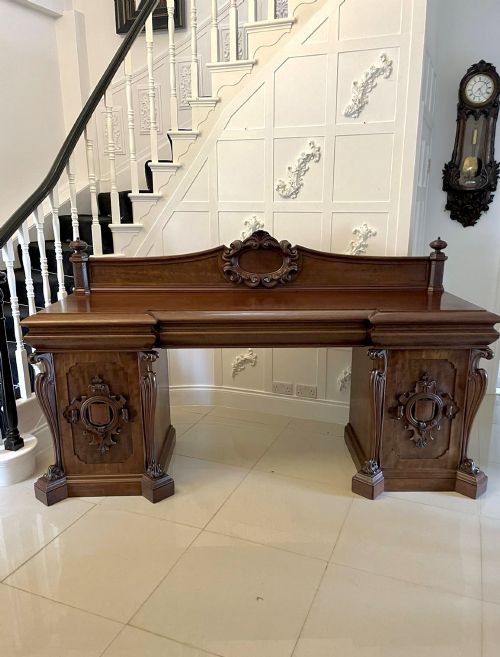
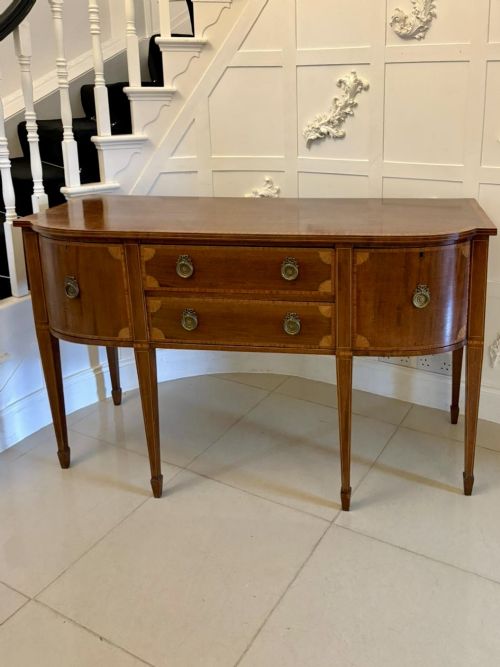
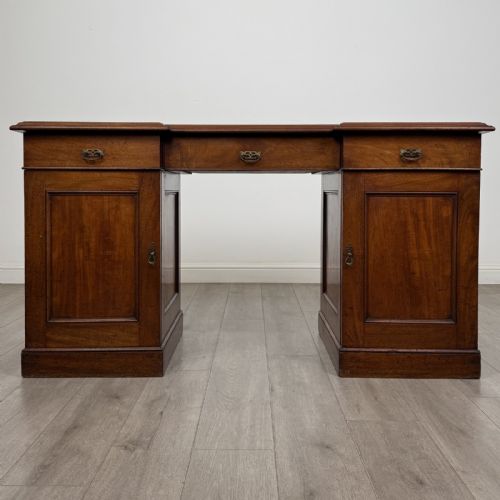
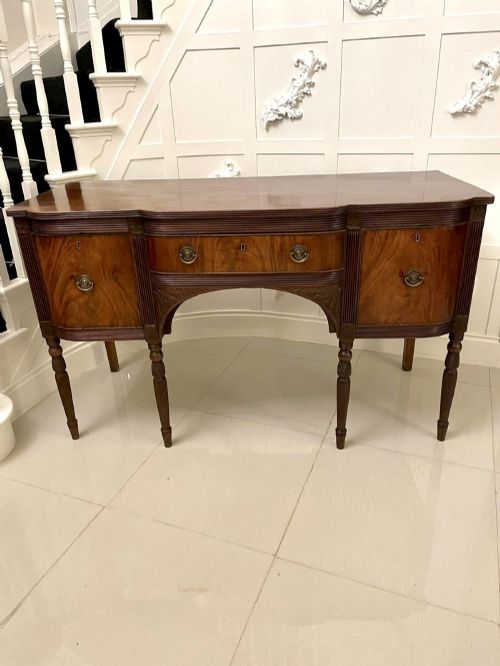
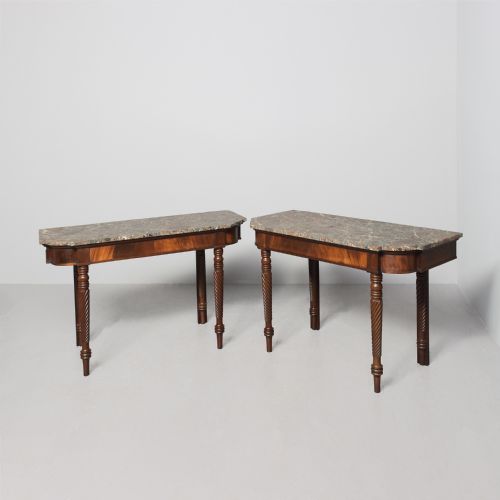
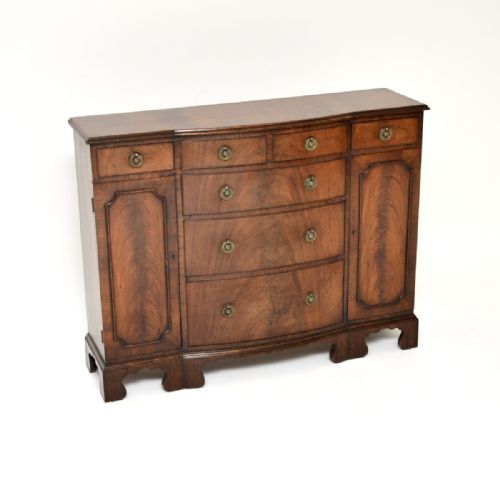
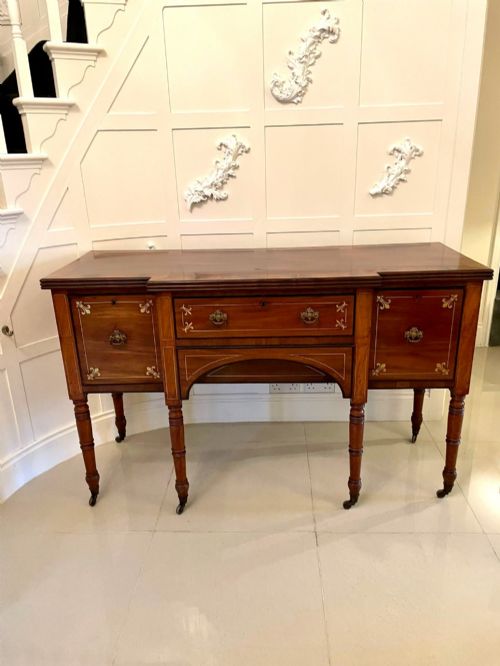
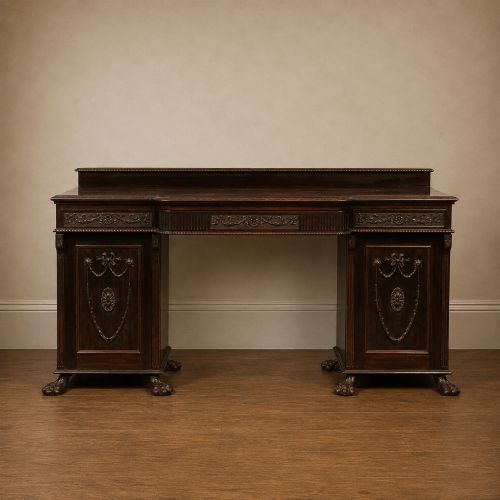
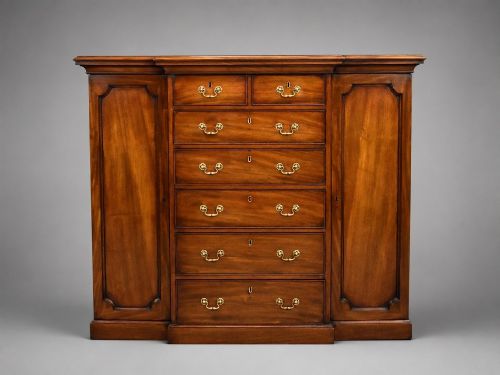
A mahogany breakfront table is a substantial piece of furniture defined by its projecting central section, appearing in forms such as side tables, serving tables, console tables, and pedestal desks. These items span from the eighteenth century through the Edwardian period, capturing Georgian, Regency, William IV, and Victorian design traditions.
Side tables and serving tables dominate the selection, often featuring pedestals, drawers, or marble tops. Buyers frequently encounter examples finished in figured or flame mahogany veneer, with occasional brass inlays and carved details reflecting Adam Revival or Neoclassical influences.
The layout incorporates variations like inverted breakfronts and bow ends, demonstrating how makers adapted the rectilinear projection for different domestic uses, from libraries to grand halls.
Materials and construction methods
Makers utilised solid mahogany alongside figured and flame mahogany veneers to create rich surfaces with deep reddish-brown tones and complex grain patterns. Carved wooden elements, gilt touches, and painted wood accents frequently complement the primary timber.
Many pieces incorporate contrasting materials, pairing mahogany structures with marble tops, inset leather writing surfaces, and detailed brass inlays. Structural stability relies on traditional joinery, accommodating complex multi-drawer configurations and glazed bookcase sections where present.
Mahogany Breakfront Table Retail Price Guide 2026
Typical asking prices for mahogany breakfront table among the pieces listed under this phrase on Sellingantiques today, from the lower quarter to the upper quarter. They describe what is for sale here now, not the wider market.
Some tables arrive with clever hidden compartments and adjustable glazed shelves designed to outsmart Regency book thieves.
Distinctions in construction and design
The selection of timber veneer dictates much of the visual impact, with highly figured flame mahogany and crisp carved details marking the finer examples. The precision of the breakfront projection and the integration of secondary elements like brass inlay or marble tops separate standard pieces from important works.
Proportion and the handling of Revival styles influence desirability, particularly when makers execute complex curves, inverted breaks, and paw feet with architectural clarity.
Gillow & Co.
The Mahogany Breakfront Table Glossary
- Breakfront
- A piece of furniture where the central section projects forward from the flanking wings, creating a stepped facade.
- Flame mahogany veneer
- A thinly sliced timber layer cut from the fork of the mahogany tree, displaying a distinctive flame-like grain pattern.
- Inverted breakfront
- A design layout where the central section recedes rather than projects, reversing the traditional breakfront profile.
- Pedestal desk
- A large freestanding desk resting on two supporting pedestals containing banks of drawers, often featuring a breakfront kneehole arrangement.
Mahogany Breakfront Table: Frequently Asked Questions
Where should I place a mahogany breakfront table?
These pieces suit principal reception rooms, grand hallways, or dining rooms where their architectural profile can be fully appreciated against a wall.
Their linear projection makes them effective focal points beneath large mirrors or paintings, providing surface space for display or serving.
How do I care for mahogany surfaces?
Maintain the timber by keeping it away from direct sunlight and sudden temperature changes, which can dry out the polished finish.
Apply natural beeswax occasionally to nourish the wood and preserve the depth of the mahogany grain.
What is the difference between a sideboard and a serving table?
Sideboards generally offer enclosed storage with doors or multiple deep drawers for dining utensils and linens, developing significantly during the nineteenth century.
Serving tables tend to be lighter architectural console or side forms designed primarily for display and food presentation during meals.
How can I identify the period of a breakfront table?
Examine the timber selection, hardware, and decorative vocabulary, such as Neoclassical brass inlay or heavy Victorian proportions.
Construction methods inside the drawers and cabinet backs often reveal the manufacturing era through tool marks and joint types.