

Mahogany Bracket Foot Chest
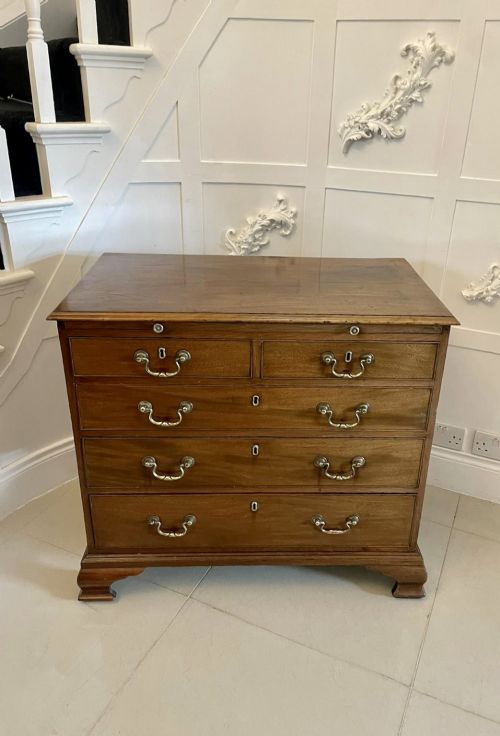
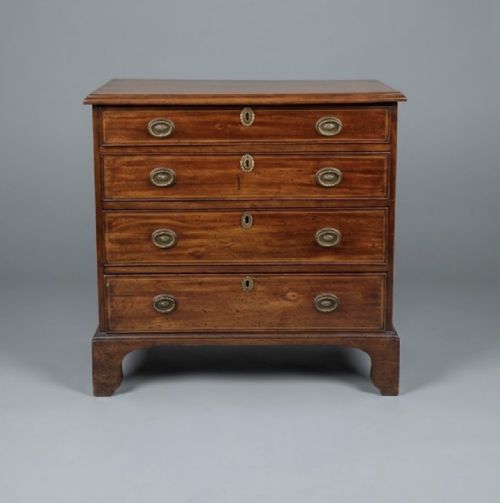
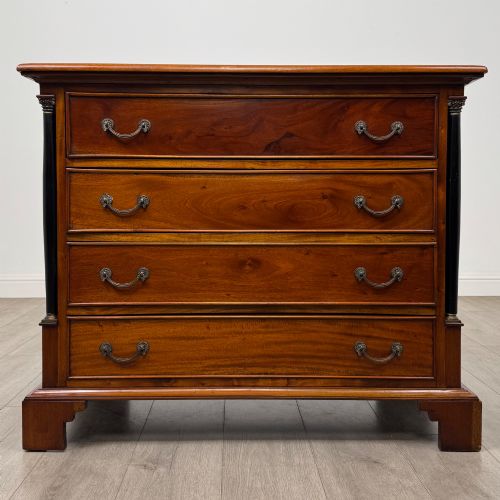
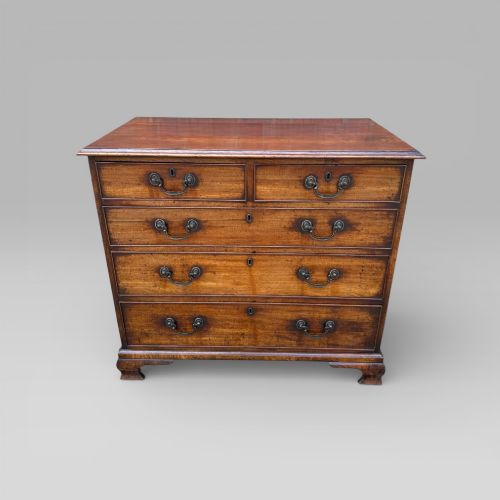
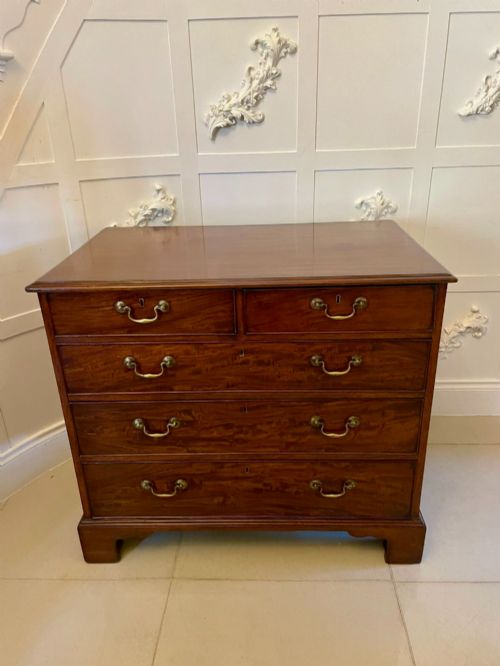
A mahogany bracket foot chest provides essential storage with the rich grain and structured base that defined Georgian and Regency rooms.
Mahogany Bracket Foot Chest
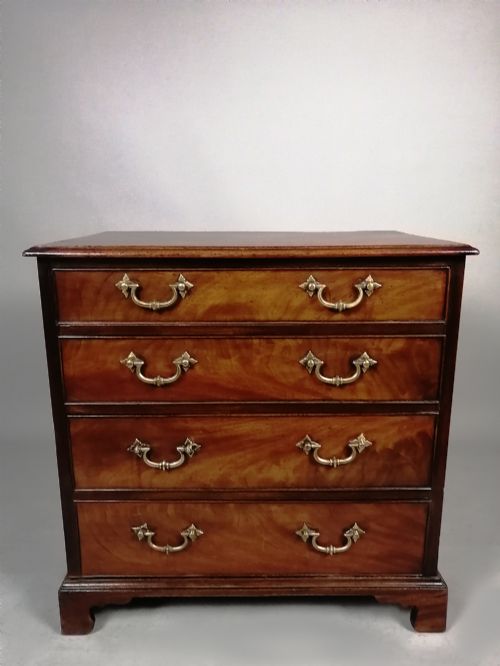
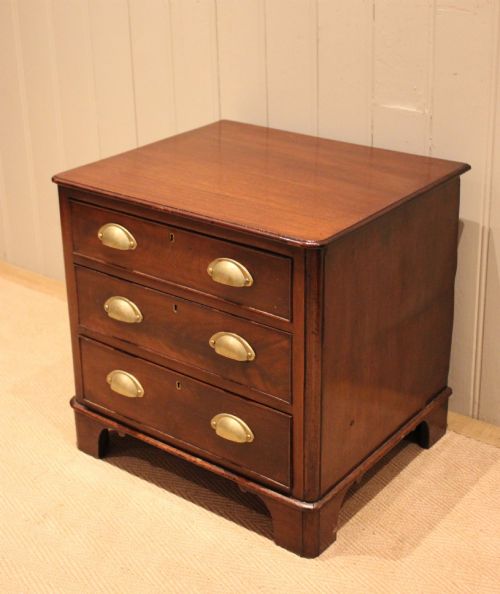
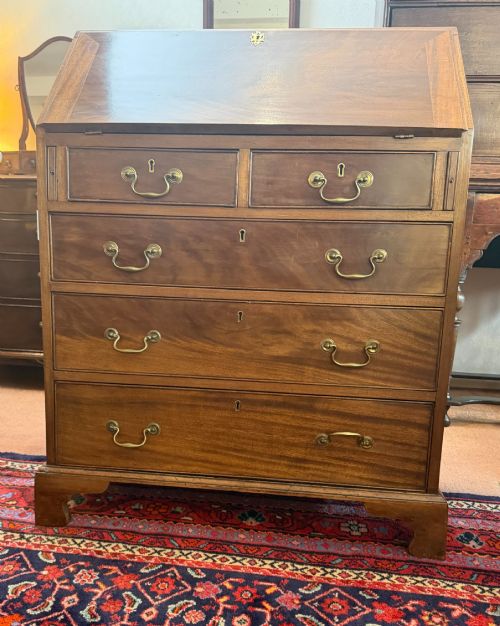
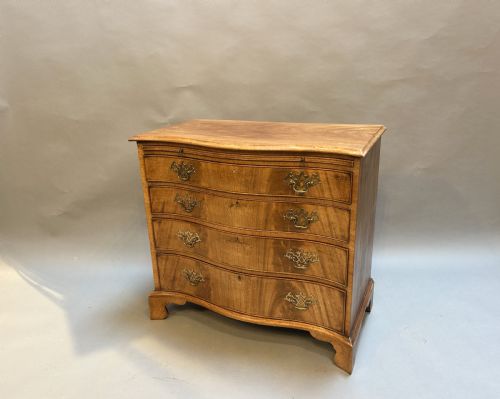
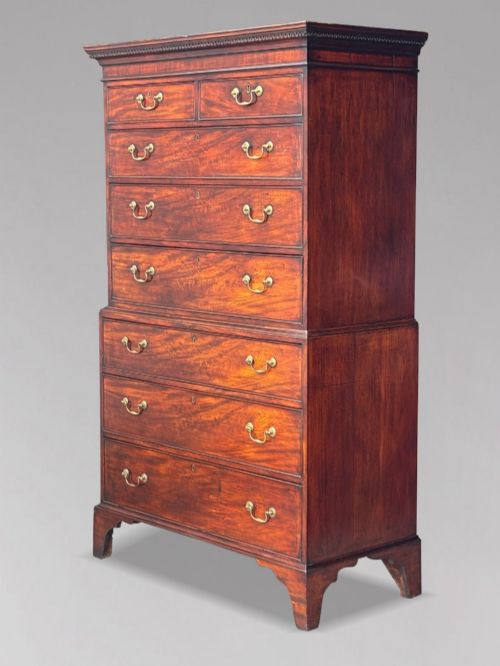
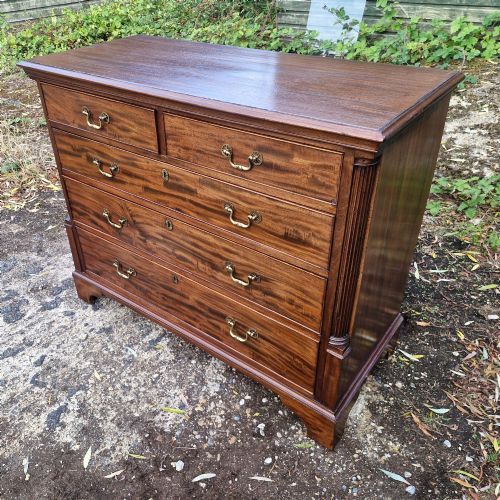
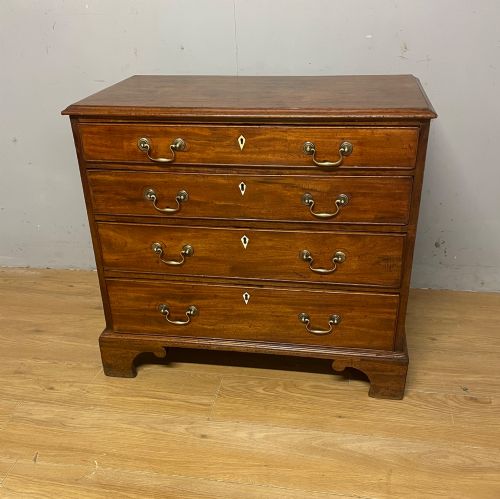
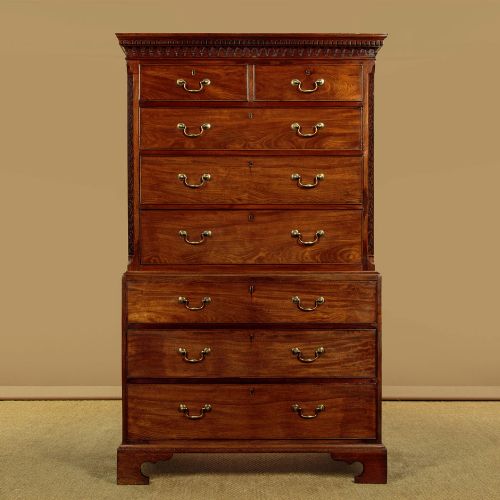
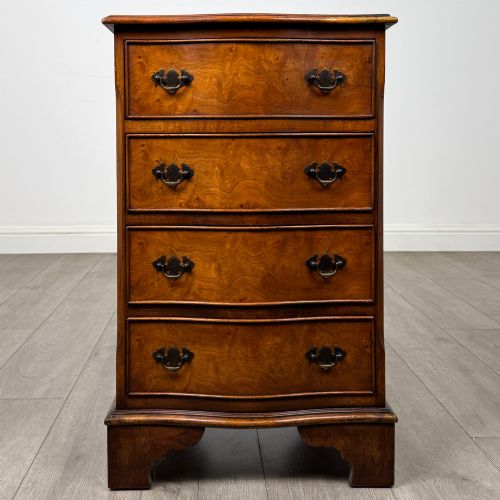
When you search for a mahogany bracket foot chest, you are looking at practical storage furniture grounded by distinct corner feet. These pieces range from small four-height chests and bachelor chests to larger serpentine outlines and tallboys.
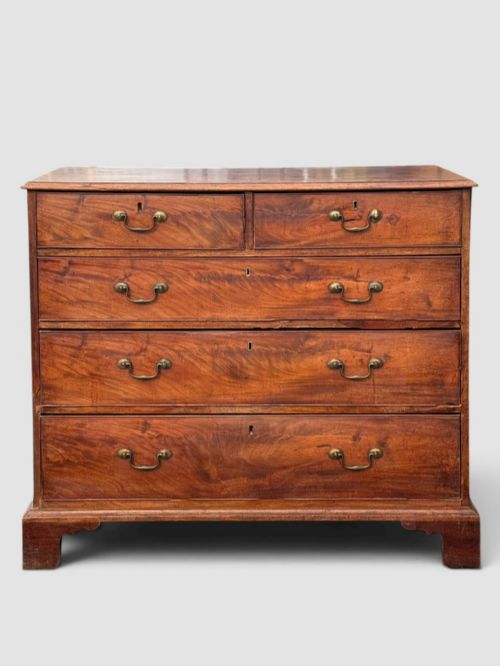
The version you are most likely to meet on this page dates from the Georgian and George III periods, though later Edwardian and revival interpretations also appear. They arrive in forms with two-over-three drawer arrangements, brushing slides, or narrow bowfront profiles.
How they were made
Cabinet makers constructed these pieces primarily using solid and veneered mahogany, supported by secondary timbers such as oak, pine, and boxwood in the internal drawer linings and framing. Brass handles, escutcheons, and occasional bone details provided the functional hardware for the drawer fronts.
Joinery relied on tight dovetailing for the drawer construction and precise jointing to secure the bracket feet to the lower base moulding. Selected examples incorporated flame mahogany veneers and subtle boxwood stringing to create patterned surfaces on the front elevations.
Mahogany Bracket Foot Chest Retail Price Guide 2026
Typical asking prices for mahogany bracket foot chest among the pieces listed under this phrase on Sellingantiques today, from the lower quarter to the upper quarter. They describe what is for sale here now, not the wider market.
Several chests hide small secret compartments behind their brushing slides for safekeeping.
What varies in quality
The standard of timber selection and surface patina sets one piece apart from another, distinguishing finely figured grain from plain stock. Original brass hardware, crisp bracket feet that retain their proper proportions, and smooth drawer operation indicate superior craftsmanship.
Proportion and scale also dictate quality, particularly in smaller low chests and bachelor chests where balanced dimensions are harder to achieve. Pieces retaining intact internal drawer divisions and consistent colour across the top and sides command greater interest.
J Moorcroft
The Mahogany Bracket Foot Chest Glossary
- Bracket foot
- A corner foot shaped like a bracket, supporting the base of a case piece with a mitred corner joint. This form lifts the chest off the floor.
- Brushing slide
- A pull-out shelf positioned above the top drawers, traditionally used for writing or brushing clothes. It slides flush into the cabinet frame when not in use.
- Serpentine outline
- A curved front edge on a chest that swells outward at the centre and recedes toward the sides. This contour requires advanced woodworking skill.
- Bowfront
- A convex, outwardly curved front profile popular on Regency and later chests. It softens the linear appearance of the case.
- Tallboy
- A tall chest of drawers made in two stacked sections, often combining a chest on chest configuration. It maximises vertical storage space.
Mahogany Bracket Foot Chest: Frequently Asked Questions
What is a brushing slide used for?
A brushing slide provides a pull-out surface integrated into the upper section of the chest. It served historically for folding garments or writing letters.
Today, it adds a functional shelf that tucks away invisibly when not in use, enhancing the versatility of the piece.
How do I date a mahogany chest?
Dating relies on observing construction methods, timber choice, and hardware styles. Georgian pieces often feature hand-cut dovetails and oak drawer linings.
Later Victorian and Edwardian examples show machine-sawn elements and different handle fixings that distinguish them from eighteenth-century work.
Where should I place a tallboy?
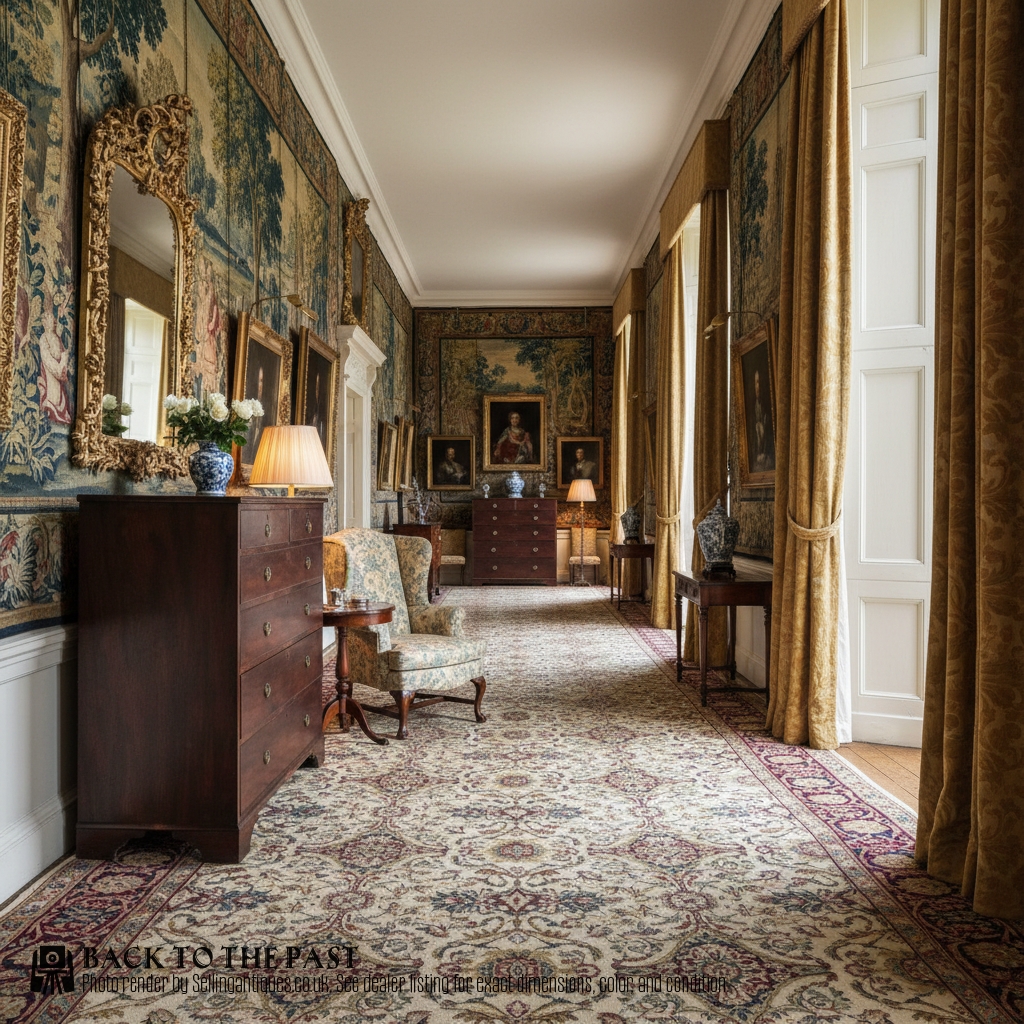
A tallboy requires a wall space with sufficient vertical clearance to accommodate its double-stacked sections. Bedrooms and large hallways suit their generous proportions best.
Ensure the room allows enough clearance for the drawers to open fully without obstruction.