
Mahogany Bow Fronted Chest
A mahogany bow fronted chest brings a swelling convex curve and rich timber grain to any bedroom or hallway.
Mahogany Bow Fronted Chest
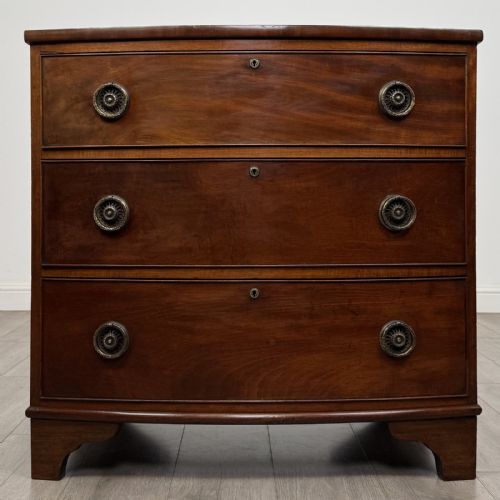
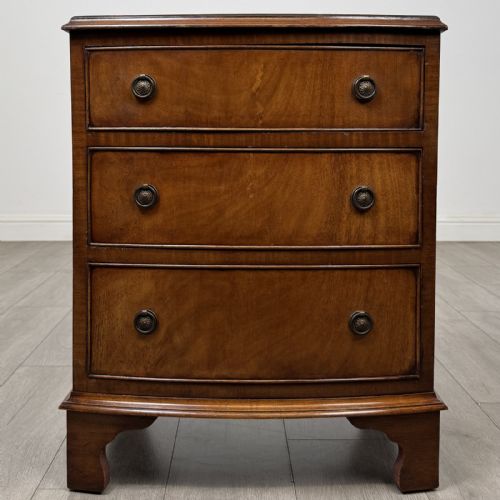
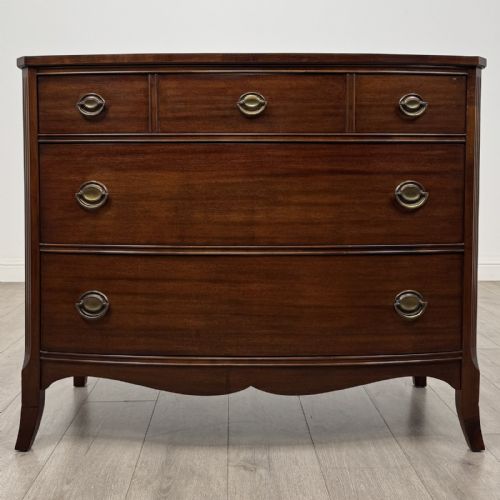
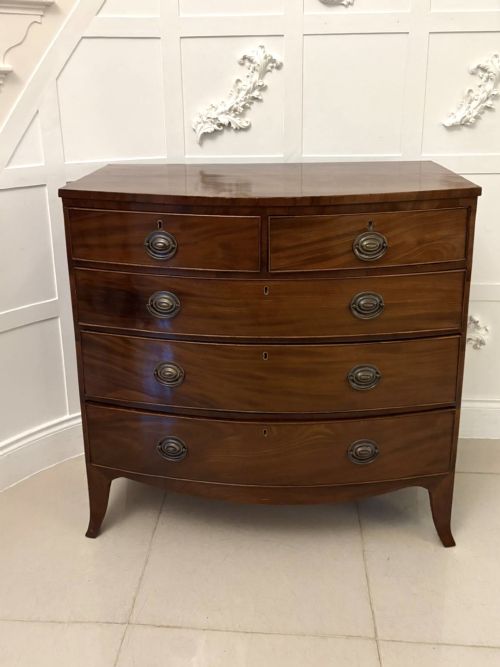
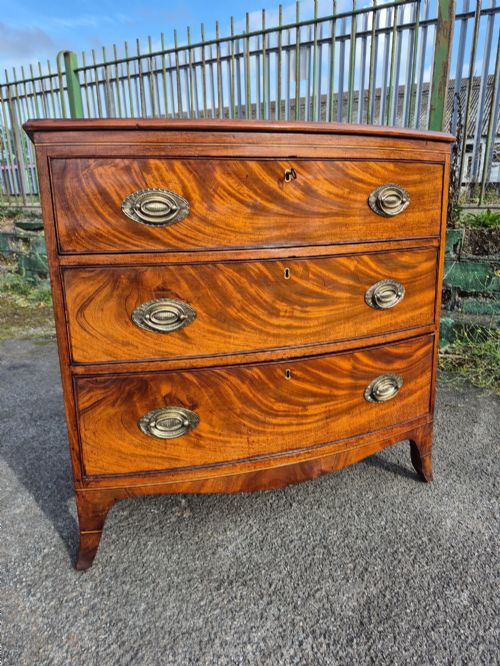
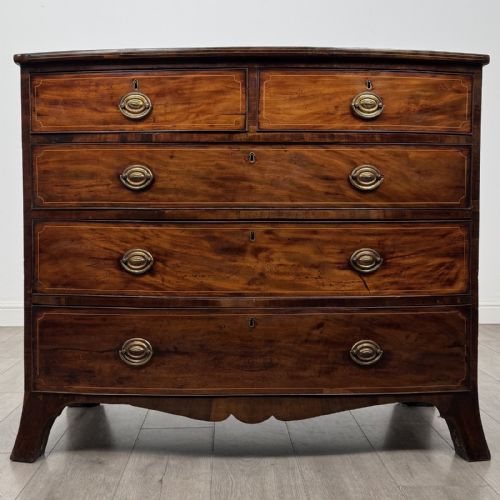
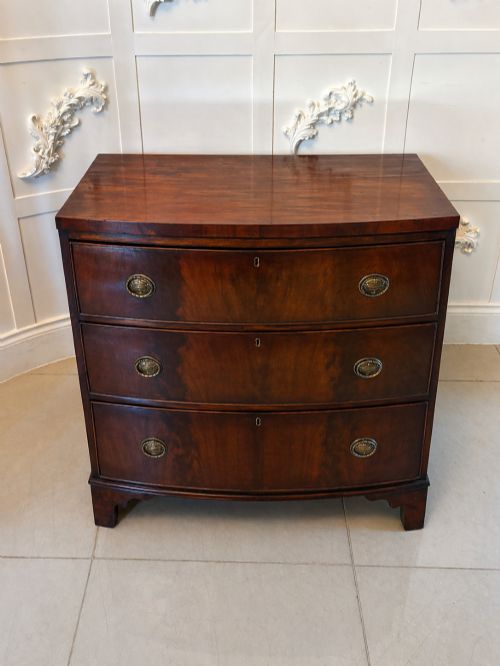
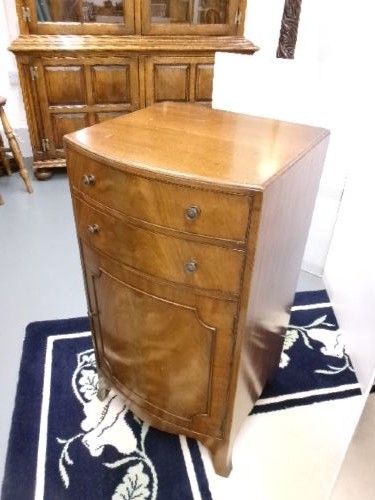
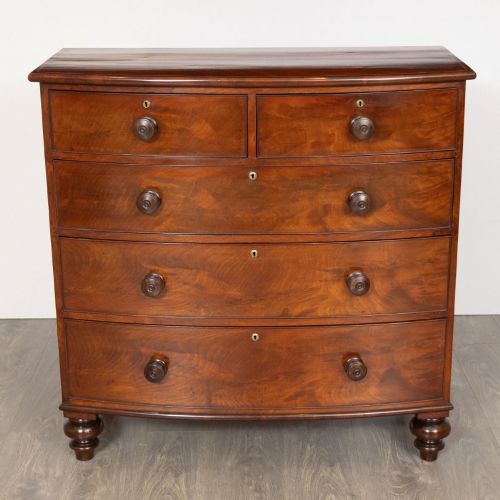
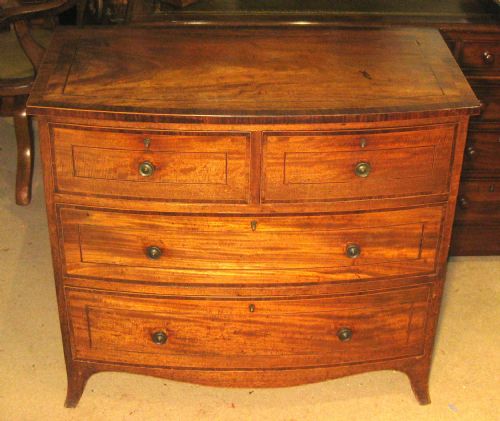
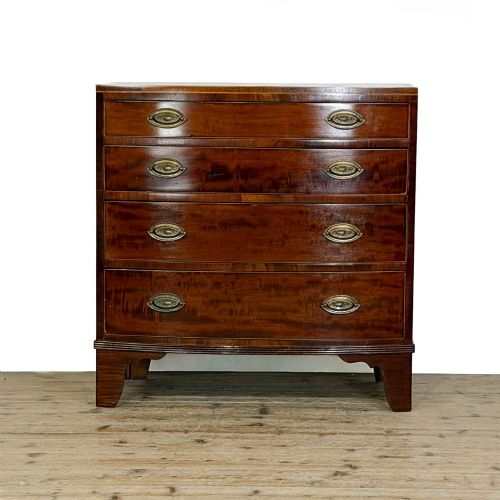
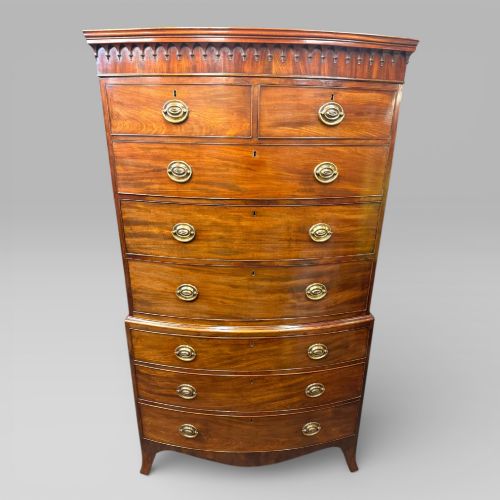
A mahogany bow fronted chest is a case of drawers built with a convex curved front that projects outward into the room. These pieces range from compact bedside cabinets and small dressing chests to tall chest on chest formats spanning the Georgian, Regency, and Victorian periods.
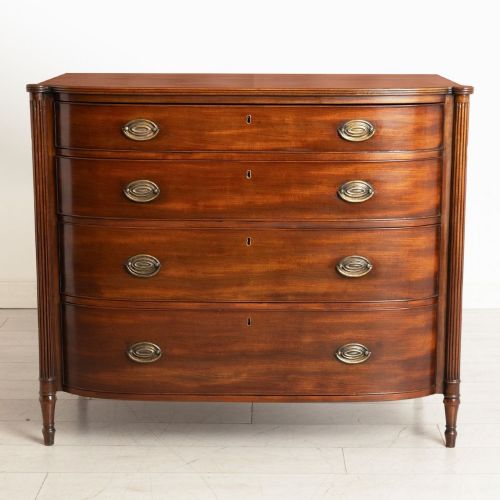
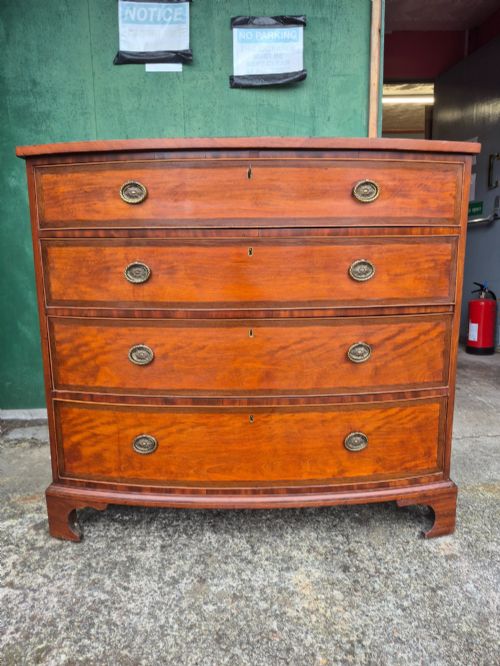
The most common examples encountered on this page date from the late eighteenth century through to the Regency era, typically offering four graduated drawers. Cabinetmakers designed these curving forms to soften the rectangular geometry of traditional rooms while providing practical domestic storage.
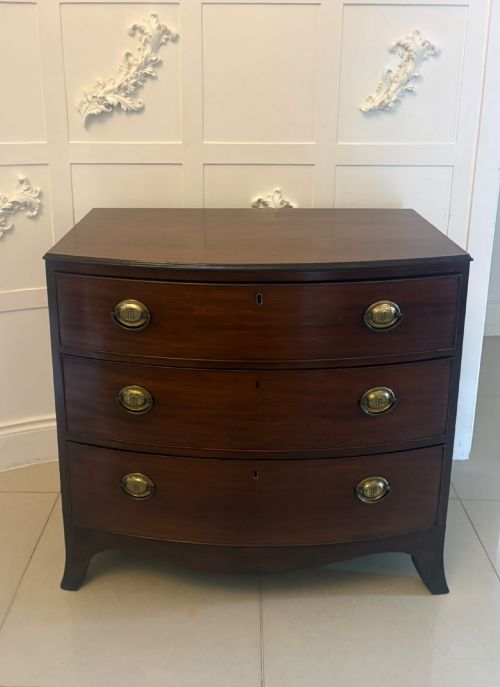
Makers also produced smaller proportions intended for intimate chambers, alongside miniature furniture and dwarf versions. Regional variations from Scotland and Wales introduce distinct carcase proportions and secondary timbers.
How They Were Made
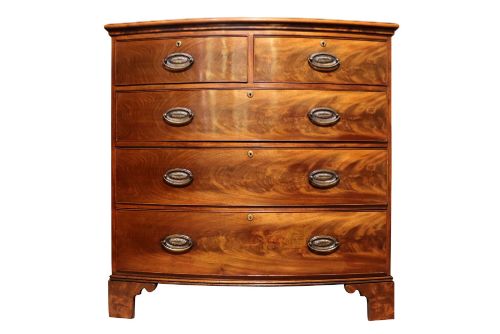
Cabinetmakers constructed the main carcase from solid pine or oak as a stable secondary timber, then applied selected mahogany veneers to the visible exterior surfaces. Flame mahogany veneers were chosen for drawer fronts to create dramatic, swirling grain patterns that caught the light.
Inlaid stringing and crossbanding in contrasting satinwood or ebony frequently border the drawer fronts, adding linear definition to the curved facade. Brass handles and escutcheons, often original cast drop handles on batwings or circular backplates, secure the drawer openings.
Listings feature mahogany bow fronted chests spanning the Georgian, Regency, and Victorian periods alongside Edwardian and later reproductions.
What Varies in Quality
Superior examples display careful book-matching of flame mahogany veneers across the curved drawer fronts, ensuring the grain patterns mirror each other symmetrically. The integration of the curved drawer sides into the bowed frame requires precise hand-planing to maintain a smooth, even sweep.
Secondary wood selection and drawer construction indicate the standard of workshop execution, with hand-cut dovetails joining drawer sides to front and back. Depth of natural patina and retention of original brass hardware elevate an example above standard utility pieces.
Gillows
The Mahogany Bow Fronted Chest Glossary
- Bow front
- A convex front projecting in a gentle outward curve. This shape requires specialised joinery to shape drawer fronts and matching carcase frames.
- Flame mahogany
- A veneer cut from the branch junction of the tree. The resulting grain shows dramatic, fiery patterns resembling flickering flames.
- Crossbanding
- A border strip of veneer laid perpendicular to the surrounding grain. It frames drawer fronts and top edges in a contrasting timber direction.
- Graduated drawers
- A series of drawers decreasing in depth from bottom to top. This arrangement creates visual stability and accommodates bulkier garments below.
- Caddy top
- A raised furniture top with a moulded edge resembling the lid of a tea caddy. This profile appears on select Georgian and Regency case pieces.
- Stringing
- A thin inlay line of contrasting wood or light-coloured timber. It traces geometric borders around drawers and top panels.
Mahogany Bow Fronted Chest: Frequently Asked Questions
How do I spot a fake mahogany bow fronted chest?
Examine the timber shrinkage, secondary woods inside the drawers, and the method used to form the curved drawer fronts. Older pieces display hand-cut dovetails and natural wax build-up within internal carcase joints.
Check whether the curved veneer has modern machine-cut uniformity or shows subtle irregularities consistent with period hand tools. Original hardware impressions on the timber should match the backplates of the current handles.
What is the difference between Georgian and Regency chests?
Georgian pieces often feature restrained architectural proportions with classical bracket feet and rich, dark mahogany patination. Drawer arrangements commonly include a smaller top drawer above three longer graduated ones.
Regency examples frequently introduce more pronounced flame mahogany veneers, satinwood banding, and turned or reeded pillar legs. The overall aesthetic shifts toward bolder visual contrast and decorative inlay.
How should I care for antique mahogany furniture?
Keep the wood away from direct heat sources and strong sunlight to prevent the mahogany veneer from drying out or splitting. Maintain a stable room temperature and humidity level.
Apply a microcrystalline wax polish sparingly and buff with a soft cloth to preserve the surface sheen. Avoid silicone-based sprays that penetrate the grain and alter the timber's natural patina.
Are small bow front chests rare?
Smaller proportions designed for dressing rooms or bedrooms appear less frequently than standard full-sized chamber chests. Makers built these compact versions to fit narrower wall spaces in period townhouses.
Their reduced footprint makes them versatile for contemporary rooms, though genuine period examples command strong interest from collectors seeking domestic scale.