
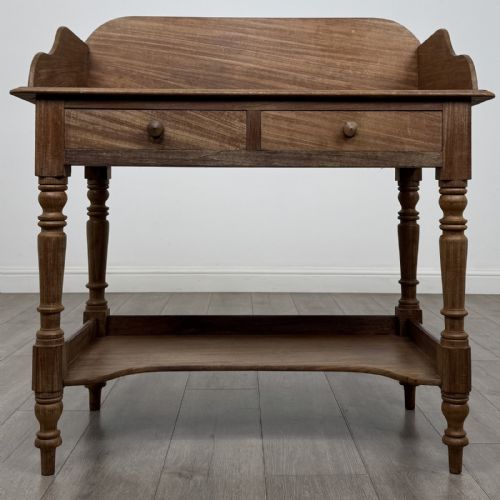
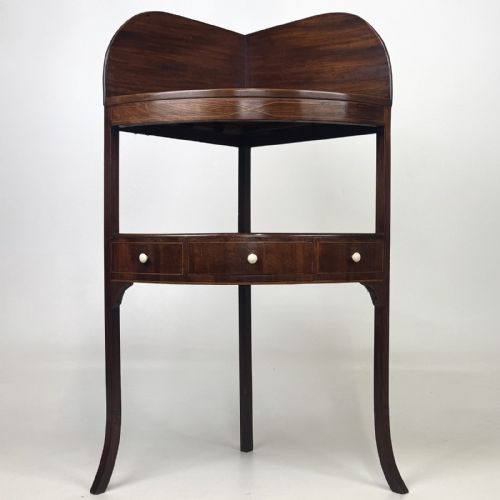
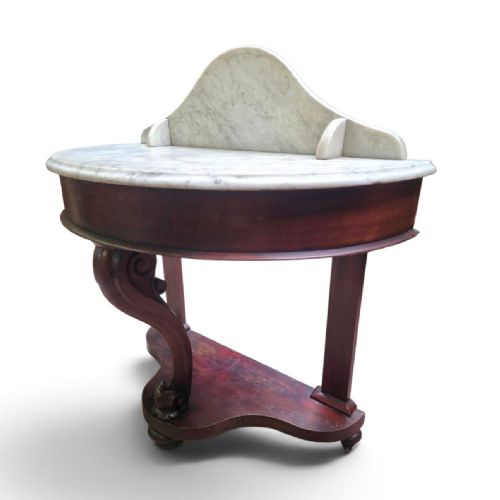
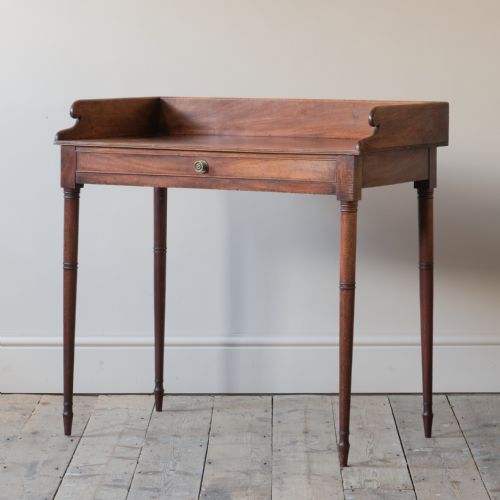
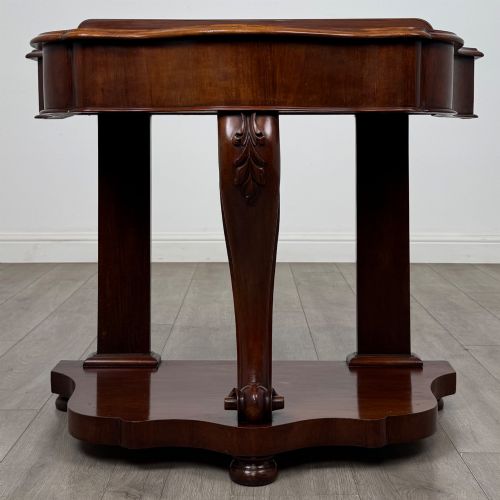
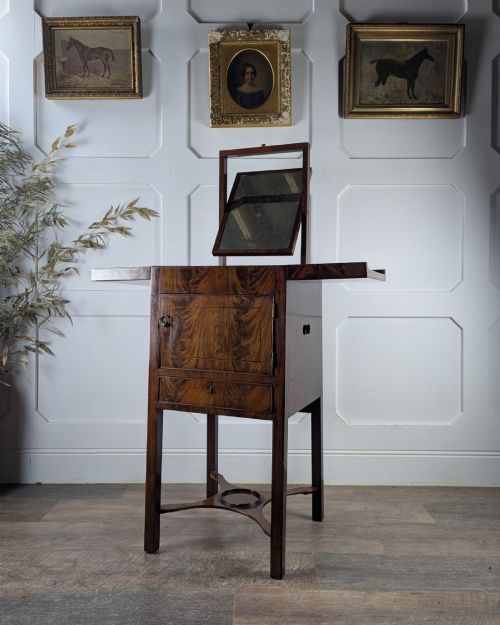

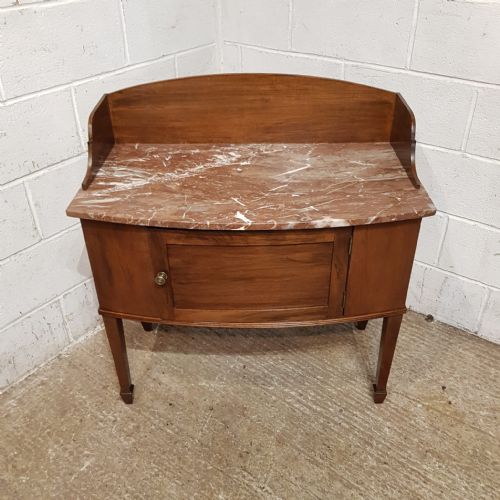
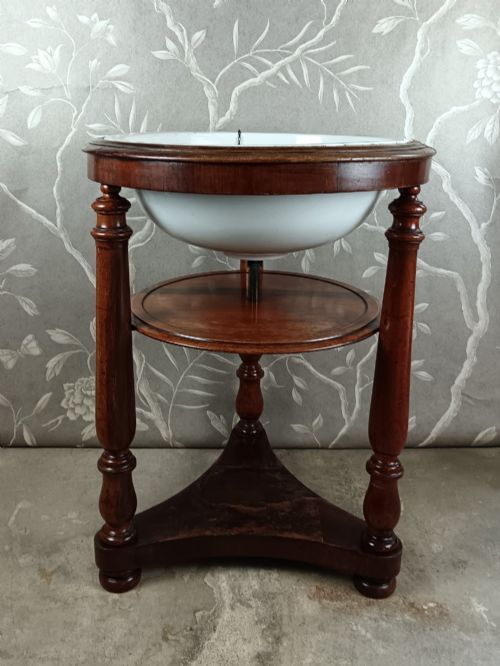
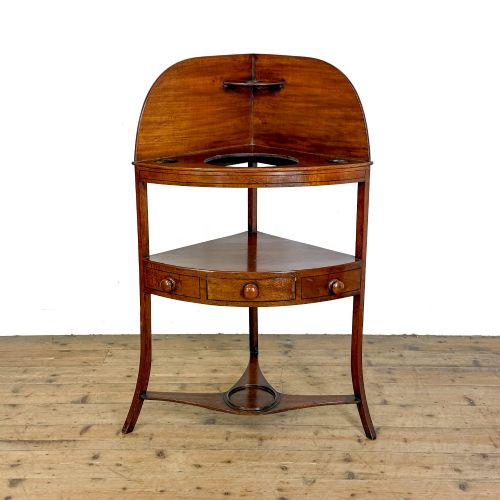
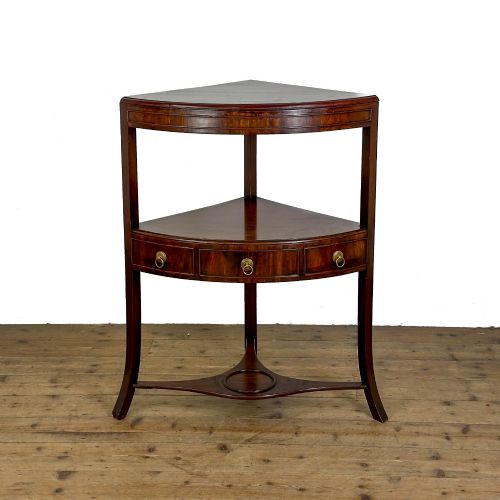
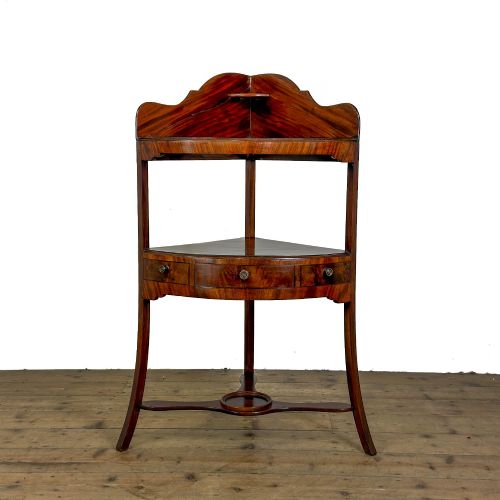
Mahogany Basin Washstand
These mahogany basin washstand pieces span the Georgian to Edwardian periods, offering clever folding designs and sturdy corner forms for daily use.
Mahogany Basin Washstand
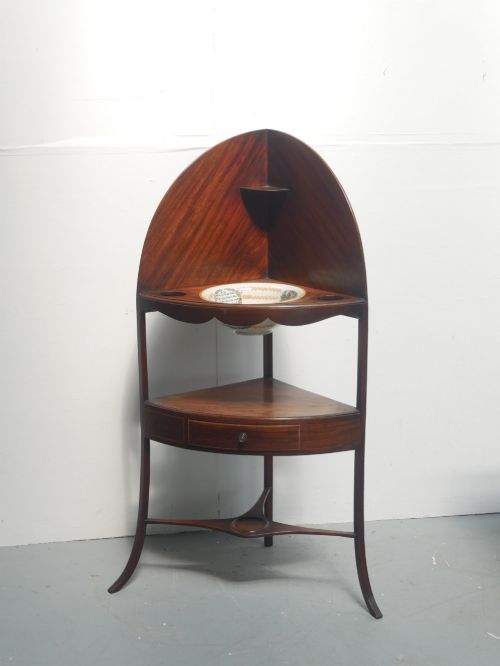
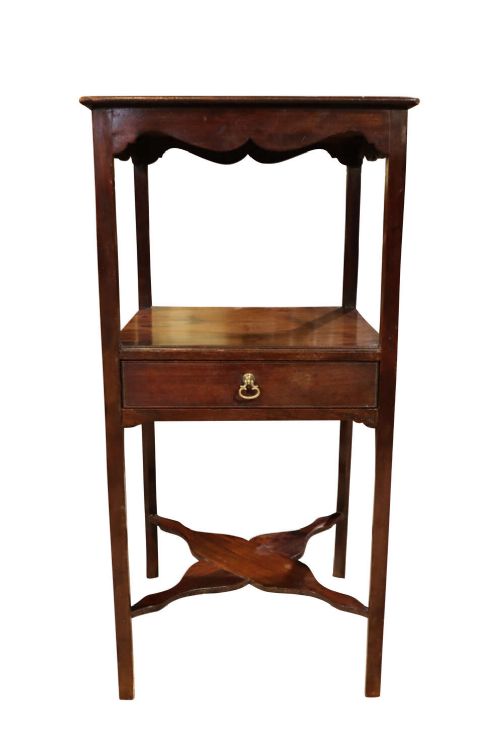
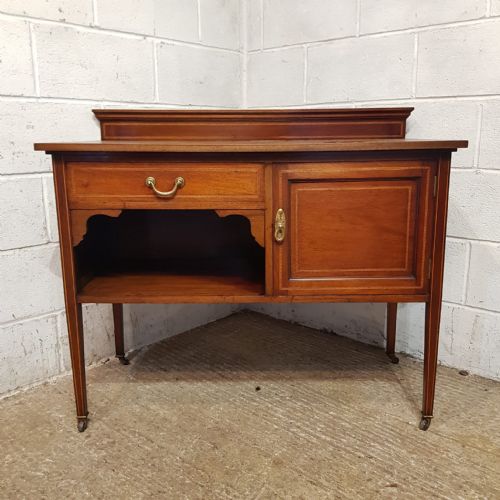
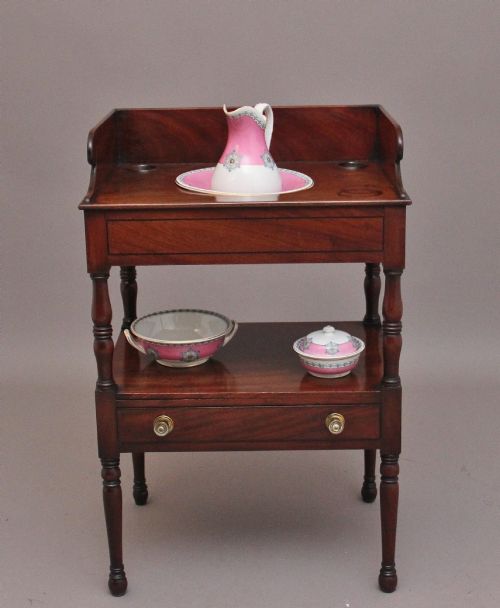
Most pieces date from the 18th century through to the Edwardian era, reflecting domestic routines before plumbed bathrooms became common. Buyers encounter folding types, tiered corner stands, and marble-topped variants designed to hold basins securely.
These items transition easily into modern homes as occasional tables or plant stands. Their compact forms make them practical for smaller rooms while retaining traditional period character.
Distinguishing quality in period washstands
The refinement of the timber grain and the precision of the boxwood inlay mark the distinction between standard utility items and finer pieces. Better examples show careful selection of Cuban mahogany with rich figuring.
Original hardware such as brass campaign mounts or integrated ceramic basins elevate a piece above later adaptations. Conversion work, where bedside tables or bidets are altered into washstands, changes the structural integrity.
The crispness of the turned legs and the secure fit of folding tops demonstrate the skill of the original maker. Well-preserved marble tops without heavy staining indicate careful domestic treatment over the centuries.
The listings feature mahogany alongside marble, ceramic, brass, glass, and boxwood inlay across Georgian, Regency, Victorian, and Edwardian periods.
The Mahogany Basin Washstand Glossary
- Washstand
- A piece of furniture designed to hold a basin, jug, and washing accessories. These items date primarily from the Georgian, Victorian, and Edwardian eras.
- Corner Washstand
- A space-saving furniture form engineered to fit neatly into a room corner. They frequently feature tiered platforms for water containers and soap.
- Campaign Washstand
- Portable furniture fitted with brass hinges and folding elements designed for travel. These pieces reflect military use during the 19th century.
- Cuban Mahogany
- A dense, richly figured timber imported from the Caribbean used in high-status 18th and 19th-century cabinet making. It resists warping and takes a deep polish.
- Bidet
- A low basin form found among 19th-century sanitation furniture, occasionally produced in mahogany frames. These items share construction traits with standard washstands.
Mahogany Basin Washstand: Frequently Asked Questions
What is a mahogany basin washstand used for today?
Modern owners repurpose these pieces as hallway tables, plant stands, or bathroom storage units. Their historic utility translates well into decorative domestic display.
Compact corner versions fit unused angles in living rooms, while marble-topped variants provide durable surfaces for daily items.
How do I identify a Georgian washstand?
Georgian examples display understated lines, often utilising solid mahogany or Cuban mahogany with subtle boxwood inlay. Look for tiered shelves designed to hold specific basin sizes.
Corner configurations dominate this period, showing proportion and joinery typical of 18th-century workshops before ornate Victorian styling took over.
Are campaign washstands different from standard ones?
Campaign versions feature collapsible frames and brass hardware built for easy packing and transport. They often use round or triform stands rather than fixed legs.
Standard domestic washstands remain rigid and stationary, whereas campaign variants reflect the portable needs of 19th-century travellers.
What maintenance do marble top washstands need?
Marble tops require gentle cleaning with mild soap and water to avoid staining the porous stone. Avoid acidic cleaners that etch the polished surface.
The wooden frames benefit from occasional wax polish to nourish the mahogany without building up heavy residue.