
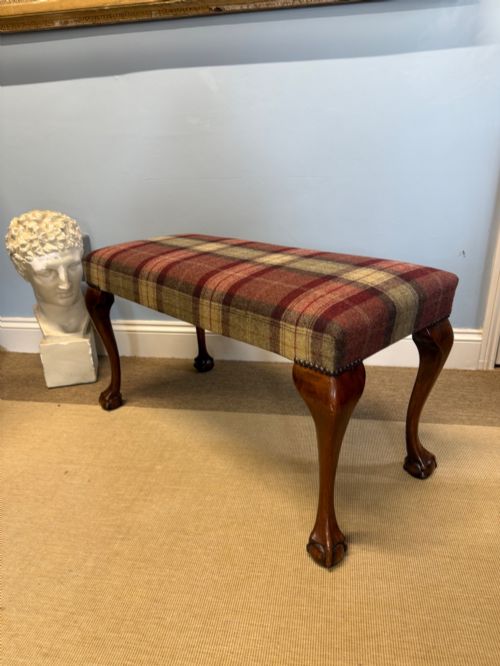
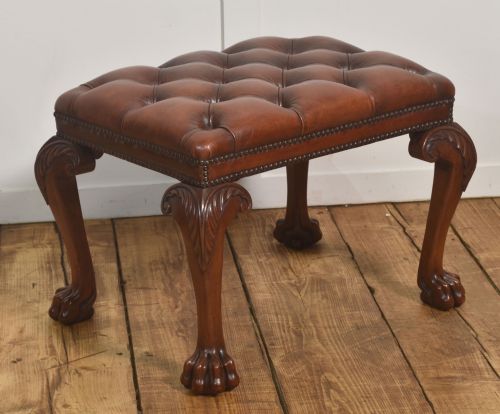
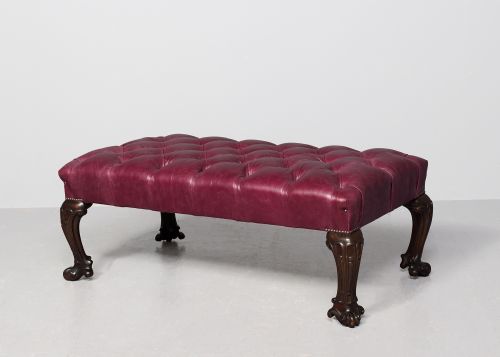
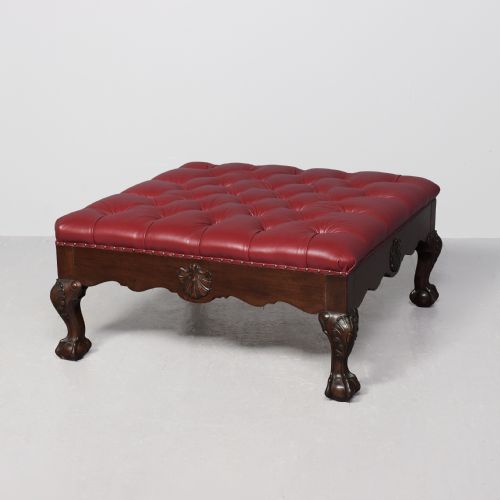
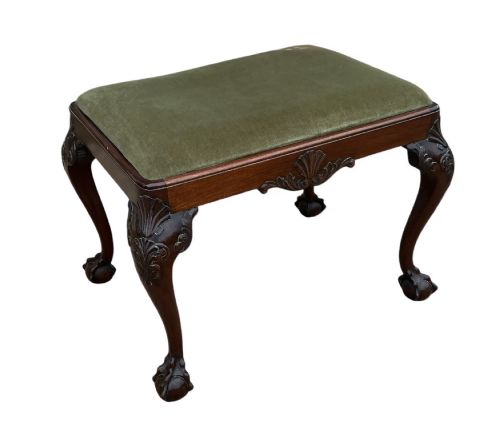
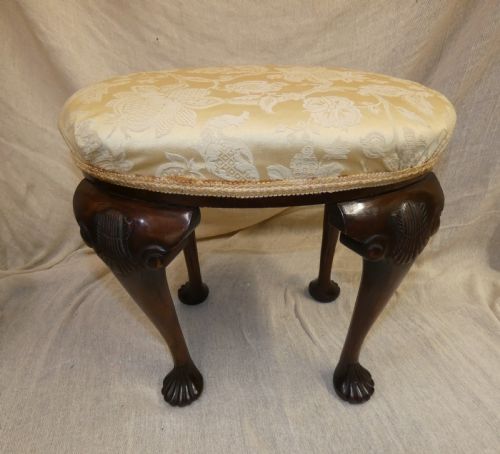
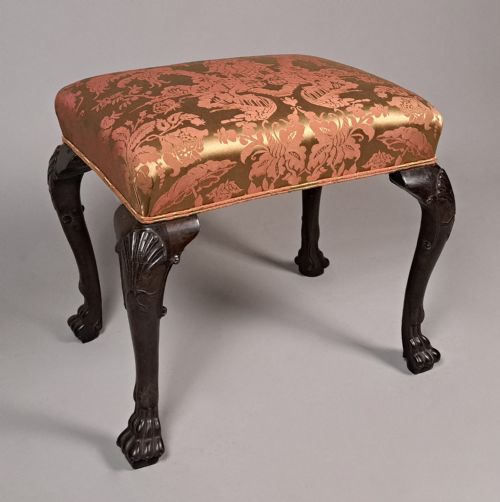

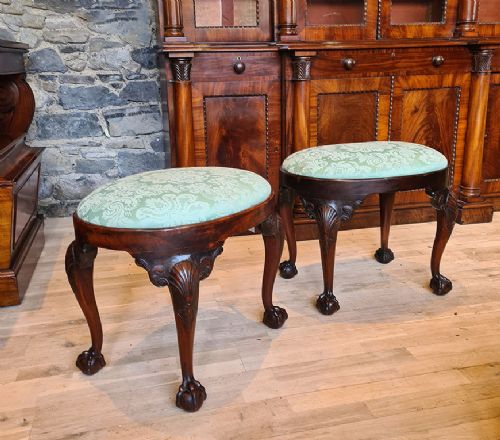


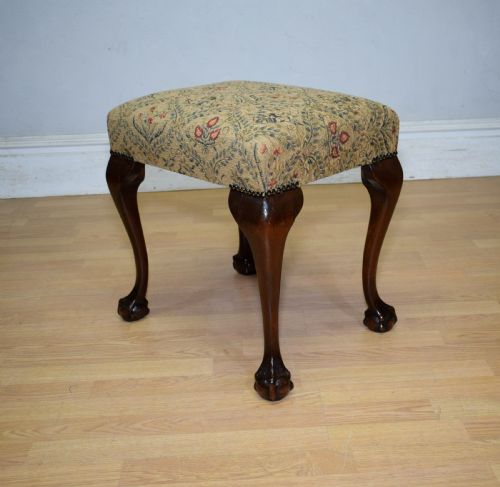
Mahogany Ball Claw Footstool
A mahogany ball claw footstool brings solid timber frames and substantial padded tops together, offering period presence and robust utility for any room.
Mahogany Ball Claw Footstool
When searching for a mahogany ball claw footstool, buyers encounter sturdy timber frames paired with upholstered seats across various historical revivals. These pieces range from compact footstools to longer benches and dressing stools.
The selections span the eighteenth century up through the early twentieth century, with strong representation from Victorian and revival periods. Chippendale and Georgian styles dominate the aesthetic, frequently incorporating carved timber details.
Most examples utilise solid mahogany frames resting on distinctive claw and ball feet. Upholstery choices vary widely from period damask and velvet to modern leather and tapestry fabrics.
How they were made
Cabinet makers constructed the foundational frames using solid mahogany, shaping and carving the timber to achieve the characteristic ball and claw profiles. This dense wood provided the necessary strength for heavily carved legs.
Upholstery involved stuffing textile coverings over supportive webbing and stuffing layers, using fabrics such as wool, damask, velvet, and leather. Brass tacks or decorative trim secured the outer textiles to the timber framework.
Claw and ball feet were sometimes carved so enthusiastically that the wooden talons appear to grip thin air.
What varies in quality
The depth and crispness of the timber carving set superior examples apart from simpler production. Carved details on the knees and the execution of the ball and claw feet reveal the hand of a skilled maker.
Proportion and timber selection also divide the range, with well-figured mahogany and balanced dimensions marking better work. The quality of the upholstery fabric and the precision of its application complete the distinction.
Morris and Co.·Whytock and Reid
The Mahogany Ball Claw Footstool Glossary
- Ball and claw
- A furniture foot design representing a bird's talon clutching a ball, commonly carved on mahogany legs.
- Chippendale
- A cabinet making style originating in the eighteenth century, known for intricate carved woodwork and cabriole legs.
- Damask
- A reversible figured fabric traditionally used for rich upholstery on period seating.
- Cabriole
- A furniture leg that bends outward and tapers inward, finishing in a decorative foot such as a ball and claw.
- Hide
- Animal skin prepared for leather upholstery, often buttoned on large footstools.
Mahogany Ball Claw Footstool: Frequently Asked Questions
How do I clean mahogany?
Dust timber frames regularly with a soft dry cloth to prevent grime accumulation. Apply natural beeswax periodically to nourish the mahogany surface.
Avoid liquid cleaners or silicone polishes that can damage antique wood finishes over time.
Are these stools comfortable?
Most pieces feature padded tops upholstered in fabric, leather, or velvet over supportive interior stuffing. They provide firm seating suited for resting feet or casual perching.
Depth and padding density vary depending on whether the piece functions as a dressing stool or low footrest.
How do I date a stool?
Examine the timber colour, grain characteristics, and tool marks visible on the underside of the frame. Revival pieces often borrow eighteenth-century motifs while retaining twentieth-century construction methods.
Upholstery materials and tack styles also offer clues to the period of manufacture or subsequent reupholstery.
Where should I place it?
Position a footstool in front of an armchair or sofa to serve its traditional function. Long benches and dressing stools work well at the foot of a bed or beneath a window.
Keep wooden furniture away from direct heat sources to prevent timber splitting.