
Mahogany Astragal Bookcase
A mahogany astragal bookcase brings structured Georgian and Edwardian storage to a room through fine timber and glazed tracery.
Mahogany Astragal Bookcase
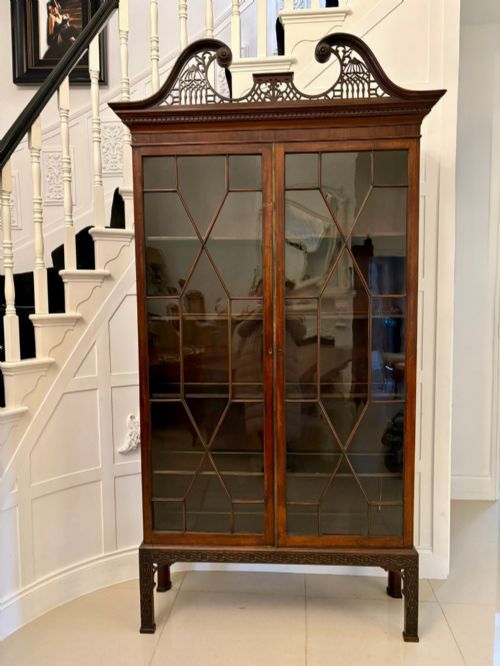
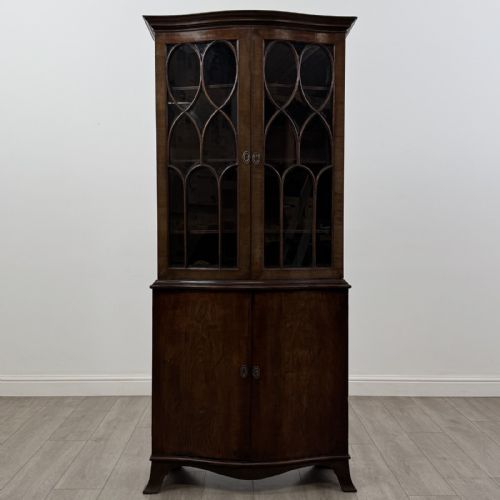
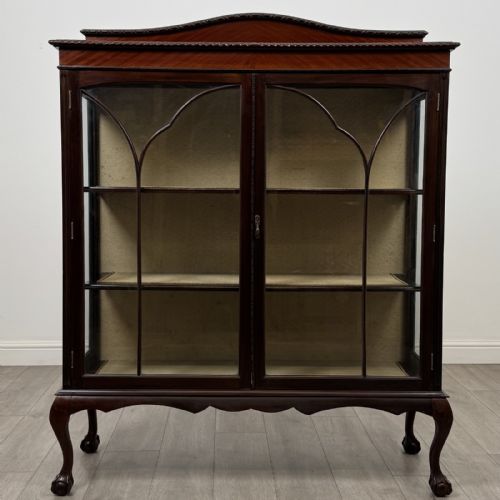
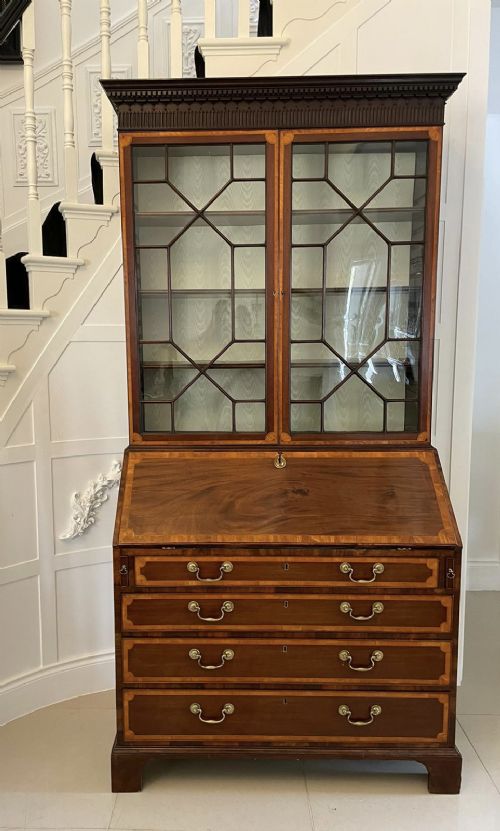
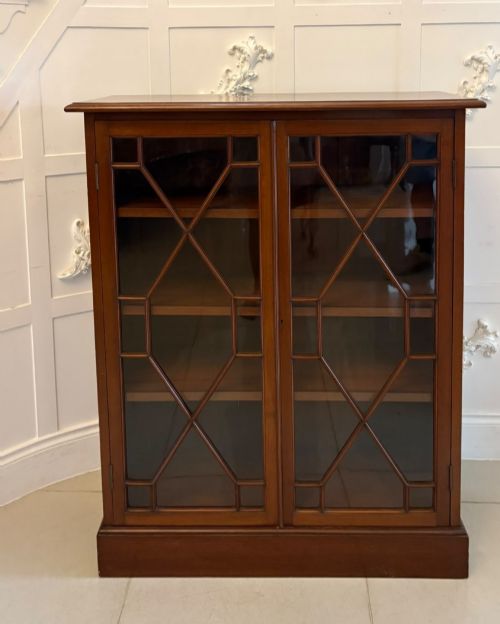
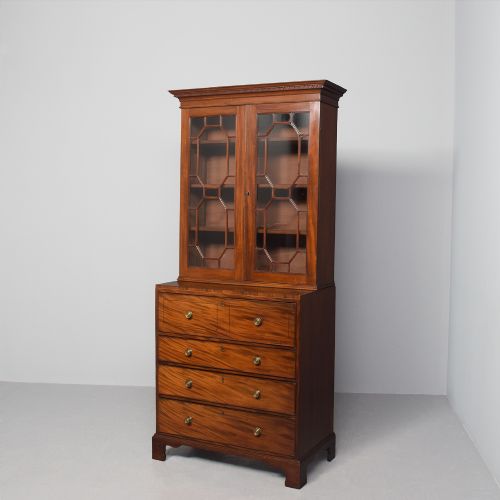
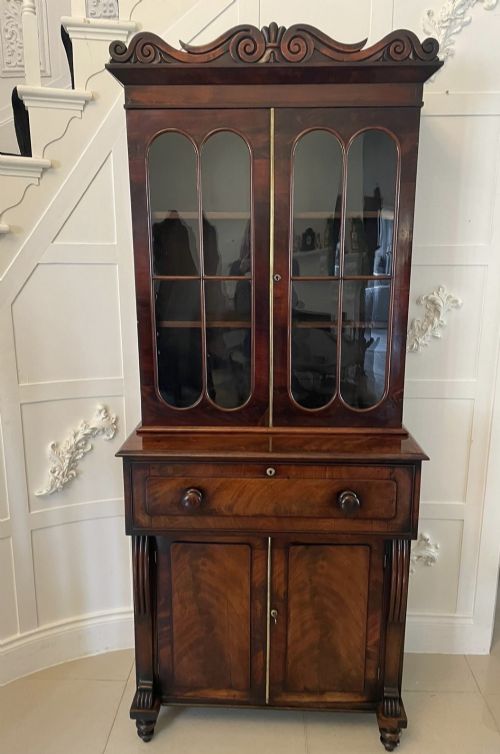
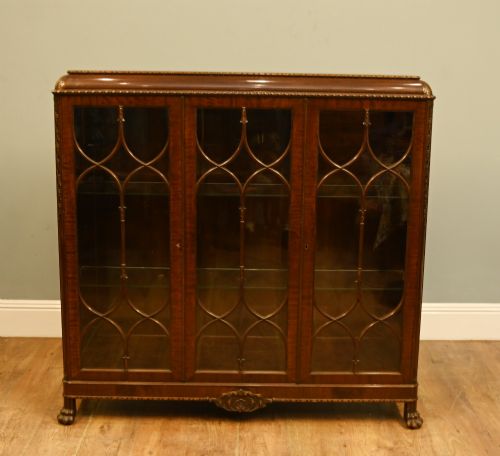
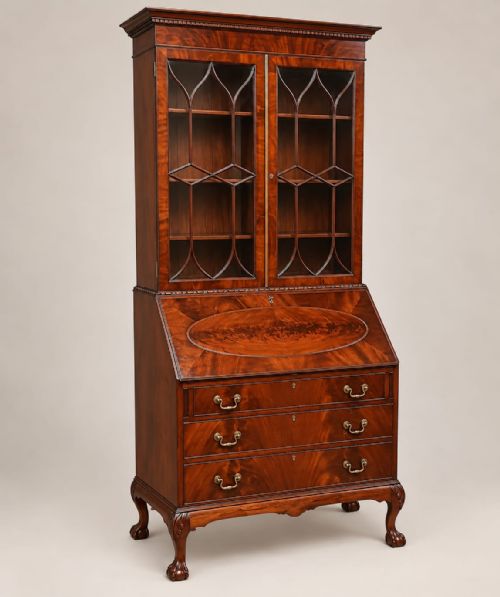
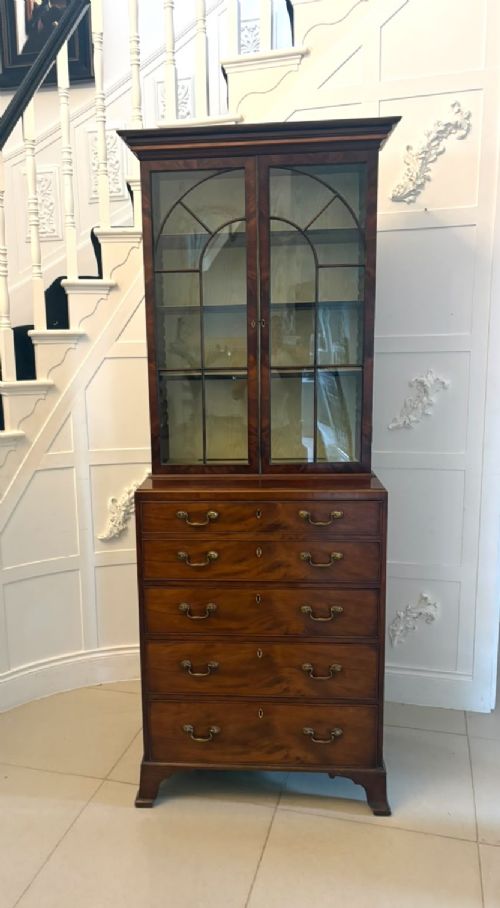
A mahogany astragal bookcase serves as a tall library piece, display cabinet, or bureau combination designed to hold volumes behind divided glass panes. Buyers searching this phrase meet variations spanning the Georgian, Regency, Victorian, and Edwardian periods.
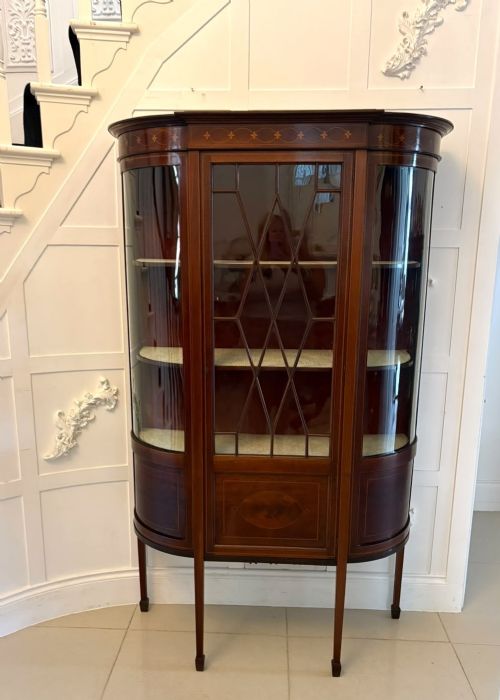
The most common formats on this page include breakfront library bookcases, smaller bureau bookcases with fitted interior writing sections, and glazed display cabinets. These pieces range from substantial multi-door room dividers to slim, single-door examples.
Origins stretch from late eighteenth-century workshops through nineteenth-century revivals into the twentieth century. Makers and cabinetmakers adopted styles from George III designs to Chippendale and Regency revivals.
Materials and construction
Makers built these pieces primarily from solid and veneered mahogany, often selecting flame mahogany for drawer fronts and cabinet doors to create a figured, rippled grain pattern. Satinwood inlay and brass hardware frequently accent the darker timber.
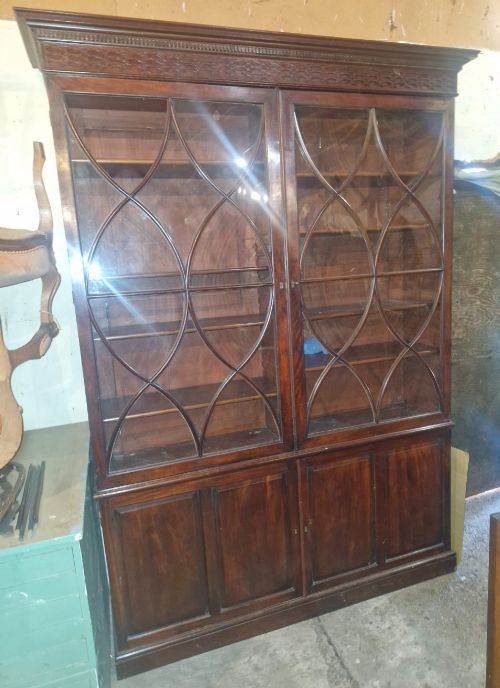
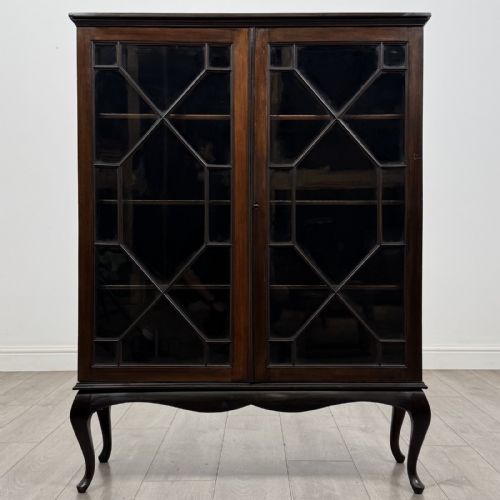
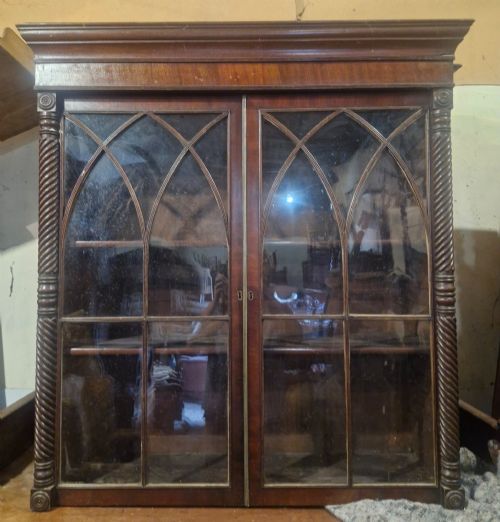
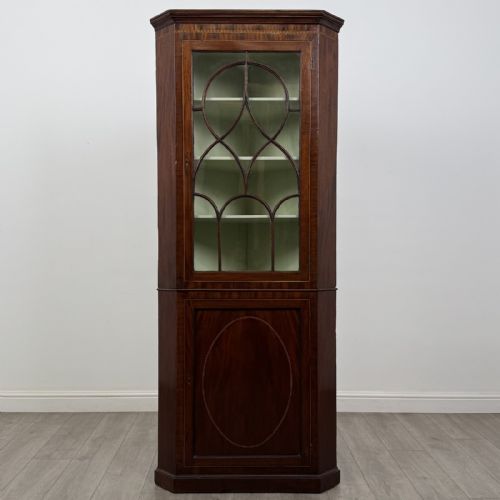
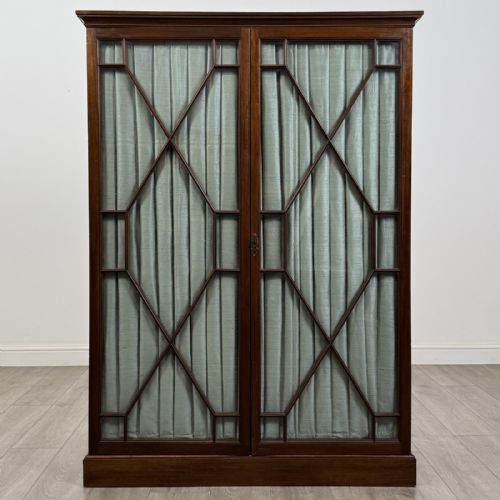
The defining feature is the astragal glazing bar, which divides the glass door panels into smaller geometric panes of glass. Cabinetmakers joined these thin wooden mouldings by hand to support large glass fronts safely.
Listings feature mahogany, satinwood inlay, glass, and brass, spanning the Georgian, Victorian, Regency, and Edwardian periods.
Judging execution and finish
Quality reveals itself in the choice of timber figure, such as richly marked flame mahogany, and the precision of the satinwood inlay work. Finer examples display meticulous joinery in the individual astragal bars and fitted desk interiors.
Proportion and architectural presence separate standard production from exceptional cabinet work, particularly in breakfront and multi-door library formats. The crispness of carved details, where present, dictates the standing of the piece.
Jas Shoolbred·Gillows·George Oakley·Maple & Co·Howard and Sons·Thomas Chippendale
The Mahogany Astragal Bookcase Glossary
- Astragal
- A moulding profile used to divide glass panels in cabinet doors. These slender wooden bars form the distinctive grid pattern across the bookcase front.
- Breakfront
- A cabinet design where the central section projects forward from the flanking wings. This architectural arrangement creates depth and visual balance.
- Secretaire
- A desk form featuring a drop-front drawer that conceals a fitted interior with small drawers and pigeonholes. It combines writing functions with enclosed bookcase storage above.
- Flame mahogany
- A veneer cut from timber where the branch meets the trunk, producing a rippled, flame-like pattern. It was favoured for high-status cabinet doors and drawer fronts.
- Vitrine
- A glass-sided display cabinet designed for the presentation of objects rather than books. They often feature delicate glazing bars and satinwood stringing.
Mahogany Astragal Bookcase: Frequently Asked Questions
What is an astragal bookcase?
An astragal bookcase is a tall wooden storage unit featuring glass doors divided into smaller panes by thin wooden mouldings. These pieces were designed to protect libraries while displaying fine leather-bound volumes.
They appear in various formats, including bureau bookcases with drop-front writing desks and large breakfront library cabinets. The style spans multiple periods from the eighteenth century into the twentieth.
How do I use a secretaire bookcase?
The secretaire section operates via a pull-down drawer front that hinges open to reveal a writing surface. Inside, small pigeonholes and miniature drawers organise letters and writing materials.
Above this desk space, the glazed doors house books, while lower cupboards or drawers provide general storage. This multi-purpose design suited domestic studies and libraries.
How do I date a mahogany bookcase?
Dating relies on stylistic clues, timber selection, and construction methods visible in the woodwork. Georgian and Regency examples typically feature heavier architectural cornices and hand-cut joinery.
Edwardian and later revival pieces often incorporate machine-cut elements and lighter satinwood inlay. Comparing the backboards and interior drawer construction helps confirm the period.
Where should I place a breakfront bookcase?
A breakfront bookcase requires a substantial wall space due to its projecting central section and wide proportions. These large library pieces anchor a room, making them well-suited to studies, drawing rooms, or spacious hallways.
Ensure adequate clearance in front of the cabinet for doors to open fully. Positioning away from direct sunlight protects the mahogany finish and book bindings.