
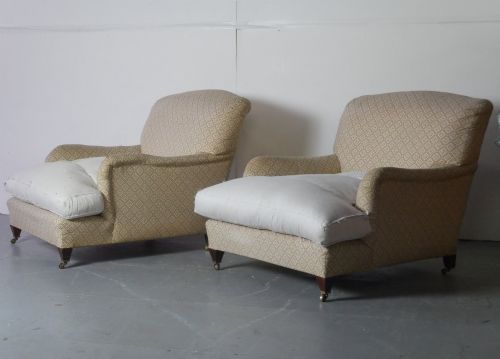
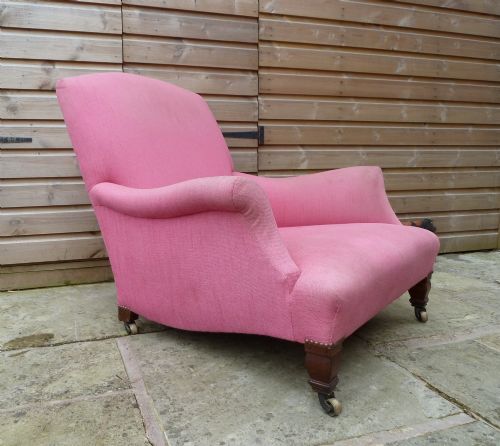
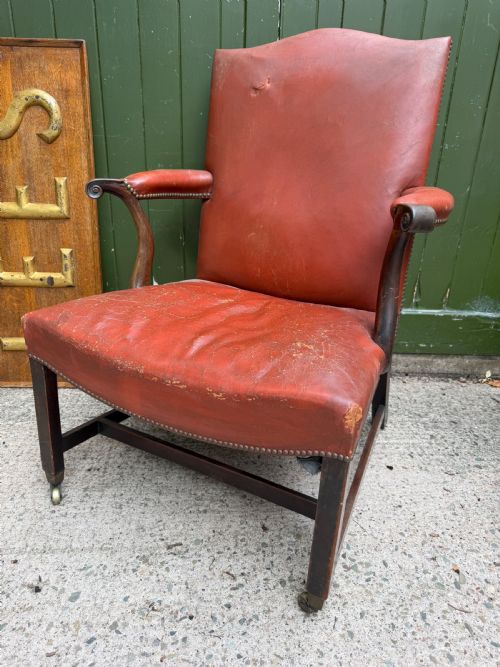
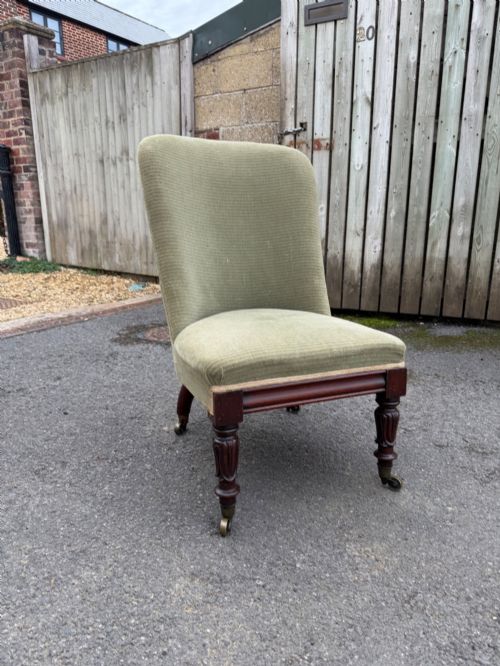
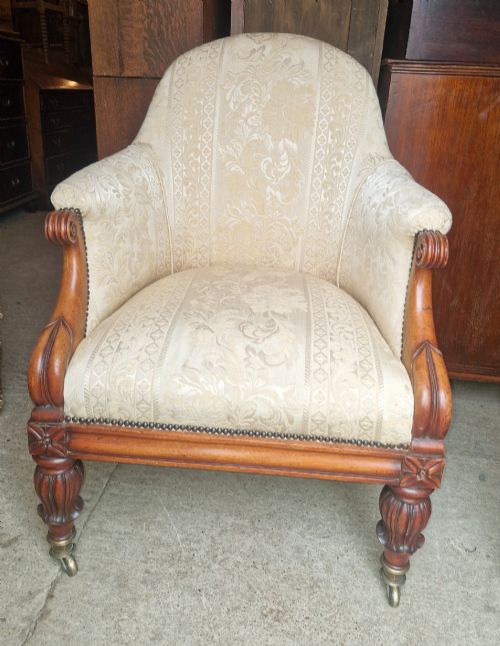
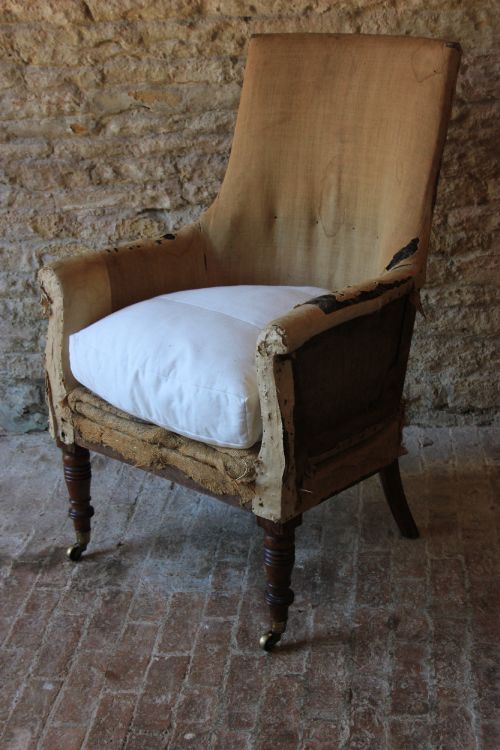
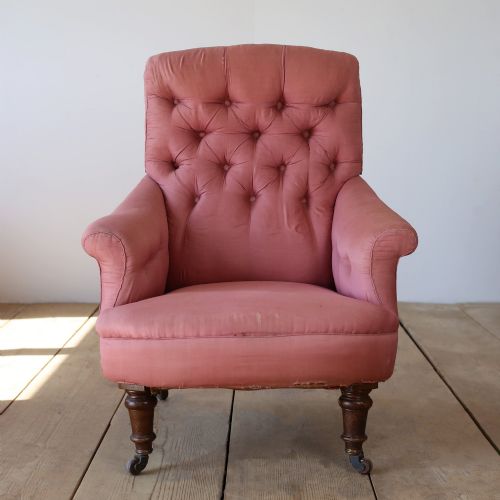
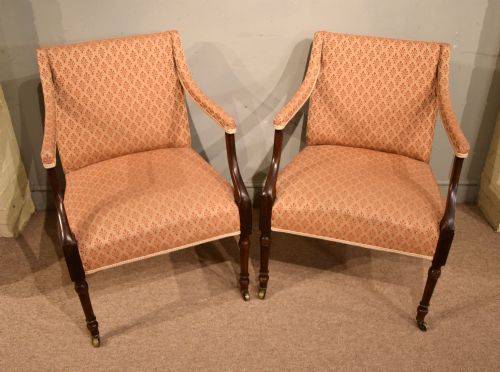
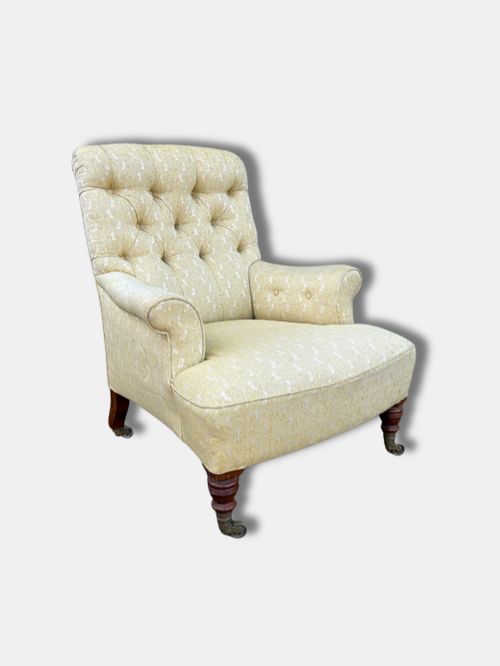
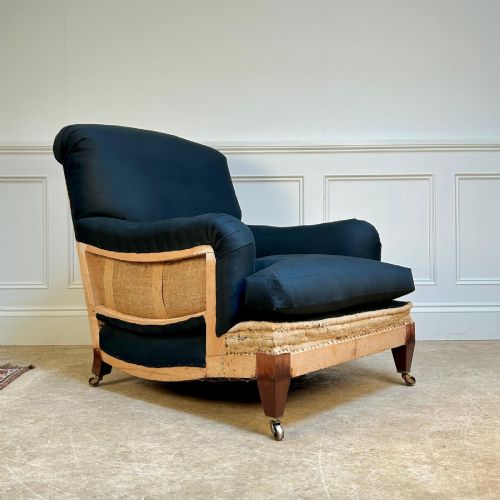
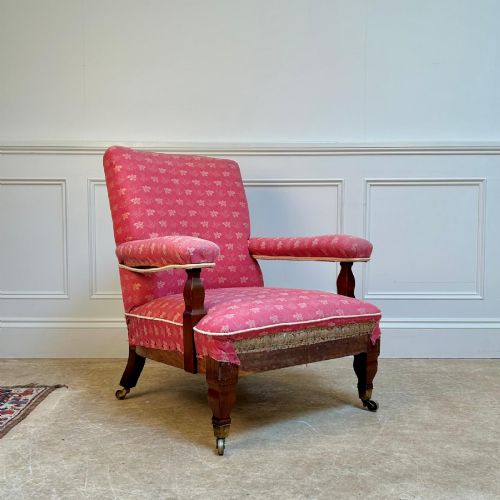
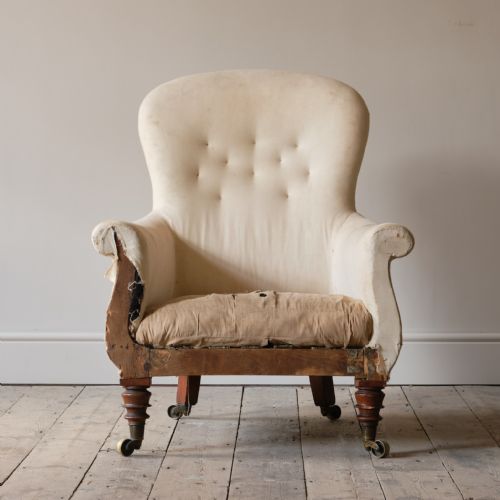
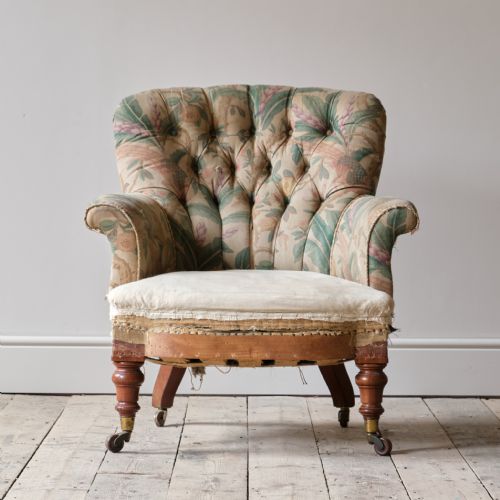
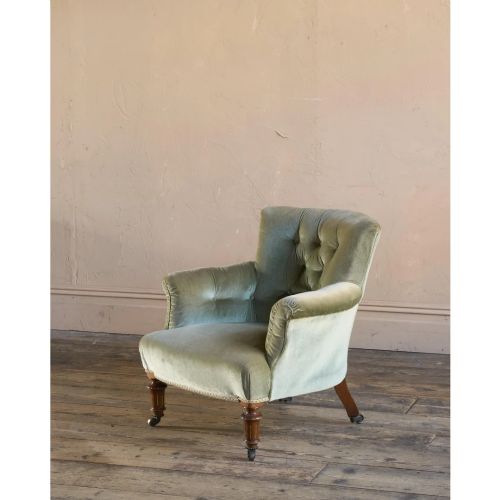
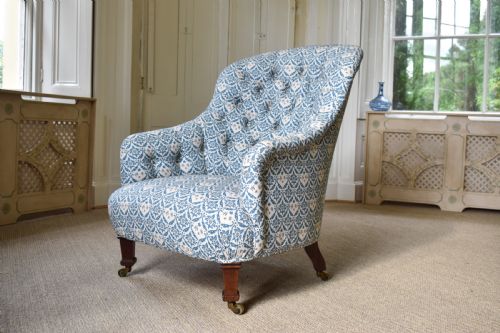

Mahogany Armchair Brass Castors
A mahogany armchair brass castors combines timber frames with metal hardware for sturdy seating found across several British periods.
Mahogany Armchair Brass Castors
When you examine a mahogany armchair brass castors, you look at seating designed for libraries, country houses and parlours, spanning the Georgian, Regency, Victorian and Edwardian eras. The records show forms ranging from library armchairs and bergères to button-backed styles and side chairs.
The version you are most likely to meet on this page is a nineteenth-century library or country house armchair featuring a mahogany frame supported by metal castors. These pieces combine timber construction with upholstered surfaces in leather, velvet, fabric or cane.
How they were made
Craftsmen built the structural frames using solid mahogany, shaping the timber into reeded, turned or show-frame supports. Metal components, specifically brass castors and cappings, were fitted to the feet to allow movement across carpets and floorboards.
Upholstery techniques varied from traditional horsehair stuffing beneath leather, calico or velvet to cane panels woven into bergère frames. Finish details included buttoning and decorative studs applied directly to the textile coverings.
Several armchairs arrive with their original castors intact, ready to roll smoothly across nineteenth-century floorboards.
What varies in quality
Quality rests in the handling of the timber frame and the precision of the joinery beneath the upholstery. Finer pieces demonstrate robust mahogany construction with balanced proportions, whether executed as a compact library chair or a large country house seat.
The distinction between standard workshop production and master craftsmanship shows in the crispness of the wood turning, the weight of the brass castors, and the integrity of the underlying webbing and springs.
Howard and Sons·Morris and Co·Gillows·Hampton and Sons·Harrods London·William Birch
The Mahogany Armchair Brass Castors Glossary
- Bergère
- An upholstered armchair with enclosed cane panels on the back and sides. This style gained popularity during the eighteenth and nineteenth centuries.
- Library chair
- A heavy, comfortable seating form designed for reading rooms, typically featuring padded arms and substantial timber frames.
- Castor
- A small wheel mounted on a swivel attached to the foot of a piece of furniture. It allows heavy seating to be moved across floors easily.
- Reeded
- A decorative moulding consisting of parallel convex strips resembling bundled reeds. It appears frequently on nineteenth-century chair legs.
- Show-frame
- A wooden structural framework left exposed around the upholstered elements of an armchair. This highlights the quality of the polished timber.
Mahogany Armchair Brass Castors: Frequently Asked Questions
How do I identify a Regency mahogany armchair?
Look for characteristic design elements such as saber legs, reeded frames, and classical proportions that define early nineteenth-century seating.
Examine the timber finish and the joinery methods used beneath the upholstery to confirm the period.
What is a bergere armchair?
A bergère is an enclosed upholstered armchair featuring woven cane panels on the back and armrests. These pieces often include loose seat cushions.
They originated in France but became staple seating forms in British drawing rooms and libraries.
Why do these chairs have brass castors?
Brass castors were fitted to heavy library and country house armchairs to make them easier to reposition on thick carpets. They protect floor surfaces and timber legs from strain.
Hardware quality often indicates the workshop standard of the piece.
Are these chairs suitable for daily use?
Most antique armchairs are built with solid mahogany frames and robust internal webbing that withstands regular sitting. Many feature durable leather or heavy fabric upholstery.
Checking the stability of the joints ensures the piece functions safely in a modern room.