



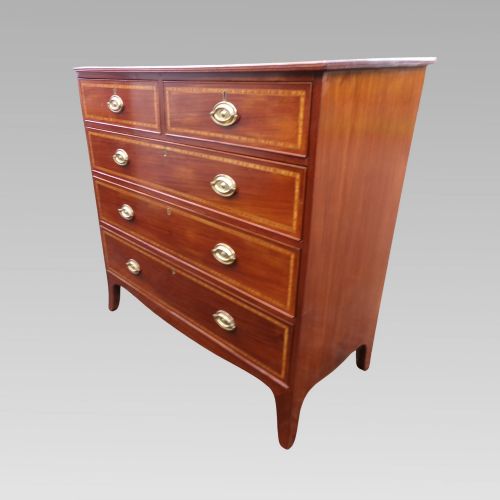


Mahogany and Satinwood Commode
A mahogany and satinwood commode brings contrasting timber and precise inlay to a room, offering both generous storage and striking surface pattern.
Mahogany and Satinwood Commode
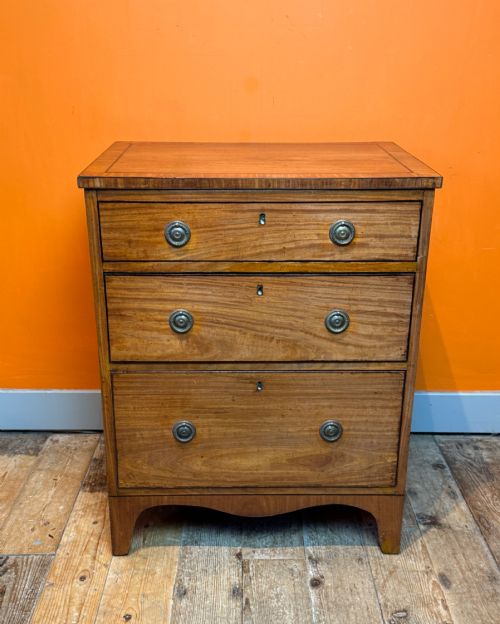
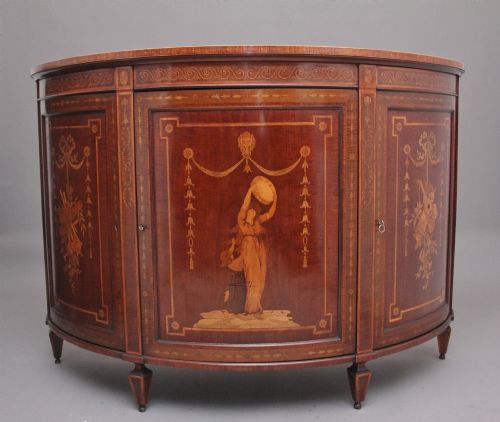
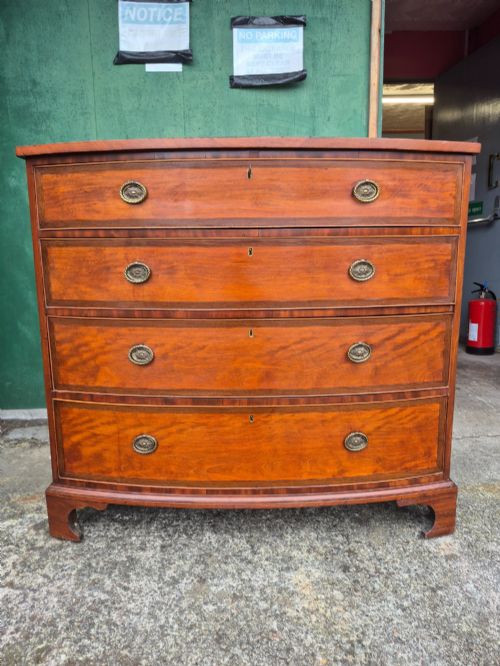
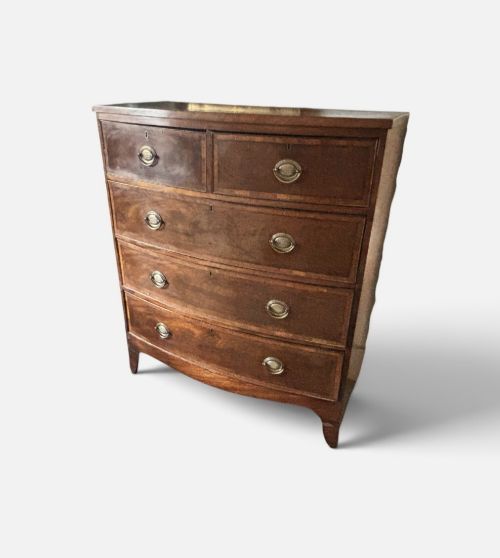
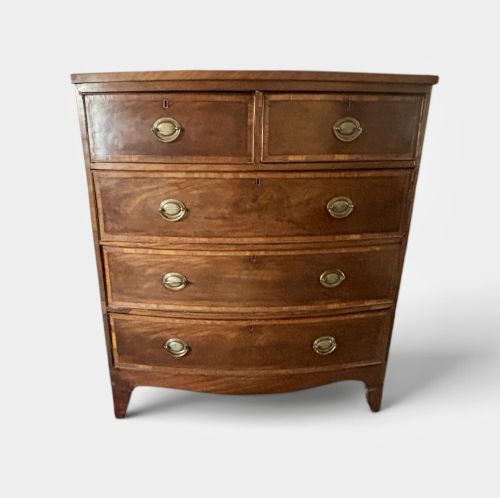
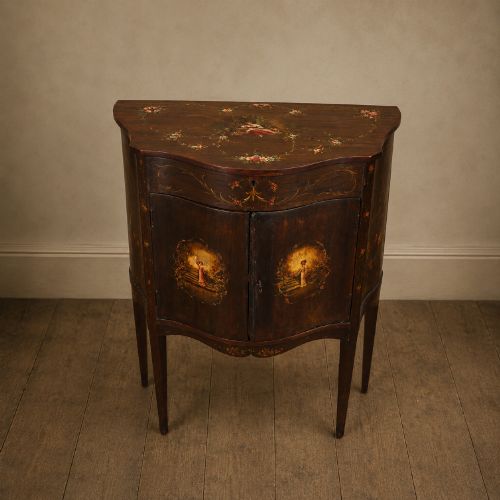
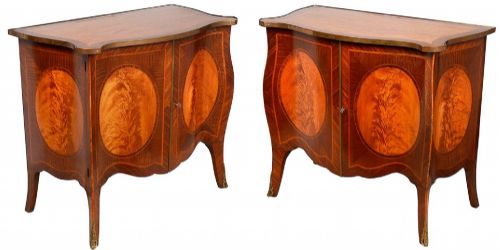
When searching for a mahogany and satinwood commode, you encounter pieces spanning Georgian origins through Regency refinements and later Victorian and Edwardian revivals. These items take several forms including bow-fronted chests, serpentine side cabinets, and demi-lune commodes designed to anchor a principal room.
The version you are most likely to meet on this page is a Sheraton Revival piece from the nineteenth century or nineteen-hundreds, combining mahogany carcases with lighter satinwood banding and crossbanding. Alongside traditional commodes, the selection includes related chest of drawers and side cabinet forms sharing the same timber vocabulary.
Materials and construction
The primary carcases utilise solid and veneered mahogany, providing a dark, stable foundation with rich grain movement. Lighter satinwood is introduced as veneers, crossbanding, and banded borders to frame the drawer fronts and top surfaces.
Detailing relies on fine inlay techniques, incorporating boxwood stringing, marquetry, and occasional hand-painted motifs. Brass handles and mounts frequently complete the construction on period examples.
Mahogany and Satinwood Commode Retail Price Guide 2026
Typical asking prices for mahogany and satinwood commode among the pieces listed under this phrase on Sellingantiques today, from the lower quarter to the upper quarter. They describe what is for sale here now, not the wider market.
Some chests arrive with secret drawers hidden beneath the moulded top cornices, designed to outsmart inquisitive guests.
Assessing quality and execution
Quality rests primarily on the crispness of the timber selection and the precision of the inlay work. Finer examples display tightly figured mahogany matched with evenly spaced satinwood banding and sharp, clean mitres at the corners.
The refinement of the secondary details also marks the division between standard and superior pieces. Smoother drawer mechanics, well-chosen brass hardware, and balanced proportions signal careful workshop execution.
Edwards and Roberts·Gillows
The Mahogany and Satinwood Commode Glossary
- Crossbanding
- A border of veneer laid perpendicular to the grain of the central panel. This technique frames drawer fronts and table tops with contrasting timber direction.
- Serpentine
- A front contour characterised by a convex centre flanked by concave curves. It requires advanced cabinet-making skill to execute cleanly in solid wood and veneer.
- Demi-lune
- A half-moon shape characteristic of commodes and side tables designed to sit flush against a wall. These pieces often feature curved doors or drawers following the semi-circular plan.
- Stringing
- Narrow strips of contrasting wood inlaid into channels cut into the surface. It provides delicate linear definition around panel edges and drawers.
- Marquetry
- The art of creating decorative patterns using fitted pieces of various veneers. Artisans assemble pictorial or geometric designs on furniture surfaces.
Mahogany and Satinwood Commode: Frequently Asked Questions
What is a mahogany and satinwood commode?
A mahogany and satinwood commode is a decorative storage cabinet or chest featuring a dark mahogany base contrasted with pale satinwood veneers and inlay. These pieces serve as focal points in reception rooms and bedrooms.
Craftsmen utilised these contrasting timbers to create geometric borders, panel outlines, and figurative motifs. The form bridges functional storage and high decorative art.
How were these commodes originally used?
Historically, commodes and side cabinets provided enclosed storage for household linens, clothing, or valuable possessions in principal rooms. Their decorative tops also served as display surfaces for porcelain, clocks, and candlesticks.
Positioned against drawing room or hallway walls, they functioned both as utility items and as indicators of household status. Their refined appearance suited entertaining spaces rather than private dressing quarters.
How do I date a mahogany and satinwood commode?
Dating relies on examining construction methods, timber thickness, and stylistic cues such as hardware and inlay motifs. Georgian and Regency pieces show hand-cut joinery and specific proportions, whereas Sheraton Revival items from later periods emulate these styles with slightly different internal timber standards.
Secondary woods inside the drawers and the style of the brass handles offer further clues. Comparing the piece against documented examples from specific decades helps narrow the period of manufacture.
How do I live with a satinwood commode?
Living with these pieces involves protecting the polished timber surfaces from direct sunlight and excessive moisture fluctuations. Placing them away from heat sources preserves the stability of the veneers and inlay.
Routine care requires gentle dusting with a soft cloth and occasional application of appropriate furniture wax. Their versatile tones allow them to sit comfortably alongside both antique and contemporary interior schemes.