
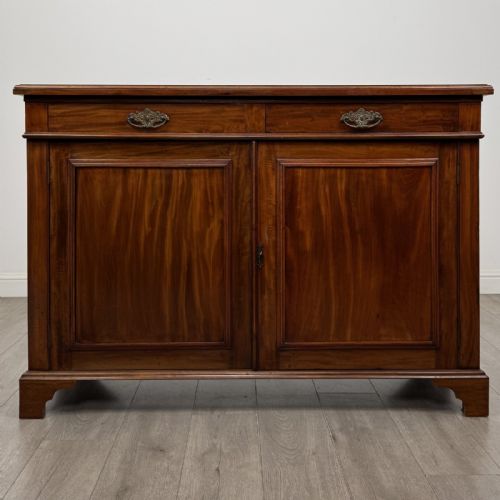
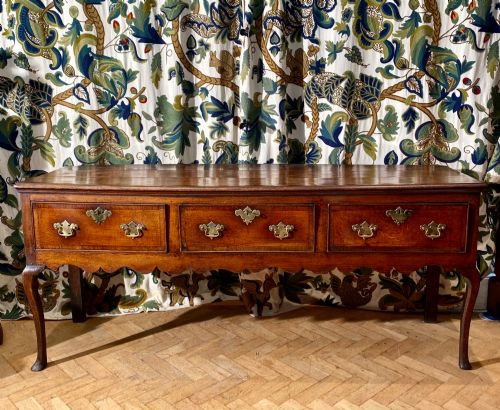
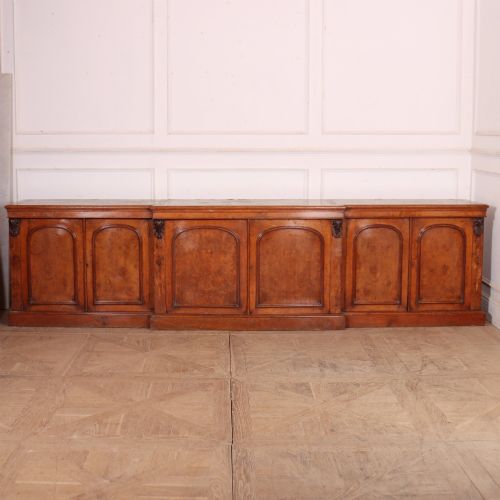
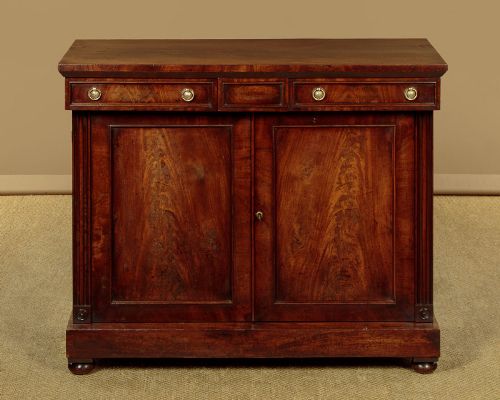
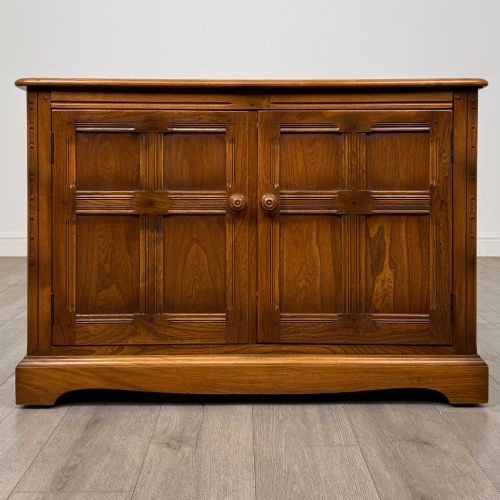
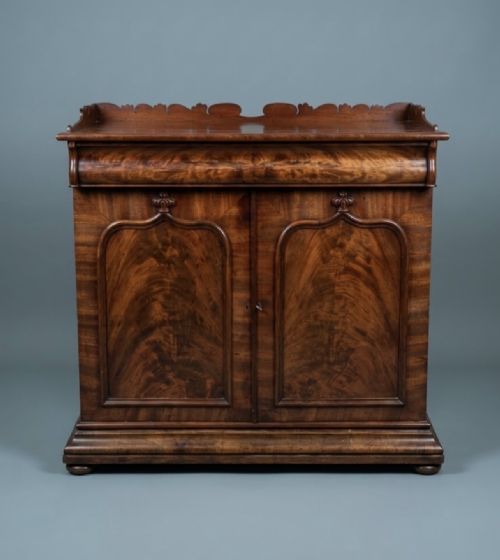
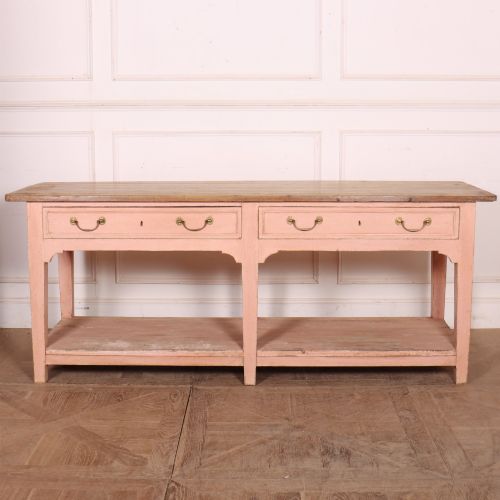
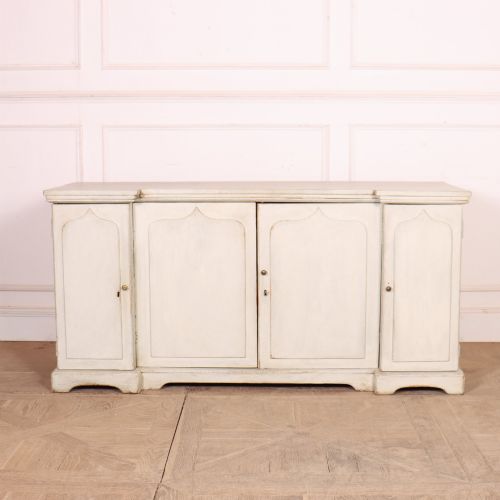
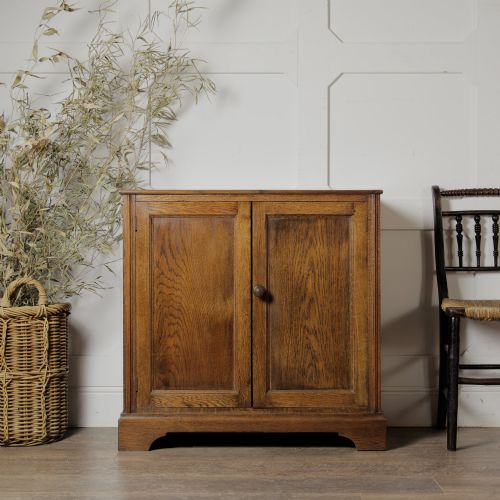
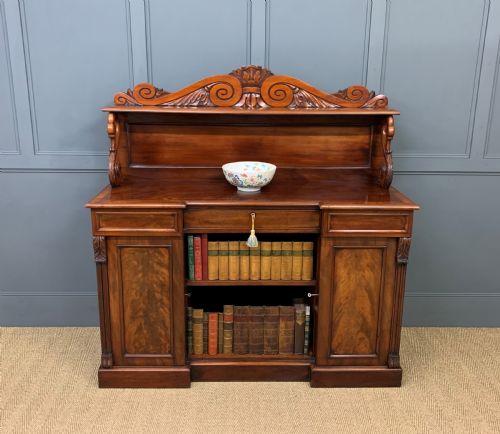
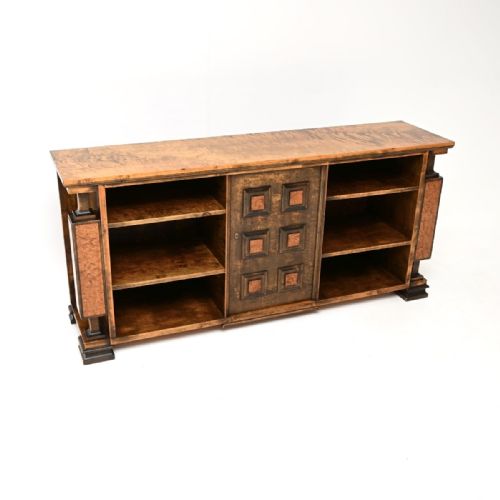
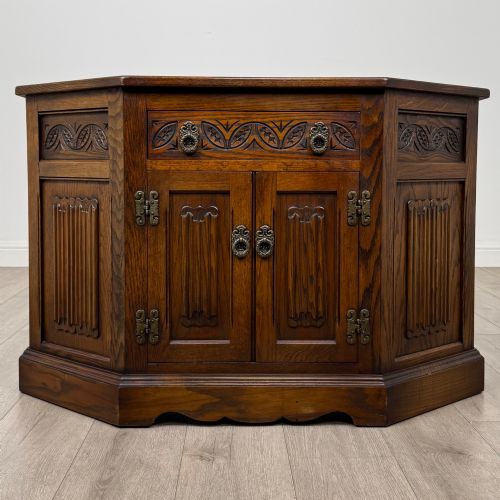
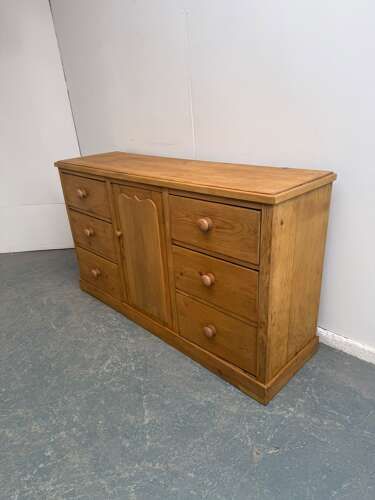
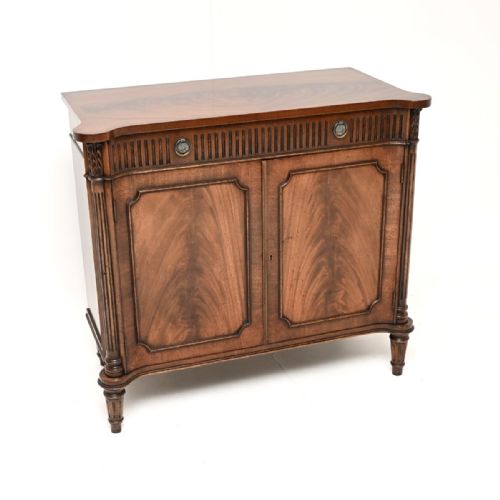
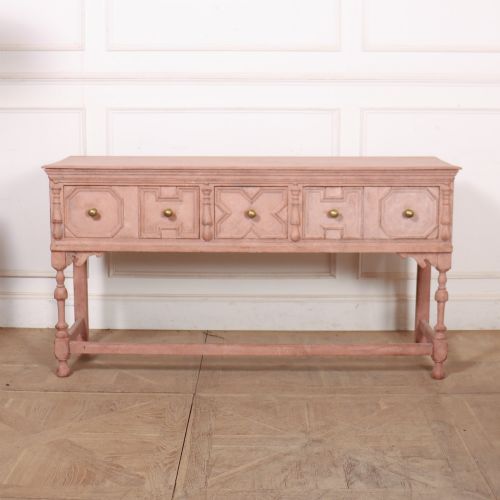
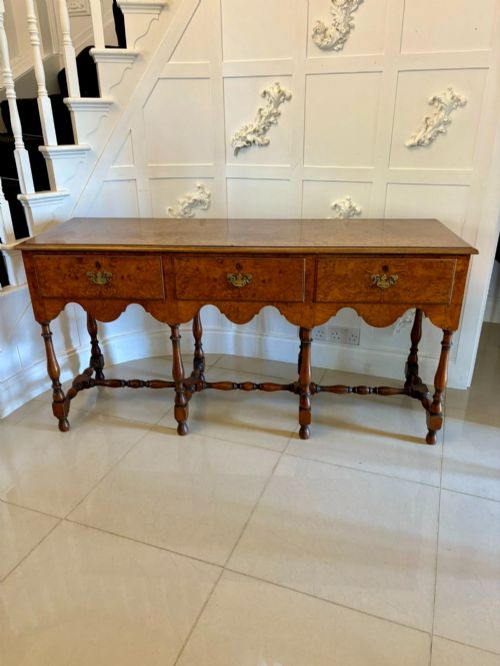
Low Wooden Sideboard
A low wooden sideboard offers grounded storage and surface space, bringing practical utility and period character to living and dining rooms.
Low Wooden Sideboard
A low wooden sideboard serves as a functional storage piece, frequently appearing in forms such as dresser bases, side cabinets, and low cupboards across this selection.
Pieces span multiple centuries and stylistic traditions, including Georgian, Victorian, Edwardian, and Art Deco eras, with origins ranging from English country workshops to Scottish and Welsh farmhouses.
The primary forms rely on substantial timber construction, often configured with doors, drawers, or open potboards suited to daily household use.
Materials and construction
Cabinet makers utilised dense hardwoods such as oak, mahogany, and walnut, frequently selecting figured veneers like flame mahogany or burr walnut for decorative impact on visible surfaces.
Secondary timbers like pine and elm appear in regional vernacular pieces such as farmhouse dresser bases, while brass and iron provide functional hardware fittings.
Listings feature periods from the 18th century through to the 1930s, utilising timbers including oak, mahogany, walnut, and pine.
Assessing quality and execution
Quality rests upon the selection of timber and the precision of the cabinet work, distinguishing utilitarian kitchen pieces from formal reception room furniture.
Superior examples exhibit thoughtful proportions, carefully matched grain patterns on doors and drawers, and original fitted interiors that reflect skilled workshop production.
Gillows·Whytock and Reid
The Low Wooden Sideboard Glossary
- Dresser base
- A low cabinet featuring drawers and cupboards, traditionally used in kitchens or dining rooms for food preparation and storage.
- Potboard
- An open slatted lower shelf beneath a dresser base, originally designed for storing heavy pots and pans.
- Chiffonier
- A compact sideboard or low cabinet developed in the nineteenth century, often featuring enclosed shelving or a small bookcase superstructure.
- Breakfront
- A cabinet front where the central section projects forward from the flanking outer sections, creating architectural depth.
Low Wooden Sideboard: Frequently Asked Questions
What is a low wooden sideboard?
A low wooden sideboard is a versatile storage unit designed with a low profile, encompassing forms like dresser bases, side cabinets, and cupboards.
These pieces provide both enclosed storage and a display surface, making them adaptable for modern living spaces.
Where were these sideboards used?
Historically, these items served utilitarian and display functions in kitchens, dining rooms, and parlours across regional farmhouses and urban townhouses.
Today, their proportions make them suitable as media consoles, hallway units, or dining room storage.
How do I tell Georgian from Victorian pieces?
Georgian pieces often display restrained classical proportions, simple bracket feet, and solid oak or mahogany construction. Victorian items frequently incorporate heavier proportions, elaborate wood veneers like burr walnut, and more ornate hardware.
Examining the construction methods and secondary timbers inside drawers helps clarify the period of manufacture.
What woods are commonly found?
Oak and mahogany form the foundation of many pieces, supplemented by walnut, elm, and pine in regional or country furniture.
Decorative veneers such as amboyna and satin birch appear on high-status examples from the later nineteenth and early twentieth centuries.