


Low Walnut Shelving
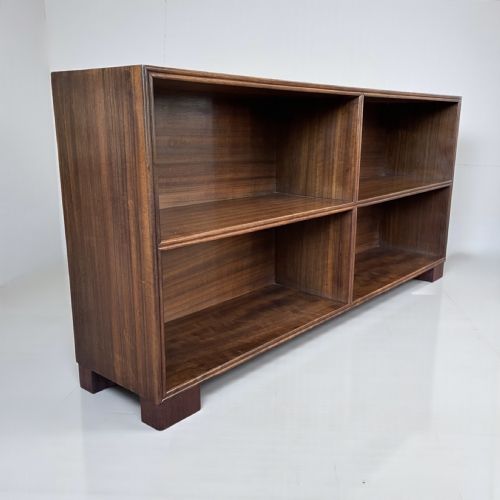
Low walnut shelving brings practical display and rich timber grain into a room without dominating the wall space.
Low Walnut Shelving
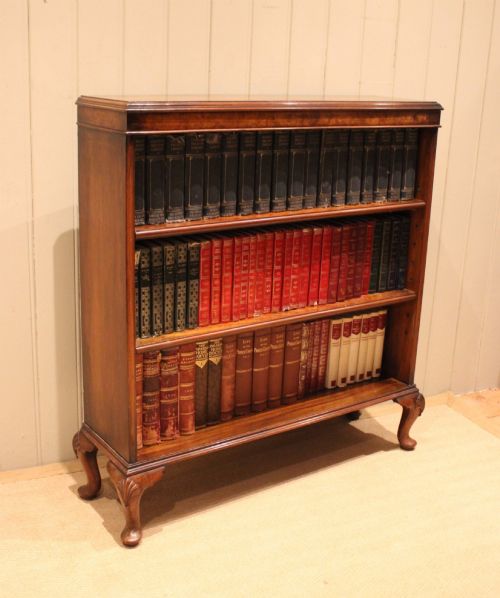
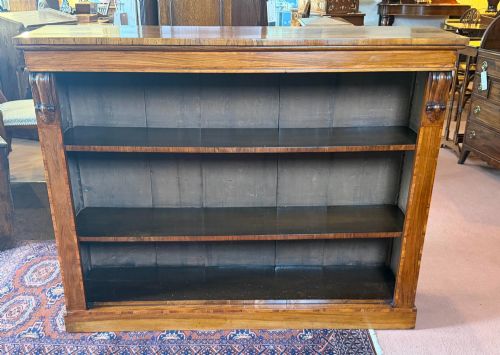
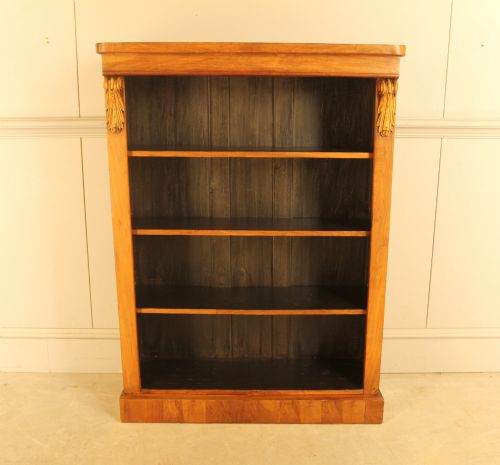
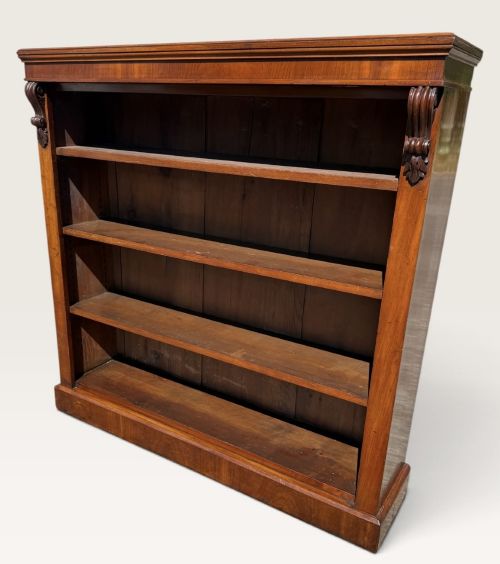
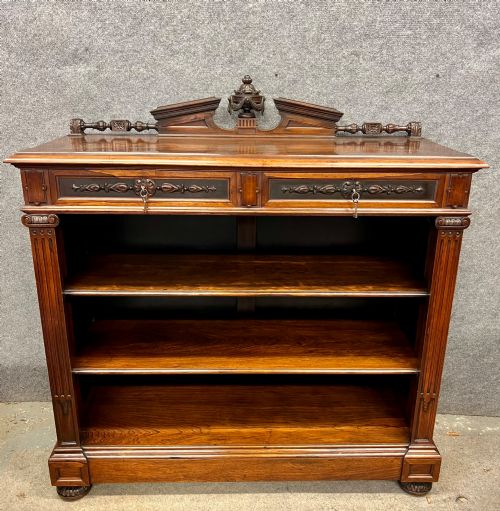
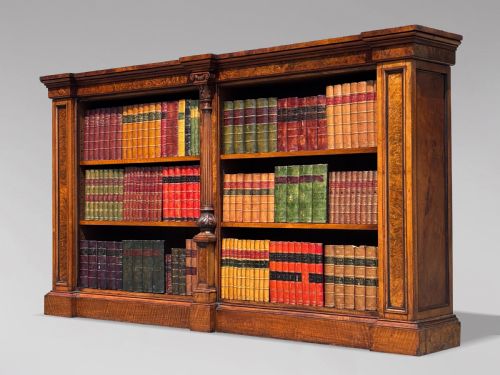
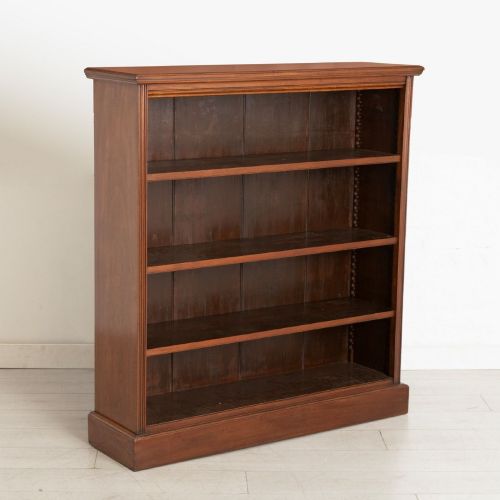
Low walnut shelving primarily manifests as open bookcases and cabinets designed to sit comfortably below eye level. These pieces serve as functional furniture for holding books and decorative objects while keeping ceilings feeling high and rooms feeling open.
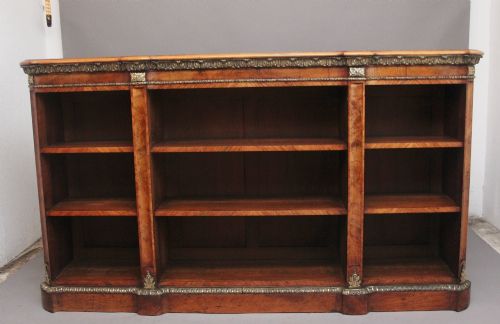
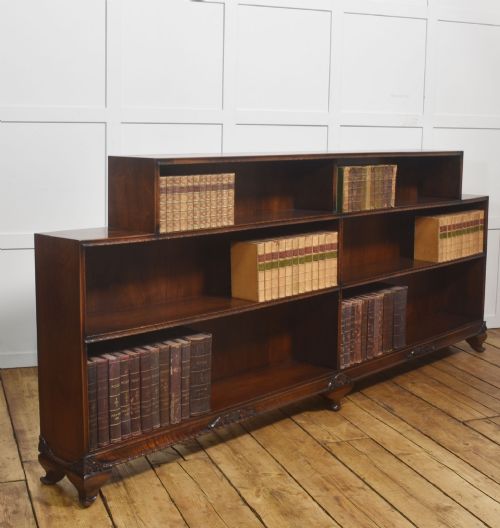
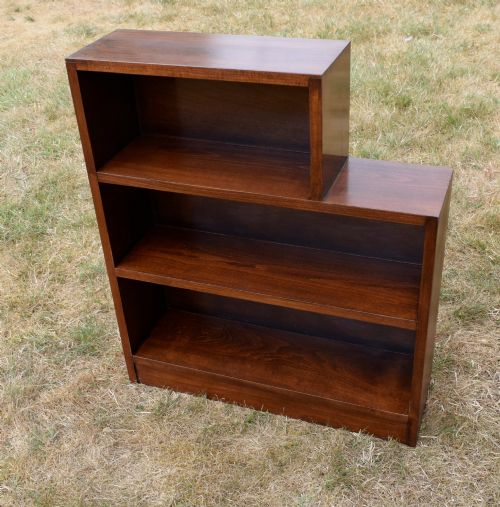
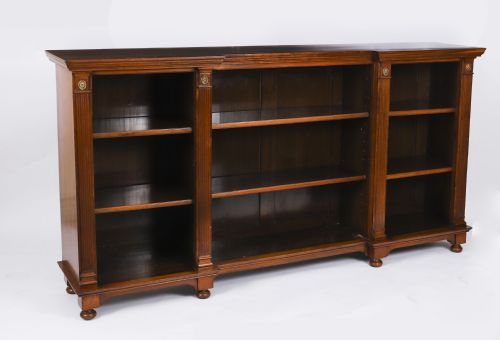
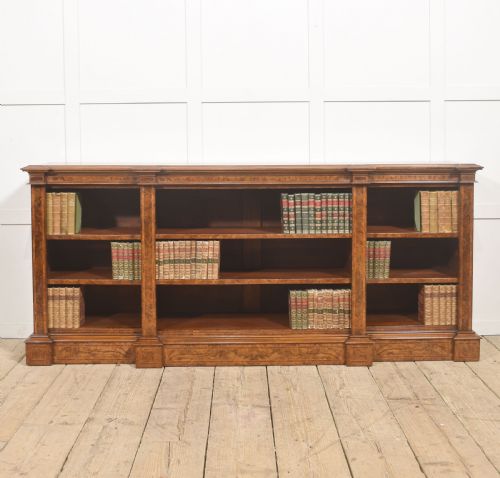
The selections found here draw heavily from the nineteenth century and the Victorian era, alongside later Art Deco interpretations and Edwardian pieces. Buyers frequently encounter open bookcases featuring adjustable shelves, breakfront profiles, and stepped designs that suit various interior proportions.
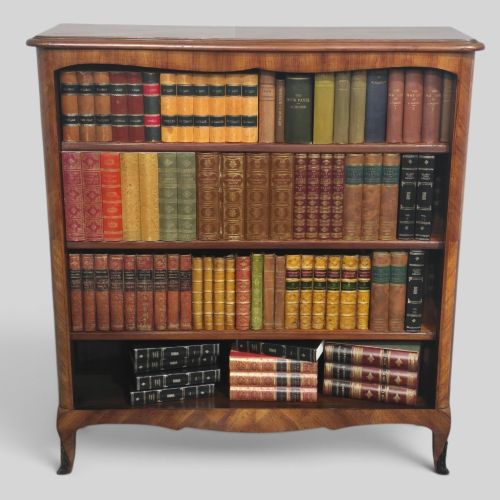
Origins span English workshops of the Victorian and William IV periods as well as French ateliers influenced by Louis styles. Common structural variations include freestanding low bookcases, modular cabinets, and matched pairs built for symmetrical library or drawing room layouts.
Quality and execution
Superior examples distinguish themselves through the selection of highly figured burr veneers and crisp, well-cast ormolu or gilt mounts. The depth of the timber finishing and the precision of inlaid details elevate certain pieces above standard utilitarian shelving.
Structural integrity depends on the quality of the timber seasoning and the stability of breakfront or stepped configurations over time. Finer pieces demonstrate careful attention to internal joinery and shelf adjustment systems that operate smoothly without binding.
Some nineteenth-century makers hid their adjustment mechanisms so cleverly that the shelves appear to float on pure walnut air.
JOHNSTONE AND JEANES·Maurice Adams
The Low Walnut Shelving Glossary
- Burr walnut
- A veneer sliced from the gnarly growths of a walnut tree, yielding swirling patterns of grain. This decorative wood was favoured for high-status Victorian and William IV cabinetry.
- Ormolu
- Gilt bronze mounts applied to furniture for decorative contrast against dark timbers. Makers in the nineteenth century used these metallic accents to elevate the formality of bookcases.
- Breakfront
- A cabinet or bookcase whose central section projects forward from the flanking wings. This architectural form adds depth and shadow play to low shelving units.
- Faux burr walnut
- A painted or finished surface mimicking the appearance of natural burr walnut grain. Artisans applied this technique when genuine burr veneers were unavailable or too costly.
- Adjustable shelves
- Movable internal boards supported by brass tracks or wooden ratchets. This adaptable system allows users to customise vertical clearance for varying volumes.
Low Walnut Shelving: Frequently Asked Questions
What periods do these bookcases come from?
The available selection spans the nineteenth century, including William IV and Victorian eras, alongside Edwardian designs and 1930s Art Deco pieces.
Earlier examples often display neoclassical or revival influences, while twentieth-century pieces adopt cleaner geometric lines.
Are the shelves adjustable?
Many low walnut bookcases feature adjustable shelving systems supported by brass pins or tracks.
This makes it straightforward to alter interior heights for different book sizes and display items.
What is the difference between walnut and burr walnut?
Standard walnut timber offers a straight, rich grain pattern with deep brown tones across large surfaces.
Burr walnut comes from tree growths that produce complex, swirling patterns used as decorative veneers on finer cabinets.
How do I fit low shelving into a modern room?
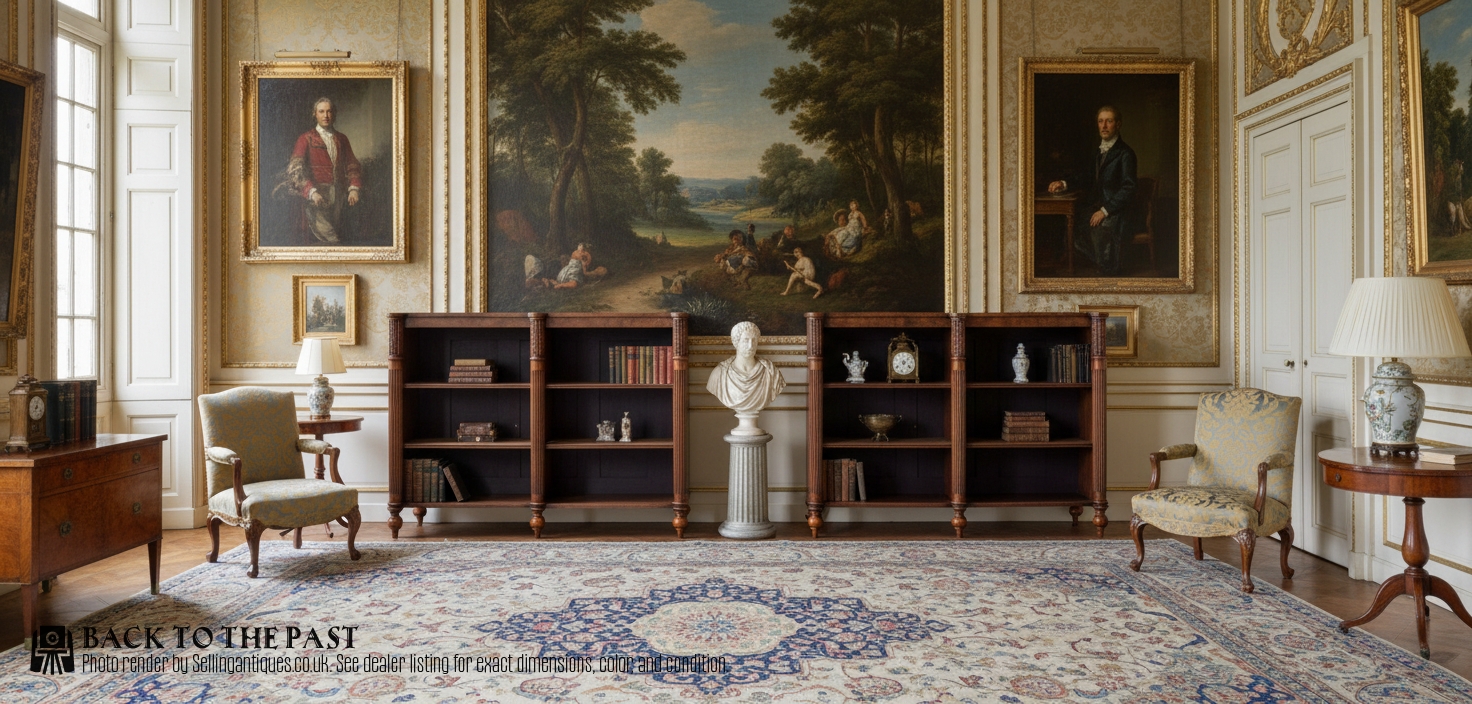
Low shelving units sit easily beneath windows or picture rails without blocking natural light or wall art.
Their proportions provide accessible surface space on top for lamps and ornaments while keeping floor areas clear.