
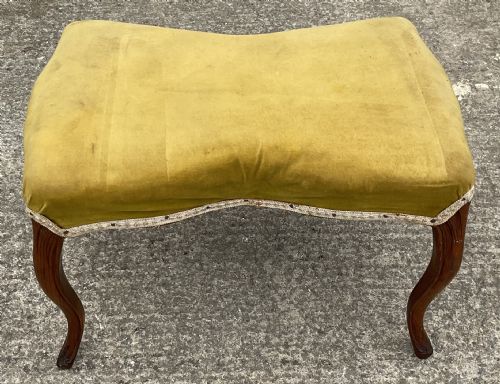


Low Walnut Footrest
These low walnut footrest pieces are compact, timber-framed supports designed for the hearth or fireside, combining rich woods with traditional textile covers.
Low Walnut Footrest
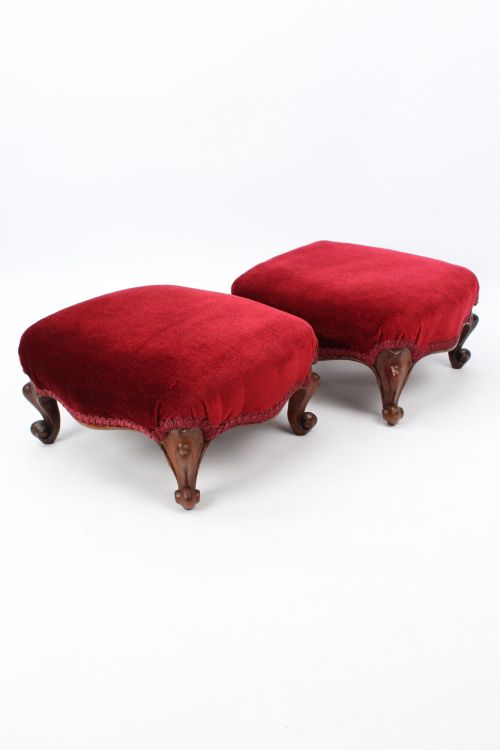
A low walnut footrest takes the form of a compact stool or footstool, designed primarily for fireside comfort and dressing use. These pieces appear across Victorian, Edwardian, and earlier revival periods, reflecting shifting domestic habits.
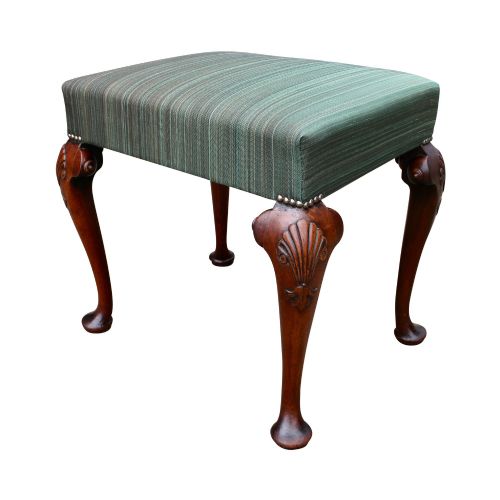
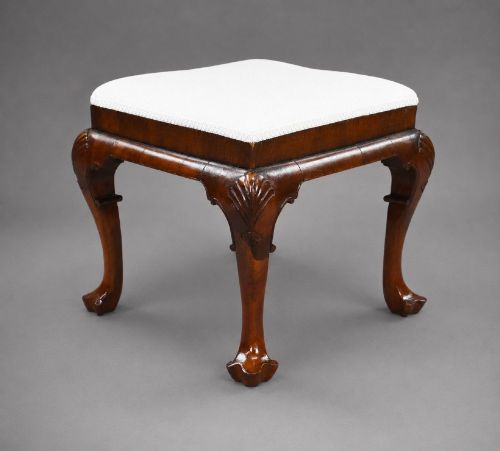
The materials and styles range from solid walnut frames with simple upholstered pads to elaborate examples featuring carved cabriole legs and decorative needlepoint. The selection includes pairs alongside individual long fender stools and dressing stools.
Buyers will encounter various revival aesthetics, including Queen Anne, Louis XIV, and George II styles, executed in hardwood with textile or leather upholstery secured by brass tacks.
Materials and construction methods
Makers utilised solid walnut and hardwood to construct sturdy frames, frequently shaping the timber into cabriole legs with carved detailing. Frames were joined using traditional woodworking techniques to ensure stability under daily use.
Upholstery forms an essential component of each piece, incorporating materials such as textile, velvet, fabric, and tapestry. These coverings are often secured and finished with brass tacks along the frame borders.
Some fireside stools arrive with needlepoint covers stitched by hands long forgotten, preserving tiny personal colour choices in wool.
Factors of distinction
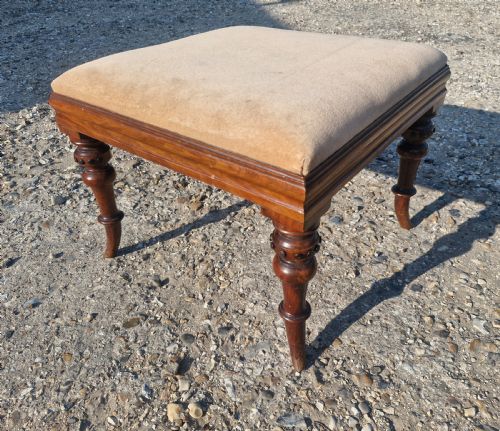
The refinement of the woodwork dictates much of the quality, separating simple turned supports from deeply carved cabriole legs with detailed ornamentation. Crisp carving on the walnut frame indicates superior craftsmanship.
The choice and execution of the covering also distinguish pieces, with hand-worked needlepoint and heavy tapestry representing a higher standard of finish than plain modern or standard fabric replacements.
The Low Walnut Footrest Glossary
- Cabriole leg
- A furniture leg that curves outward at the knee and tapers inward to an ankle, mimicking an animal's limb. This form became central to Queen Anne and revival furniture designs.
- Fender stool
- A long, low stool designed to fit neatly in front of a hearth fender. These pieces kept feet elevated from cold stone floors near the fireplace.
- Brass tacks
- Small metal fasteners with decorative heads used to secure fabric and leather upholstery to wooden frames. They provide both structural hold and visual trim along the edges.
Low Walnut Footrest: Frequently Asked Questions
Where were low walnut footrests used?
These pieces were placed primarily by the fireside or in bedrooms for dressing purposes. Their low profile kept feet warm near the hearth.
They also served as convenient portable seating when space beside larger armchairs was restricted.
How do I identify a Victorian footstool?
Victorian examples often feature dark walnut frames with characteristic turned or cabriole supports. Upholstery methods from this era frequently utilise heavy fabrics and brass tacks.
Stylistic revivals during the period borrowed heavily from earlier centuries, mixing walnut timbers with needlepoint or velvet covers.
What is a Queen Anne style stool?
This style references early eighteenth-century design traits, notably the curved cabriole leg and restrained use of carved ornamentation on walnut. Revival versions appeared in later decades.
These pieces typically present clean wooden lines paired with traditional drop-in or upholstered seats.
Are these stools suitable for daily use?
The solid hardwood construction of these pieces provides the structural strength needed for everyday resting of feet. Their compact size allows them to be moved easily around a room.
Care should be taken with historical upholstery fabrics to maintain their condition over time.