

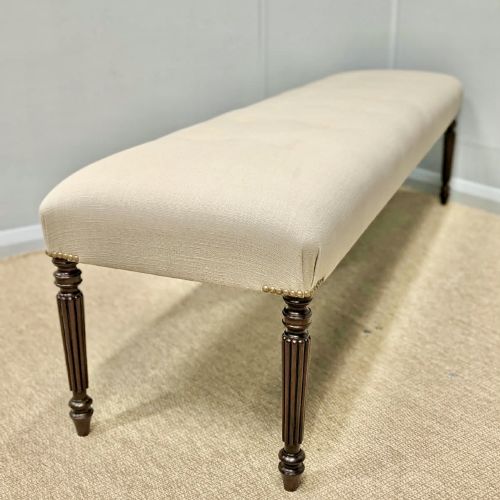
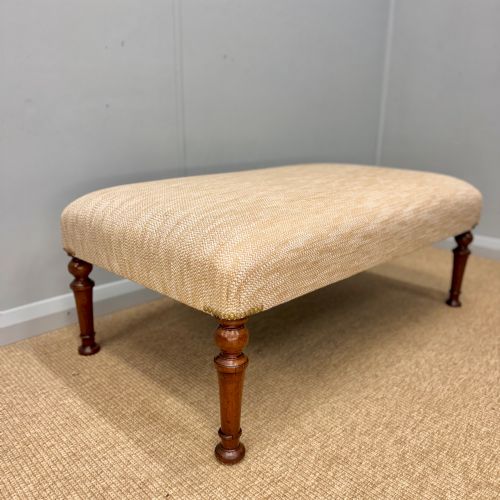


Beige Upholstered Bench
A beige upholstered bench brings quiet texture and practical seating to a room, offering understated utility rooted in centuries of craftsmanship.
Beige Upholstered Bench
When searching for a beige upholstered bench, buyers encounter a varied selection of antique seating including footstools, ottomans, hall benches, canapés, settees, and fender stools. These pieces originate from periods such as the Regency era, the Victorian period, and the Edwardian years, with dates spanning 1880, 1900, and the broader nineteenth century.
The assortment on this page leans heavily toward nineteenth-century forms, including walnut hall benches recovered in neutral linen and carved walnut freestanding stools. Alongside these benches, the listings incorporate larger seating such as Regency sofas and French canapés, blending long timber frames with soft textile tops.
Makers and designers embraced diverse regional aesthetics for these items, drawing on English country house traditions, Georgian revival patterns, French provincial designs, and Louis XVI styles. Such influences appear across painted woodwork, carved oak settle seats, and extended centre stools designed for placement in generous hallways or principal rooms.
How they were made
Makers constructed these frames from solid hardwoods, primarily utilising walnut, mahogany, and oak to build sturdy structural foundations. Timber components often feature carved ornamentation, fluted legs, and painted finishes suited to French provincial or English country house interiors.
Upholstery techniques combined traditional stuffing methods with textile coverings suited to daily use. Surviving examples employ wool, tapestry fabric, general fabric upholstery, and newly applied beige linen to refresh the seating surface.
Beige Upholstered Bench Retail Price Guide 2026
Typical asking prices for beige upholstered bench among the pieces listed under this phrase on Sellingantiques today, from the lower quarter to the upper quarter. They describe what is for sale here now, not the wider market.
The listings on this page span the Regency period through to 1900, featuring walnut, mahogany, and oak across various stool and settee forms.
What varies in quality
The standard of carving and timber selection determines the distinction between ordinary and exceptional pieces. Elaborate hand-carved details on walnut and oak frames indicate higher workshop skill compared to plain or heavily restored woodwork.
The integration of the upholstery relative to the frame also dictates overall standard. Pieces retaining well-executed recovering work in quality linen or tapestry fabric complement the historical timber without masking the original joinery.
The Beige Upholstered Bench Glossary
- Canapé
- An upholstered sofa or settee featuring a decorative wooden frame, common in French seating designs. These pieces often incorporate exposed carved woodwork along the top rail and arms.
- Fender stool
- A low stool designed to sit in front of a fireplace hearth. Nineteenth-century examples typically feature elongated proportions to accommodate warming feet near the fire.
- Hall bench
- A wooden bench intended for an entrance hall or corridor, sometimes incorporating a high back or a settle seat. They provide practical seating combined with substantial timber presence.
- Regency
- An English design period spanning the early nineteenth century, characterised by classical restraint and neoclassical motifs. Furniture from this era often displays clean architectural lines.
- Walnut
- A dense hardwood prized for its rich grain and stability, frequently used in high-status nineteenth-century furniture frames. It accepts fine carving and polished finishes exceptionally well.
Beige Upholstered Bench: Frequently Asked Questions
Where should I place a hall bench?
A hall bench suits entryways, corridors, or the foot of a bed where practical seating is required without blocking passage.
Their narrow proportions allow them to occupy transitional spaces while introducing period character through exposed timber frames.
How do I care for antique upholstery?
Maintenance involves gentle vacuuming with a soft attachment to remove dust from linen, wool, or tapestry surfaces.
Keeping the textile away from direct sunlight prevents fading in the natural fibres.
What is a fender stool used for?
Fender stools historically sat before the hearth to provide comfortable seating close to the fireplace.
Their low profile prevented them from obstructing the warmth radiating from the fire.
How do I identify a Victorian stool?
Victorian pieces often display heavier timber construction, walnut framing, and detailed carving influenced by revival styles.
Dates around 1880 frequently appear alongside robust proportions and traditional joinery methods.