
Low Upholstered Footstool
A low upholstered footstool offers a practical resting place for feet while bringing period character to a fireside or dressing room.
Low Upholstered Footstool
A low upholstered footstool provides a compact seat or foot rest, often designed to sit close to the floor near a fireplace or in front of a dressing table. When you search for this phrase, you encounter pieces spanning from the eighteenth century through the Victorian era and into the Art Deco period.
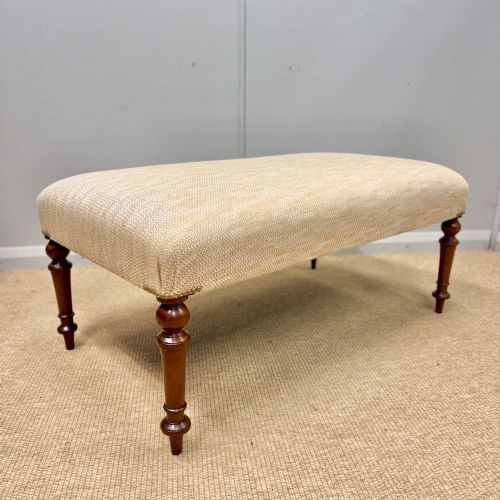
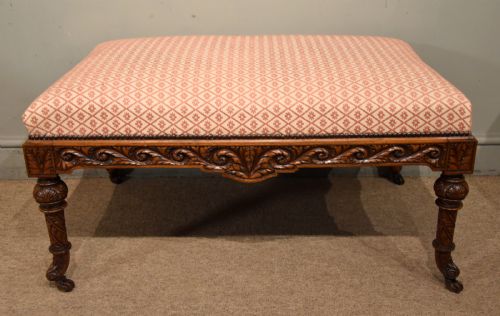
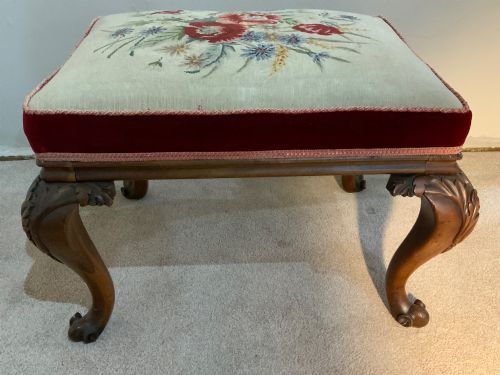
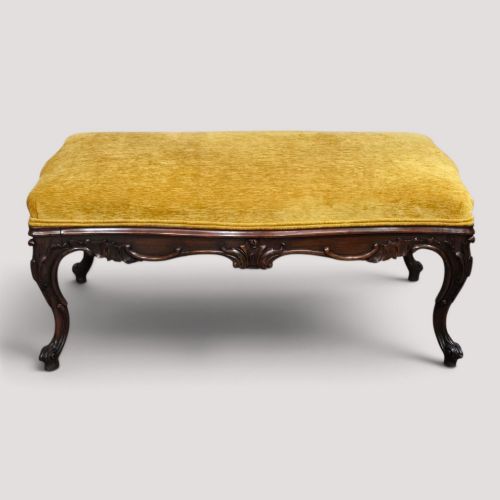
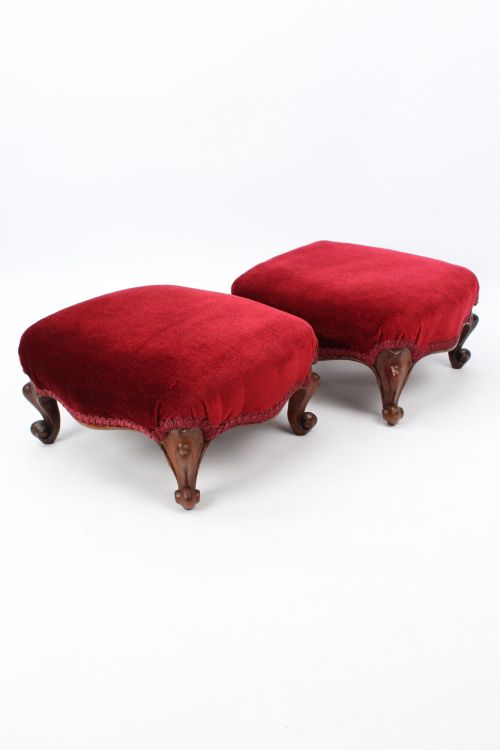
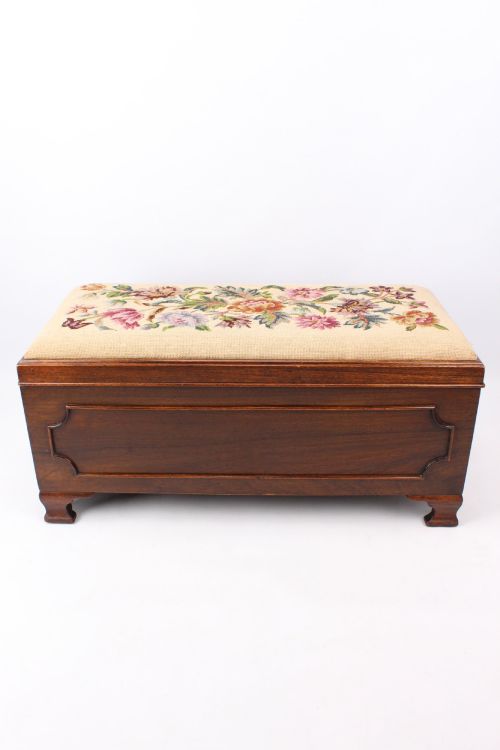
The version you are most likely to meet on this page is the Victorian walnut or mahogany footstool, frequently resting on short legs or brass castors. These range from simple square forms to larger rectangular benches and low gout stools designed for comfort.
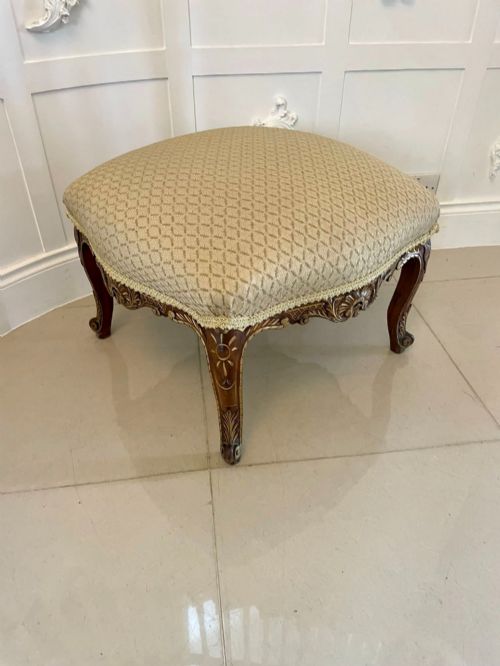
Makers and craftsmen applied various regional and historical influences, resulting in styles that include Regency, Queen Anne revival, Edwardian, and Anglo-Indian designs. Surviving examples often show subsequent re-covering in modern or period-appropriate textiles.
How they were made
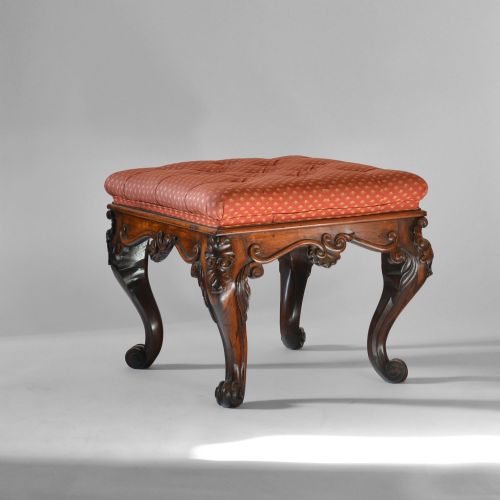
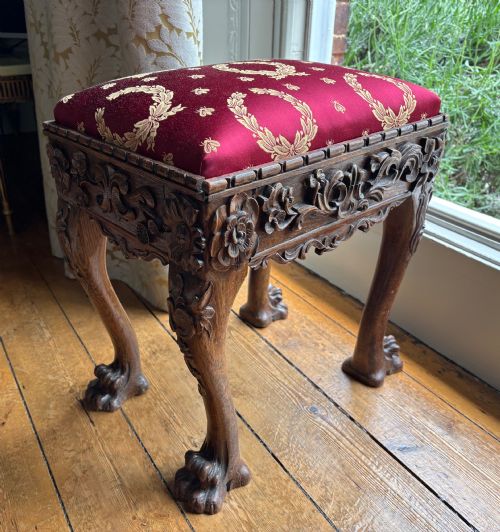
Carpenters and cabinetmakers utilised dense timbers such as mahogany, walnut, rosewood, oak, and pitch pine to construct the sturdy frames. Joints were typically joined with traditional fixings, while decorative elements involved hand-carving, gilding, or applied veneers like burr walnut and birds-eye maple.
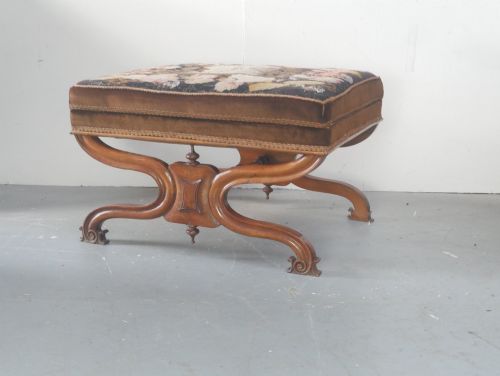
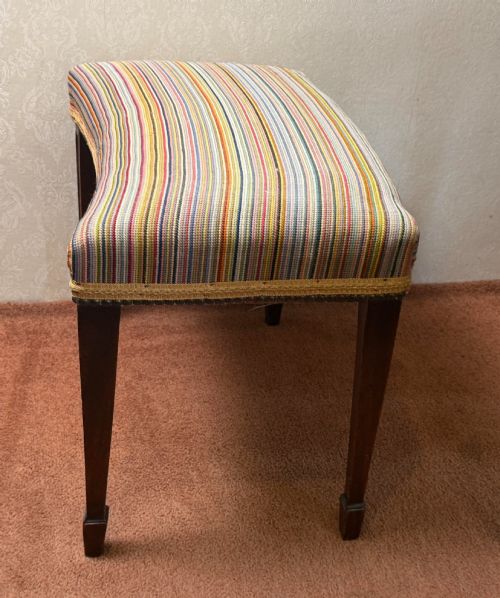
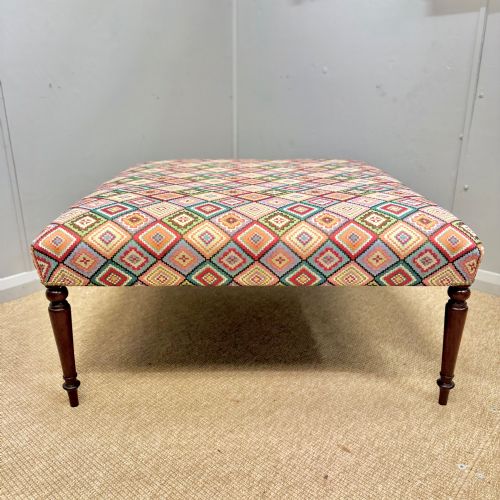
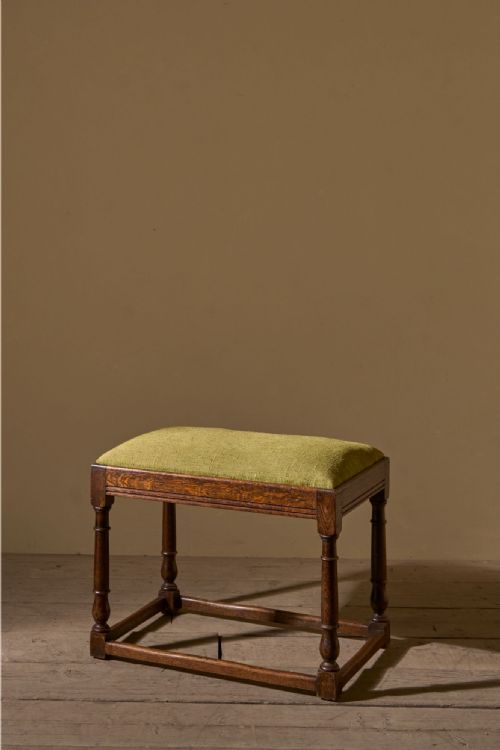
Upholstery techniques combined webbing, stuffing, and heavy textiles to create a durable seat. Original or period coverings frequently feature wool tapestry, needlework, velvet, heavy green linen, or leather fixed with close-nailing.
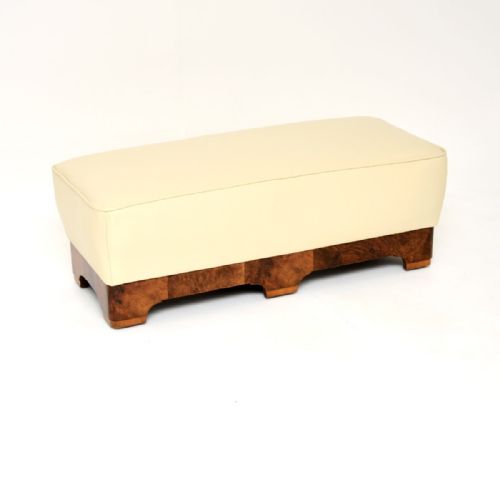
Period examples span from the eighteenth-century Georgian era through Victorian designs to 1930s Art Deco pieces.
What varies in quality
The caliber of a frame rests on the choice of timber and the crispness of any hand-carving or turned elements, such as barley-sugar legs. Denser hardwoods and finely figured veneers indicate a more ambitious commission from the outset.
The integrity of the original joinery and the proportion of the piece dictate its visual balance. Pieces that retain harmonious scale and well-executed structural details separate standard utilitarian seating from finer examples.
Harry And Lou Epstein
The Low Upholstered Footstool Glossary
- Gout stool
- A specialised low footstool designed to elevate and support the foot, often featuring an adjustable inclined top. These items were particularly popular during the nineteenth century for relieving joint discomfort.
- Cabriole leg
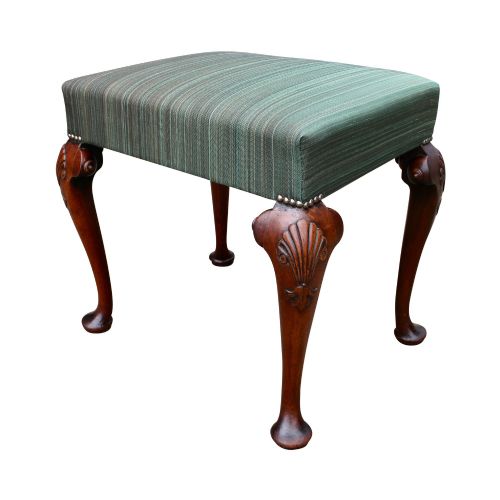
- A furniture leg that curves outward and then tapers inward, mimicking an animal's leg in motion. This form appears frequently on walnut and mahogany seating from the eighteenth century onwards.
- Stretcher
- A horizontal wooden brace connecting the legs of a stool to provide structural rigidity. In earlier pieces, these can take elaborate forms like saltires or oyster-veneered rails.
- Castor
- A small wheel attached to the base of a leg to allow smooth movement across the floor. Brass versions are commonly found on larger nineteenth-century examples.
- Needlework
- Hand-stitched textile work utilised for upholstery. Pieces finished in period woolwork demonstrate considerable domestic labour and decorative ambition.
Low Upholstered Footstool: Frequently Asked Questions
How do I date a footstool?
Examine the primary timber, leg style, and construction methods used in the frame. Secondary woods and turning patterns often align with specific decades like the Victorian era or the Georgian period.
Compare the upholstery method and underlying webbing where accessible, though many pieces have been re-covered over time to suit later interiors.
Where should I place a low footstool?
These pieces suit placement directly in front of an armchair by the hearth or at the foot of a bed. Their modest height also makes them effective as dressing table seats.
Because they take up minimal floor space, they integrate easily into sitting rooms and studies without crowding the layout.
Are these stools comfortable for daily use?
Most antique footstools were built with firm traditional stuffing designed to support the feet or provide occasional seating. Contemporary buyers often find them well-suited for relaxing with a book.
If the internal padding has degraded over the decades, a restorer can rebuild the interior using traditional materials while preserving the antique frame.
What is the difference between a footstool and an ottoman?
Footstools generally measure smaller and sit lower to the ground, specifically intended for resting feet or low seating. Ottomans often present a larger scale and can function as central coffee tables or generous benches.
Historical terminology sometimes overlaps in listings, but scale and proportion remain the clearest indicators.