

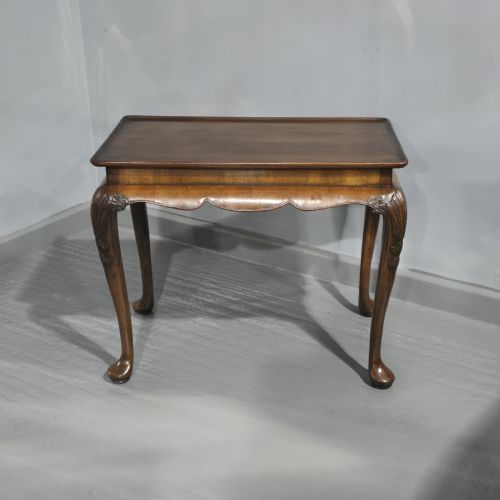


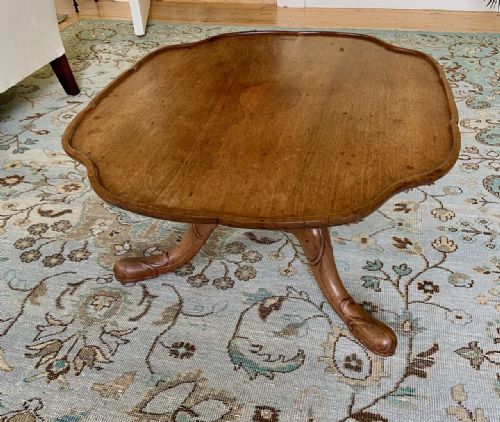

Low Tray Table
A low tray table brings a removable top and low stature together for easy serving.
Low Tray Table
A low tray table combines a supportive stand with a portable surface designed for serving or display at a reduced height. These pieces serve as functional coffee tables or occasional tables in modern rooms while retaining their traditional utility.
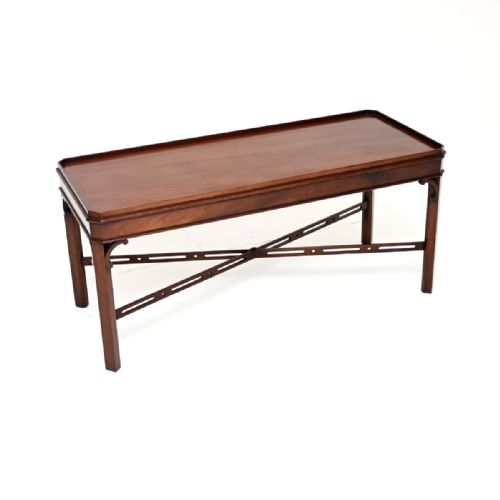
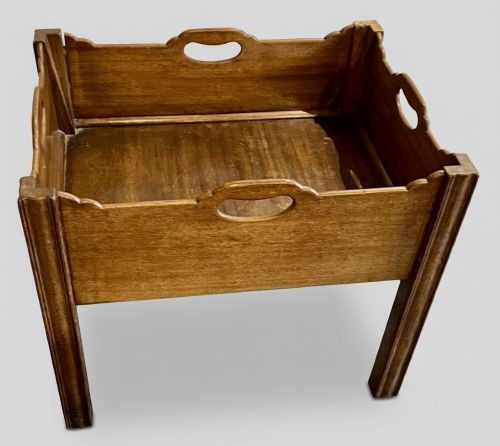
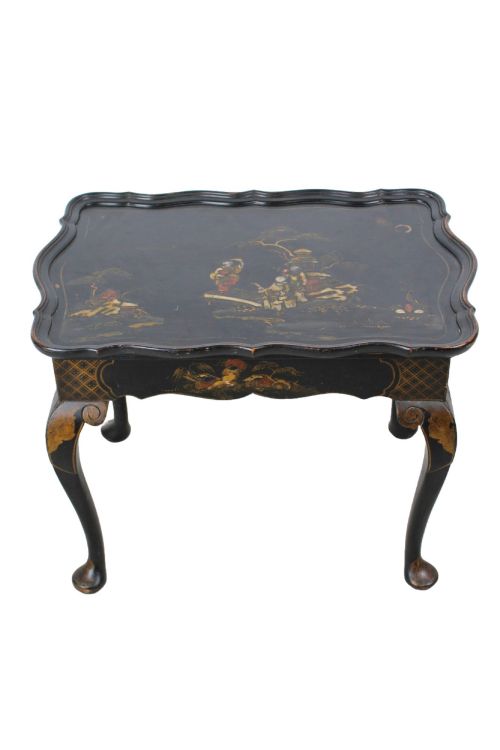
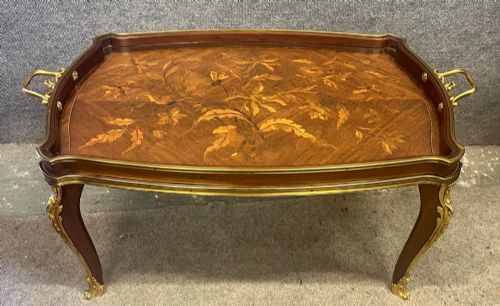
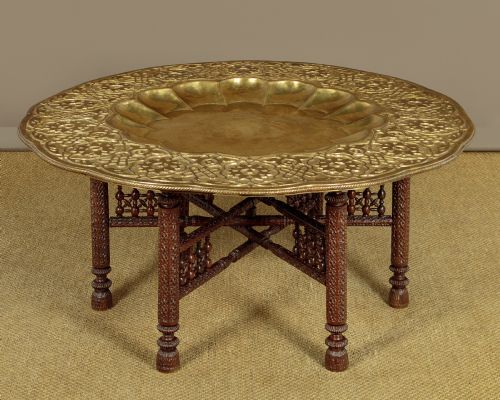
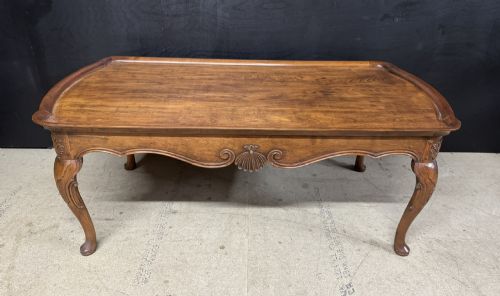
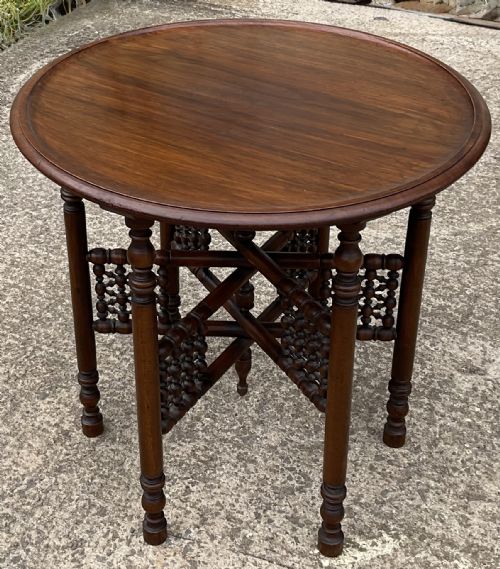
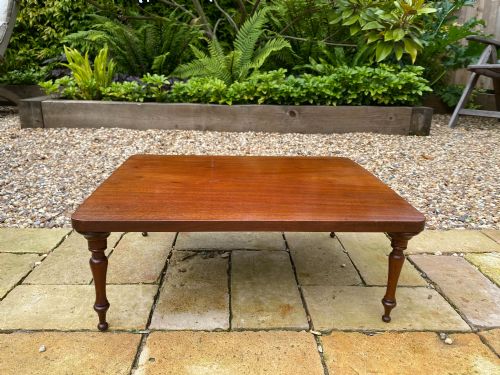
The versions met most frequently on this page date from the nineteenth century through to the nineteen thirties, spanning Edwardian, Victorian and revival styles. Formats range from circular lacquer tops to large brass surfaces and rectangular mahogany structures.
Origins and aesthetics vary widely, incorporating Anglo-Indian brass work, Oriental and Chinoiserie lacquered wood, and British revival designs in walnut and mahogany. Each piece merges the practicality of a detachable tray with the decorative finish of its period.
Materials and construction
Makers utilised solid timbers such as mahogany and walnut, frequently applying burr veneers or ebonised finishes to achieve rich surface textures. Lacquered wood surfaces display intricate Chinoiserie decoration, built up through traditional layering techniques.
Metal components include heavy brass tops, often etched with zodiac signs or oriental motifs, paired with wooden folding or fixed stands. Gallery edges are raised around the trays to secure items during transport, fixed firmly to the base structures.
Low Tray Table Retail Price Guide 2026
Typical asking prices for low tray table among the pieces listed under this phrase on Sellingantiques today, from the lower quarter to the upper quarter. They describe what is for sale here now, not the wider market.
Listings feature woods including walnut, mahogany, and ebonised timber, alongside brass and lacquer.
Quality and craftsmanship
Superior examples demonstrate meticulous attention to detail in the execution of carved galleries, crispness of brass etching, and depth of lacquer work. The integrity of the jointing between the stand and the tray surface separates refined studio pieces from standard production.
Finer timber selections, such as figured burr walnut and dense mahogany, display superior grain alignment and ageing. The balance and stability of the low frame, alongside the preserved condition of hand-applied finishes, dictate the upper tier of the range.
Whytock and Reid
The Low Tray Table Glossary
- Gallery
- A raised wooden or metal rim around the edge of a tray to prevent objects from sliding off. This feature is often pierced or fret-cut in revival pieces.
- Chinoiserie
- European decorative art imitating Chinese styles, typically characterised by lacquered surfaces and gilt motifs. It appears prominently on Edwardian occasional tables.
- Ebonised timber
- Wood treated to resemble ebony, creating a dark, uniform finish. This technique was popular in nineteenth-century cabinet making.
- Occasional table
- A small, movable table designed for specific, intermittent use rather than permanent placement. These items suit flexible living spaces.
Low Tray Table: Frequently Asked Questions
What is a low tray table?
A low tray table is a small piece of furniture featuring a removable or integrated tray top resting on a low support frame. They function primarily as coffee tables or occasional tables.
These pieces descend from traditional serving trays placed upon folding or rigid stands. Their low profile suits modern seating arrangements.
How were tray tables used?
Historical tray tables served to carry food, drinks or writing materials from the kitchen or pantry to the drawing room. The top lifted off independently for convenient service.
Today, they remain in fixed positions as coffee tables while keeping their distinctive raised edges. The portable top concept persists in domestic use.
How do I style a tray table?
Place a low tray table centrally before a sofa or beside an armchair to act as an accessible surface for books or lamps. Their decorative tops work well when left largely unobstructed.
Consider the material finish, such as brass or lacquer, to complement existing room tones. The low height pairs effectively with low-slung seating.
How do I identify the period?
Examine the timber species, joinery methods and decorative motifs to determine the age of a piece. Edwardian Chinoiserie items display specific lacquer techniques distinct from Victorian brass work.
Revival styles draw on earlier Queen Anne or Georgian designs but incorporate manufacturing methods of their actual date of production. Comparing edge profiles and hardware aids in dating.