

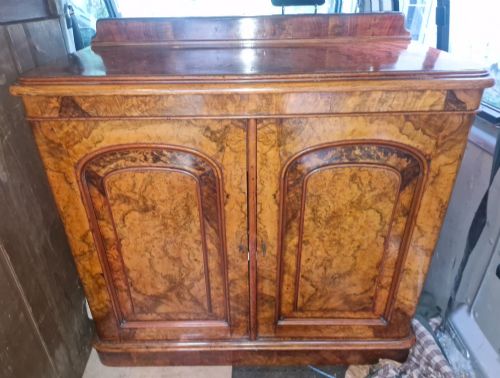
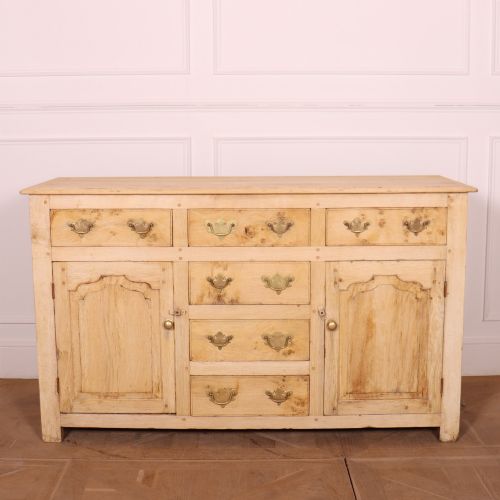
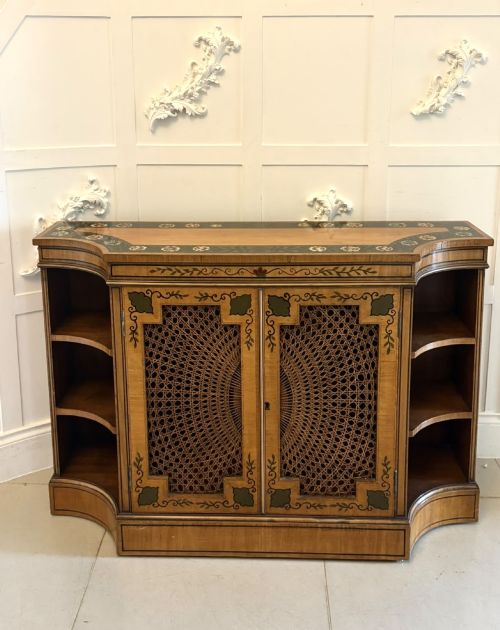
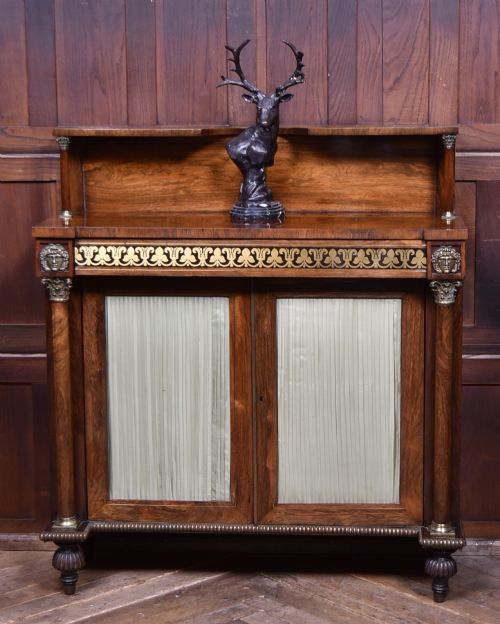
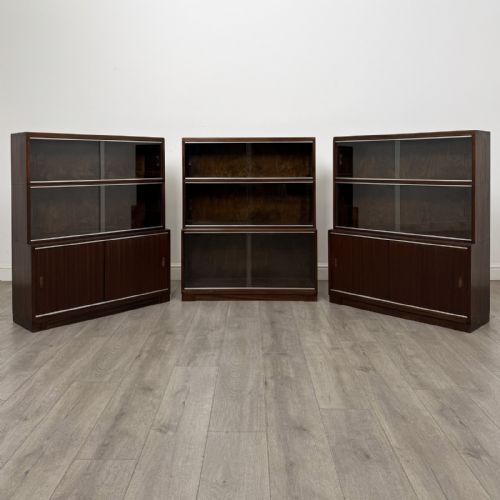
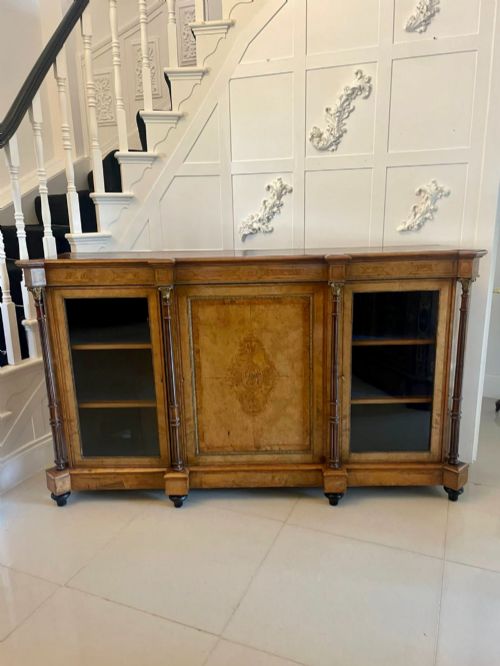
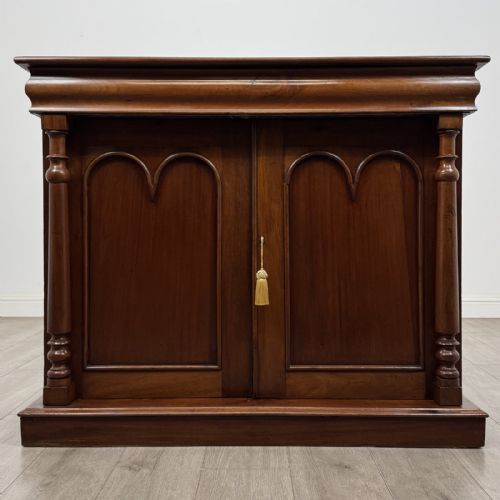
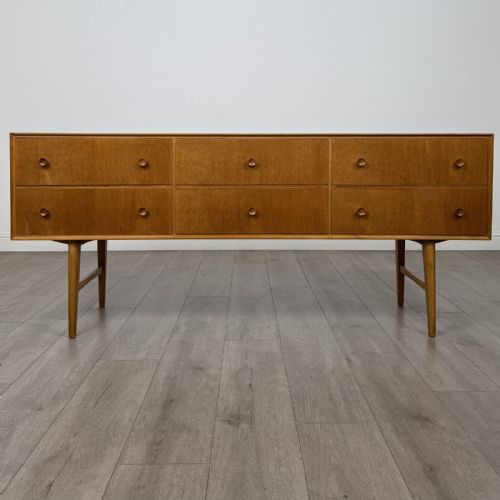
Low Sideboard Cabinet
A low sideboard cabinet brings substantial storage and flat surface utility into a room without dominating the wall space, uniting practicality with period presence.
Low Sideboard Cabinet
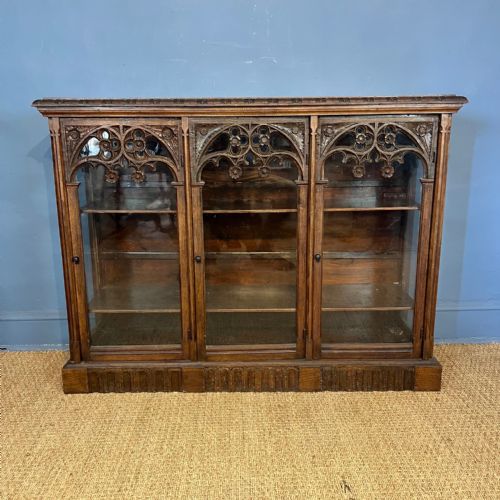
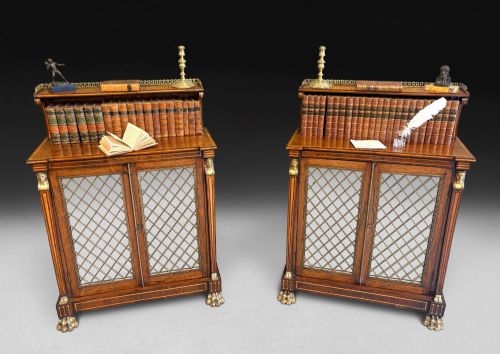
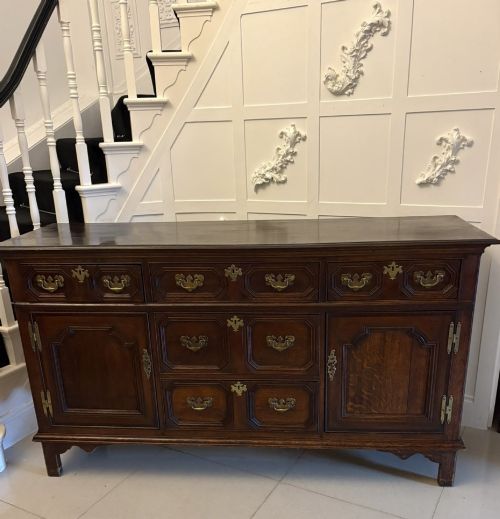
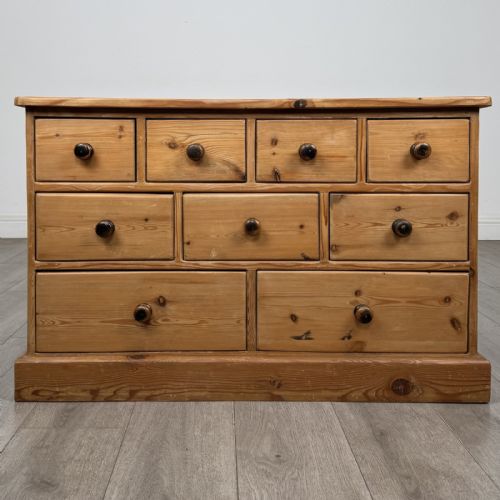
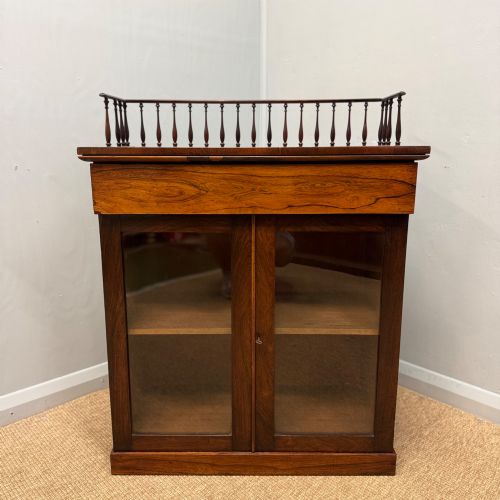
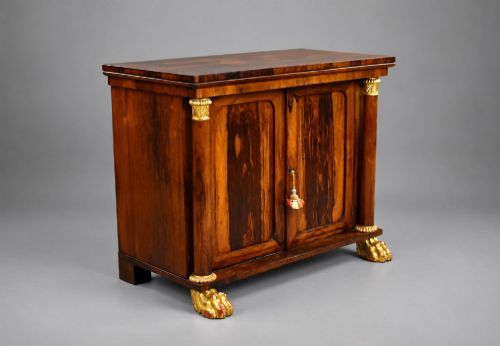
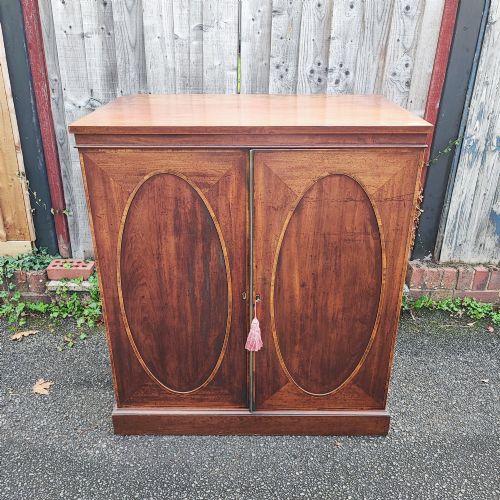
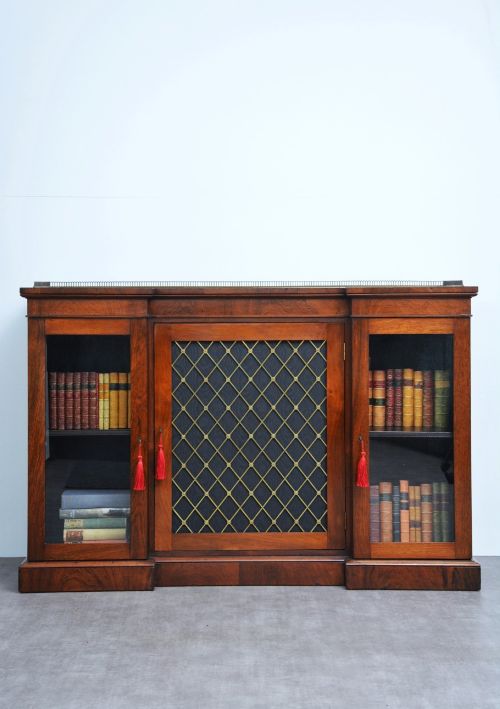
A low sideboard cabinet encompasses a broad variety of low-profile storage forms, ranging from Georgian oak dresser bases and Regency rosewood chiffoniers to Victorian walnut credenzas and 1920s oak sideboards. These pieces provide low surfaces for display alongside enclosed cupboard storage or drawers beneath.
The selection on this page draws heavily on 18th century, Georgian, Victorian, Regency, and 1920s examples constructed in woods such as mahogany, oak, rosewood, and burr walnut. Forms extend from breakfront bookcases and chiffoniers to linen presses and enfilades, offering low-slung utility suited to domestic interiors.
How they were made
Cabinet makers utilised dense hardwoods like mahogany, oak, rosewood, and burr walnut, often applying figured or flame veneers to prominent door and drawer surfaces. Solid pine appears in vernacular pieces, while decorative accents rely on brass inlay, ormolu mounts, and carved details such as linenfold panels and fielded doors.
Construction techniques follow traditional joinery methods suited to each period, from 18th-century pegged oak framing to Victorian carcass construction and early 20th-century sliding glass or tambour door mechanisms. Surfaces are finished with wax or polish that highlights the natural grain and colour of the timber.
Low Sideboard Cabinet Retail Price Guide 2026
Typical asking prices for low sideboard cabinet among the pieces listed under this phrase on Sellingantiques today, from the lower quarter to the upper quarter. They describe what is for sale here now, not the wider market.
The inventory records regional English craft traditions alongside 1920s Danish, Swedish Art Deco, and French enfilade forms.
What varies in quality
Quality rests upon the selection and matching of timber veneers, where highly figured flame mahogany, burr walnut, and rosewood demonstrate superior material choice compared to plain utility boards. The crispness of carved details, inlay work in brass and ebony, and the integration of decorative mounts set finer workshop productions apart from simpler provincial pieces.
Structural integrity and the retention of original hardware, feet, and internal shelving dictate the standing of a piece within its period. Refined proportions, such as concave curves or breakfront profiles, separate ambitious cabinet work from standard domestic storage.
The Low Sideboard Cabinet Glossary
- Chiffonier
- A compact sideboard or low cabinet developed in the Regency and Victorian periods, typically featuring shelves or a mirror superstructure above enclosed lower cupboards. These pieces provide elegant storage in drawing rooms and dining spaces.
- Credenza
- A low sideboard or cabinet, frequently associated with Victorian marquetry and inlay work, designed for display and serving. These pieces often incorporate glazed doors or curved side compartments.
- Enfilade
- A long low sideboard or cabinet originating from continental traditions, designed to sit against an extensive wall and provide continuous surface space and storage through multiple doors.
- Marquetry
- The art of applying decorative veneer pieces in wood, metal, or shell to form pictorial or geometric patterns on cabinet surfaces. This technique elevates the visual richness of Victorian and Regency pieces.
Low Sideboard Cabinet: Frequently Asked Questions
Where should I place a low sideboard cabinet?
These low cabinets suit dining rooms, living spaces, and hallways where height must be kept down to preserve wall art or windows. Their proportions allow surface display while keeping storage beneath waist level.
Position them against blank walls or beneath mirrors to anchor a room visually without crowding the floor area.
How do I date a mahogany chiffonier?
Dating relies on stylistic markers and construction methods spanning the Regency and Victorian eras. Early 19th-century examples often feature brass inlay and scrolling brackets, whereas later Victorian pieces lean towards heavier carving or burr walnut veneers.
Inspect the backboards, drawer linings, and hardware fixings for period-specific hand tools and joinery traits.
What is the difference between an oak dresser base and a sideboard?
Dresser bases originate from earlier vernacular and Georgian traditions, generally presenting sturdy oak construction with deep drawers set over cupboards. Sideboards emerged later as more formal dining room furniture with specialised compartments.
Both offer low storage, but dresser bases carry a heavier, more rustic country house character.
Can these cabinets be used for media storage?
Many low sideboard cabinets and cupboards accommodate modern media equipment due to their wide proportions and internal shelving. Vintage and antique pieces with sliding doors or multiple cupboards offer concealed space for contemporary devices.
Check internal depth and shelf arrangements to ensure compatibility with modern electrical units.