





Low Plant Stand
A low plant stand elevates greenery with restrained height, drawing the eye to timber grain and stone inset tops.
Low Plant Stand
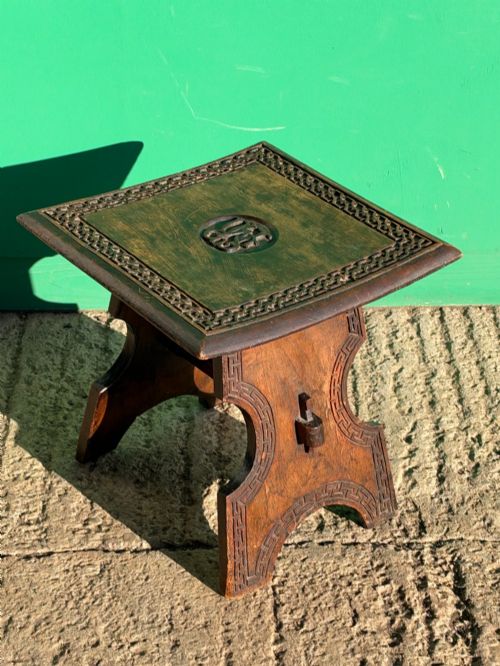
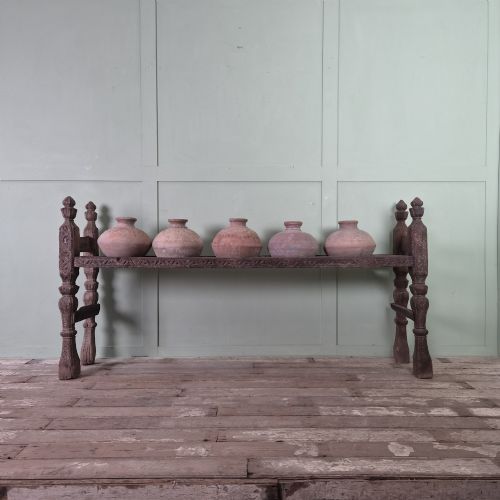
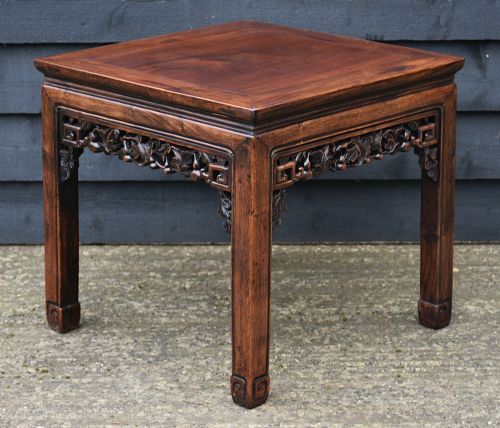
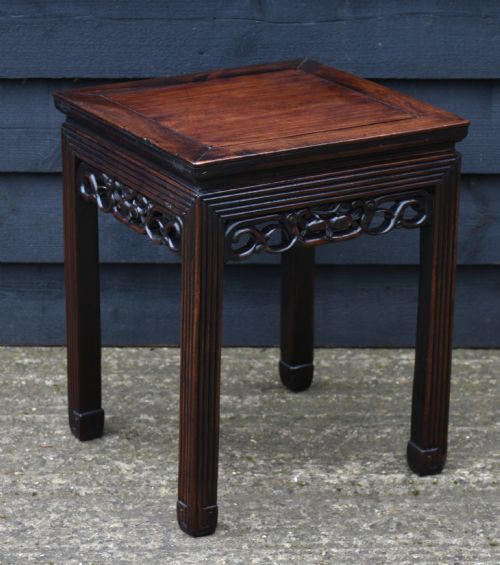
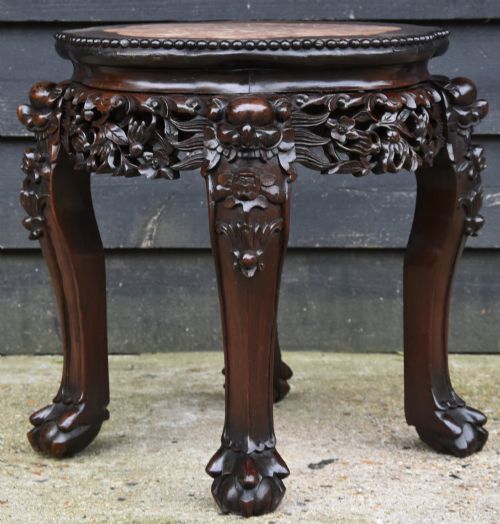
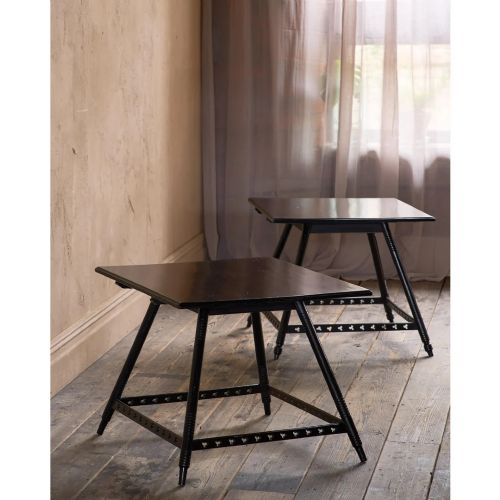
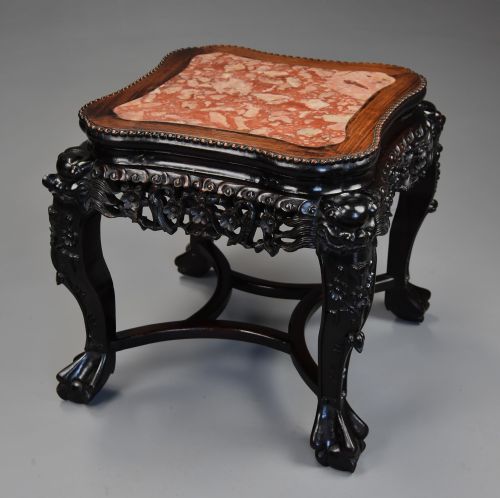
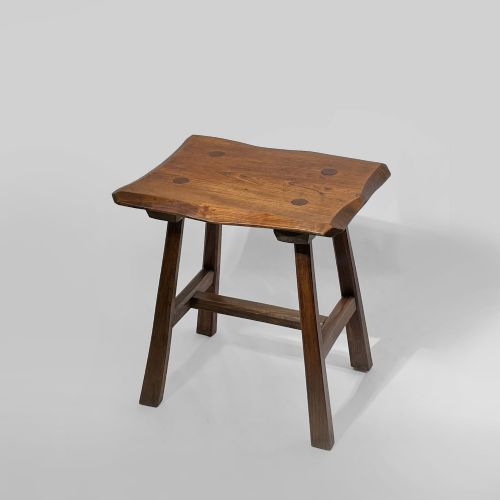
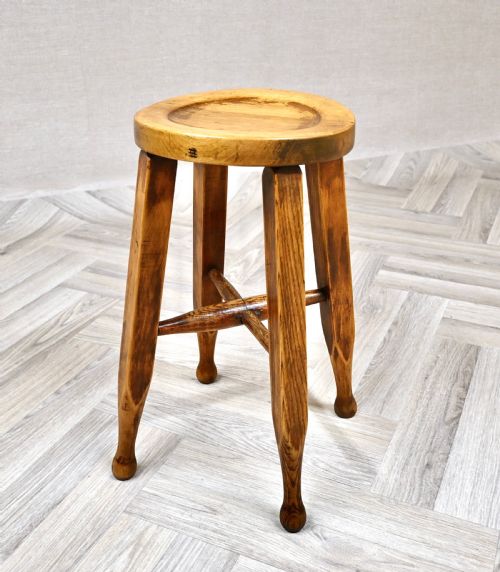
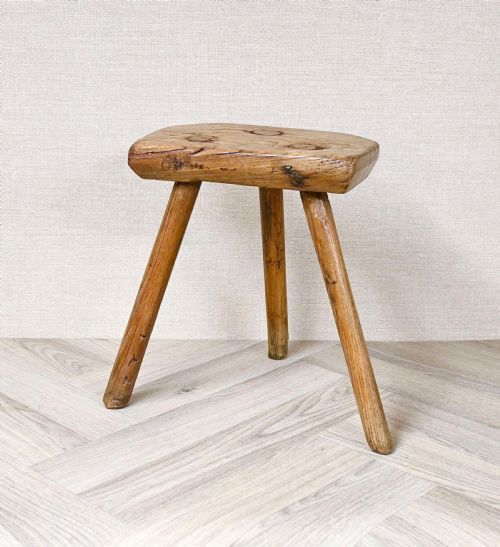
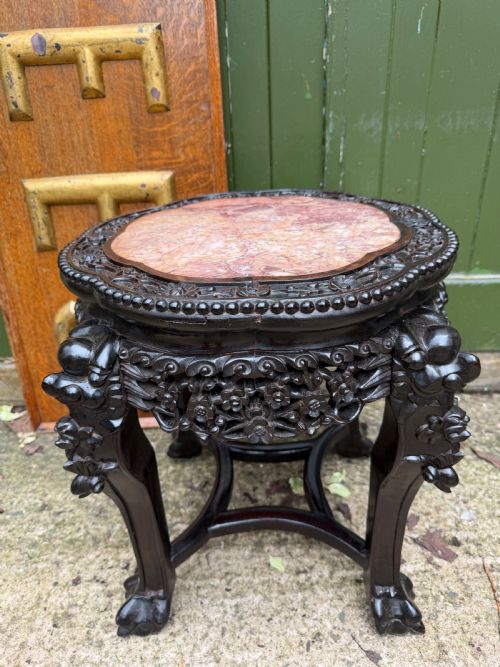
A low plant stand takes many forms across this selection, appearing as carved hardwood jardiniere tables, rustic stools, and occasional tables designed to support vegetation or heavy vases.
The material palette shifts from heavy Chinese rosewood and hongmu to European oak, elm, and fruitwood, spanning the nineteenth century through the art deco era.
Buyers seeking a low plant stand encounter diverse regional expressions, from Qing dynasty marble-top vessels to rustic English country stools and Japanese chabudai tea tables.
Materials and Construction
Carpenters utilised dense hardwoods such as rosewood, hongmu, and padouk, often employing mortise and tenon joinery to support heavy stone inserts.
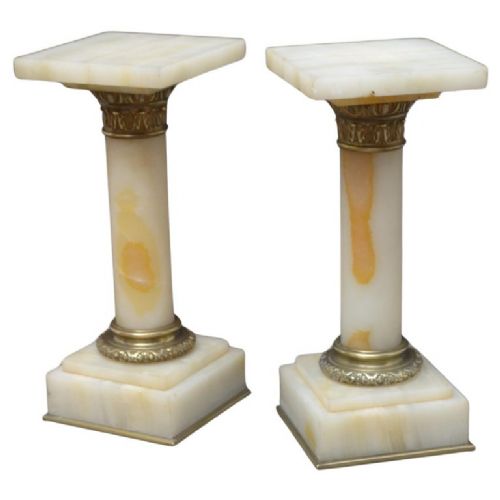
Insets of variegated rouge marble, onyx, and porcelain panels sit flush within carved wooden frames, requiring precise wood-working to accommodate natural expansion.
Softer timbers like oak, elm, and fruitwood appear in country and rustic pieces, shaped with turned legs and simple pegged joints.
Low Plant Stand Retail Price Guide 2026
Typical asking prices for low plant stand among the pieces listed under this phrase on Sellingantiques today, from the lower quarter to the upper quarter. They describe what is for sale here now, not the wider market.
Listings feature hard timbers including rosewood, oak, elm, padouk, and fruitwood alongside marble and onyx.
Factors of Quality
The refinement of the carving dictates much of the distinction, separating mechanical repetition from crisp, deeply undercut foliage and geometric borders.
The selection of the inset stone matters greatly; uninterrupted marble with rich natural veining elevates a piece far above flawed or plain replacements.
Structural integrity relies on the tightness of the original joints and the stability of dense timbers against seasonal cracking.
Liberty and Co·Majorelle
The Low Plant Stand Glossary
- Hongmu
- A dense, dark Chinese hardwood frequently used for high-status furniture and jardiniere stands. It translates directly to red wood and holds intricate hand carving exceptionally well.
- Jardiniere stand
- A low table or pedestal specifically constructed to hold a ceramic flower pot or jardiniere. These often incorporate water-resistant marble or tile tops to handle moisture.
- Chabudai
- A traditional low Japanese table used for domestic tasks while kneeling or sitting on the floor. In Western interiors, they function well as compact coffee or display tables.
- Joint stool
- An early form of wooden stool constructed with pegged mortise and tenon joints rather than turned legs inserted into a seat. They offer sturdy elevation for heavier objects.
- Apprentice piece
- A miniature version of a furniture type created by a trainee craftsman to demonstrate mastery of joinery and proportion to a guild.
Low Plant Stand: Frequently Asked Questions
What is a low plant stand used for?
These pieces elevate potted plants, ceramic vases, and decorative objects above floor level to protect delicate flooring and improve room composition.
Historically, they also served as occasional tables for tea, smoking accessories, or lighting.
How do I identify Chinese hardwood stands?
Look for dense, heavy timbers like rosewood or hongmu combined with traditional joinery and inset marble or porcelain panels. Chinese examples often feature key-fret carving or shaped aprons.
The weight and the depth of the hand-carved relief typically indicate the traditional origin.
Can I use an antique stool as a plant stand?
Many low stools and milking stools share dimensions and stability with dedicated plant stands, making them suitable for displaying heavy pots.
Their rustic timber surfaces and patinated legs offer an alternative to formal oriental jardiniere tables.
How do I care for marble top tables?
Wipe marble surfaces with a damp cloth and mild soap, avoiding acidic cleaners that etch the polished stone.
Use protective pads beneath heavy planters to prevent scratching the inset stone or staining the surrounding wood.