
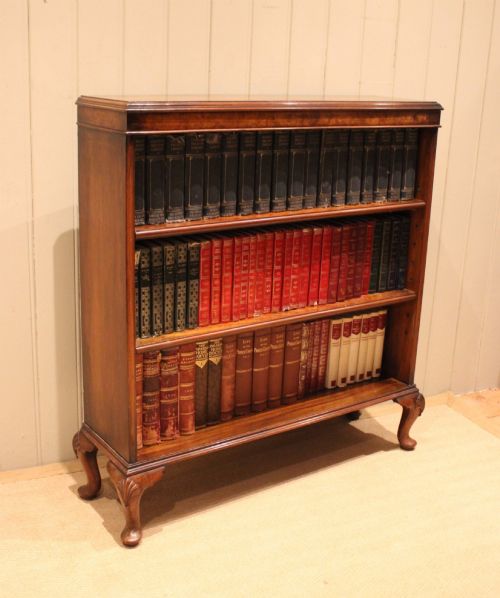
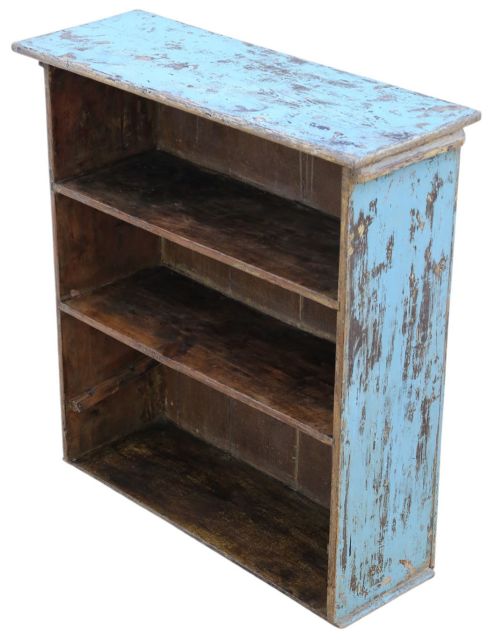
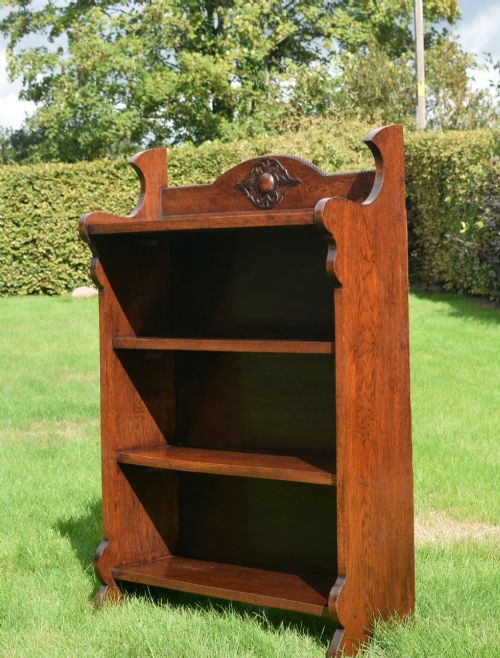
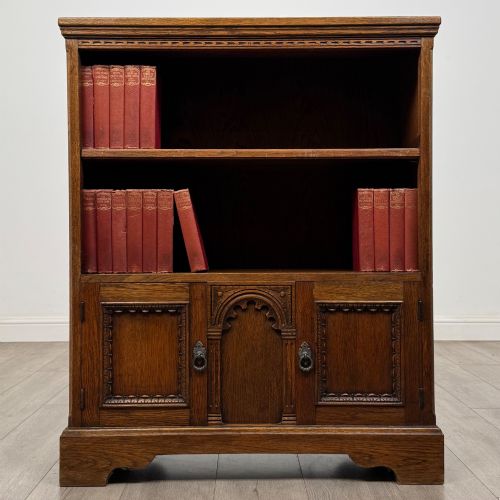
Low Open Display Shelves
Low open display shelves bring immediate architectural access to books and objects, spanning Victorian, Edwardian, and Art Deco designs.
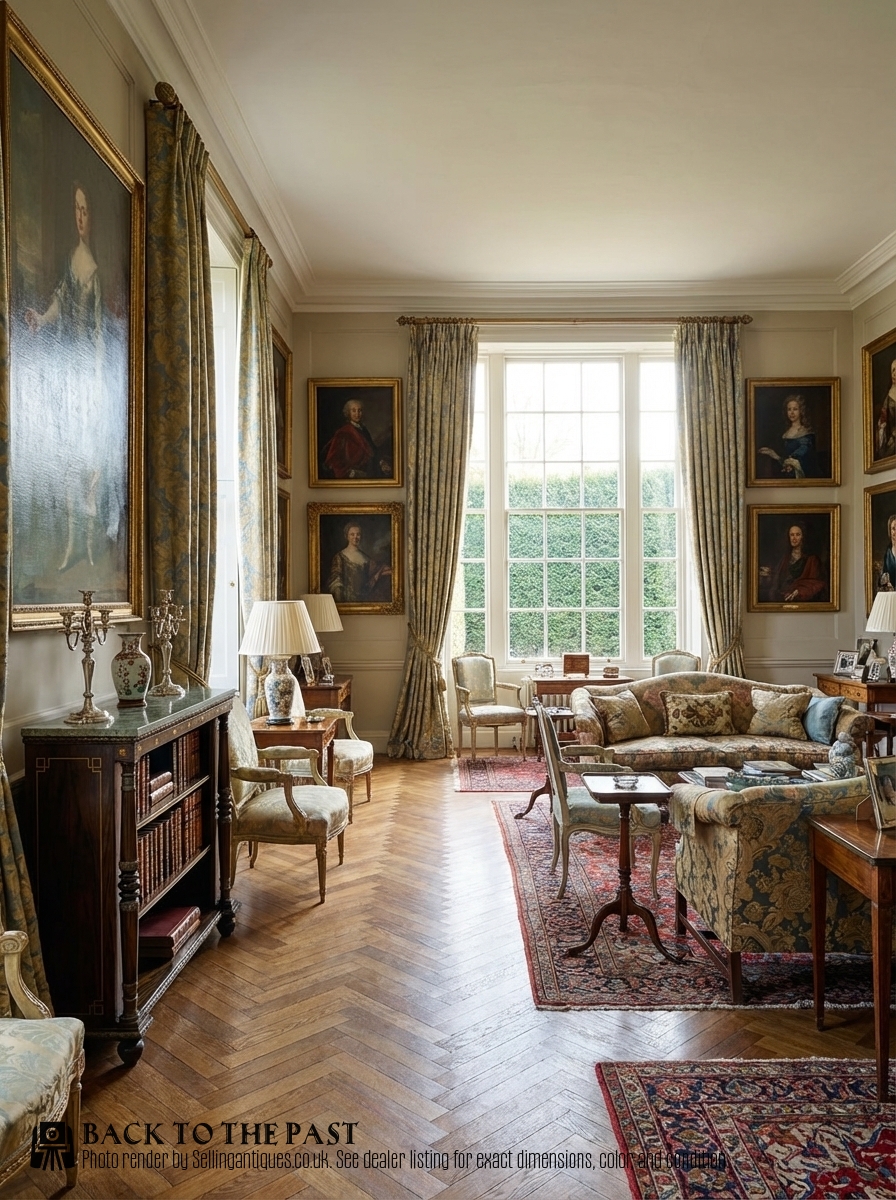
Low Open Display Shelves
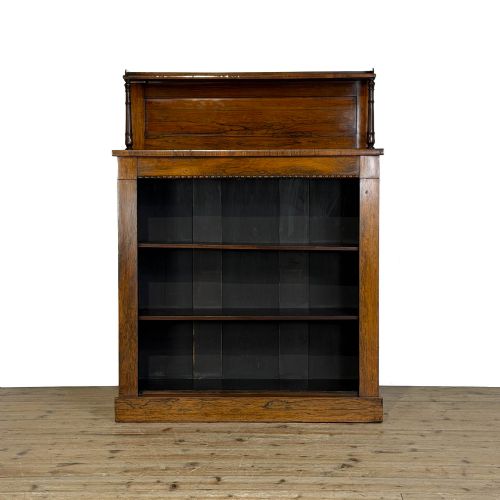
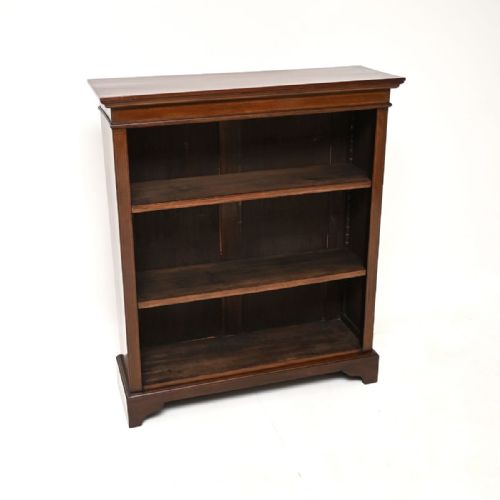
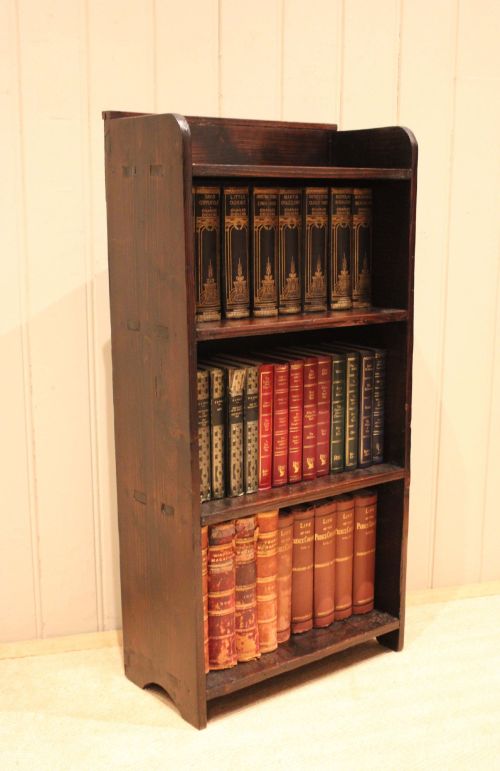
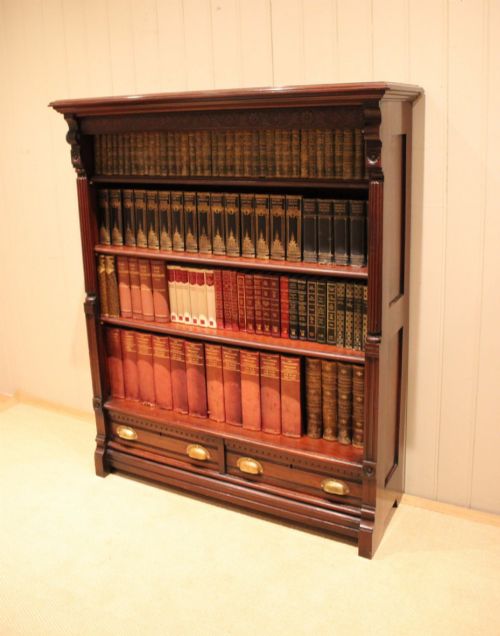
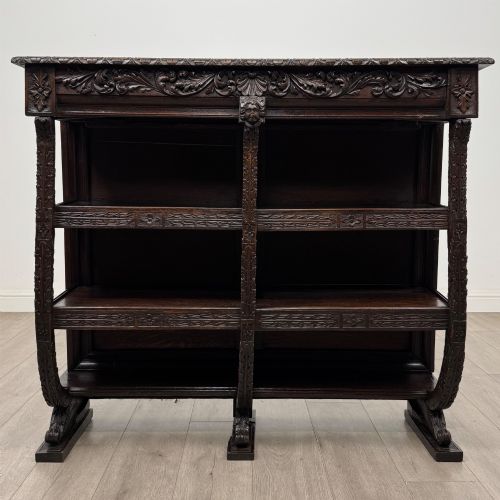
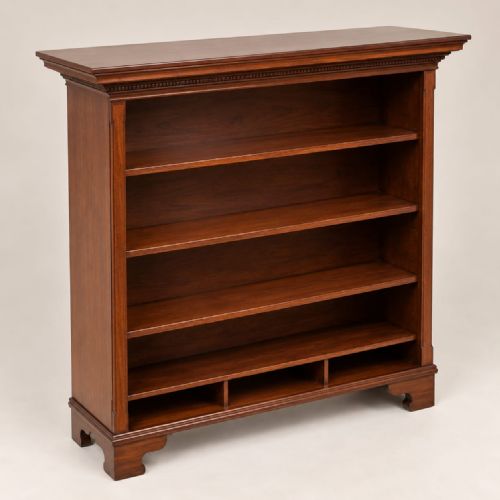
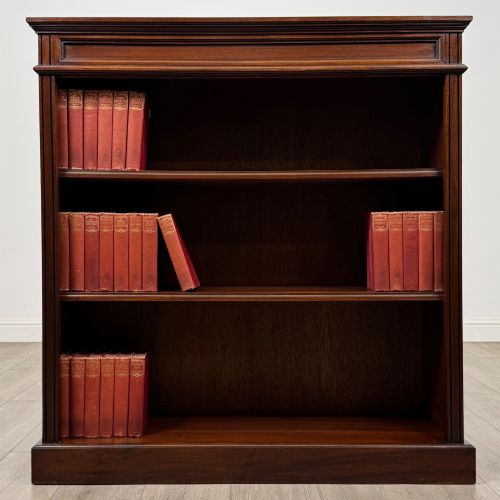
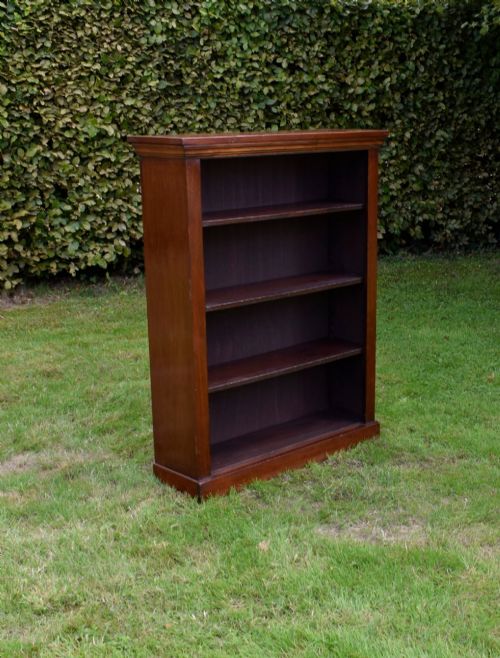
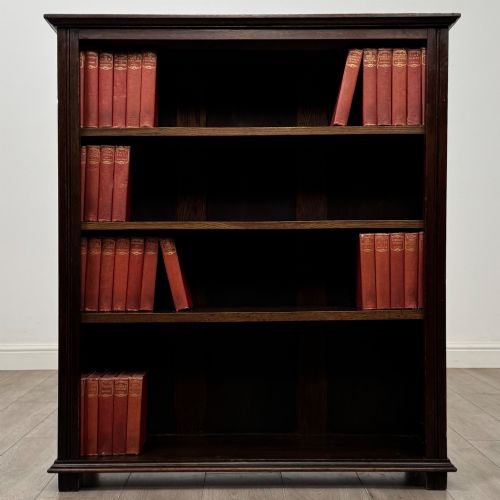
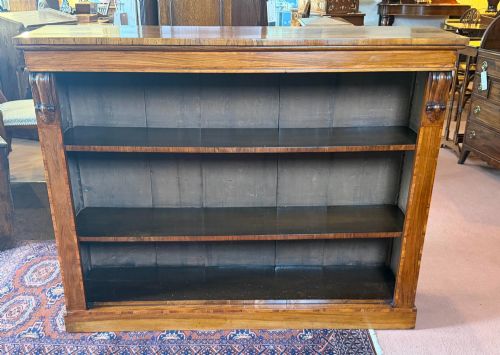
Low open display shelves present books and ornaments at an accessible height, taking the form of bookcases, shelving units, and display cabinets. These pieces range from compact Edwardian and 1930s oak examples to large Victorian mahogany and walnut bookcases.
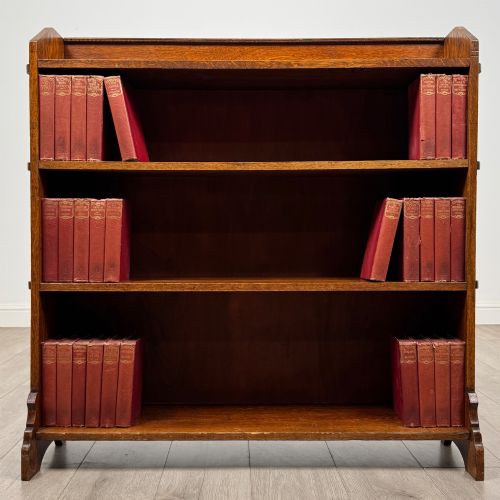
The most common form met on this page is the Edwardian or Victorian oak open bookcase, often featuring adjustable shelves. Alongside these sit mahogany, walnut, rosewood, and pine pieces, reflecting styles from Regency and William IV to Arts and Crafts and Art Deco.
Materials and construction
Makers utilised solid hardwoods such as oak, mahogany, walnut, rosewood, and ash, alongside pine and paint finishes. Construction involves sturdy joinery designed to support heavy volumes without sagging over time.
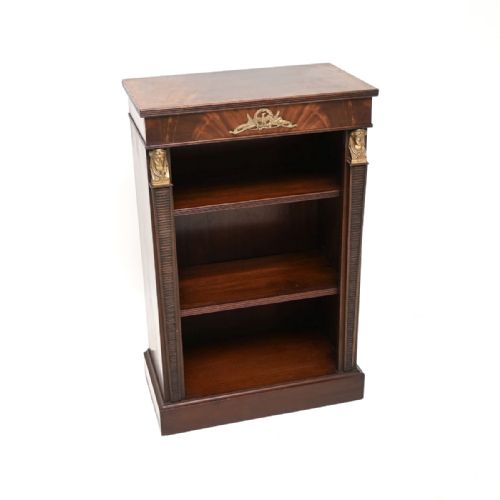
Detailing includes carved elements, inlaid decoration, adjustable shelf mechanisms, and occasional brass fittings or leather tops. Surfaces are finished in natural wood tones or painted treatments like distressed blue.
One piece even hides a leather top for writing notes while browsing.
Judging quality
Quality rests in the selection of timber figure, such as golden oak, rich mahogany, or figured walnut, paired with crispness in carved details and inlay. Well-executed adjustable shelving mechanisms indicate superior craftsmanship.
Proportion and stylistic cohesion separate standard utility furniture from sophisticated examples like Neoclassical Empire or Aesthetic Movement pieces. The integration of secondary materials, such as brass hardware and leather inserts, also marks distinction.
The Low Open Display Shelves Glossary
- Adjustable shelves
- Shelves that can be moved to different heights using pins, ratchets, or track systems. This allows the internal layout to accommodate books of varying sizes.
- Breakfront
- A cabinet or bookcase where the central section projects forward from the flanking wings. This creates a pleasing rhythm of depth across the front elevation.
- Inlay
- A technique where pieces of contrasting timber or other materials are inserted into recesses in the wood surface. It creates flat decorative patterns.
- Waterfall bookcase
- A shelving unit where each shelf steps back in depth from the one below, following a vertical cascade. The profile resembles a descending slope.
Low Open Display Shelves: Frequently Asked Questions
What are low open display shelves?
Low open display shelves are accessible wooden bookcases and shelving units designed to hold books and decorative objects without glass doors.
They appear in various period styles, from Victorian and Edwardian oak to Art Deco ash and 1930s walnut.
How do I style these shelves?
Arrange books vertically and horizontally alongside display objects to break up solid rows of text blocks.
The open format allows items to be reached easily and creates an airy feel in a room.
Are the shelves adjustable?
Many examples on this page include adjustable shelving systems to accommodate volumes of different heights.
Check individual descriptions to confirm whether the shelves move or remain fixed in place.
What woods were commonly used?
Makers constructed these pieces primarily in oak, mahogany, walnut, and pine, with occasional rosewood, ash, and teak.
Some surfaces feature painted finishes, leather tops, or brass hardware.
How do I identify the period?
Period is indicated by timber choice, structural style, and decorative details like carving or inlay.
Edwardian pieces often use golden oak, while Victorian examples lean towards heavier mahogany and walnut.