
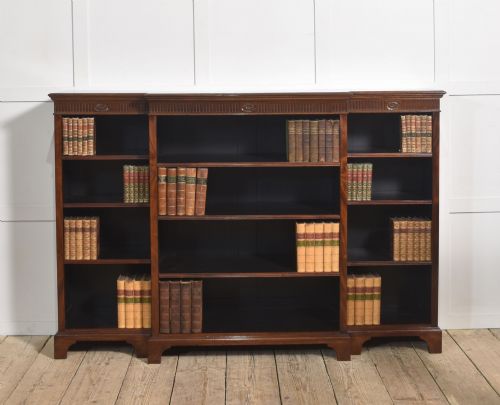
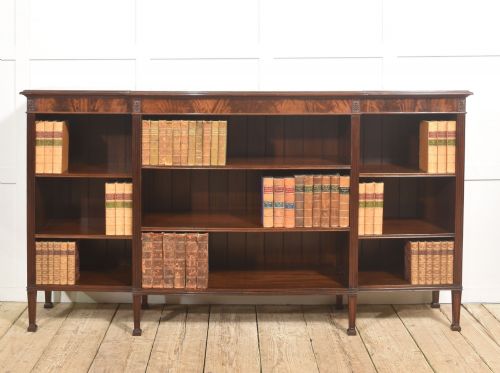


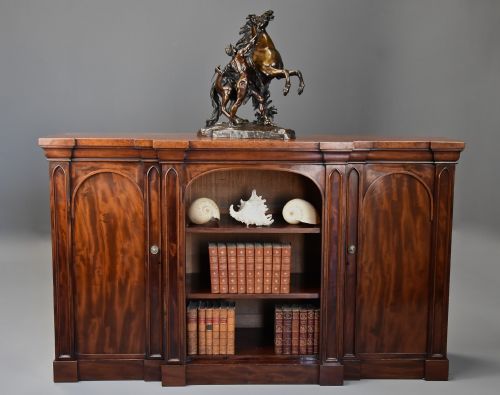


Low Mahogany Breakfront Bookcase
A low mahogany breakfront bookcase anchors a room with timber grain and tiered shelf space, offering the classic proportions collectors prize.
Low Mahogany Breakfront Bookcase
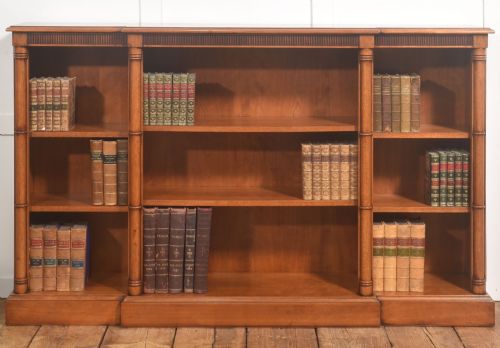
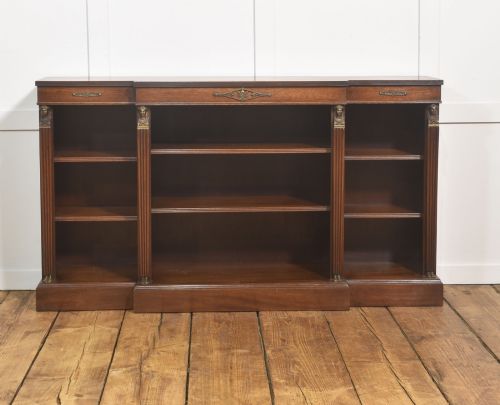
A low mahogany breakfront bookcase presents a stepped facade where the central section projects forward from the flanking wings. These pieces span periods from the nineteenth century into the twentieth century, encompassing Regency, Victorian, and Edwardian interpretations.
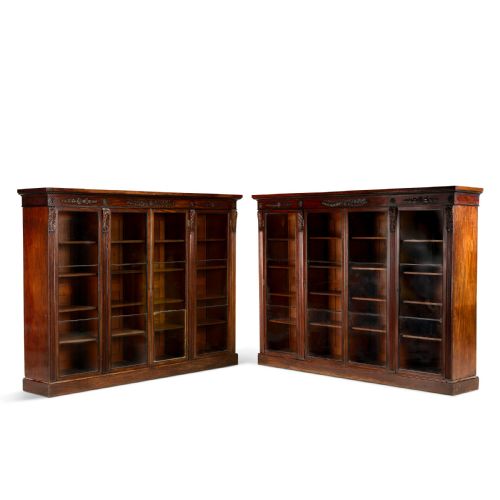
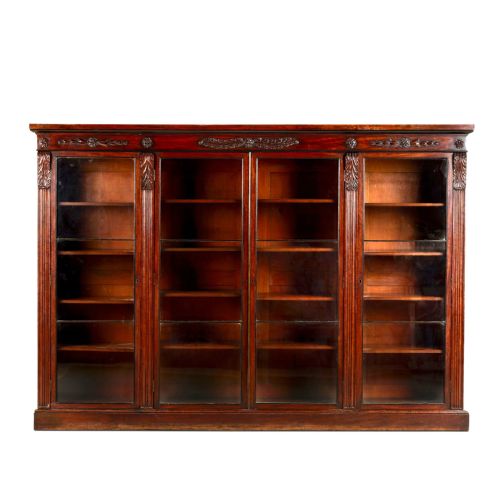
The form functions equally well as a library bookcase, side cabinet, or floor bookcase, providing generous display space for volumes and decorative objects. Open shelving formats appear alongside glazed doors and brass-mounted configurations across the selection.
Origins range from authentic Regency workshop productions to later Edwardian and 1910 reproductions built in the Regency style. Buyers encounter both dwarf open bookcases and substantial library pieces sharing the characteristic breakfront profile.
Materials and construction methods
Makers utilised solid mahogany and flame mahogany veneer over structural timbers to achieve rich, figured surfaces across the breakfront bodies. Cabinetmakers selected timber with deep grain patterns to catch the light on the projecting central sections.
Metalwork details include brass fittings and cast ormolu mounts that accent the classical architectural lines of the furniture. Glazed doors protect the interior shelves while marble tops occasionally provide a durable, refined surface finish.
Some nineteenth-century makers snuck Gothic arches into respectable mahogany libraries just to keep the bookworms guessing.
Evaluating quality and execution
The distinction between standard production and superior work rests on the choice of timber and the precision of the veneer matching. Flame mahogany veneers laid with care across wide cabinet fronts elevate the visual presence of the piece.
Hardware execution and decorative enrichments such as ormolu mounts or Gothic influences set exceptional examples apart from simpler utility cabinets. Construction integrity, including adjustable shelving mechanisms and sturdy plinth bases, determines the enduring utility of each bookcase.
Gillows
The Low Mahogany Breakfront Bookcase Glossary
- Breakfront
- A cabinet design where the central section projects further forward than the flanking sections. This architectural arrangement creates shadow and depth across the front of the furniture.
- Flame mahogany
- A highly figured wood veneer displaying flickering, flame-like patterns derived from the branch junctions of the tree. Cabinetmakers prize this timber for its decorative impact on primary display surfaces.
- Ormolu
- Gilt bronze ornamentation applied to furniture for decorative contrast. This metallic embellishment characterises French Empire and Neoclassical designs.
- Dwarf bookcase
- A low-standing bookcase designed to sit beneath dado height or window sills. These compact pieces offer accessible shelving without dominating the wall space of a room.
- Gothic Revival
- A nineteenth-century stylistic movement drawing inspiration from medieval architectural forms. Pieces in this style often incorporate pointed arches and traceried details.
Low Mahogany Breakfront Bookcase: Frequently Asked Questions
Are these bookcases adjustable?
Many examples provide adjustable library shelving to accommodate books of varying heights. This internal flexibility makes the furniture practical for modern library use.
Fixed shelves also appear in specific period formats, particularly in older Regency and Georgian productions. Buyers should inspect the interior peg systems to determine adjustability.
How do I identify Regency style?
Regency style draws on classical antiquity and clean architectural lines, often featuring flame mahogany veneers and restrained brass details. The proportion emphasises horizontal balance and refined dignity.
Pieces built around nineteen-ten frequently emulate these earlier Regency characteristics while retaining Edwardian manufacturing traits. Comparing timber finishes and construction joints helps clarify the actual period.
Where should I place a low bookcase?
A low bookcase functions effectively in studies, drawing rooms, and hallways where tall furniture would overwhelm the floor space. The surface top provides an ideal platform for lamps and decorative objects.
Because the height remains modest, these cabinets allow art and mirrors to hang comfortably above them. They integrate smoothly into domestic room layouts without blocking natural light.