
Dark Mahogany Shelving
Dark mahogany shelving brings rich timber tones and practical tiers into a room, offering sturdy display space for books and objects.
Dark Mahogany Shelving
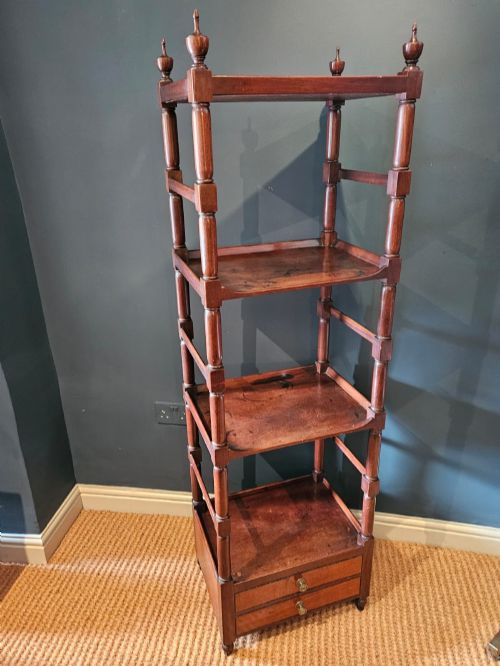
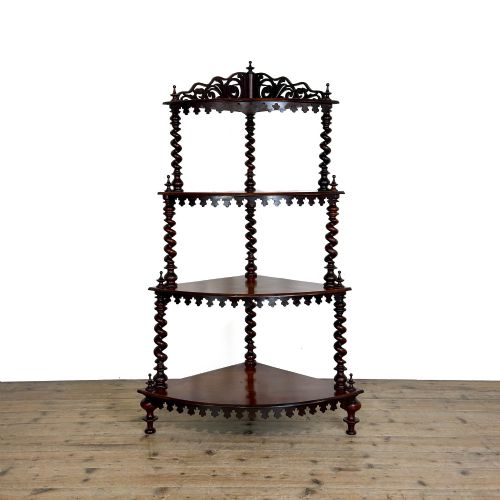
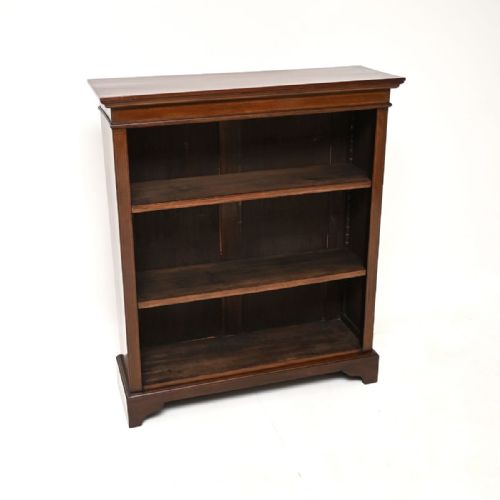
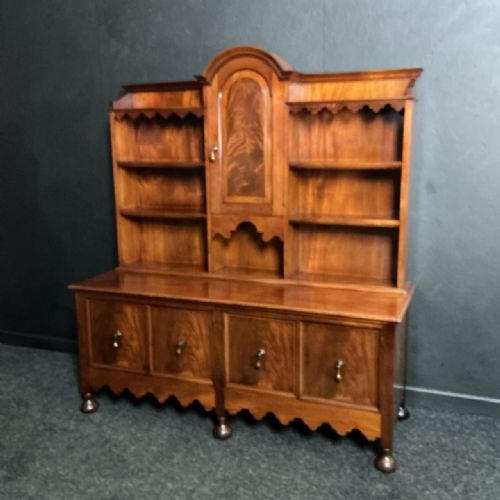
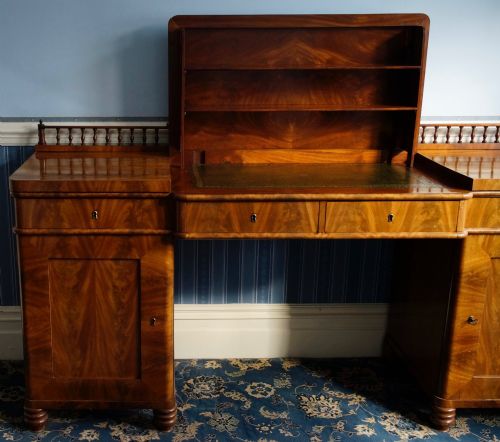
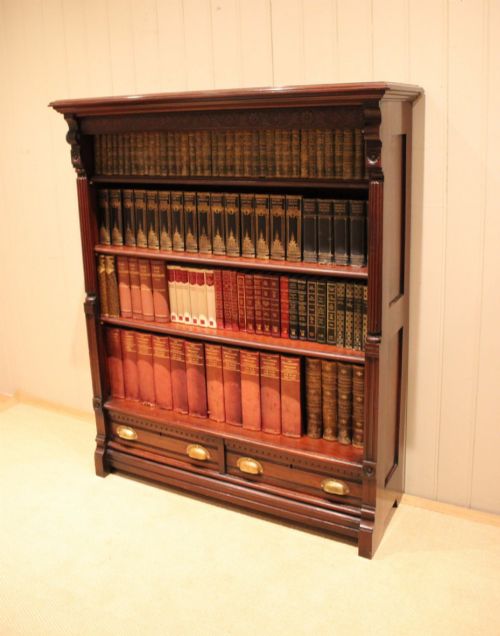
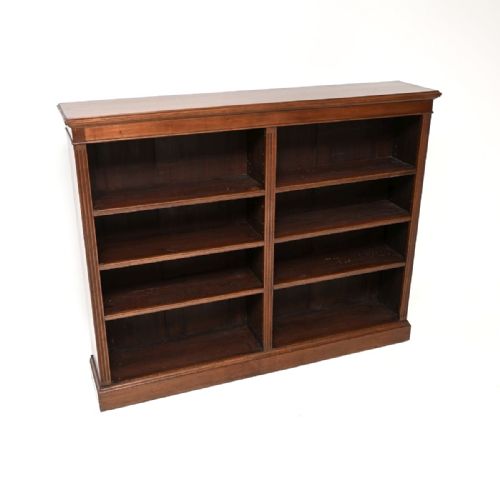
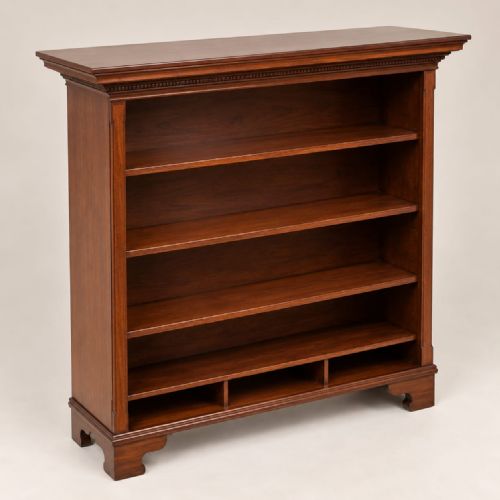
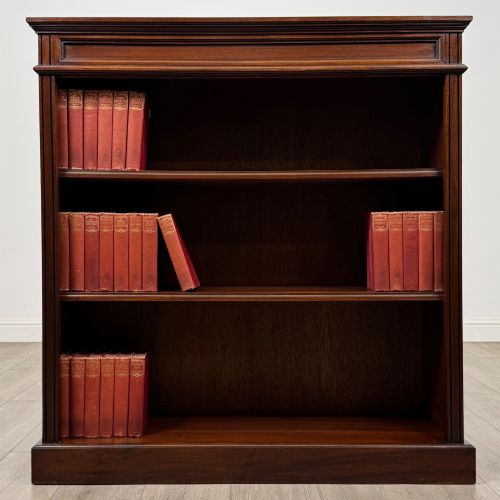
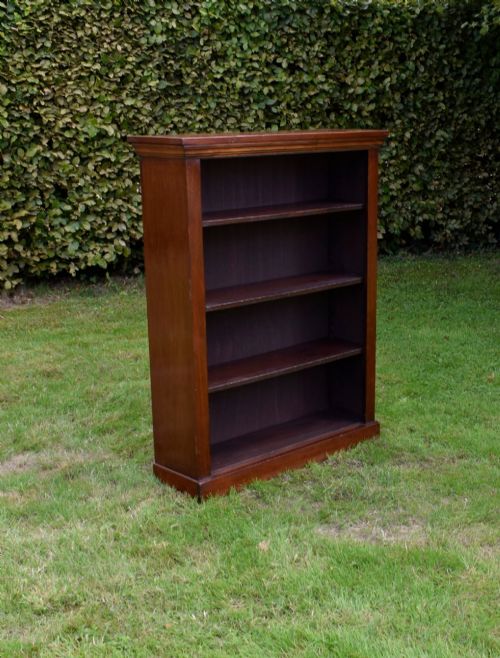
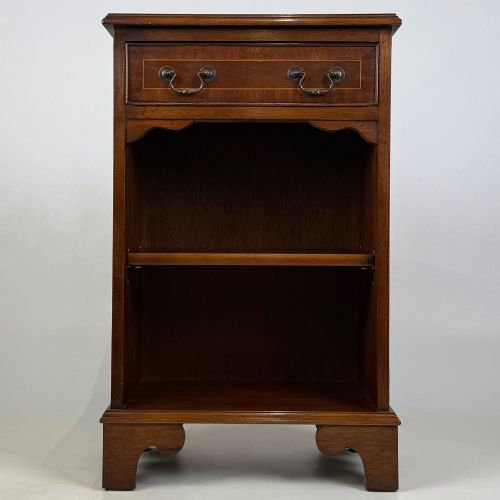
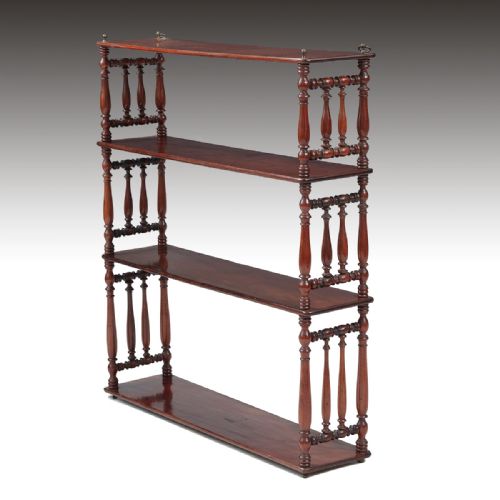
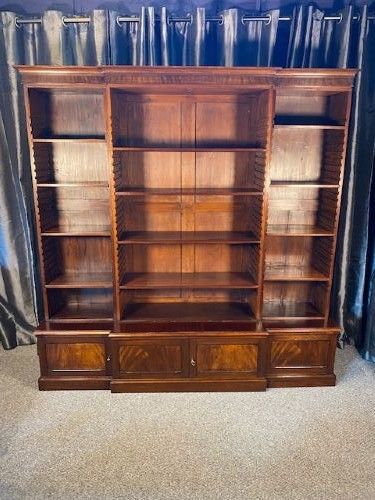
The version most commonly met on this page is the open bookcase or multi-tiered whatnot, frequently rendered in solid mahogany or flame mahogany veneer. These pieces range from petite wall shelves and four-tier corner units to substantial breakfront library bookcases equipped with adjustable shelves.
Makers and cabinetmakers from the eighteenth century onward utilised these forms to organise libraries and display decorative objects in formal rooms. The surviving examples combine deep, dark brown timber tones with functional architecture suited to modern and traditional interiors alike.
Materials and construction methods
Construction relies heavily on solid mahogany and flame mahogany veneer, chosen for deep colouration and striking grain patterns. Cabinetmakers often integrated secondary timbers, applying veneer over panel foundations to achieve rich visual movement on larger surfaces.
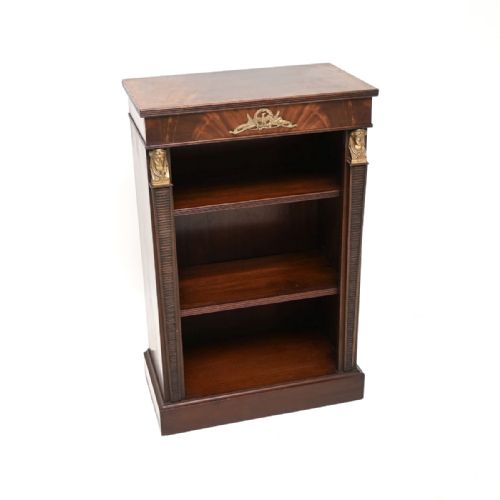
Details such as brass fittings, glass doors, and inlaid satinwood or paint accents appear across various pieces to elevate the design. Adjustable shelving mechanisms, using wooden ratchets or brass pins, demonstrate the practical ingenuity applied during the nineteenth and early twentieth centuries.
Some nineteenth-century corner whatnots were built in matching pairs, ready to flank a fireplace or window with symmetrical charm.
Distinctions in quality and execution
Quality reveals itself in the selection of timber figures, particularly where flame mahogany veneer is matched symmetrically across doors or tiers. Superior pieces exhibit precise joinery, such as dovetailed drawer construction and tightly fitted backboards that remain stable over centuries.
Proportion and architectural harmony separate standard utility furniture from exceptional cabinet work. Refined mouldings, subtle brass hardware, and carefully executed inlays of satinwood distinguish the output of skilled workshops from utilitarian production.
Gillows
The Dark Mahogany Shelving Glossary
- Whatnot
- A piece of furniture consisting of open shelves for displaying small objects, popular in the nineteenth century. These multi-tiered units often fit neatly into corners or stand freely against walls.
- Waterfall bookcase
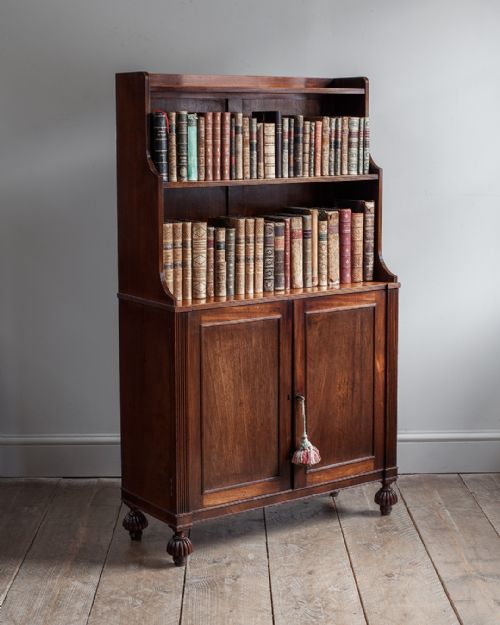
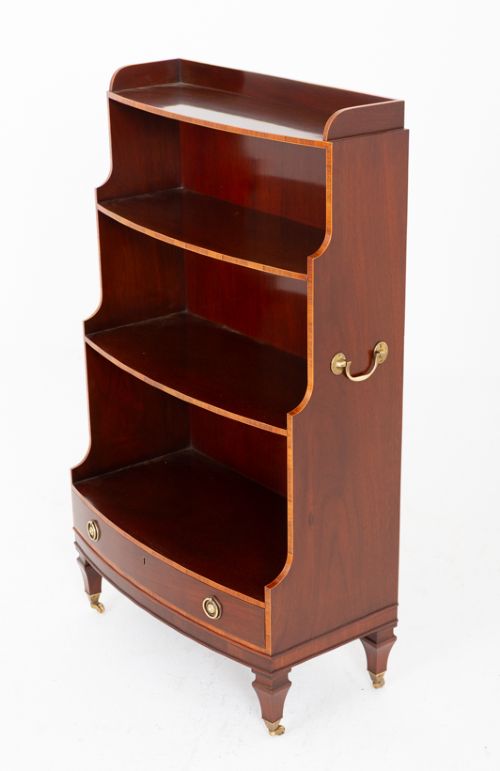
- A set of open shelves where each tier steps back progressively from the one below it. This graduated form creates a distinct vertical profile.
- Flame mahogany
- A veneer cut from timber taken where branches join the main trunk, showing a rippled, flame-like grain pattern. Cabinetmakers reserved this striking material for prominent surfaces.
- Breakfront
- A piece of furniture whose central section projects forward from the flanking wings. This architectural arrangement adds depth and formal presence to large bookcases.
- Inlay
- A technique of inserting contrasting materials, such as satinwood or brass, into carved recesses on the timber surface. It creates decorative borders and geometric motifs.
Dark Mahogany Shelving: Frequently Asked Questions
What is a whatnot bookcase?
A whatnot is a multi-tiered piece of furniture designed for displaying books and decorative objects. These open units frequently feature three or four tiers supported by slender uprights.
They appear in both freestanding and corner configurations, making efficient use of vertical space in period rooms.
How do I identify a Regency bookcase?
Regency bookcases typically reflect neoclassical influences through restrained lines, brass mounts, and dark mahogany timbers. They often incorporate architectural elements such as classical columns or tiered waterfall designs.
Many pieces from this period focus on clean silhouettes paired with rich grain patterns rather than heavy carving.
Where should I place wall-hanging shelves?
Hanging shelves suit smaller rooms or hallways where floor space is limited. They provide sturdy display surfaces for books or decorative items without crowding the floor.
Ensure proper wall fixings are used to support the weight of solid timber construction.
Are shelves adjustable in antique bookcases?
Many larger nineteenth-century bookcases feature adjustable shelving using wooden ratchets, saw-tooth tracks, or brass support pins. This adaptability allowed owners to accommodate volumes of varying heights.
Not all antique units possess this feature, so checking the interior uprights confirms whether the shelves move.