
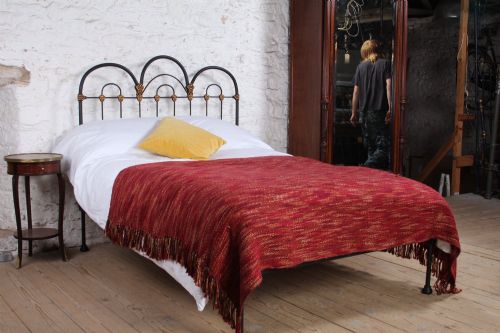
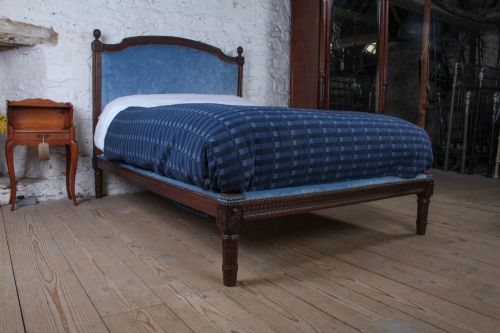


Low Footboard Bed Frame
These low footboard bed frame examples offer open sightlines and robust metal or wood construction, suiting modern spaces that need classic character.
Low Footboard Bed Frame
When searching for a low footboard bed frame, buyers encounter robust double, king size, and super king size beds designed with no end or low-end profiles. These pieces originate from the Victorian and Louis XVI style periods, bringing substantial scale and architectural presence to a bedroom.
The selections on this page primarily showcase metal constructions in cast iron, wrought iron, forged iron, and brass, alongside occasional wooden frames in oak. French Country, French Chateau, and Irish variants dominate the forms, offering distinctive shaping, classic straight rails, and ribbon reed details.
How they were made
Makers utilised cast iron, wrought iron, and forged iron to build sturdy structural frames, frequently combining iron with polished brass components for visual contrast. These metal elements involved careful shaping and joining techniques suited to industrial and artisanal metalworking of the late nineteenth and early twentieth centuries.
Wooden examples integrate solid oak frameworks, while upholstered versions feature fabric and velvet textiles applied to panels and low ends. French stylistic influences appear through carved details and tailored upholstery on Louis XVI style and French Chateau pieces.
Some iron beds feature ribbon reed details, proving that even heavy metal can dress up for the evening.
What varies in quality
The distinction between standard and superior pieces rests on the intricacy of the metal shaping, the presence of decorative brass mounts, and the sophistication of the casting work. Elaborate ribbon reed motifs and refined classical straight rails set finer examples apart from simpler utilitarian builds.
Material combination and surface finish also define quality, particularly where iron is paired with detailed brass accents or where oak frames feature precise period styling. Upholstered variants gain distinction from the execution of the fabric work and the proportion of the head and low-end panels.
The Low Footboard Bed Frame Glossary
- No End Bed
- A bed frame featuring a high headboard and an absent or very low footboard, creating an open appearance at the base.
- Cast Iron
- Molten iron poured into a mould to form rigid structural or decorative components.
- Wrought Iron
- Iron heated and worked with tools by a blacksmith to create durable, malleable furniture elements.
- Louis XVI Style
- A neoclassical design vocabulary characterised by straight lines, restrained classical ornamentation, and symmetrical proportions.
- Ribbon Reed
- A decorative moulding detail resembling a twisted ribbon or reeded band found on metal and wooden bed frames.
Low Footboard Bed Frame: Frequently Asked Questions
What is a low footboard bed frame?
A low footboard bed frame is a sleeping platform designed without a high obstruction at the foot, offering an open visual profile that suits rooms with limited space or specific sightline requirements.
These pieces span Victorian and early twentieth-century periods, utilising metal and wood to combine practicality with distinct historical character.
How do I style a low footboard bed frame?
These beds work well as central focal points in bedrooms where an unobstructed view across the mattress is desired. Their neutral metal or wood finishes allow them to complement both traditional and contemporary interior schemes.
Pairing them with appropriate bedding and surrounding furniture highlights their distinct ironwork, brass accents, or upholstered panels.
What materials are used in these frames?
The construction relies heavily on cast iron, wrought iron, forged iron, and polished brass elements. Wooden options feature solid oak alongside fabric and velvet upholstery.
These materials reflect the manufacturing standards of the late nineteenth and early twentieth centuries.
How do I identify the period of a bed frame?
Dating relies on observing construction techniques, material choices, and stylistic markers such as Victorian casting methods or Louis XVI style proportions. Structural details like straight rails and iron shaping provide clues to the era of manufacture.
Comparing the specific joinery and decorative motifs against known period examples helps clarify the age.
Are these beds suitable for standard modern mattresses?
These frames come in standard sizing categories including double, king size, and super king size, accommodating contemporary mattress dimensions. Standard slats or appropriate support systems integrate into the existing iron or wood structures.
Checking the specific width and length measurements ensures a proper fit for modern bedding.