


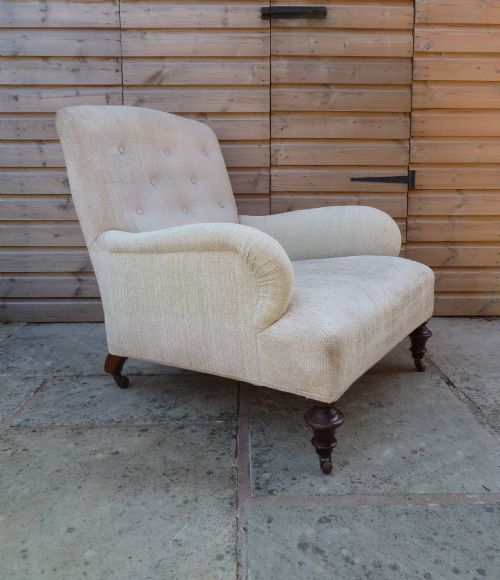
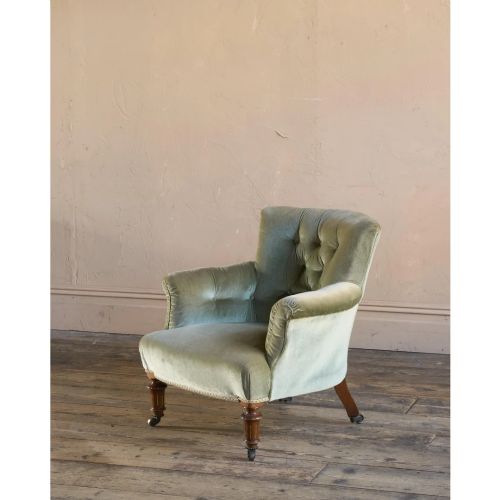
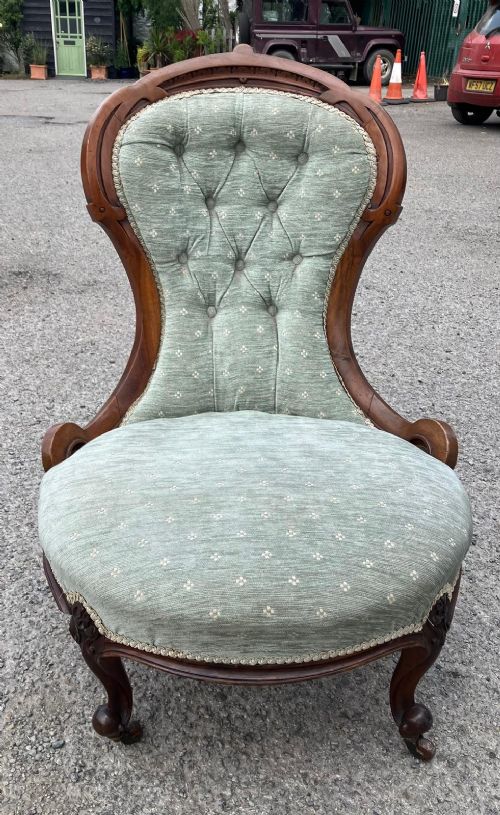
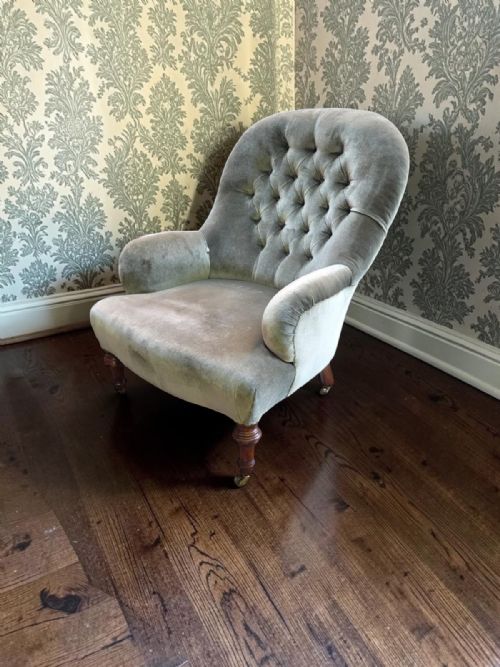
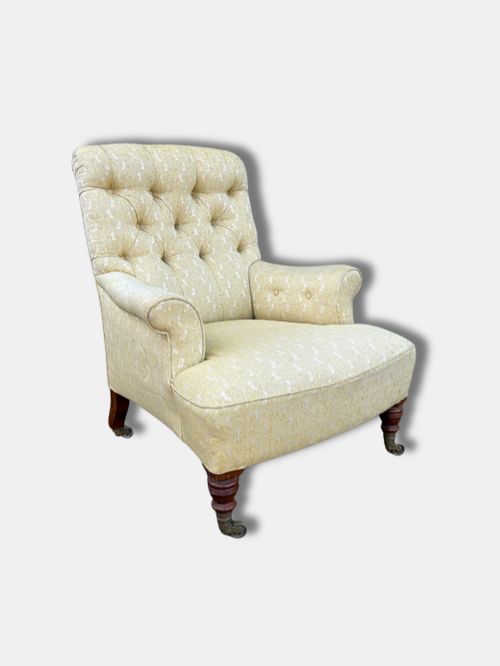
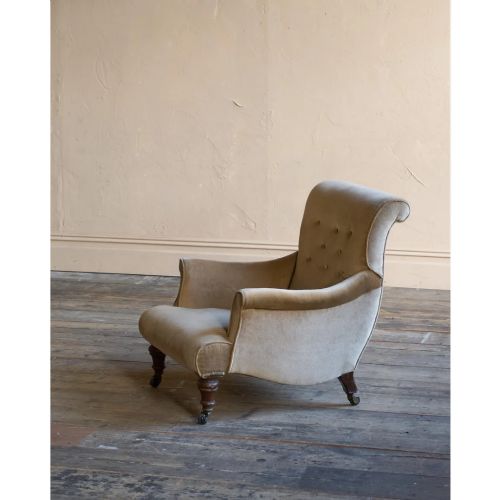
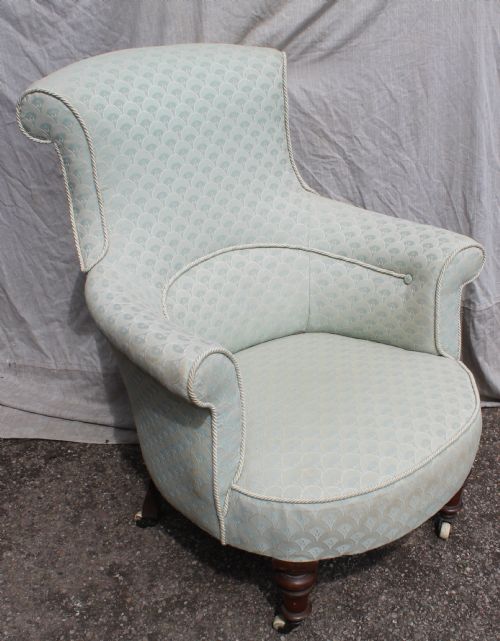
Low Fireside Chair
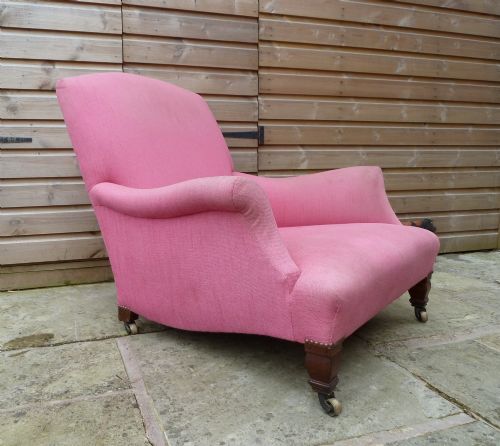
A low fireside chair brings comfortable, compact seating near the hearth, offering low-slung proportions and deep upholstery suited to relaxed sitting.
Low Fireside Chair
A low fireside chair encompasses compact upholstered seating designed to sit close to the ground, keeping the sitter near the warmth of the hearth. These pieces span Victorian, Edwardian, and Art Deco periods, drawing on English country house, French Napoleon III, and nineteenth-century design traditions.
Materials and Construction
Frames are built from hardwoods such as mahogany, walnut, rosewood, and ebonised wood, alongside general wood construction. Joinery supports sturdy forms like square-sided, scroll-back, and bobbin frames.
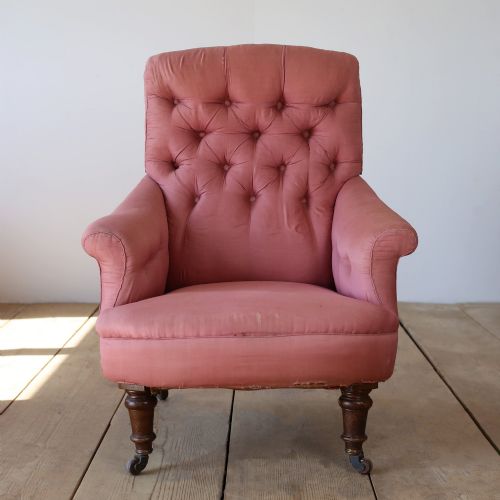
Upholstery relies on fabrics including velvet, cotton, and leather, often paired with brass details and metal components. Interior padding and button-back techniques provide the characteristic cushioning of the period.
Materials utilised across the collection include walnut, mahogany, rosewood, velvet, leather, and brass.
Assessing Quality and Craftsmanship
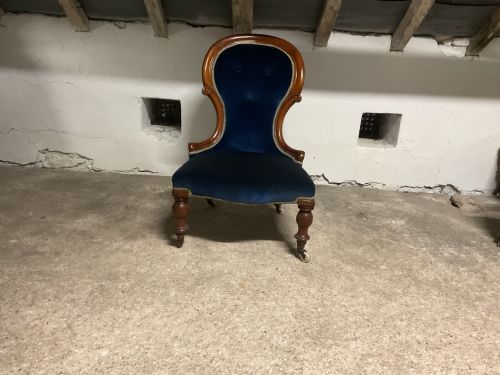
Quality rests in the architectural harmony of the frame and the integrity of the timber, whether figured walnut, rich mahogany, or rosewood. Finer pieces demonstrate careful proportion, such as balanced scroll backs or well-turned barley twist legs.
The execution of the upholstery foundation dictates the overall standard, distinguishing standard workshop production from works associated with notable makers like Gillows or Howard and Sons.
Howard and Sons·Gillows·Shoolbred
The Low Fireside Chair Glossary
- Slipper chair
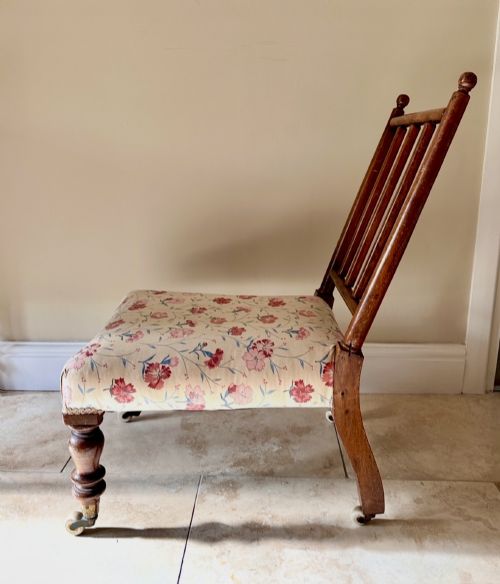
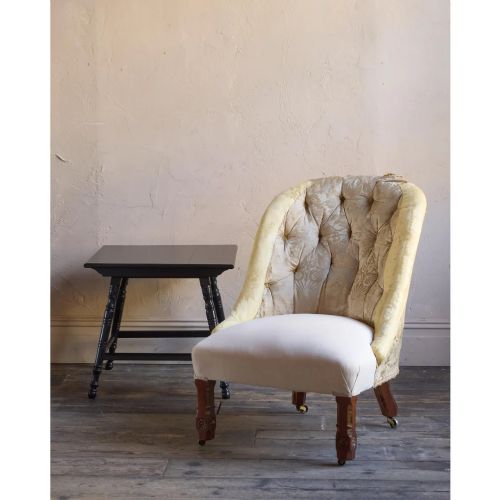
- A low-set upholstered chair traditionally used in bedrooms for dressing, featuring a seat close to the floor and no arms.
- Nursing chair
- A low chair with a supportive back, originally designed to assist mothers with infant care by placing the sitter at a convenient height.
- Button-back
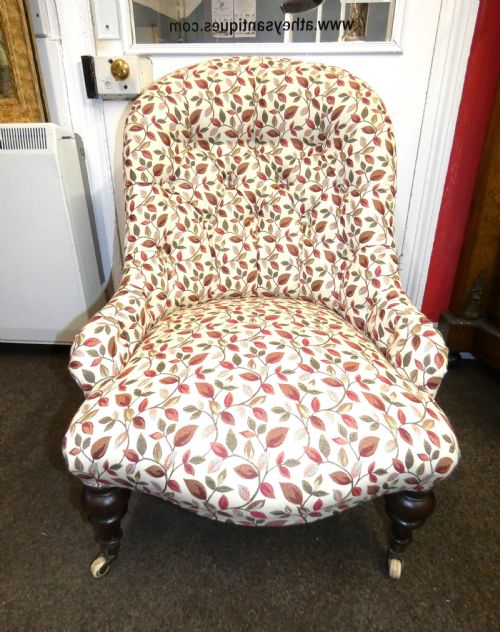
- An upholstery method where tufts are pulled tight and secured with buttons, creating a padded diamond pattern across the backrest.
- Scroll back
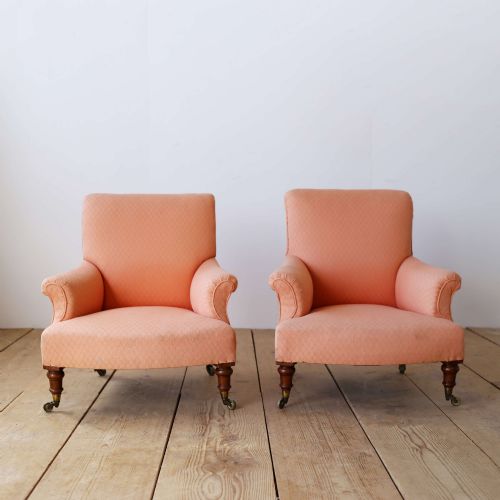
- A wooden or upholstered frame terminating in an outward-curved scroll, frequently seen on nineteenth-century French and English seats.
- Barley twist
- A decorative turning technique resembling a spiralling rope, commonly used on the wooden legs of Victorian chairs.
Low Fireside Chair: Frequently Asked Questions
How do I use a nursing chair today?
Nursing chairs work well as occasional seating in living rooms, studies, or bedrooms due to their compact footprints and supportive low seats. Their modest scale allows them to fit comfortably into reading corners where standard armchairs might overwhelm the room.
Pair one with a low side table to create a functional and traditional resting spot.
What is the difference between a slipper chair and an armchair?
Slipper chairs are built without arms and sit particularly low to the floor, originating as bedroom seats for changing shoes or dressing. Armchairs include side supports and often feature deeper proportions suited to general relaxation.
Both forms appear across nineteenth-century and twentieth-century styles on this page.
How can I date a Victorian fireside chair?
Dating relies on identifying stylistic markers, frame timbers such as walnut or mahogany, and upholstery techniques like button-backing. Mid-Victorian examples often show turned wooden legs, while later nineteenth-century pieces may reflect French Napoleon III influences or maker signatures.
Construction details and fabric choices provide further clues to the exact manufacturing period.