
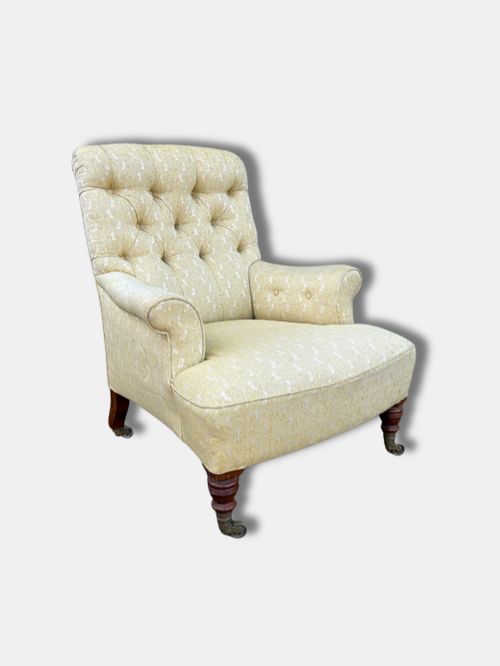
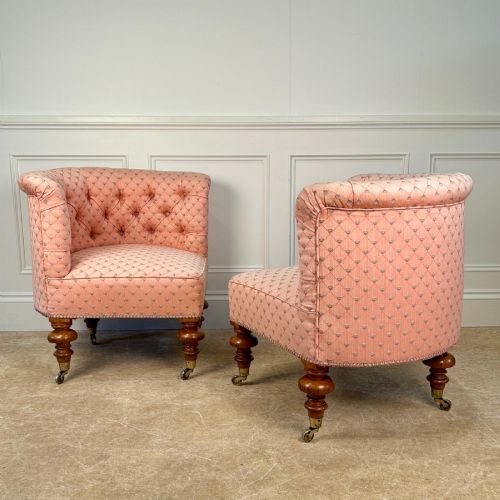
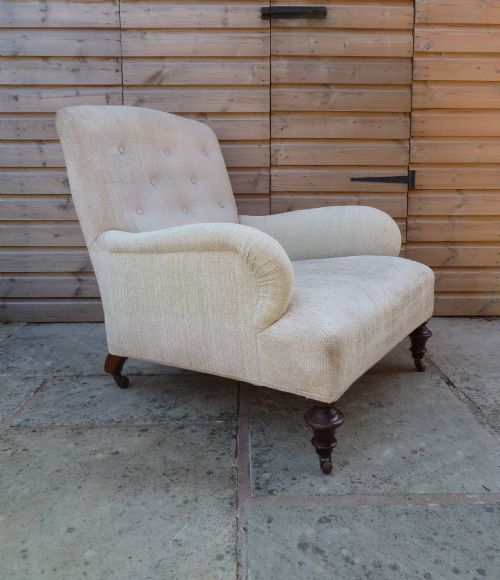
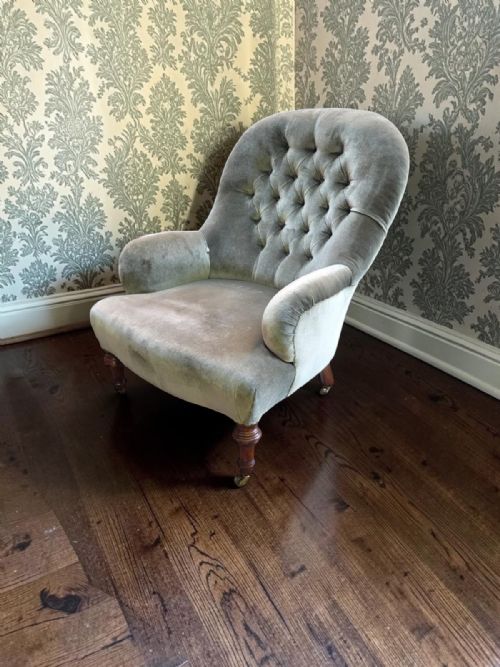
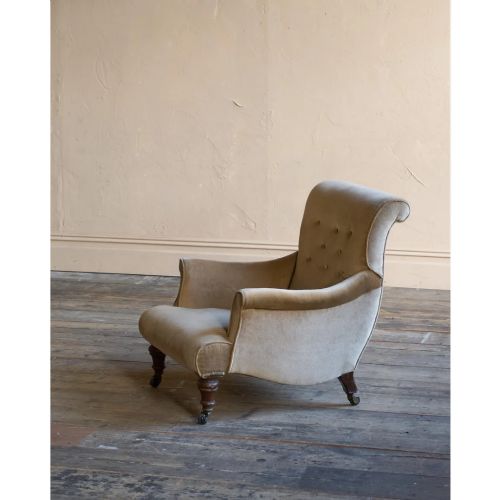
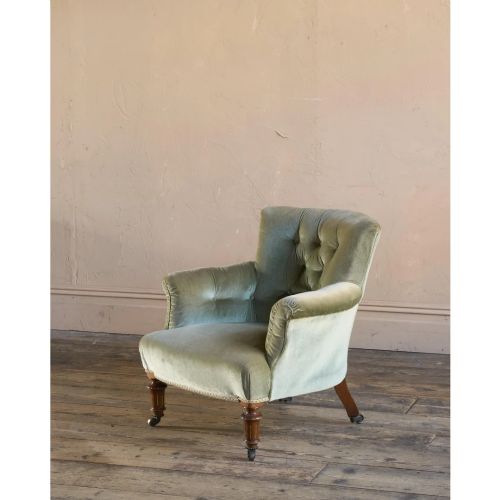
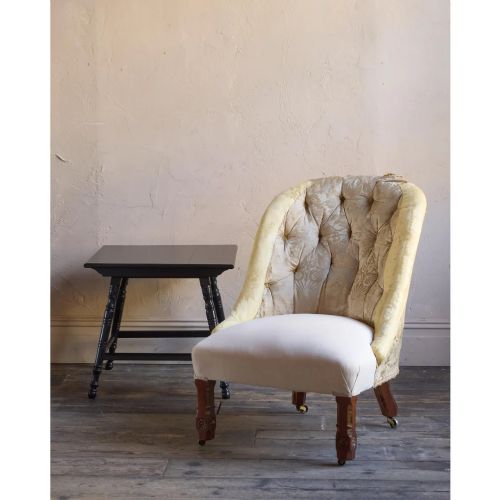
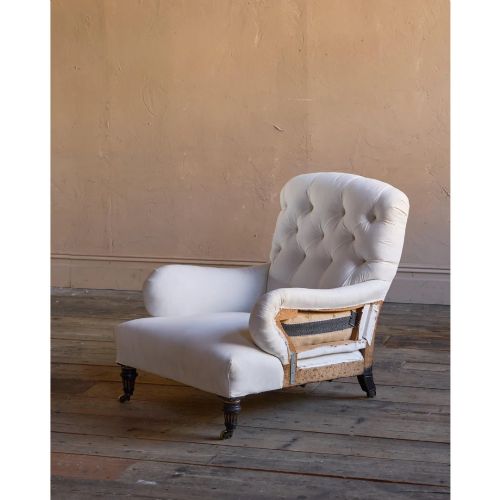
Low Button Back Armchair
A low button back armchair offers deep, upholstered comfort on a compact frame, making it a natural choice for a bedroom or fireside.
Low Button Back Armchair
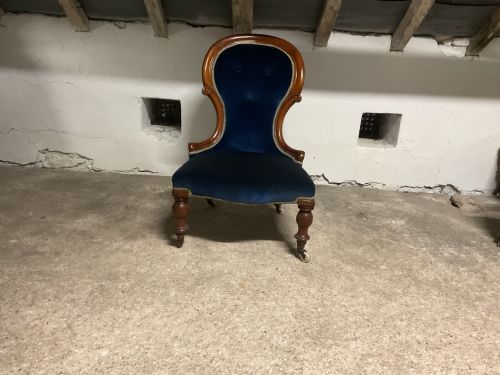
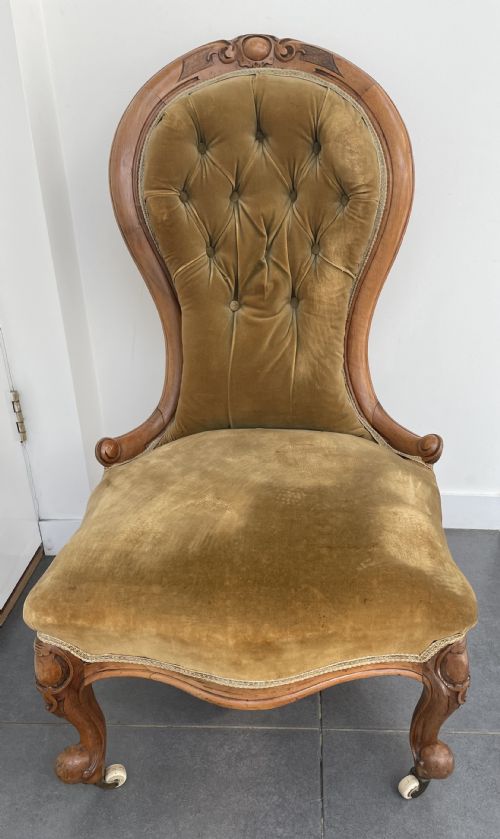
When you search for a low button back armchair, you encounter a variety of nineteenth-century and early twentieth-century seating designed for intimate spaces. These pieces frequently appear under alternative historic names such as nursing chairs, slipper chairs, and bedroom chairs.
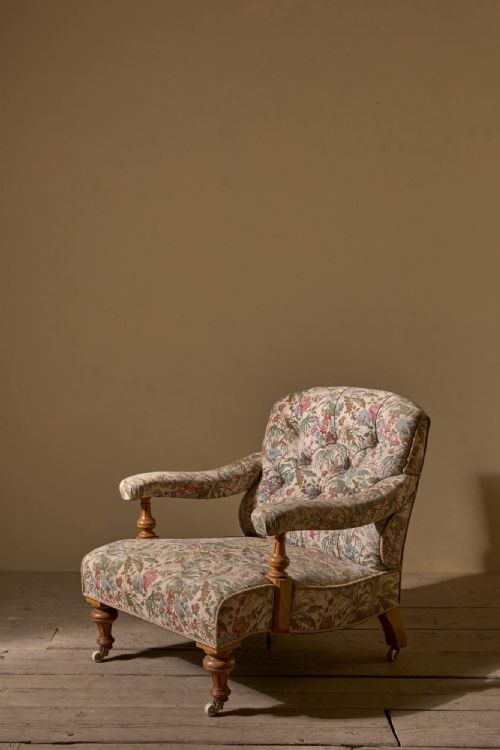
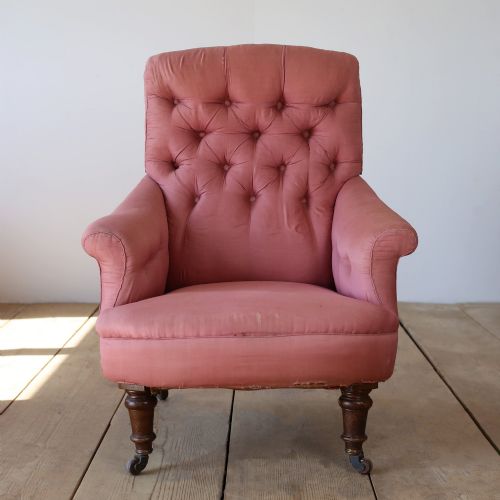
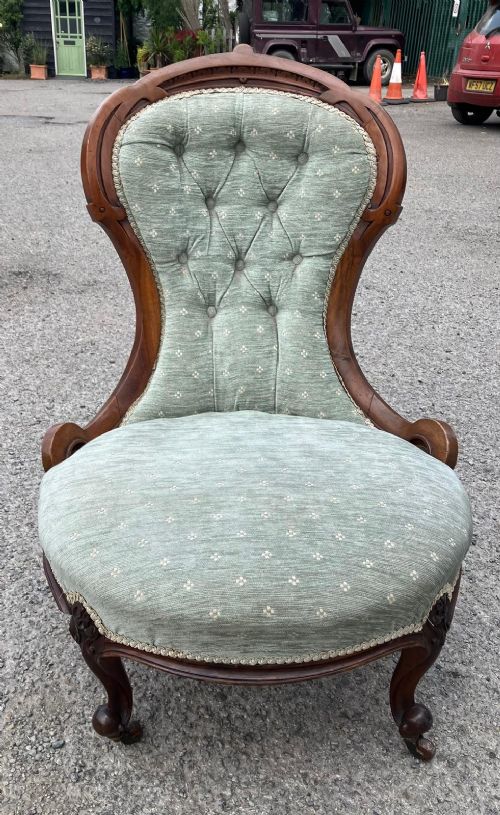
The nineteenth century provides the majority of these low-slung seats, spanning Victorian, Edwardian, and Regency periods. Walnut and mahogany frame woods predominate, often shaped into spoon-backs, tub-backs, or open armchairs with deep button upholstery.
How They Were Made
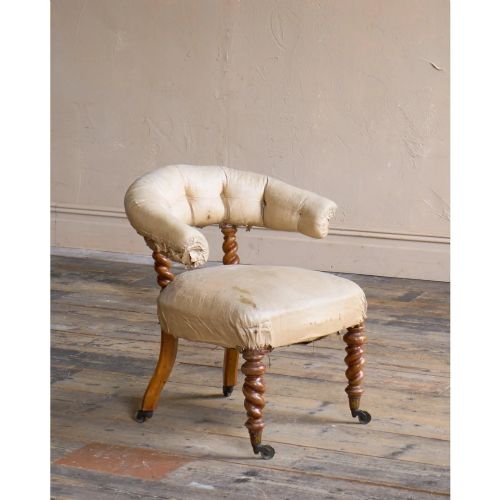
Cabinetmakers constructed the frames using hardwoods like mahogany, walnut, and oak, sometimes incorporating turned barley twist supports or brass castors. Frames were built low to the ground for warmth near fires or ease of dressing.
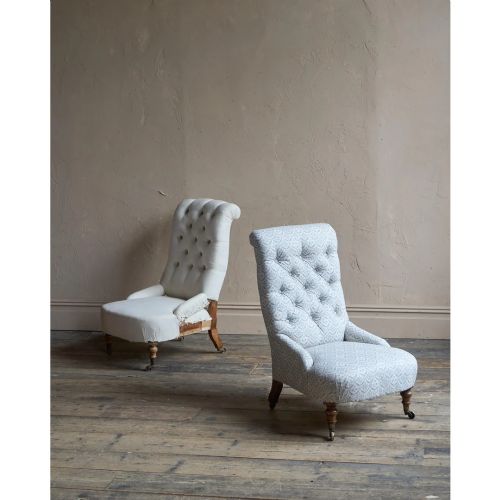
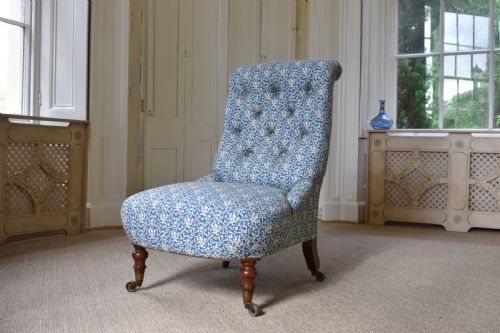
Upholstery techniques combined traditional stuffing methods with secure buttoning to hold thick fabrics such as velvet and calico in place. Makers finished these chairs with specialised textiles including William Morris fabric and Robert Kime designs.
Listings feature Victorian walnut and Edwardian mahogany frames upholstered in velvet, calico, and designer fabrics.
What Varies in Quality
The distinction between ordinary seating and exceptional pieces rests on the integrity of the timber frame and the sophistication of the upholstery. Master workshops invested greater care in carving walnut and mahogany frames and executing tight, even buttoning.
Maker attribution elevates certain examples significantly above anonymous workshop output. Marked pieces or recognizable stylistic signatures from prominent London manufacturers separate standard nineteenth-century seating from high-end collector items.
Howard and Sons·Gillows·C. Hindley and Sons
The Low Button Back Armchair Glossary
- Button back
- An upholstery method where depressions are pulled into the padding using buttons to create a geometric quilted pattern. This technique secures the interior stuffing while adding texture to the chair back.
- Nursing chair
- A low-seated Victorian chair designed originally for mothers to feed infants comfortably. The low posture also suited dressing in nineteenth-century bedrooms.
- Slipper chair
- A low-framed upholstered chair lacking arms, built originally for bedrooms to sit upon while putting on shoes. They share the compact scale of low button back armchairs.
- Barley twist
- A type of decorative turning carved into wooden furniture legs and supports resembling a twisted rope. This detail frequently dates mid-nineteenth-century seating.
- Spoon-back
- A padded chair back shaped like the bowl of a spoon to cradle the human spine. It is a common feature on Victorian walnut nursing chairs.
Low Button Back Armchair: Frequently Asked Questions
Where should I put a low button back armchair?
These compact seats suit bedrooms, dressing rooms, and smaller drawing rooms where standard armchairs overwhelm the floor space. Their low stature makes them useful beside low tables or fireplaces.
They also function well as accent seating in corners or reading nooks where you want comfortable upholstery without visual bulk.
How do I date a Victorian button back armchair?
Examine the wood of the frame, as walnut and rosewood dominate mid-nineteenth-century examples while later Edwardian versions often employ lighter mahogany or satinwood. Turned elements like barley twists typically point to the Victorian decades.
Upholstery style and underlying webbing also offer clues, though most antique chairs have been recovered multiple times since their original manufacture.
Can I use modern fabric to recover an antique armchair?
Many buyers choose to reupholster these chairs in contemporary or traditional textiles to suit modern interiors while preserving the historic frame. Using quality fabrics like velvet or linen respects the original aesthetic of nineteenth-century upholstery.
Working with a skilled upholsterer ensures the internal spring systems and deep buttoning are correctly restored during the process.