



Louis XVI Style Candlesticks
Louis xvi style candlesticks bring neoclassical restraint and classical bronze work into a room, offering refined symmetry and enduring decorative appeal.
Louis XVI Style Candlesticks
When you search for louis xvi style candlesticks, you encounter formal lighting fixtures and candelabra rooted in eighteenth-century French neoclassical design. Most examples available on this page date from the nineteenth century, reflecting sustained nineteenth-century revival interest in the balanced proportions and antique motifs of the original reign.
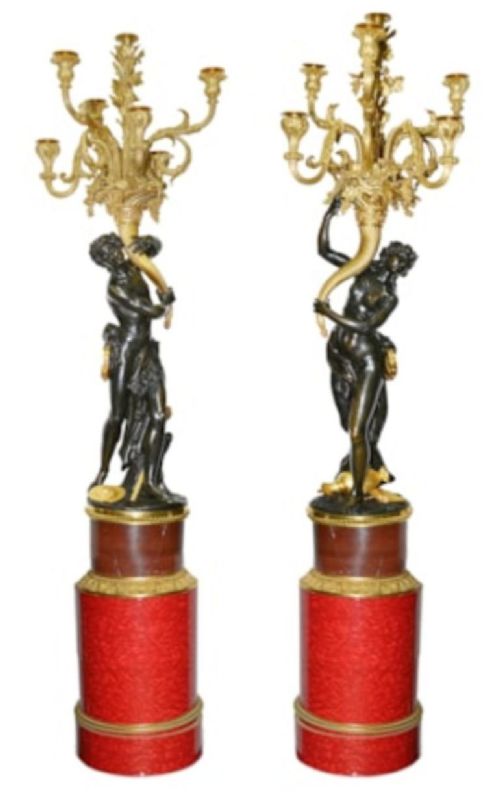
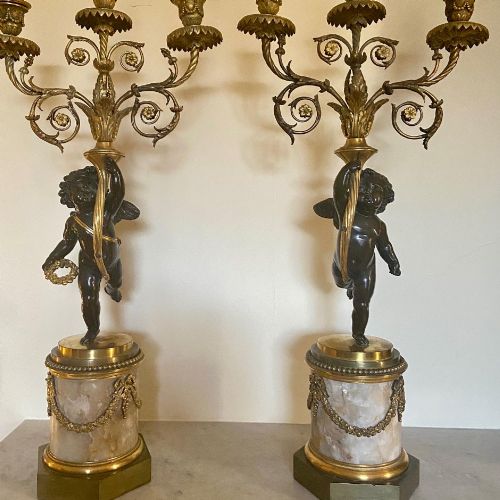
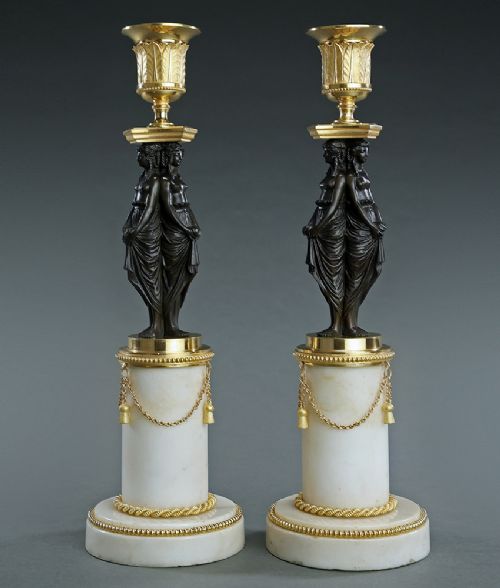
The physical forms include traditional two-arm candelabra, single-light candlesticks, and adapted candlestick lamps. Many incorporate figural elements such as putti, cherubs, or caryatids, aligning closely with decorative models after notable designers like Jean-Démosthène Dugourc, François Redmond, and Claude Clodion.
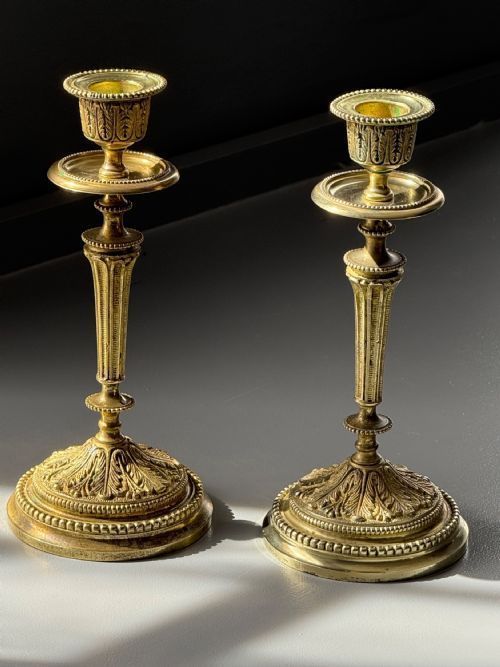
The materials span cast bronze, gilt bronze, ormolu, and patinated bronze, frequently paired with white marble bases or unusual elements like fluorspar. These pieces function both as decorative ornaments on mantlepieces and tables and as functional lighting.
Materials and Construction
The construction relies heavily on metal casting, using bronze that is subsequently gilt, polished, or given a dark patinated finish. Ormolu and gilt bronze components provide bright metallic contrast against darker bronze elements or polished stone.
Marble and occasionally fluorspar serve as substantial plinths and bases, anchoring the metal work. These stone sections are turned, carved, and fitted precisely to receive the cast bronze mounts and candle sockets.
Louis XVI Style Candlesticks Retail Price Guide 2026
Typical asking prices for louis xvi style candlesticks among the pieces listed under this phrase on Sellingantiques today, from the lower quarter to the upper quarter. They describe what is for sale here now, not the wider market.
Several pairs feature winged putti caught mid-flight, holding up candle sockets with determined expressions.
Evaluating Quality and Execution
Quality separates in the crispness of the chasing and the depth of the casting detail across figures, acanthus leaves, and fluted columns. Finer examples show sharp definition in facial expressions on putti and caryatids, whereas lesser pieces exhibit softer, shallower surface modelling.
The integration of mixed materials also distinguishes superior pairs, particularly where patinated and gilt bronzes are harmoniously combined with solid marble plinths. Heavier metal weight and secure, clean joins between components denote superior workshop standards.
Jean Démosthène Dugourc·Francois Redmond·Claude Clodion
The Louis XVI Style Candlesticks Glossary
- Ormolu
- Gilded bronze, typically produced by applying a mercury-gilding amalgam to cast bronze during the eighteenth and nineteenth centuries. This finish yields a warm, durable golden lustre.
- Patinated bronze
- Bronze treated with chemical solutions to produce a dark, uniform surface colour. It provides visual contrast against bright gilt mounts.
- Caryatid
- A sculpted female figure serving as an architectural support or stem. In these pieces, she often forms the central shaft of a candlestick.
- Fluorspar
- A colourful mineral occasionally utilised for bases or decorative sections. It exhibits natural banding and transparency.
- Candelabra
- A multi-branched lighting device designed to hold several candles simultaneously. They frequently feature removable arms to convert into single candlesticks.
Louis XVI Style Candlesticks: Frequently Asked Questions
Are these pieces from the eighteenth century?
Most pieces found here date from the nineteenth century, created during revivals of neoclassical taste rather than the original reign of Louis XVI.
Nineteenth-century makers closely reproduced or reinterpreted eighteenth-century models by designers like Dugourc and Clodion.
How do I care for gilt bronze and ormolu?
Gilt bronze requires gentle dusting with a soft, dry brush to prevent the accumulation of dirt in intricate chased recesses.
Avoid chemical polishes, abrasives, and water, as harsh cleaning methods can strip away the delicate gold layer.
Can these candlesticks be wired for electricity?
Some pieces are adapted into table lamps with internal wiring running through the central shaft.
When purchasing unconverted examples, professional consultation ensures any electrification respects the original structure without causing permanent damage.