



Louis XVI Ormolu Appliques
Louis xvi ormolu appliques are cast bronze wall lights and mounts that bring neoclassical symmetry and gilded warmth to an interior.
Louis XVI Ormolu Appliques
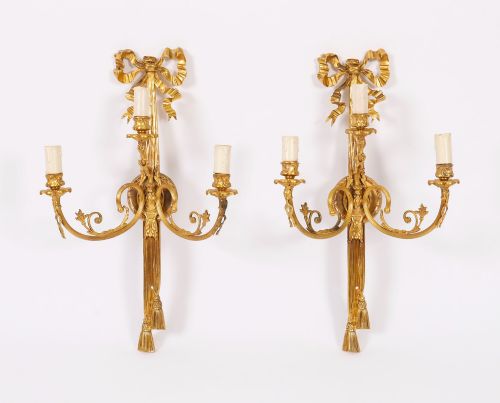
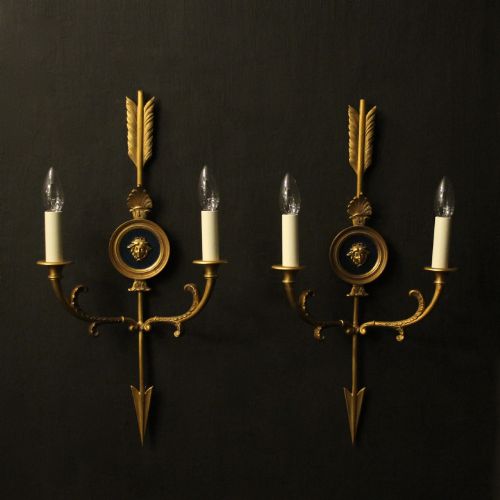
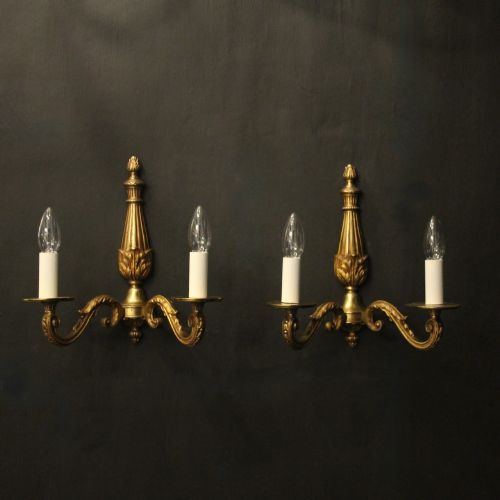
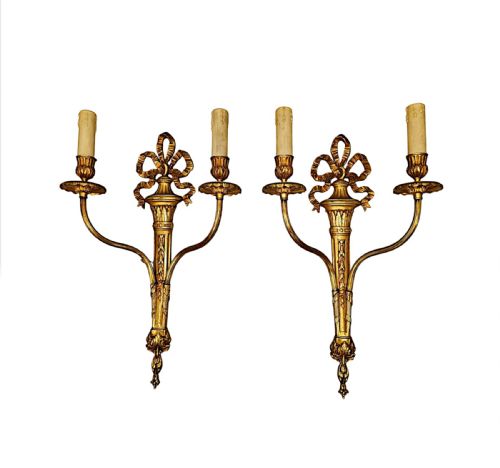
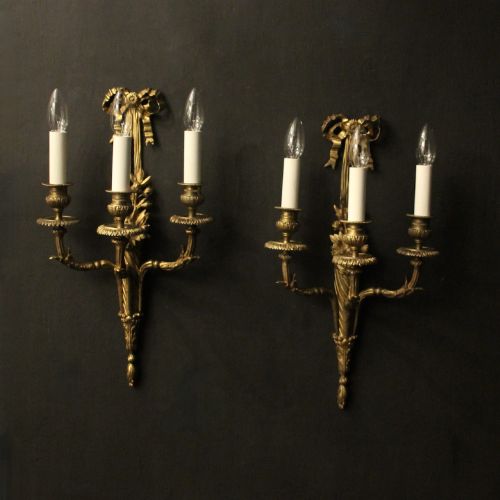
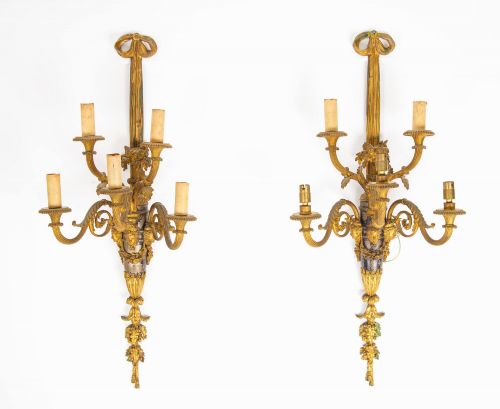
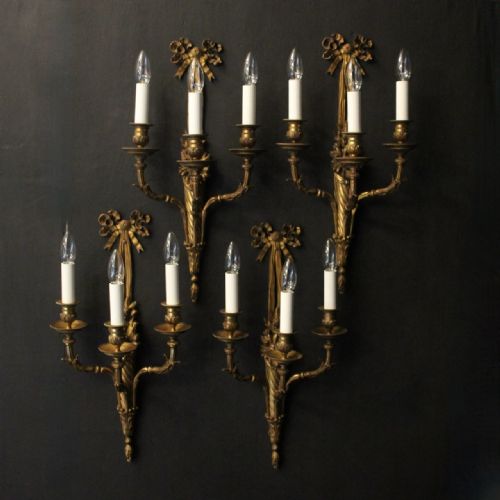
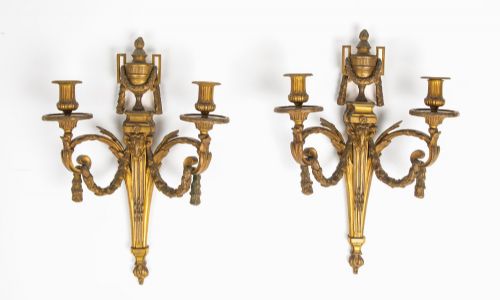
When you search for louis xvi ormolu appliques, you encounter French wall lights, sconces, and furniture mounts predominantly dating from the nineteenth and early twentieth centuries. These pieces reflect revival periods inspired by eighteenth-century neoclassical design, utilising symmetrical arrangements and classical motifs.
The most common formats on this page are twin and triple arm wall lights, alongside pairs of furniture mounts. Originating largely from French workshops, they span styles from French Neoclassical to Louis XVI Revival and French Chateau.
Materials and technique
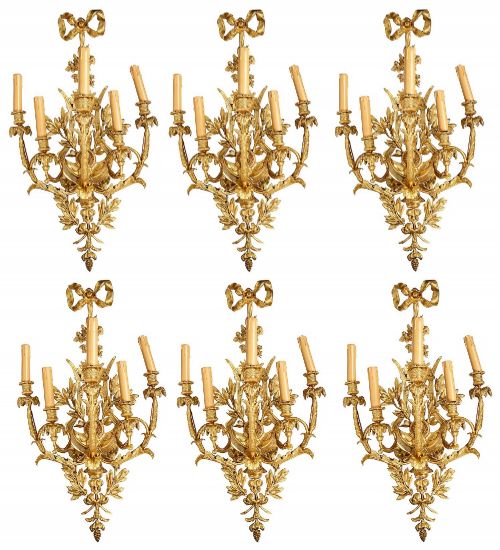
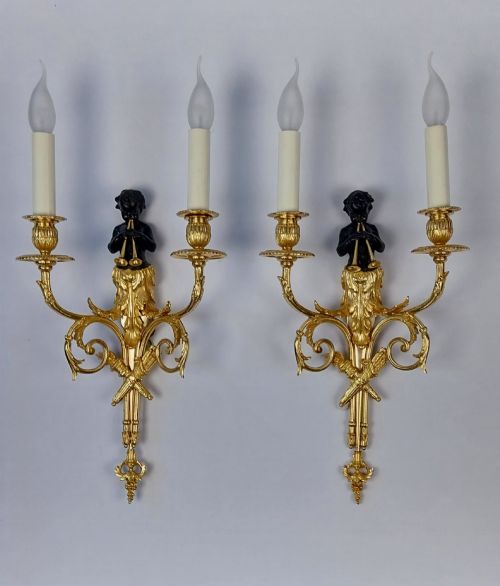
The primary material is cast bronze, worked into detailed forms such as ram's head masks and cherub figures. Workshops applied gilding to create the characteristic ormolu surface, sometimes combining it with patinated bronze or brass.
Makers utilised casting and chasing techniques to define crisp foliage and classical drapery. Selected examples incorporate auxiliary materials like crystal drops and mirrored backplates to enhance reflection.
Louis XVI Ormolu Appliques Retail Price Guide 2026
Typical asking prices for louis xvi ormolu appliques among the pieces listed under this phrase on Sellingantiques today, from the lower quarter to the upper quarter. They describe what is for sale here now, not the wider market.
Materials across the inventory include gilded bronze, brass, patinated bronze, and integrated crystal elements.
Quality differences
Weight and structural integrity also separate standard production from superior examples. Heavier castings with secure arm junctions and well-defined backplates indicate attentive workshop execution.
Henri Vian
The Louis XVI Ormolu Appliques Glossary
- Ormolu
- Gilded bronze produced by applying a mercury and gold amalgam to a bronze base and heating it. This historic technique creates a warm, durable golden surface.
- Applique
- A decorative wall-mounted lighting fixture or furniture mount. In this context, it refers to sconces and wall lights.
- Neoclassical
- A style drawing on the classical art and architecture of ancient Greece and Rome. It prioritises symmetry, restraint, and classical ornamentation.
- Chasing
- The manual finishing of a metal casting using small punches and hammers. This process sharpens details and textures after the initial casting.
Louis XVI Ormolu Appliques: Frequently Asked Questions
What are louis xvi ormolu appliques?
These pieces are decorative bronze wall lights and mounts styled after eighteenth-century French neoclassical design. They typically feature arms for candles or bulbs and ornament walls with classical motifs.
Most examples seen here originate from the nineteenth and early twentieth centuries, produced during various revival periods. They serve both as functional lighting and sculptural wall decoration.
How do I install wall sconces safely?
Wall sconces require secure mounting to wall studs or appropriate masonry fixings to support the weight of the bronze and brass components. Electrical wiring should be assessed by a qualified professional to ensure compatibility with modern standards.
Historical backplates often feature original screw holes that can guide placement. Care must be taken to protect the gilded ormolu surface during handling and installation.
How do I clean gilded bronze?
Gilded bronze requires gentle dusting with a soft, dry cloth to remove surface particles. Avoid chemical cleaners, abrasive cloths, or metal polishes that can strip the delicate gold layer.
Preserving the original ormolu involves minimal intervention and protecting the metal from excessive moisture. Professional conservation is recommended for deep cleaning.
How can I tell the period of a light?
Dating relies on examining the casting quality, fastening methods, and material composition. Nineteenth and early twentieth-century pieces often show specific hand-chasing marks and assembly screws typical of those eras.
Stylistic cues such as revival details and maker stamps further clarify the date of production. Comparing the patination and wear patterns also helps establish age.