



Louis XVI Carved Cupboard
A louis xvi carved cupboard brings neoclassical restraint and fine timber to a room, offering both sculptural presence and genuine utility.
Louis XVI Carved Cupboard
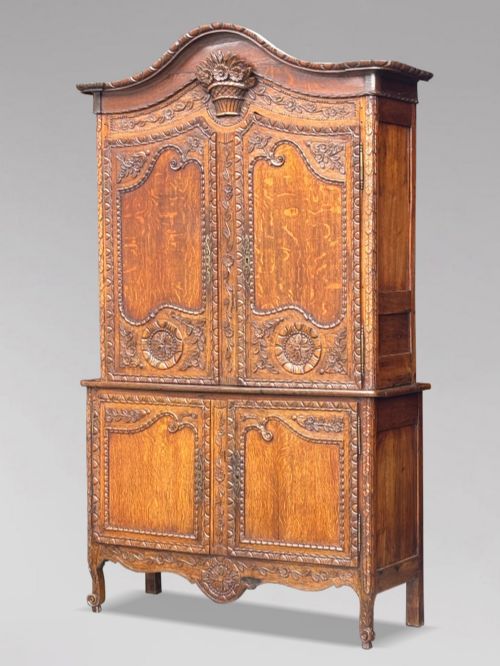
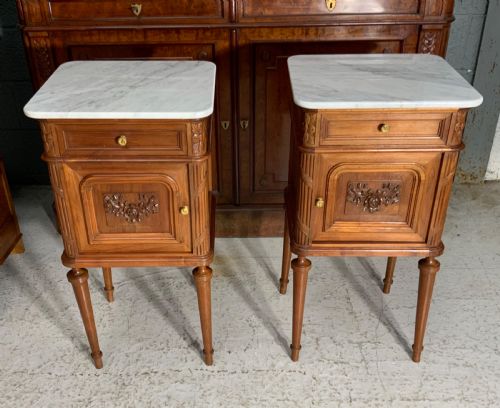
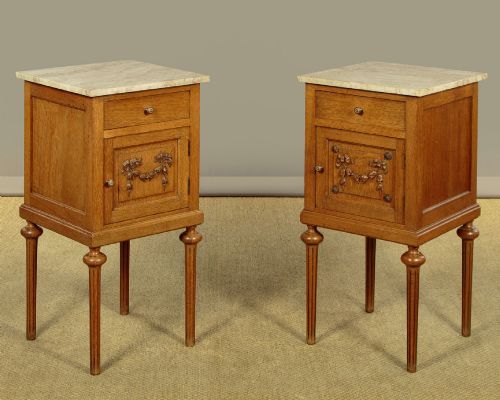
A louis xvi carved cupboard represents a tradition of neoclassical cabinet making that prioritises straight lines, symmetry and restrained ornamentation over earlier curves. These pieces take various forms across the evidence, including buffet deux corps, armoires, and bedside cabinets.
The versions most commonly met on this page date from the eighteenth century through to the early twentieth century, spanning original periods and later revivals. They frequently incorporate marble tops, brass mounts, and hand-carved details that reflect French provincial and chateau aesthetics.
Makers adapted the style to smaller utilitarian items such as bedside tables and larger storage furniture alike, maintaining characteristic proportions. Walnut, oak, mahogany, and cherrywood provide the primary structures for these functional and decorative items.
Materials and construction
Cabinet makers utilised dense hardwoods including walnut, oak, mahogany, and cherrywood to build stable carcases capable of supporting heavy marble tops. Timber selection dictated both the structural integrity and the capacity for crisp hand carving.
Surface decoration relies on direct wood carving and applied brass elements to articulate panels, doors, and cornices. Skilled joinery ensures that large forms like the buffet deux corps and armoires remain true across seasonal changes in humidity.
Louis XVI Carved Cupboard Retail Price Guide 2026
Typical asking prices for louis xvi carved cupboard among the pieces listed under this phrase on Sellingantiques today, from the lower quarter to the upper quarter. They describe what is for sale here now, not the wider market.
Listings span cabinet forms from the eighteenth to the early twentieth century, utilising walnut, oak, mahogany, and marble.
Assessing quality and execution
The standard of carving distinguishes standard output from exceptional work, with depth and sharpness revealing the hand of a trained artisan. Crisp execution on walnut or oak doors shows a command of neoclassical motifs.
Integration of secondary materials like marble and brass separates robust pieces from lesser examples. Heavy stone tops require precise rebates and stable internal framing to distribute weight evenly.
The Louis XVI Carved Cupboard Glossary
- Buffet deux corps
- A tall two-part storage piece featuring a lower cupboard section surmounted by a smaller upper cabinet. This architectural form provides substantial display and storage capacity.
- Demi lune
- A half-moon shape used for the top and plan of tables and cabinets. This curved profile allows bedside furniture to sit flush against a wall while softening room angles.
- Neoclassical
- A style rooted in classical antiquity that rejects baroque excess in favour of straight columns, symmetry, and geometric proportion. It defines the architectural grammar of these pieces.
- Armoire
- A large freestanding wardrobe or cupboard with hinged doors enclosing shelving or hanging space. They often feature prominent carved pediments and panelled timber doors.
Louis XVI Carved Cupboard: Frequently Asked Questions
How do I date a louis xvi carved cupboard?
Dating relies on examining construction marks, timber preparation, and hardware fixings alongside stylistic indicators. Eighteenth-century examples display hand-cut joints and distinct patina, while revival pieces from the nineteenth and early twentieth centuries show machinery marks and different assembly methods.
Secondary woods and drawer linings offer further clues to age and origin. Comparing the carving technique to known period standards helps separate original eighteenth-century furniture from later Edwardian or 1920s interpretations.
Where should I place a bedside cabinet?
Bedside cabinets suit bedrooms where their compact proportions provide convenient surface space and enclosed storage. Marble-topped versions offer durable protection against water rings and daily wear.
Pairing matching cabinets creates symmetry on either side of a bed. Their neutral timber tones and classical lines also allow them to function as small accent tables in a hallway or living space.
How do I care for walnut and oak furniture?
Regular dusting with a dry, soft cloth prevents particle buildup on carved surfaces and mouldings. Avoid placing timber furniture near direct heat sources or strong sunlight to prevent wood movement and fading.
Applying a traditional beeswax polish occasionally nourishes the grain and enhances the natural patina. Avoid silicone-based sprays, which can penetrate the pores and damage the historic finish over time.