





Louis XVI Bed
When you search for a louis xvi bed, you enter a world of classical symmetry, refined carving and stately proportions built for restful sleep.
Louis XVI Bed
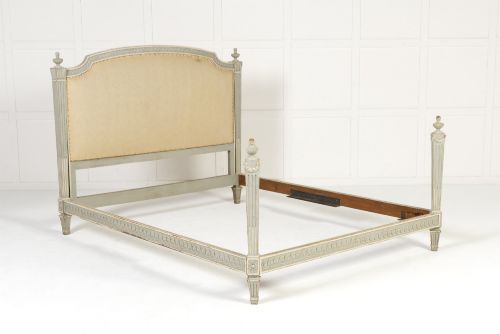
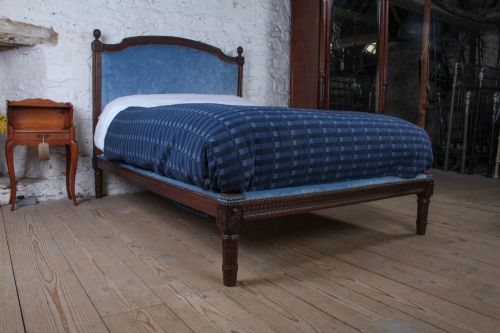
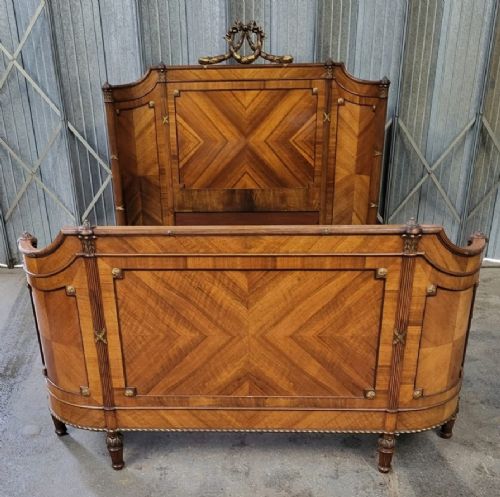
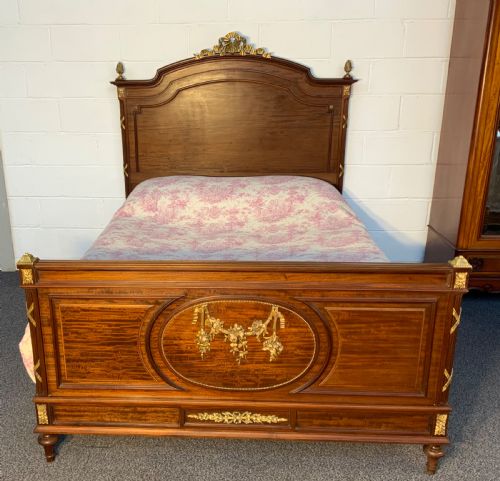
A louis xvi bed brings classical French elegance to a bedroom through restrained ornamentation, straight fluted columns and rectilinear geometry. Pieces appearing here span from the late nineteenth century through the early twentieth century, capturing revivals of neoclassical taste rather than eighteenth-century originals.
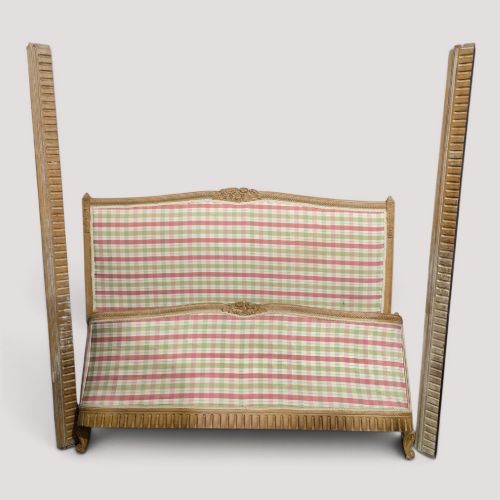
Most examples present as double, king or single sizes in wood or painted finishes, often incorporating cane panels or fresh fabric upholstery. The form follows architectural principles derived from ancient Rome, favouring balance and clarity over ornate curves.
Materials and Construction
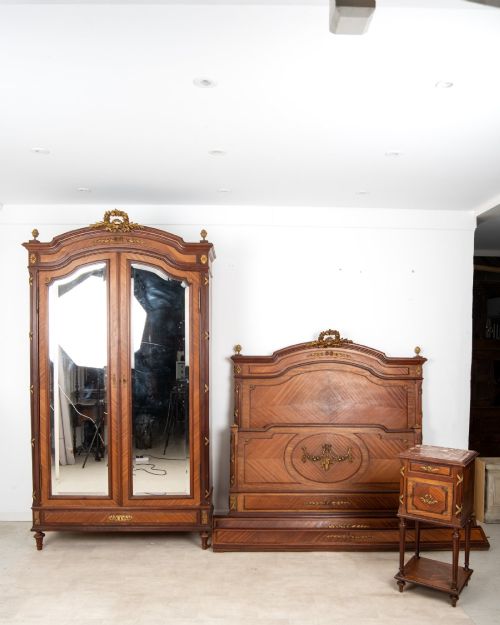
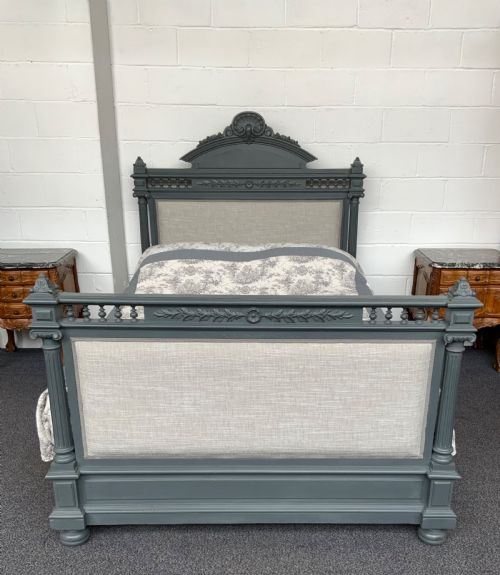
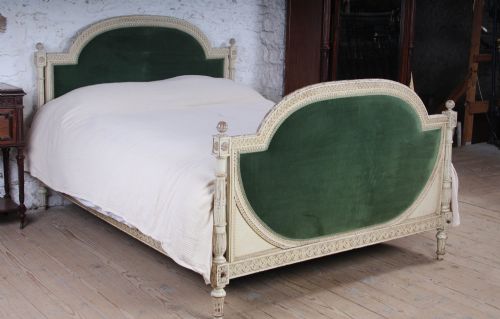
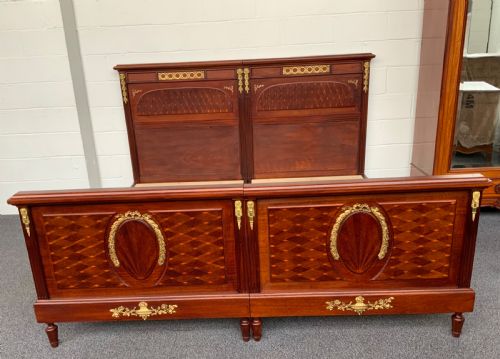
Cabinet makers built these frames using dense hardwoods like mahogany, walnut and beech, frequently applying quarter-veneers or intricate parquetry and marquetry to flat surfaces. Painted wood finishes in muted tones or cream also appear widely, sometimes accented with gilt detailing or polychrome floral panels.
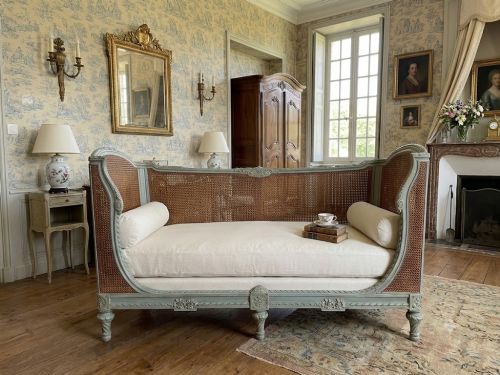
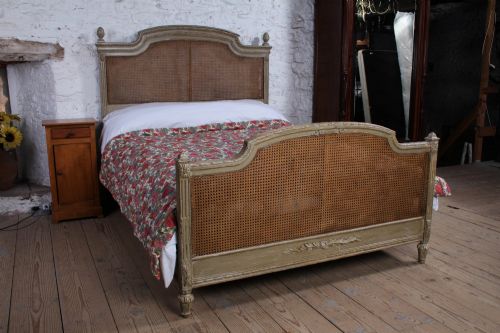
Cane work forms a key structural and decorative element on headboards and footboards, woven tightly into wooden channels to create breathable bergere panels. Metal elements such as brass and ormolu provide structural mounts and decorative mounts along the edges.
Listings feature pieces spanning from the 1870s to the 1930s, constructed primarily in mahogany, walnut, oak, and painted wood.
Assessing Quality and Execution
Quality reveals itself in the crispness of the hand-carved detailing, where acanthus leaves, ribbons and fluting are rendered with sharp definition rather than soft, muddy edges. Superior pieces employ dense timbers with matched veneers and robust joinery that keeps the substantial frames rigid.
The refinement of secondary elements, such as finely cast brass mounts and hand-painted portrait or floral panels, distinguishes exceptional commissions from standard commercial production. Upholstery standard and the tension of the woven cane further separate ordinary frames from finer workshops.
Constantin Potheau
The Louis XVI Bed Glossary
- Bergere
- An enclosed armchair or bed panel featuring woven cane sides or backs. This technique lightened the visual weight of heavy wooden furniture.
- Ormolu
- Gilded bronze used for decorative mounts and accents on furniture. It adds a subtle metallic sheen to wooden frames.
- Parquetry
- Geometric wood mosaic work used for decorative surfaces on beds and cabinets. Artisans arranged contrasting wood veneers in precise patterns.
- Canapé
- A decorative sofa or day bed frame sharing stylistic traits with larger bedsteads. These pieces often feature exposed carved woodwork and upholstered cushions.
- Corbeille
- A style of bed featuring a curved, enclosing headboard and footboard resembling a basket. This shape wraps around the sleeper for a cocoon-like effect.
Louis XVI Bed: Frequently Asked Questions
What defines a louis xvi bed?
A louis xvi bed is characterised by straight tapered legs, fluted columns and classical architectural motifs inspired by ancient Rome. Unlike earlier rococo styles, these pieces embrace symmetry, rectilinearity and restrained ornamentation.
Craftsmen often utilised mahogany, walnut, painted finishes and woven cane to create a structured yet elegant silhouette suited to formal chambers.
Are these beds standard modern sizes?
Many antique French beds deviate slightly from contemporary British mattress dimensions due to historical sizing conventions. Double and king sizes appear frequently, but checking exact internal frame measurements before purchasing a mattress remains essential.
Some frames accommodate standard modern slats or custom bases to ensure a secure fit for contemporary sleep setups.
How do I care for cane panels?
Woven cane requires gentle cleaning with a slightly damp cloth to remove dust from the interstices. Avoid soaking the material, and keep the bed away from direct heat sources that can dry out and snap the natural fibres.
Applying a light moisture treatment periodically helps maintain the flexibility and strength of older cane work.
How do I distinguish revival periods from originals?
Most beds found on the market originate from the nineteenth and early twentieth centuries as part of the revival movements. Machine-cut elements, modern screw fixings and secondary wood choices typically indicate a nineteenth or twentieth-century construction date rather than an eighteenth-century origin.
Examining the wear patterns, tool marks and hardware types helps determine the precise manufacturing era of the piece.