

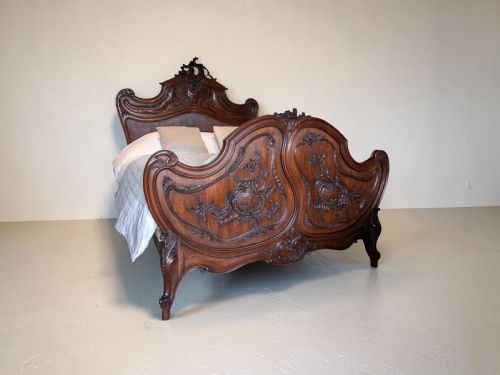


Antique French Double Bedstead
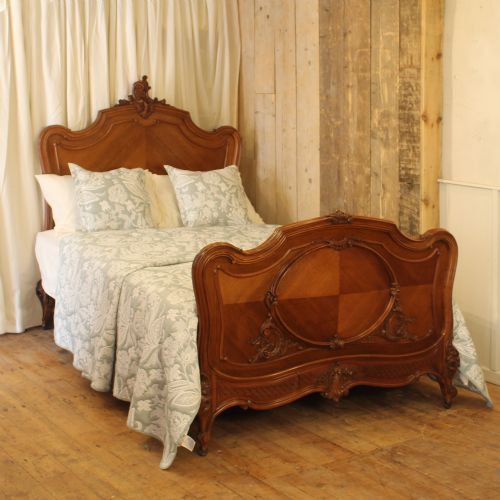
An antique french double bedstead brings continental warmth and architectural proportion to a bedroom.
Antique French Double Bedstead
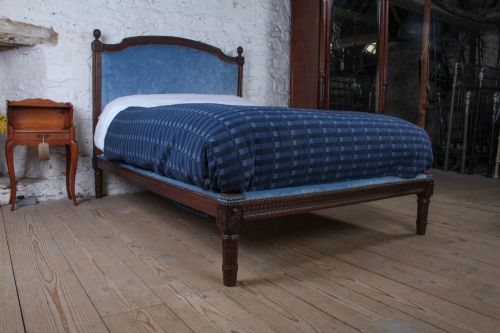
An antique french double bedstead provides a sleeping platform scaled for daily use while retaining period decorative carving. These pieces span the nineteenth century through the early twentieth century, drawing on regional traditions and formal revivals.
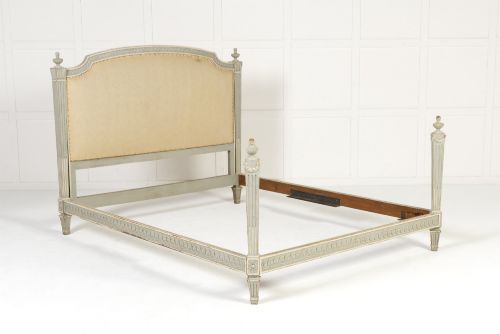
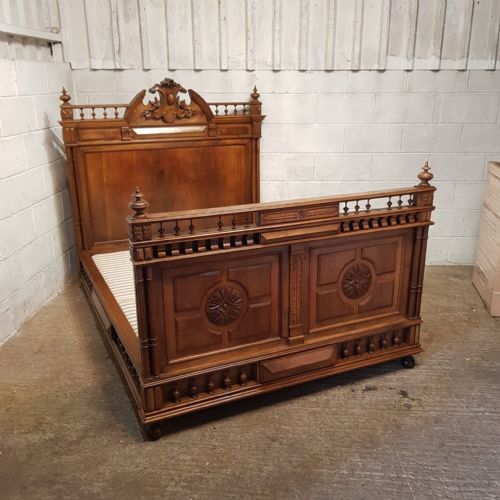
The versions most commonly met on this page include walnut and mahogany frames built in Louis XVI and provincial styles. Buyers select these beds to anchor a bedroom with authentic timber grain and historic joinery.
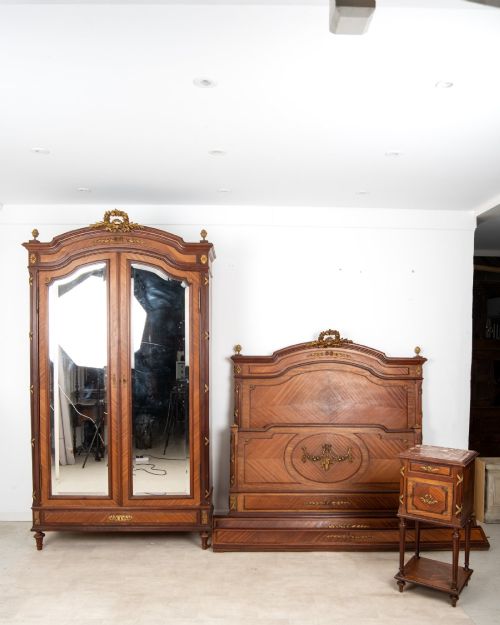
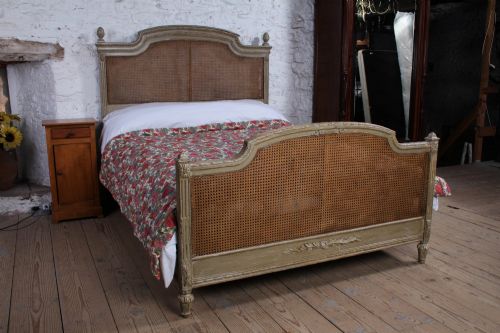
Design vocabulary ranges from simple painted surfaces to elaborate ormolu mounts and caned panels. Each bedstead accommodates standard mattress dimensions while offering distinct headboard and footboard heights.
How they were made
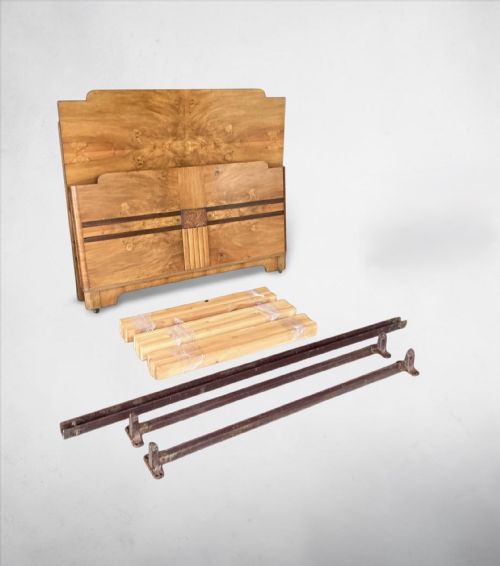
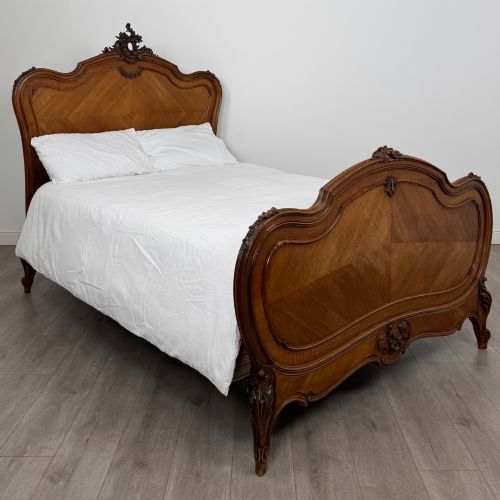
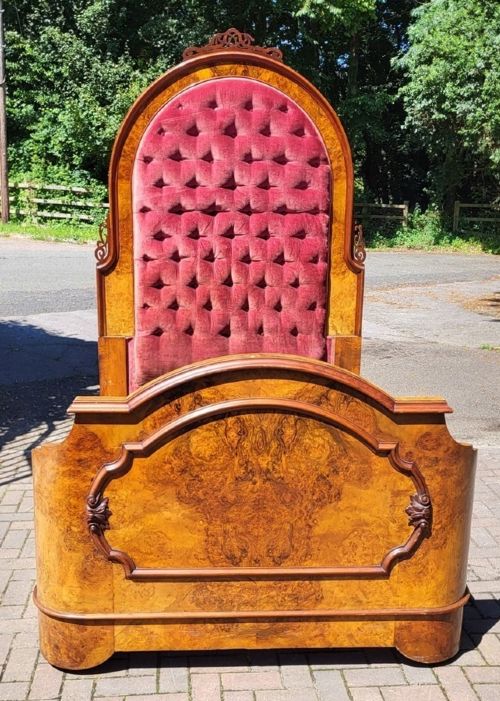
Cabinetmakers constructed these bedsteads using dense hardwoods such as walnut, oak, and mahogany, often applying burr veneers to visible headboard panels. Joinery relied on traditional mortise and tenon methods alongside sturdy iron side rails to support the mattress weight.
Decorative elements combined hand-carving in relief with cast brass or ormolu mounts fixed to the wood. Painted and gilt finishes received multiple layers, sometimes distressing naturally over decades of domestic use.
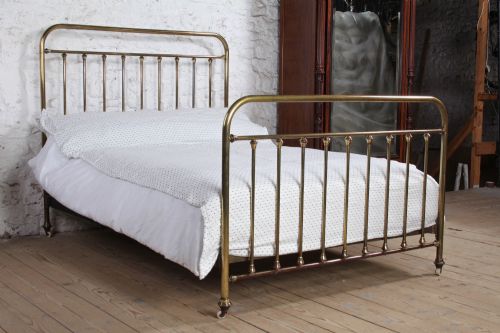
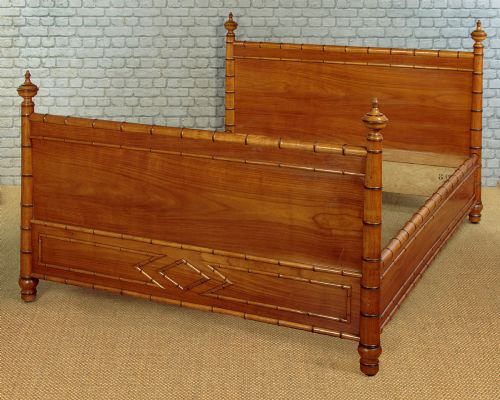
The listings on this site span Victorian, Edwardian, and Art Deco periods, utilising walnut, mahogany, brass, and painted wood.
What varies in quality
The refinement of the timber selection dictates the visual success of the piece, with figured burr walnut and plum pudding mahogany sitting at the higher end of the scale. Depth and crispness in hand-carved floral or ribbon motifs separate workshop standards from mass production.
Structural integrity depends on the original iron side rails and the precision of the corner brackets. Superior examples retain matching proportions between the headboard and low-end footboard without appearing heavy.
The Antique French Double Bedstead Glossary
- Bedstead
- A framework of a bed consisting of headboard, footboard, and side rails. This structure holds the mattress base without modern integrated upholstery.
- Ormolu
- Gilded bronze applied as decorative mounts on furniture. It adds metallic contrast to dark woods.
- Parquetry
- Geometric wood mosaic work used for decorative surfacing. Small veneer pieces create patterned floors or headboard panels.
- Caning
- Woven rattan material used to form open panels in headboards and footboards. It provides a lightweight, textured centre to wooden frames.
- Low-End
- A bed design featuring a reduced footboard height. This configuration opens up sightlines across the bedroom.
Antique French Double Bedstead: Frequently Asked Questions
Will a modern mattress fit an antique french double bedstead?
Many older frames vary slightly from contemporary standard sizes due to historical regional measurements. Custom mattress solutions or minor adjustments to the internal slats often resolve these discrepancies.
Checking the internal rail length and width before purchase ensures a proper fit for modern bedding components.
How do I care for polished wood surfaces?
Dust the timber regularly with a soft, dry cloth to prevent particulate accumulation. Avoid silicone-based sprays that damage historic French polish.
Apply a microcrystalline wax periodically to nourish the dry wood and protect the original finish from moisture damage.
How do I identify a Louis XVI style bed?
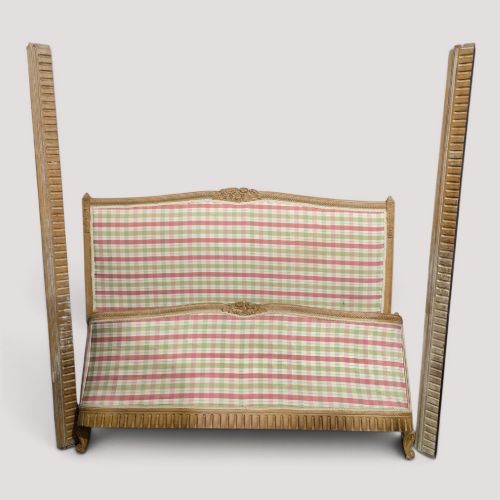
Louis XVI style pieces display straight fluted columns, neoclassical symmetry, and carved ribbon or floral motifs. The overall silhouette emphasises rectilinear geometry rather than curved baroque lines.
Look for squared-off corners and restrained architectural details that reflect eighteenth-century revival tastes.