
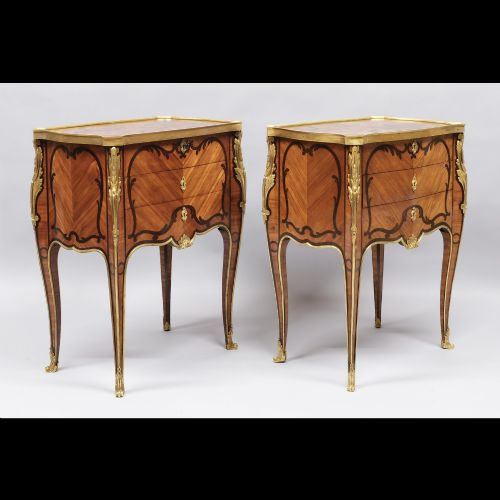
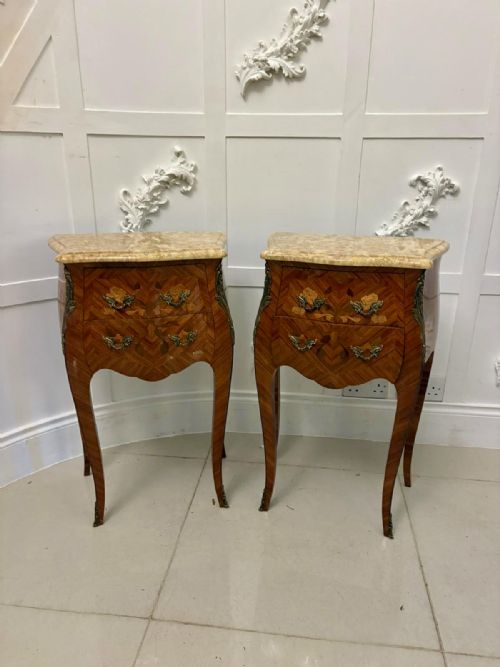
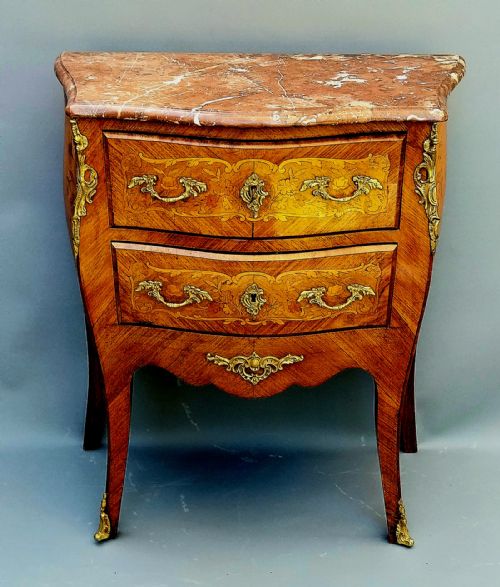

Louis XV Style Bedside Table
A louis xv style bedside table brings serpentine lines and refined French flair directly to the bedside.
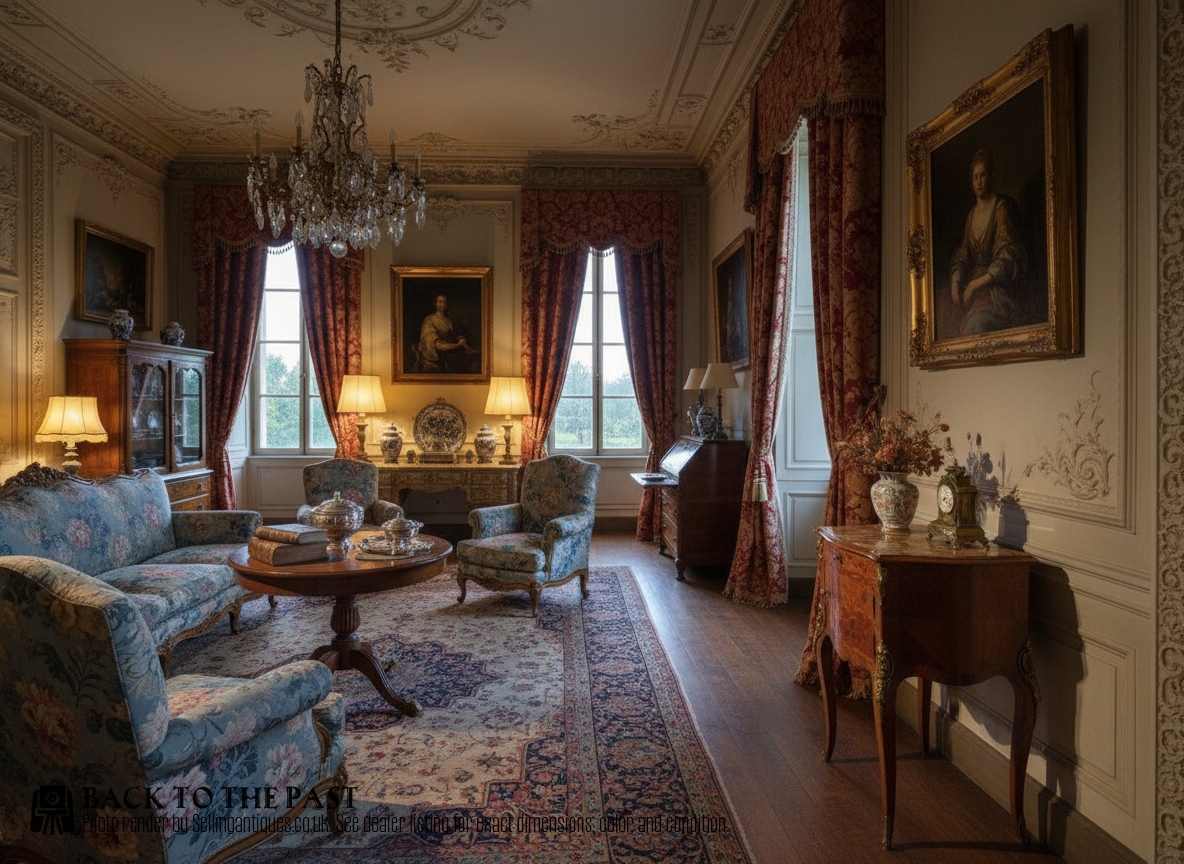
Louis XV Style Bedside Table
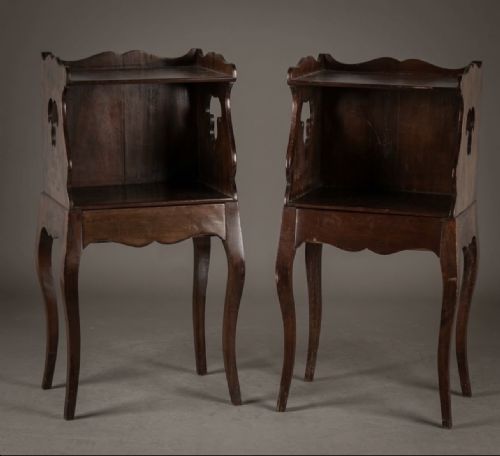
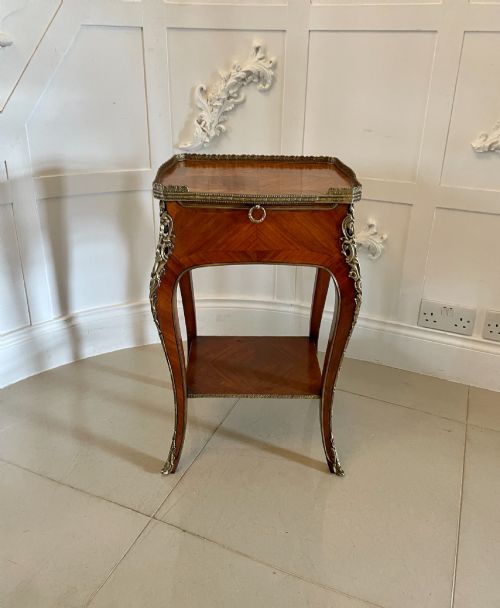
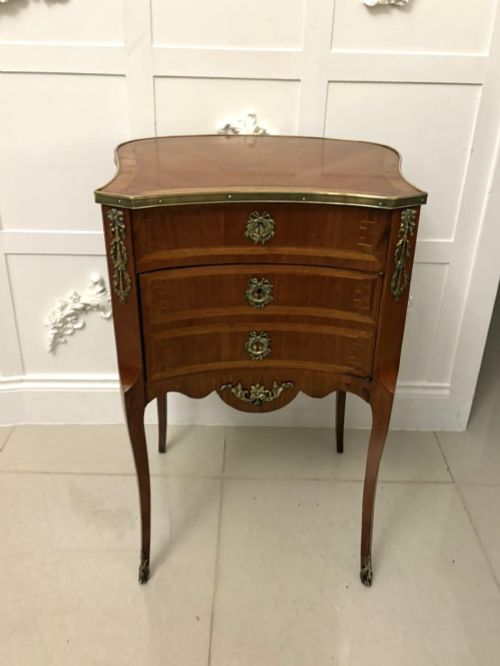
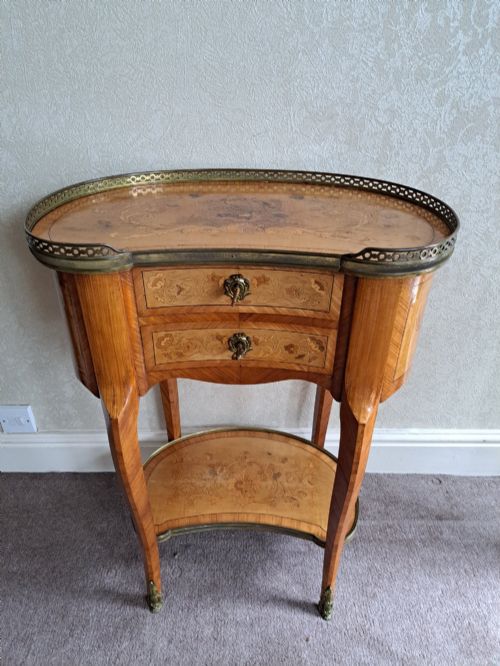
A louis xv style bedside table unites compact bedside utility with the curved profiles and ornate mounts typical of eighteenth-century French design. These pieces appear in forms such as lamp tables, small chests of drawers, and side cabinets intended for night use.
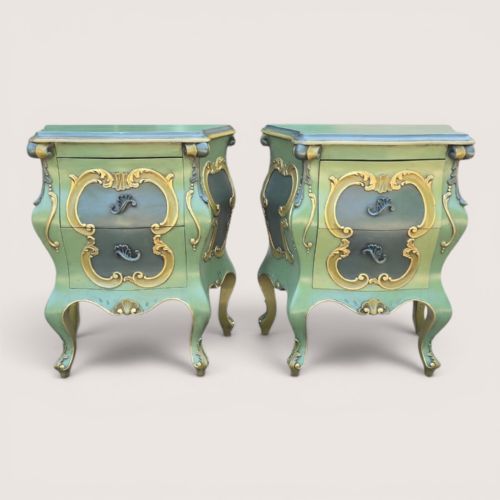
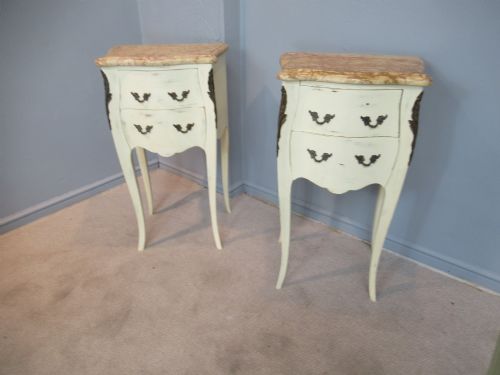
Most examples found here date from the nineteenth and early twentieth centuries, reflecting sustained revival periods rather than original eighteenth-century manufacture. Buyers frequently encounter matched pairs designed to sit symmetrically on either side of a bed.
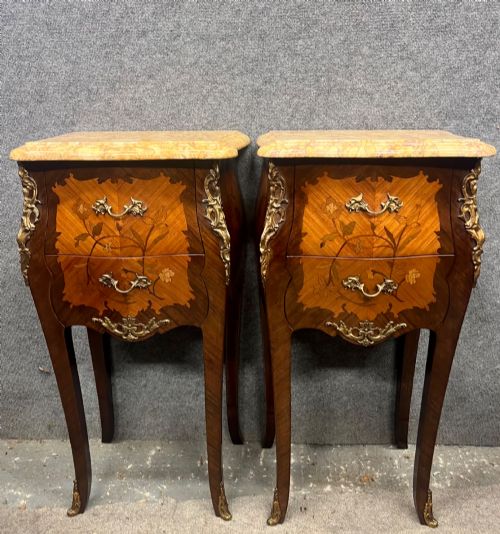
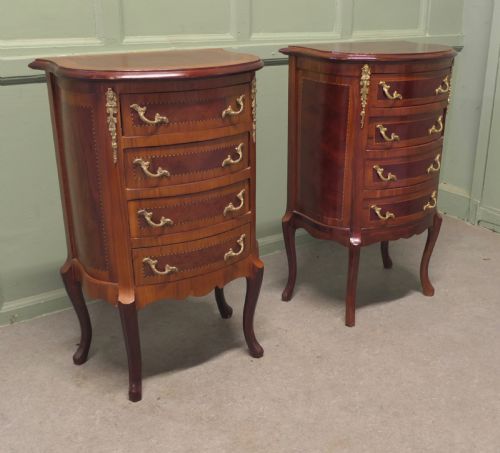
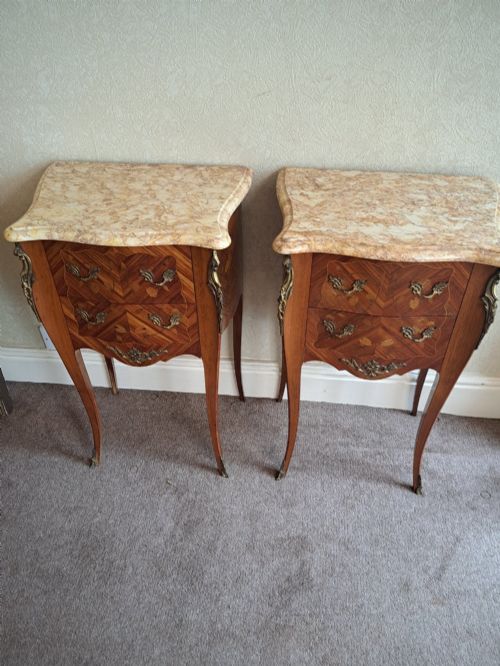
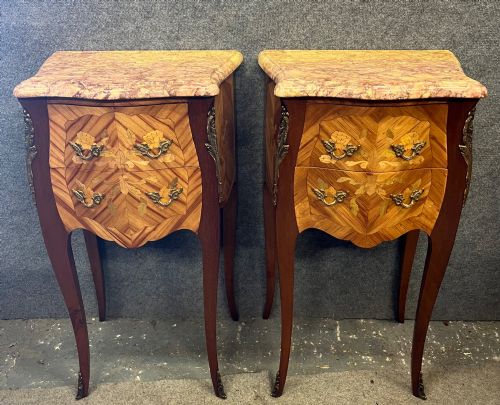
The dominant forms display characteristic serpentine fronts, bombe shapes, and occasional marble tops paired with enclosed cupboards or open shelf spaces. Walnut, kingwood, and mahogany provide the primary timber foundations for these decorative night tables.
How they were made
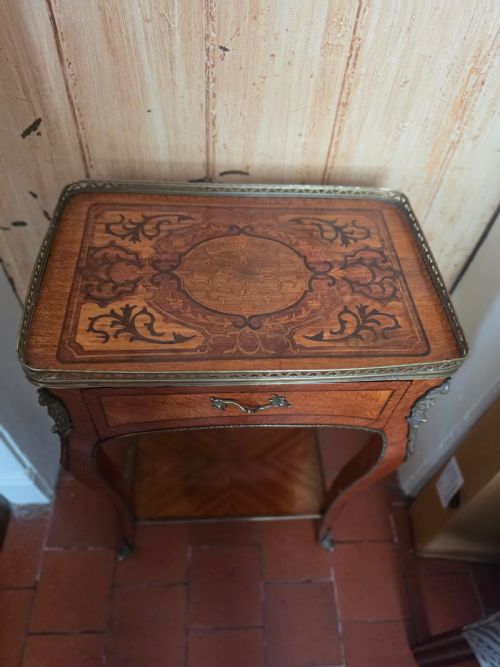
Cabinet makers built these pieces using supportive hardwoods like oak or mahogany as a carcase, overlaid with decorative veneers such as kingwood, rosewood, and walnut arranged in intricate marquetry or parquetry patterns. This veneering technique allowed craftsmen to create complex geometric and floral designs across curved drawer fronts and side panels.
Ormolu mounts, cast in brass or bronze and frequently gilt, accent the corners, handles, and apron feet to emphasise the sweeping contours of the style. Insets of shaped marble, often white or veined, form smooth, durable upper surfaces designed to hold bedside lamps and personal items.
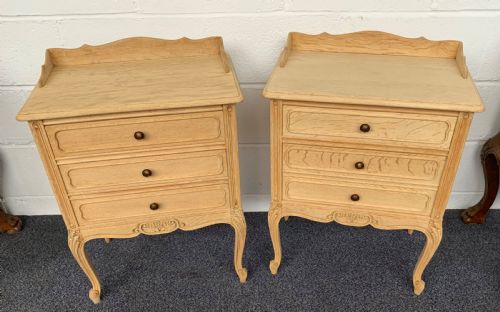
Listings span periods from the mid-nineteenth century through to the mid-twentieth century, dominated by twentieth-century revival pieces in kingwood, oak, and marble.
What varies in quality
The precision of the timber parquetry and the crispness of the cast ormolu mounts dictate the upper tier of execution. Master craftsmen ensured that intricate floral marquetry fitted seamlessly without visible filler, and that bronze mounts were hand-chased to sharpen the decorative details.
Structural integrity rests on the stability of the carcase and the smooth action of drawers within curved, bombe frames. Lesser examples rely on stamped brass rather than heavy cast bronze, and simple flat timber tops instead of fitted, polished marble slabs.
Sormani
The Louis XV Style Bedside Table Glossary
- Ormolu
- Gilded bronze or brass mounts applied to furniture edges and feet. These decorative metal ornaments highlight the serpentine lines characteristic of French revival pieces.
- Marquetry
- Inlaid wood veneers forming pictorial or decorative patterns across drawer fronts and tops. Artisans use contrasting timber tones to build complex floral or geometric motifs.
- Bombe
- An outward-swelling, bulging contour found on cabinet sides and drawer fronts. This curved profile defines much of the continental case furniture from the period.
- Parquetry
- Geometric wood inlay arranged in repetitive patterns like cubes or chequers. It provides a structured contrast to flowing marquetry designs.
- Chevets
- The French term for bedside tables or nightstands. These compact pieces typically incorporate small cupboards or single drawers beneath a display surface.
Louis XV Style Bedside Table: Frequently Asked Questions
What is a louis xv style bedside table?
A louis xv style bedside table is a small decorative cabinet or drawer unit designed for night use, featuring curved lines and French revival details.
These pieces draw inspiration from eighteenth-century court furniture, adapting compact proportions to fit modern bedroom requirements while retaining classical ornamentation.
Are these tables usually sold as pairs?
Many listings feature matched pairs intended to sit symmetrically on either side of a bed frame.
Single tables also appear frequently, serving as versatile lamp stands or small side cabinets in tighter living spaces.
How do I identify the wood types?
Examine the visible grain patterns and surface tones across the cabinet carcase and drawer fronts to distinguish timbers like kingwood, walnut, and mahogany.
Veneered surfaces often display contrasting tones arranged in geometric parquetry or floral marquetry designs.
What purpose do marble tops serve?
Fitted marble slabs provide a cool, hard-wearing surface resistant to liquid rings and scratches from bedside lamps or water jugs.
These stone tops add weight and visual contrast to the surrounding timber veneers and gilt bronze mounts.