


Louis XV Oak Dresser
A louis xv oak dresser brings heavy French provincial character and practical storage into a room, combining substantial timber with flowing carved lines.
Louis XV Oak Dresser
When you search for a louis xv oak dresser, you encounter substantial storage furniture rooted in French provincial tradition, alongside related forms like commodes, buffets, and cabinets. The pieces span periods from the eighteenth century through to later revivals in the nineteenth and early twentieth centuries.
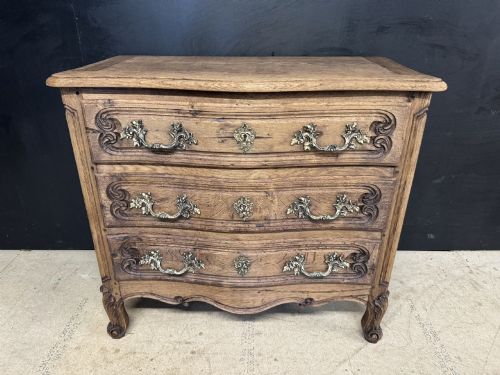
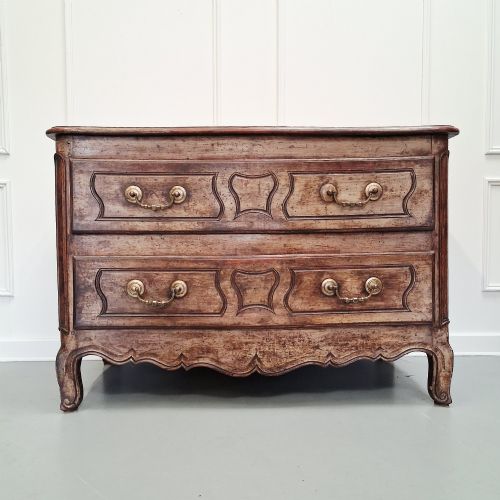
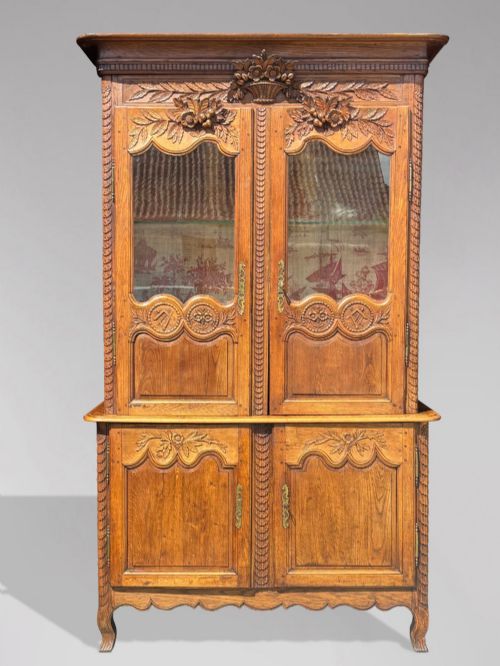
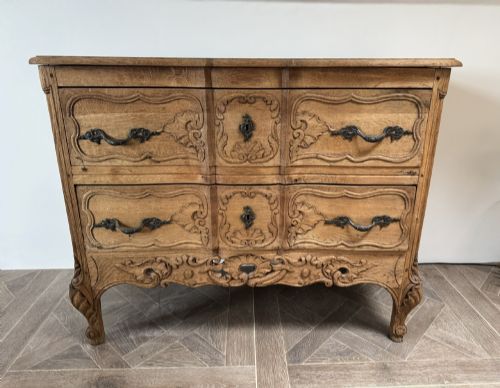
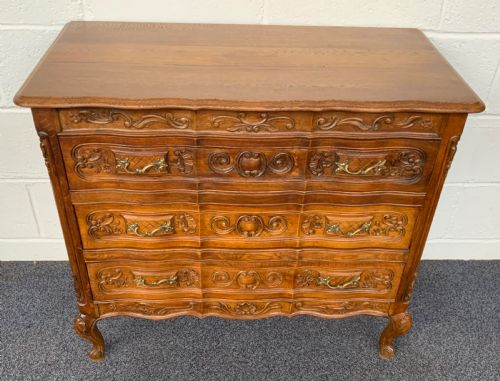
You are most likely to meet oak examples displaying characteristic Louis XV styling, such as serpentine fronts, panelled doors, and carved details. These items function primarily as chests of drawers, sideboard bases, or two-piece cupboards intended for domestic use.
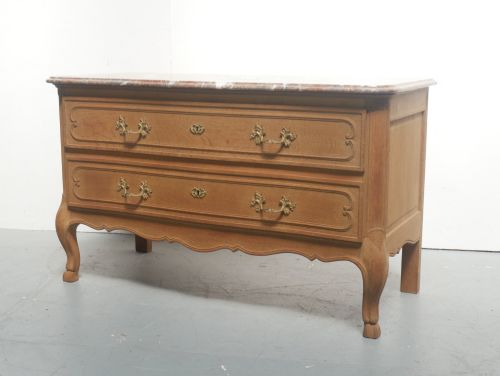
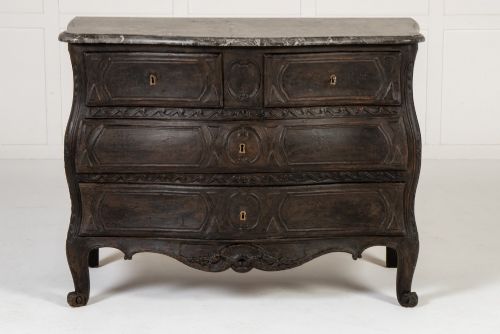
The material palette is dominated by oak, often seen in its natural state, bleached, or scrubbed, while occasional variants incorporate marble tops or walnut. Construction methods reflect both eighteenth-century joinery and later provincial cabinet-making traditions.
What varies in quality
Quality separates through the crispness of the hand-carved detailing on the oak panels and the fluidity of the serpentine or bombe forms. Pieces from the eighteenth century demonstrate refined proportions and integration of joinery compared to later revival items.
The integrity of the timber, the subtlety of surface treatments like bleaching, and the retention of original brass or iron hardware define the upper tier of these pieces. Structural harmony between upper and lower sections on two-piece cupboards also marks superior craftsmanship.
Listings span eighteenth-century origins to early twentieth-century revivals, utilising oak, walnut, marble, iron, and brass.
The Louis XV Oak Dresser Glossary
- Commode
- A low chest of drawers or cabinet, frequently featuring serpentine or bombe shaping. These pieces often serve as sideboards or bedroom storage.
- Buffet a deux corps
- A large two-piece cupboard or cabinet featuring a lower sideboard base and an upper display or storage section. It represents a substantial architectural form in provincial French furniture.
- Serpentine
- A shape characterised by a line of furniture that curves outward and then inward, creating an undulating front. This profile appears frequently on drawer fronts and commodes.
- Bombe
- A bulging, swelling contour found on the sides and fronts of commodes and cabinets. It requires advanced woodworking skill to execute properly in solid timber.
- Bleached oak
- Oak timber treated to lighten its natural colour, producing a pale finish. This treatment appears on both period pieces and later revival furniture.
Louis XV Oak Dresser: Frequently Asked Questions
Where should I place a dresser base?
A dresser base fits well in a dining room or hallway as a sideboard for serving and storage. Its lower profile suits spaces where a tall cabinet might overwhelm the room.
Ensure you measure the depth to accommodate the serpentine or bombe fronts common in these pieces.
How do I care for bleached oak?
Dust regularly with a dry cloth and avoid harsh chemical cleaners that can strip the pale finish. Keep the wood away from direct heat sources to prevent splitting.
Wax can be applied sparingly if the timber appears dry, following the grain of the oak.
What is the difference between a commode and a chest of drawers?
A commode typically refers to a low French chest of drawers, often featuring decorative serpentine shaping and specific hardware. The term encompasses both eighteenth-century examples and later nineteenth-century interpretations.
Both forms offer practical storage while serving as decorative focal points in a room.