
Louis XV Kingwood Commode
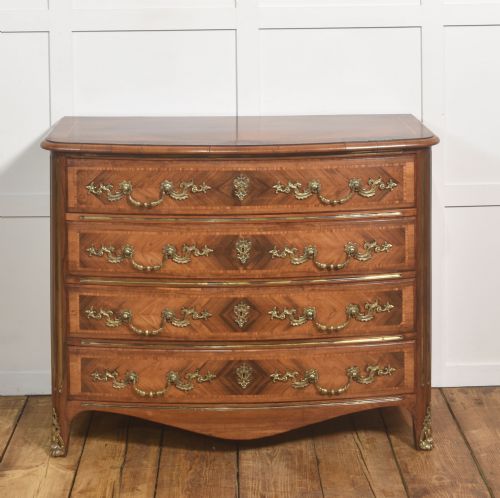
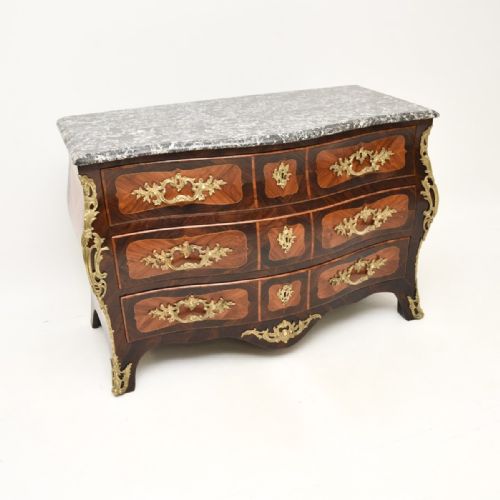
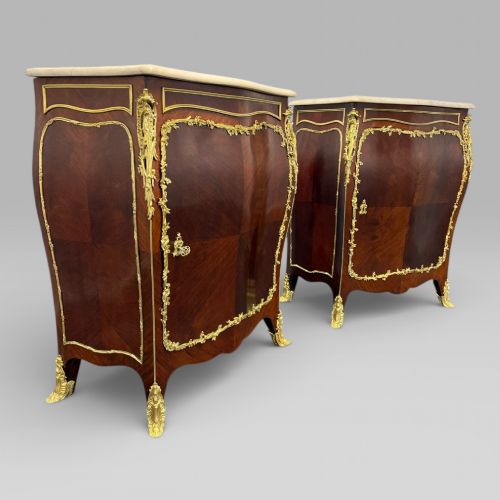
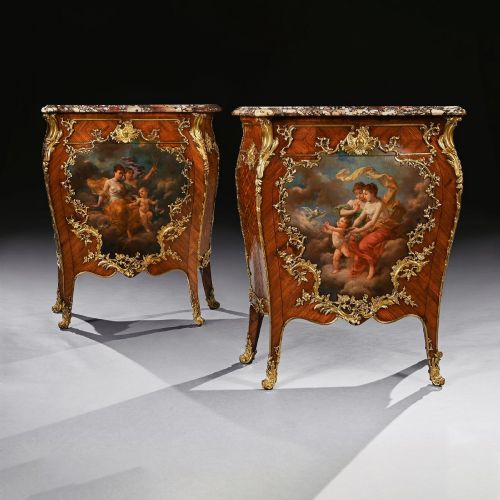
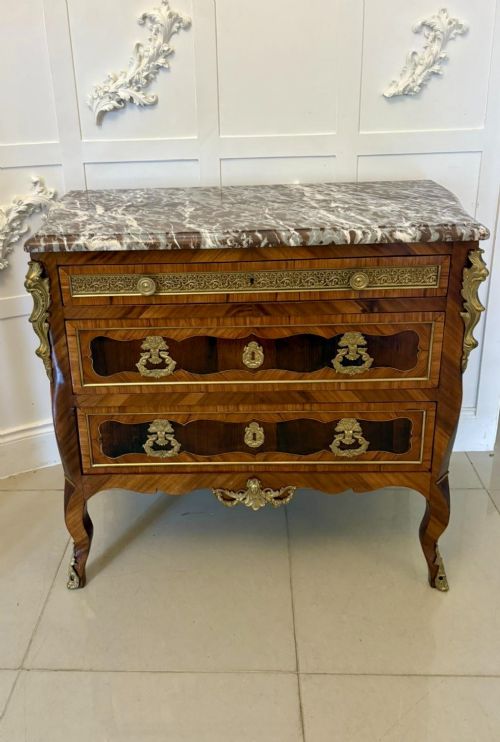
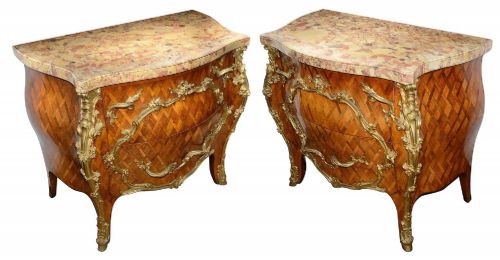
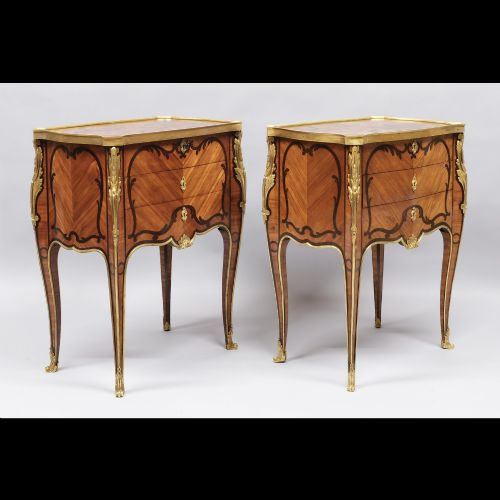
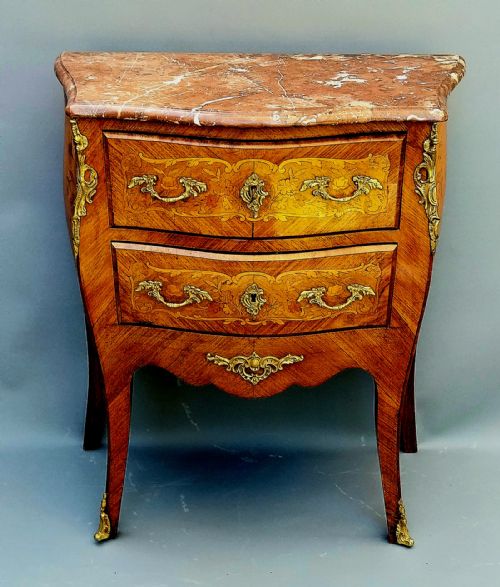
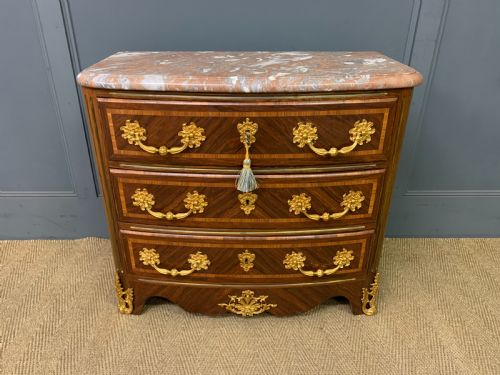
A louis xv kingwood commode brings rich timber grain, serpentine curves and gilt mounts into a room.
Louis XV Kingwood Commode
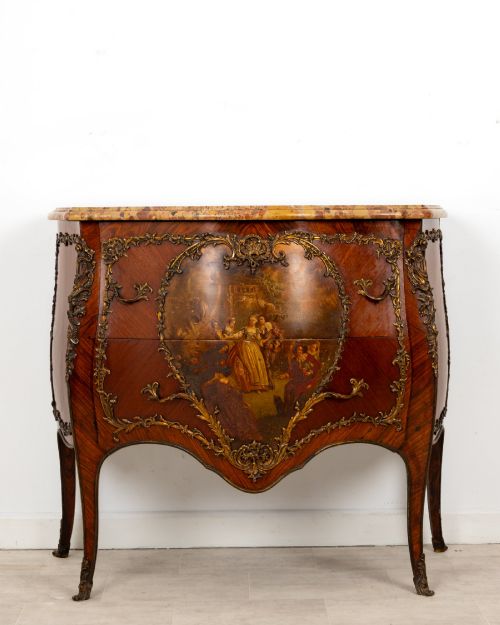
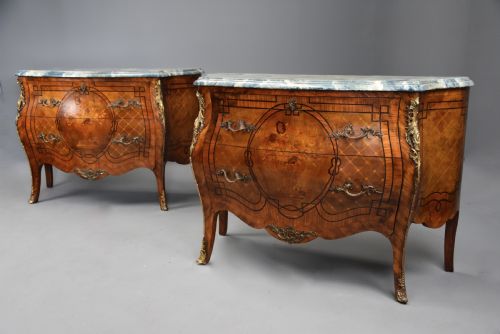
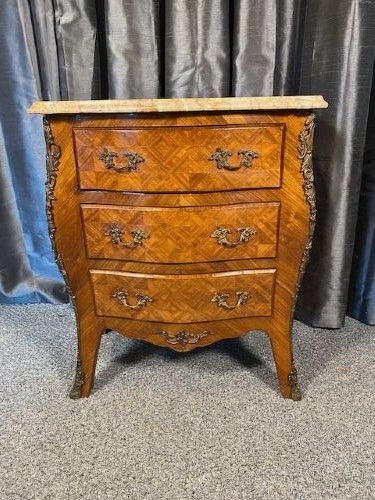
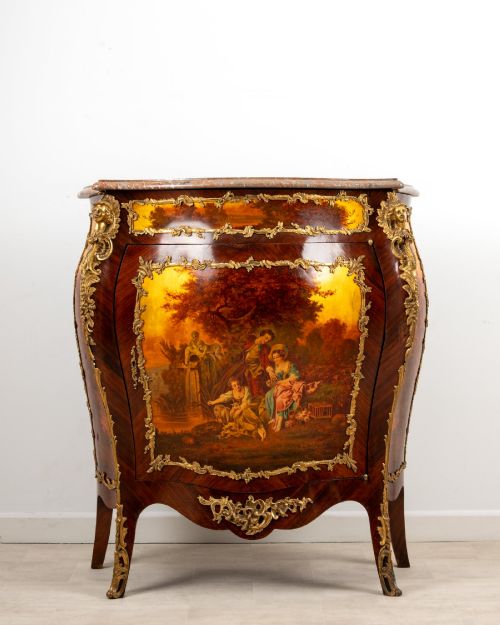
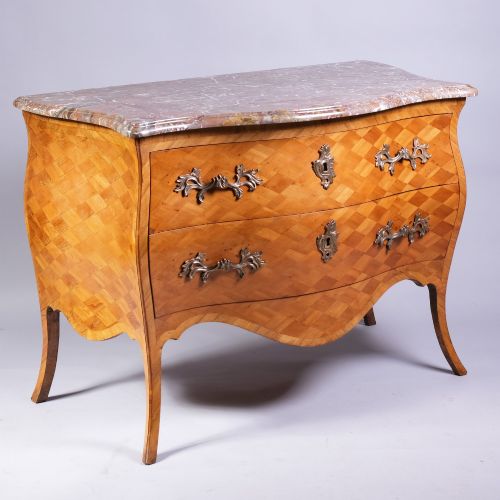
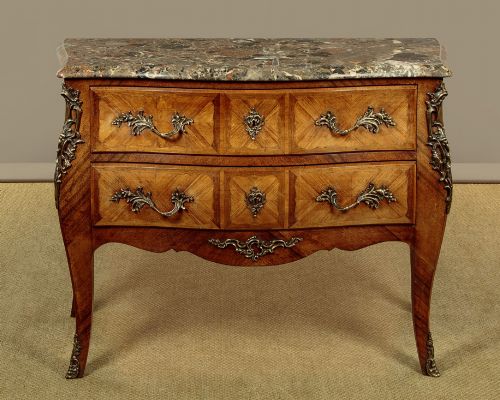
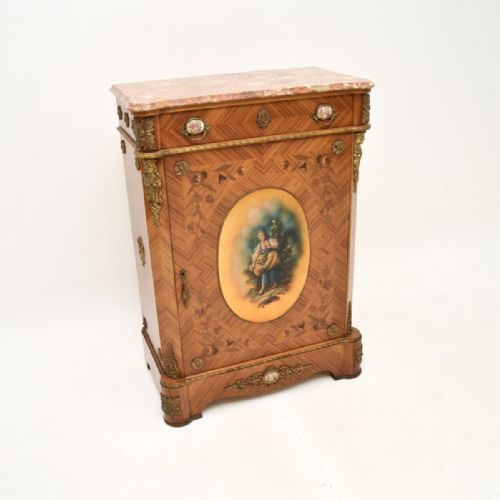
When you search for a louis xv kingwood commode, you encounter low storage chests built for eighteenth-century French interiors. These pieces take the form of serpentine or bombé cabinets fitted with drawers or doors, often scaled down as petite bedsides or side cabinets.
The version you are most likely to meet on this page dates from the nineteenth or early twentieth century, built in revival styles that echo original eighteenth-century workshops. They appear alongside actual eighteenth-century pieces, maintaining the classic silhouette of the period.
Makers working in Paris during the nineteenth century produced many of these revival pieces using traditional forms. They combined kingwood veneers with marble tops and cast metal mounts to replicate the aesthetic of the original royal court.
How they were made
Cabinetmakers laid kingwood veneers over solid carcases in geometric parquetry patterns or floral marquetry designs. These timber surfaces were frequently paired with figured walnut, rosewood, or tulipwood.
Slab marble in white or coloured varieties topped the chests, following the undulating contours of the wood below. Cast ormolu, gilt bronze, and brass mounts fastened to the corners, feet, and drawer fronts to accent the curves.
Some commodes doubled as jewellery chests, hiding small velvet-lined compartments behind their grand serpentine facades.
What varies in quality
The refinement of the cast bronze mounts separates standard production from exceptional work. Crisp, hand-chiseled ormolu shows a level of definition that plain stamped brass lacks.
The precision of the marquetry and the choice of timber figure dictate the grade of the piece. Finely cut veneers matched symmetrically across a serpentine front indicate superior cabinetmaking.
Jacques Bircklé·E. Kahn·Sormani·Maison Millet
The Louis XV Kingwood Commode Glossary
- Kingwood
- A dense Brazilian timber with dark violet and brown streaks utilised for decorative veneer. It forms the primary surface of these cabinets.
- Ormolu
- Gilt bronze mounts cast and applied to the corners and handles of furniture. This technique adds metallic highlights to the timber facade.
- Bombe
- A swelling, outward-curved contour characteristic of Rococo case furniture. This shape requires advanced veneer work to fit the rounded carcase.
- Marquetry
- Inlaid wood veneers forming floral or geometric patterns across the drawer fronts. Craftsmen cut contrasting timbers to create these pictorial designs.
- Serpentine
- A shaped furniture front curving inward at the centre and outward at the ends. This profile defines the silhouette of many chests on this page.
Louis XV Kingwood Commode: Frequently Asked Questions
How were these commodes used?
These cabinets served as functional storage furniture in bedrooms and reception rooms. Their marble tops provided a durable surface for display.
Later versions also functioned as bedside lamp chests and small side cabinets within domestic spaces.
How do I style a commode at home?
A commode works well as a focal point in a hallway or living room beneath a mirror. The marble top supports lamps and decorative objects.
Keep surrounding furniture simple to let the curved wood grain and gilt mounts stand out.
How do I tell periods apart?
Eighteenth-century pieces display period construction methods and patination acquired over centuries of use. Revival pieces from the nineteenth and early twentieth centuries often feature heavier ormolu mounts and machine-sawn timbers.
Comparing the style of the bronze work and the cut of the veneer helps clarify the date.