



Louis XV Caned Armchair
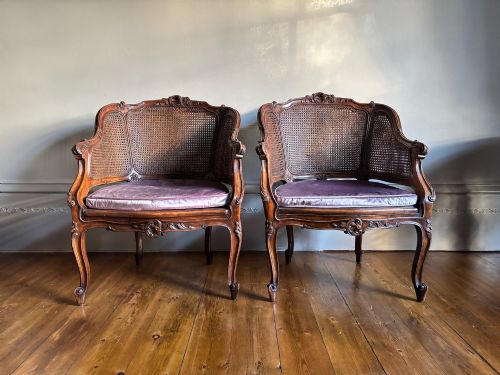
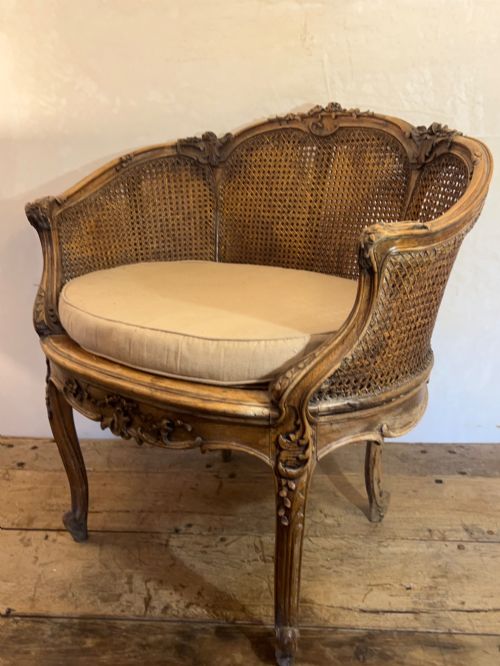
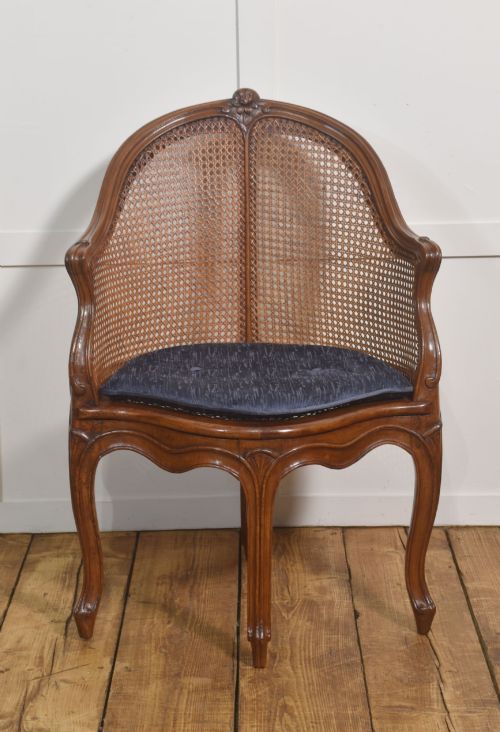
A louis xv caned armchair brings curved French elegance to a room, offering tactile rattan seating wrapped in carved timber.
Louis XV Caned Armchair
When you search for a louis xv caned armchair, you encounter seating originating from 19th-century revivals as well as early 20th-century periods like the Edwardian era, 1900, 1910, and 1920. These pieces emerge in styles including French Louis XV, French Provincial, and Louis XV Revival, taking the form of armchairs, salon chairs, tub chairs, and bergères.
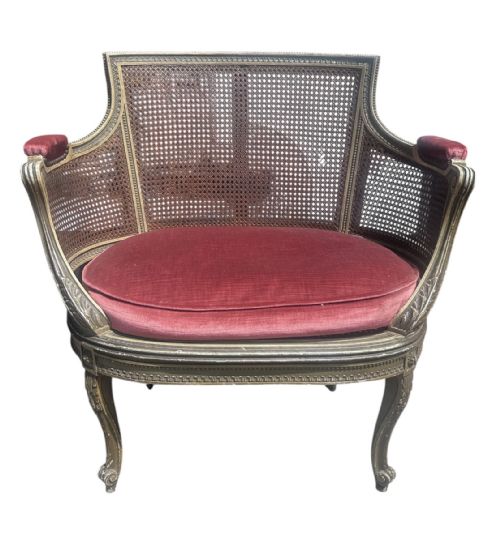
The most common versions met on this page are walnut and painted bergère armchairs built in the French Louis XV style. Such seating frequently incorporates fitted velvet, textile, or fabric cushions to complement the structural cane or rattan cane framework.
How they were made
Frames take shape in walnut, beech, or carved oak, often receiving a painted finish that defines the Louis XV aesthetic. Artisans shape these timbers into flowing curves before applying traditional joinery methods.
The characteristic seating surfaces utilise woven cane and rattan cane, creating a supportive yet flexible panel. Upholsterers then complete the chairs with loose or fixed cushions in velvet, textile, or fabric.
Louis XV Caned Armchair Retail Price Guide 2026
Typical asking prices for louis xv caned armchair among the pieces listed under this phrase on Sellingantiques today, from the lower quarter to the upper quarter. They describe what is for sale here now, not the wider market.
Current listings feature pieces spanning the 19th Century, 1880, Edwardian era, 1900, 1910, and 1920, constructed from walnut, beech, and painted wood.
What varies in quality
Quality rests in the crispness of the carved timber and the natural movement of the wood grain across walnut or beech frames. Superior examples display deeply sculpted floral and scroll motifs that integrate cleanly into the structural curves rather than appearing flat or hastily applied.
The hand-woven cane panels separate everyday work from finer pieces through tension and regularity across the mesh. Tightly woven rattan cane demonstrates durability while maintaining an even texture that supports upholstered cushions correctly.
The Louis XV Caned Armchair Glossary
- Bergère
- An enclosed armchair with upholstered sides resting on a wooden or cane frame. This form provides a deep, comfortable seat often accompanied by a matching cushion.
- Cane
- Woven material made from the peeled bark of rattan palms. It creates a breathable, patterned panel frequently utilised for seats and backrests.
- Tub chair
- An armchair featuring a continuous curved back and arms that enclose the sitter. This compact silhouette appears often in salon and library settings.
- Louis XV style
- A design movement characterised by asymmetric curves, cabriole legs, and naturalistic ornamentation. It reflects the graceful forms popular during the 18th century and revived later.
Louis XV Caned Armchair: Frequently Asked Questions
How do I use a bergere armchair at home?
These armchairs fit naturally into sitting rooms, drawing rooms, and studies as comfortable reading seats. Their upholstered cushions and enclosed cane backs provide both physical support and distinct French character.
Pare them with low wooden side tables to let the carved walnut or painted frames remain visible. Adding a contrasting textile cushion enhances comfort while complementing existing room textiles.
How do I date these French chairs?
Dating relies on examining timber wear, construction methods, and stylistic cues from the nineteenth and early twentieth centuries. Pieces from the Edwardian period or around 1900 often show specific machine assistance alongside hand-carved details.
Compare the patina of the walnut or beech frames with the tightness of the cane panels. Later revival pieces typically exhibit crisper machine-woven cane compared to older hand-threaded examples.
Are painted finishes original on these chairs?
Many pieces from the 1900 and 1910 periods feature painted surfaces applied during their initial manufacture. These finishes often acquire subtle craquelure and wear that indicate genuine age.
Inspect the layers of paint around carved joints and crevices for signs of natural ageing. Original surfaces integrate smoothly with the underlying beech or oak timber.
What is the difference between a salon chair and a bergere?
A salon chair generally offers a lighter, more open structure designed for formal entertaining rooms. A bergère provides a heavier, fully enclosed seating experience with solid upholstered sides.
Both forms utilise cane and walnut construction but serve different functional roles within a room. Bergères prioritise lounging, whereas salon chairs emphasise upright posture.