





Louis Style Settee
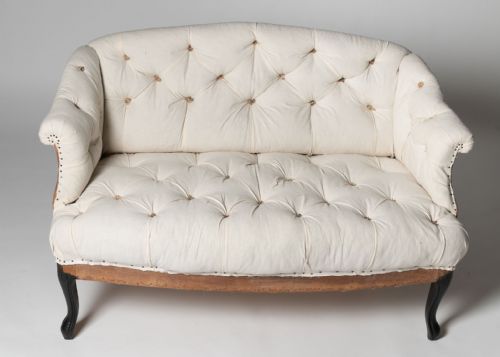
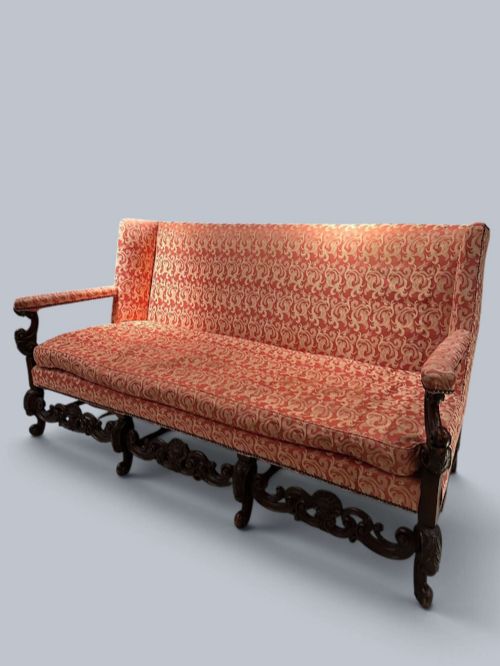
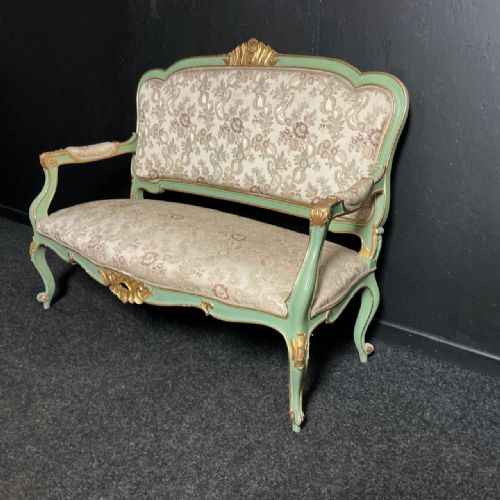
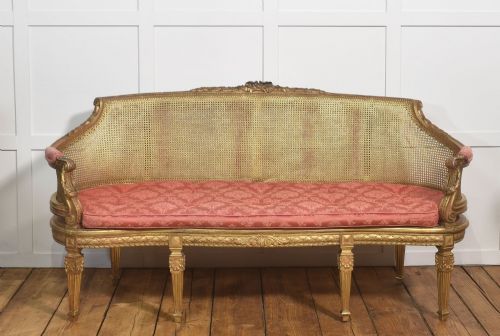
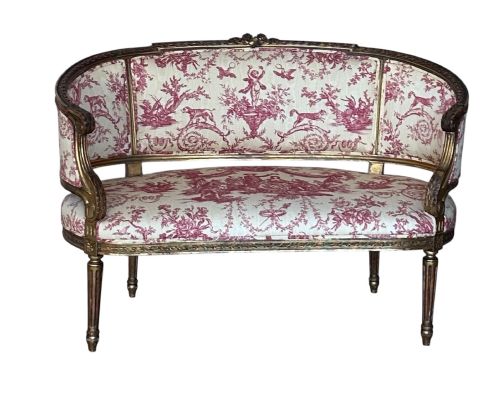
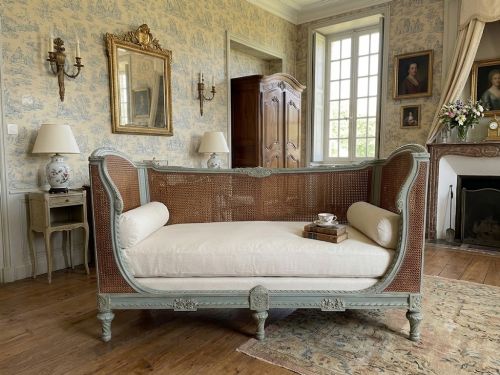
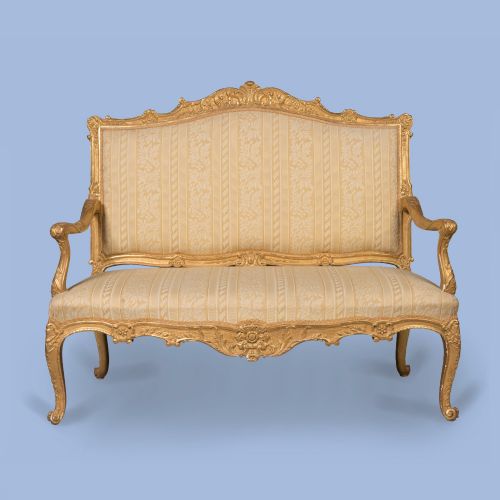
A louis style settee brings French court elegance to a room, offering carved walnut or giltwood frames paired with traditional caning or upholstery.
Louis Style Settee
A louis style settee draws upon the graceful curves of Louis XV design or the straighter, neoclassical lines associated with Louis XVI. These seating pieces appear in forms ranging from compact two-seater day beds to large salon sofas.
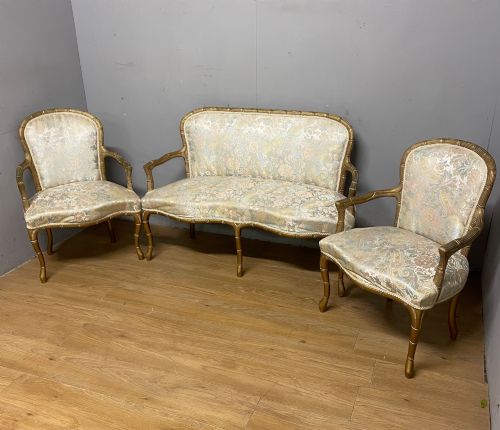
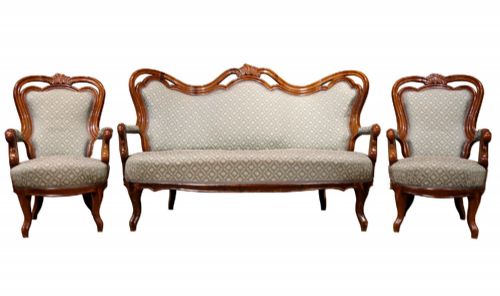
The version most commonly encountered on this page is the French Louis XV style settee, often built from carved walnut or gilded wood. Pieces span the nineteenth century through the early twentieth century, showing influences from Rococo revival to French provincial aesthetics.
Makers and workshops constructed these settees as individual salon pieces or as part of larger salon suites that included matching armchairs. The evidence shows formats such as the canapé and the bergère sofa fulfilling both decorative and practical seating roles.
Distinctions in Quality
Depth of carving and sharpness of detail separate standard production from superior examples. Hand-carved walnut frames show crisp relief work along the crest rails and arm terminals, whereas simpler pieces rely on shallow moulding.
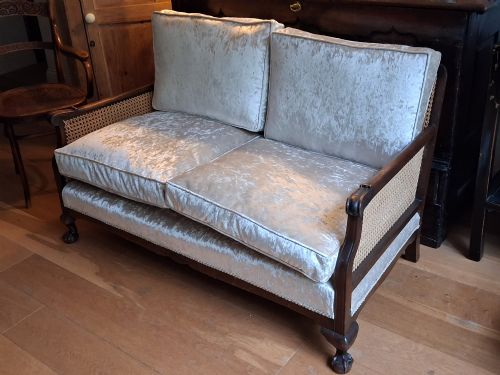
The integrity of the cane work and the finish of the giltwood or painted surfaces indicate the level of craftsmanship. Intricate caning requires steady tension across the frame, and original or sympathetic surface treatments preserve the visual harmony of the piece.
Louis Style Settee Retail Price Guide 2026
Typical asking prices for louis style settee among the pieces listed under this phrase on Sellingantiques today, from the lower quarter to the upper quarter. They describe what is for sale here now, not the wider market.
Listings feature walnut, giltwood, and painted finishes across nineteenth-century and early twentieth-century periods.
The Louis Style Settee Glossary
- Canapé
- A traditional French term for a long upholstered sofa or settee, often featuring an exposed carved wooden frame. These pieces typically accommodate two or three sitters in formal reception rooms.
- Bergère
- An enclosed upholstered armchair or sofa where the space between the armrests and seat is filled in. Versions often incorporate cane work panels into the backrest and sides.
- Giltwood
- Timber coated with a thin layer of gold leaf or metallic gilt gesso. This finish creates a luminous surface suited to formal nineteenth-century revival seating.
- Rococo Revival
- A nineteenth-century design movement resurrecting the asymmetrical scrolls, shell motifs, and curving lines of the eighteenth-century French court. It forms the basis for many Louis XV style settees.
- Aubusson
- A style of tapestry woven in the French town of the same name, frequently used for upholstery on high-end period salon suites.
Louis Style Settee: Frequently Asked Questions
How do I clean cane panels?
Dust cane work regularly with a soft brush to prevent dirt accumulation in the woven strands. Dampen the cane lightly with warm water every few months to maintain its natural elasticity.
Avoid soaking the wood or using harsh chemical cleaners near the joins. Allow the material to dry completely before any weight is placed on the seat.
Where should I place a giltwood settee?
Position the settee away from direct sunlight to protect the fragile gold leaf finish and delicate silk or velvet upholstery fabrics. Placing the piece against a neutral wall allows the carved wooden frame to stand out clearly.
Keep the seating clear of direct heat sources such as radiators to prevent the dry wood from cracking over time.
Can I reupholster an antique settee?
Reupholstering is common for pieces with worn fabric, provided the internal webbing and padding are assessed by a professional restorer. Choose traditional textiles such as linen or silk damask to match the historical character of the frame.
Retain the original tack holes where possible to minimise new stress to the aged walnut or painted woodwork during the process.