

Louis Style Console
These pieces take the fluid curves and formal symmetry of French court furniture and adapt them for nineteenth-century drawing rooms.
Louis Style Console
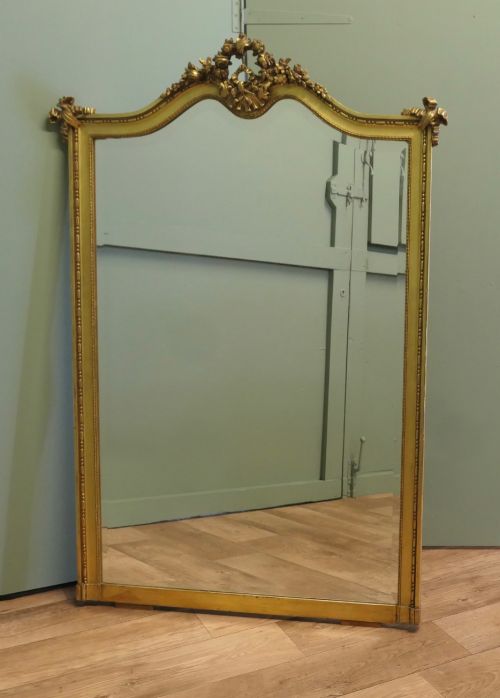
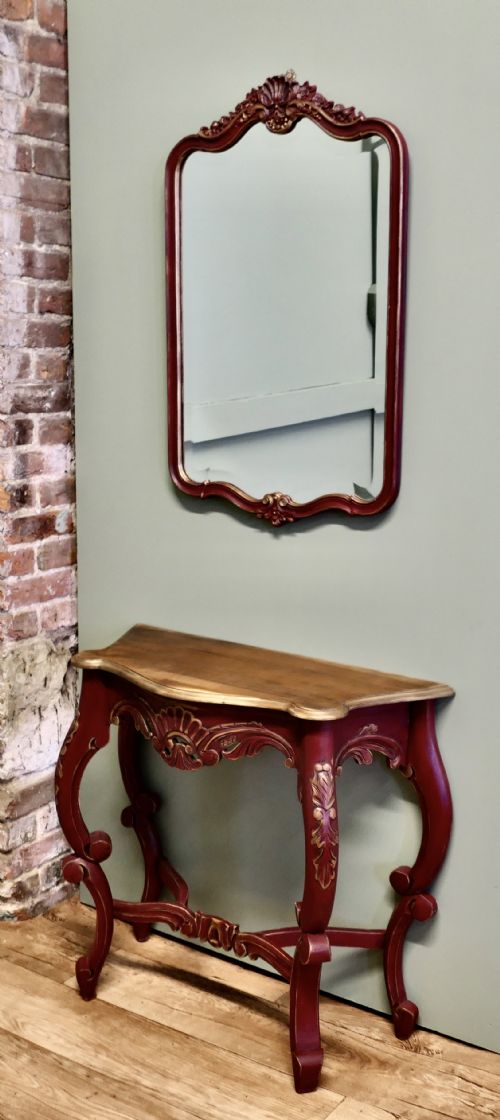
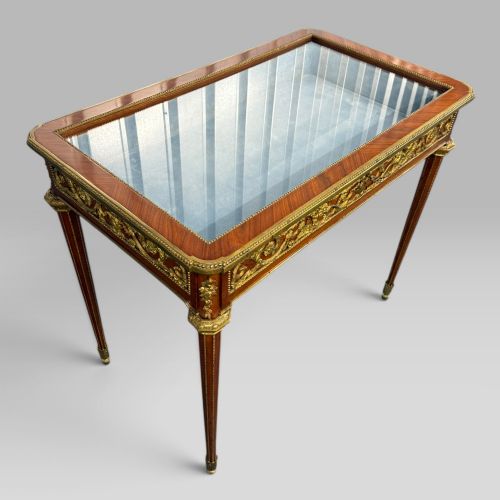
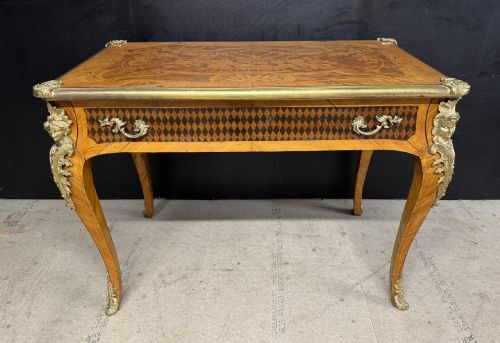
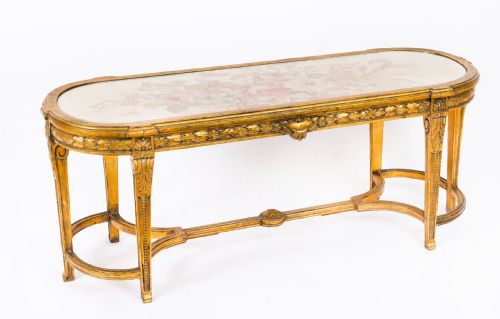
When you search for louis style console, you encounter a selection of nineteenth-century revival tables built for grand interiors. Console tables dominate the offerings, frequently accompanied by matching mirrors and alternative forms such as card tables, side tables, and games tables.
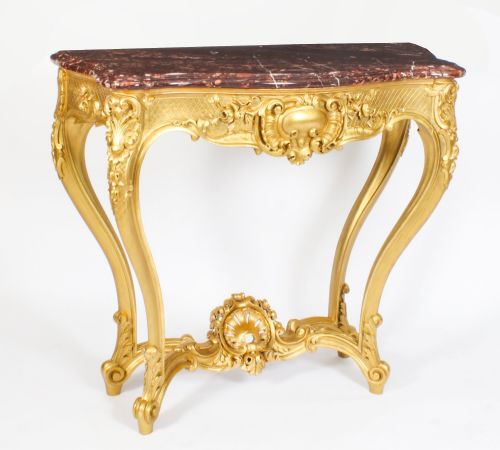
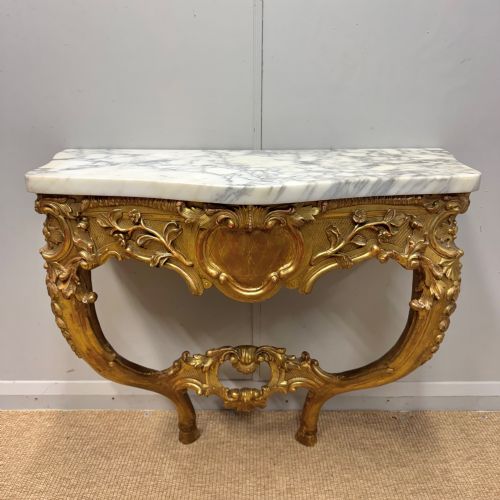
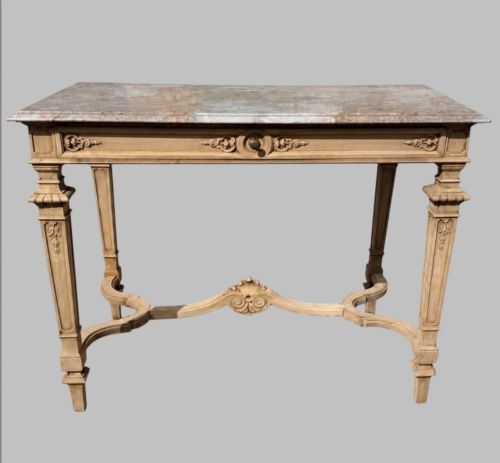
The objects stem predominantly from the nineteenth century, spanning decades from the 1850s through to the early 1900s. Makers drew heavily on Louis XV and Louis XVI aesthetics, producing serpentine outlines, demi-lune shapes, and neoclassical rigidity alongside exuberant rococo curves.
Materials and construction methods
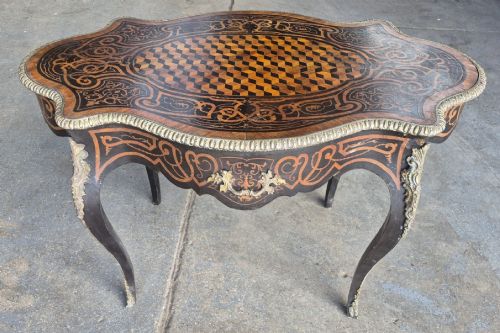
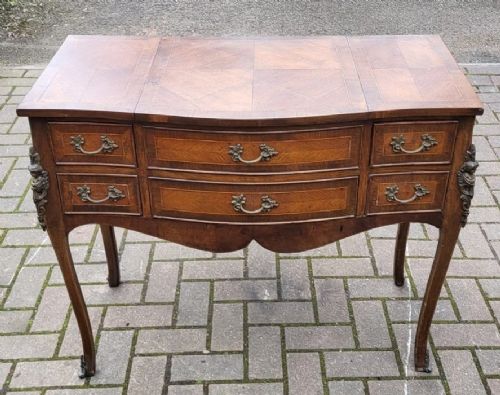
Timbers such as kingwood, walnut, mahogany, and satinwood form the underlying carcases, often enriched with intricate marquetry and parquetry patterns. Veneers of tulipwood and yew tree add tonal variation across tabletops and friezes.
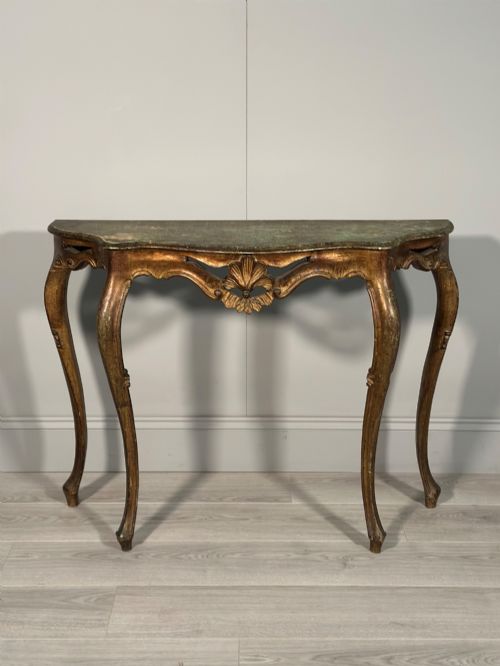
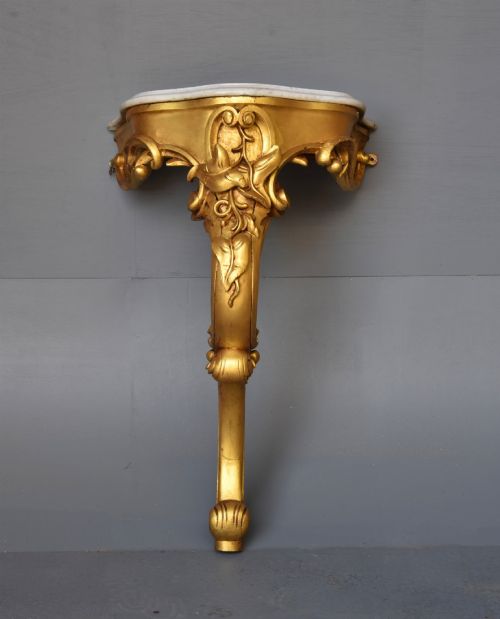
Heavy marble tops, in white and variegated shades, sit atop giltwood, brass-inlaid, and ormolu-mounted frames. Ormolu mounts punctuate corners and aprons, while hand-carved giltwood provides the sculptural foundation for serpentine console bases.
Louis Style Console Retail Price Guide 2026
Typical asking prices for louis style console among the pieces listed under this phrase on Sellingantiques today, from the lower quarter to the upper quarter. They describe what is for sale here now, not the wider market.
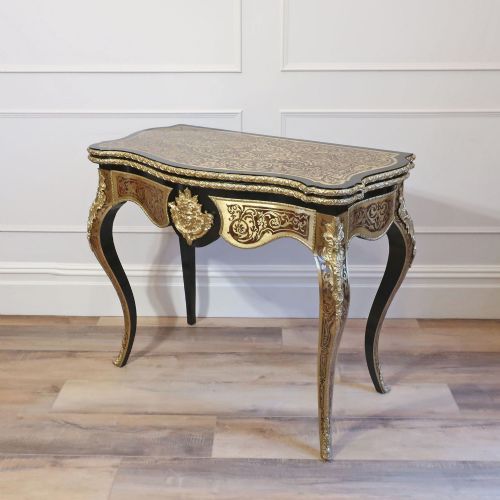
Several tables transform from unassuming side furniture into intricate card and games tables with a simple fold.
Distinctions in execution and finish
The refinement of the ormolu mounts and the crispness of the giltwood carving separate standard production from exceptional examples. Finer pieces demonstrate precise chiselling on bronze mounts and deeply undercut wooden foliage rather than shallow moulding.
Timber selection and marquetry complexity dictate the upper tier of the range, where individual veneers align symmetrically. Cabinetmakers who incorporated detailed parquetry and fitted quality card or games mechanisms achieved a higher degree of finish.
François Linke·G T Morant·Edwards and Roberts·Joseph-Emmanuel Zwiener
The Louis Style Console Glossary
- Ormolu
- Gilded bronze used for decorative mounts and accents on furniture. It provides metallic contrast against dark kingwood or painted surfaces.
- Marquetry
- The art of applying pieces of veneer to a structure to form decorative patterns. Craftsmen utilised various coloured woods to depict floral motifs and geometric designs.
- Demi-lune
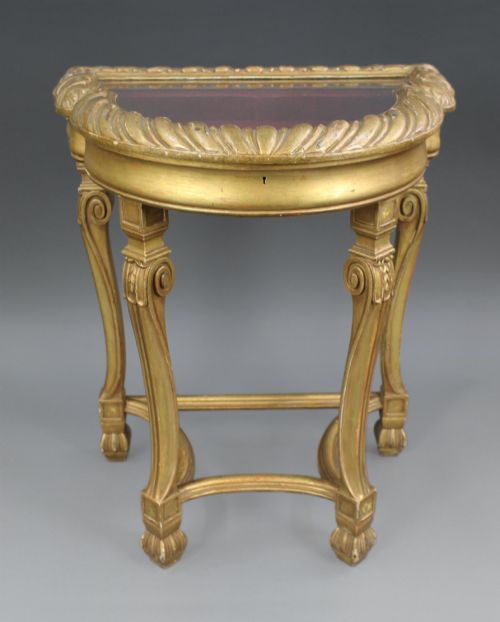
- Half-moon shape characteristic of side and console tables designed to stand flush against a wall. These tables frequently feature folding tops or marble inserts.
- Console table
- A table supported by wall brackets or decorative legs, built to stand against a vertical surface. Many surviving examples pair with matching overmantel mirrors.
- Boullework
- Marquetry consisting of tortoiseshell and brass inlaid in a scroll pattern. Developed in France, it appears on nineteenth-century revival card and games tables.
Louis Style Console: Frequently Asked Questions
What is a louis style console table?
These are decorative tables designed to stand against walls, drawing inspiration from seventeenth and eighteenth-century French royal aesthetics. Nineteenth-century makers reinterpreted these historical designs for Victorian and Edwardian drawing rooms.
They typically combine rich timber veneers with marble tops and metallic mounts, functioning as focal points in reception rooms and hallways.
How do I tell Louis XV from Louis XVI style?
Louis XV pieces rely on asymmetrical curves, serpentine lines, and exuberant rococo flourishes. The ornamentation feels organic, flowing naturally into the legs and aprons of the table.
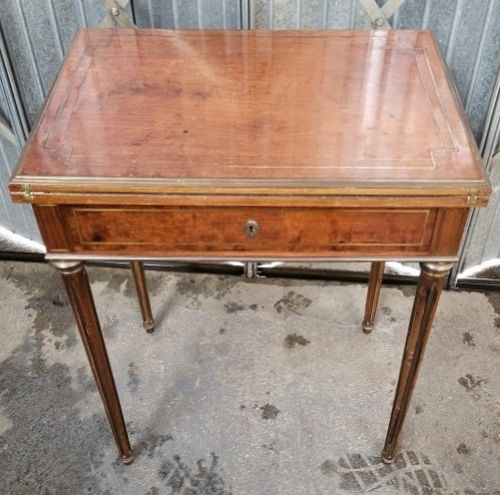
Louis XVI style shifts toward neoclassical symmetry, straight fluted legs, and geometric restraint. Rectilinear structures and classical architectural motifs replace the sweeping curves of the earlier reign.
Where were these tables placed originally?
Console tables were traditionally positioned beneath large wall mirrors in formal reception rooms and entrance halls. Their flat backs allowed them to anchor securely against structural walls.
Many surviving sets retain their matching overmantel mirrors, reflecting the unified interior schemes popular during the nineteenth century.
How do I care for marble top tables?
Marble surfaces require gentle cleaning with mild, pH-neutral soap and warm water to protect the stone from staining. Avoid acidic substances and harsh chemical cleaners that can etch the polished finish.
The underlying giltwood and ormolu mounts benefit from dusting with a soft, dry brush to preserve the metallic lustre without abrading the gilding.