



Louis Revival Cabinets
These louis revival cabinets combine continental flair with nineteenth-century craftsmanship, offering collectors elegant display space framed in gilt bronze and fine timbers.
Louis Revival Cabinets
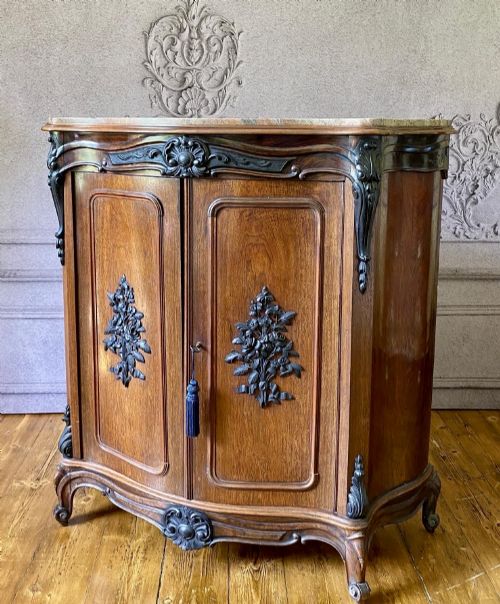
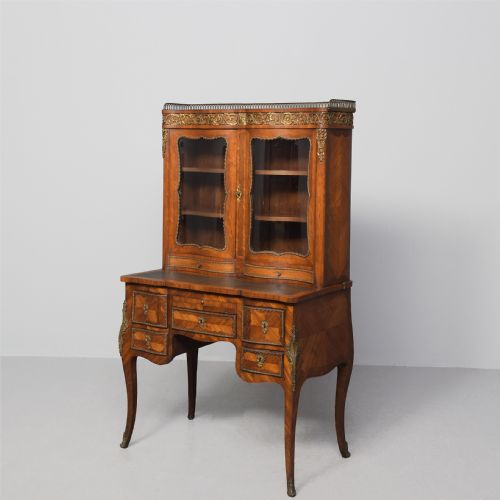
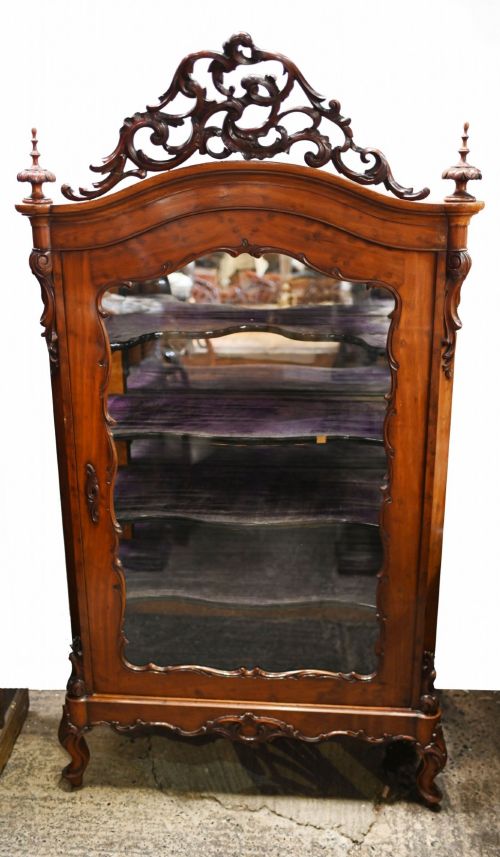
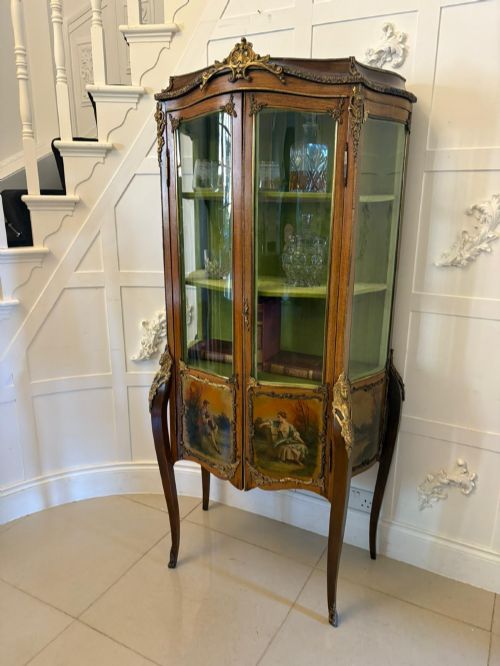
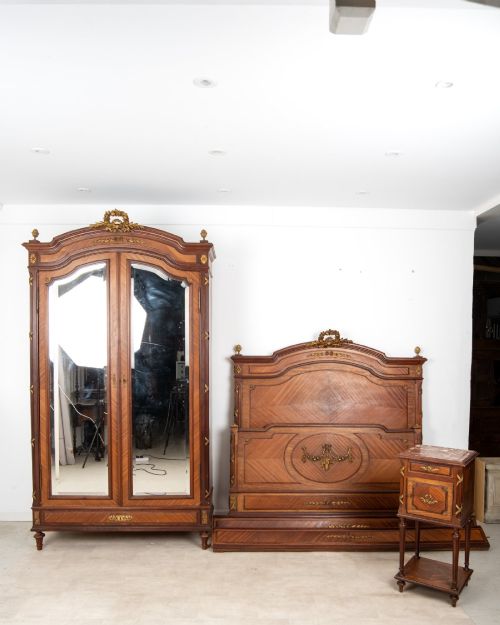
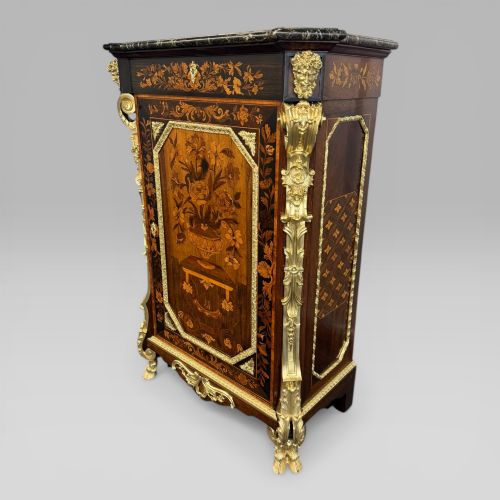
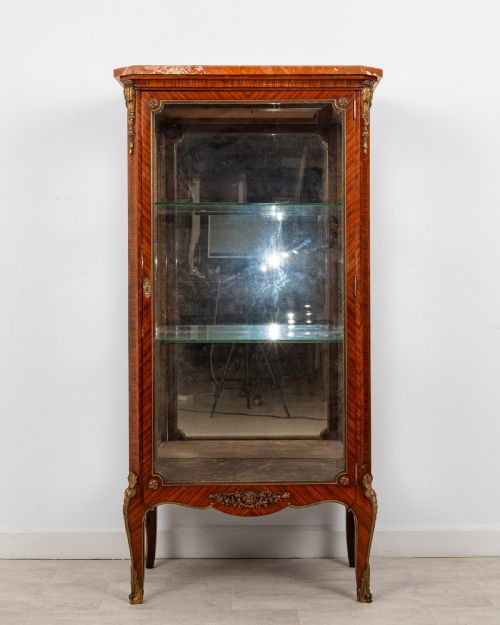
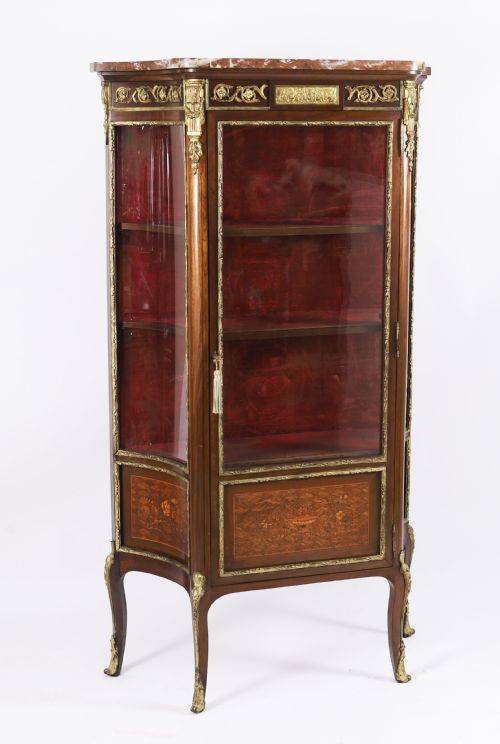
When searching for louis revival cabinets, a buyer encounters a diverse group of nineteenth- and early twentieth-century furniture inspired by French royal courts. These pieces borrow heavily from Rococo and neoclassical aesthetics, manifesting primarily as glazed vitrines, credenzas, and pier cabinets.
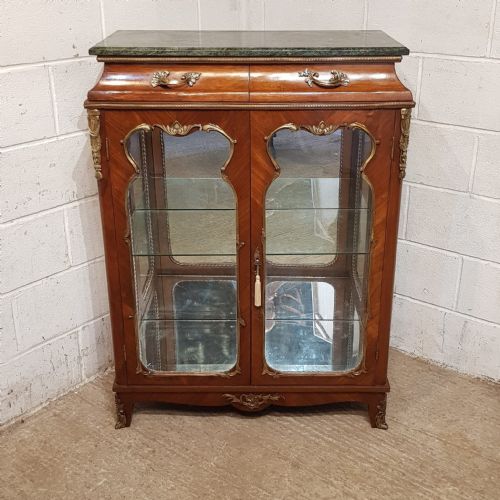
The most common examples on this page are French display cabinets and side cabinets dating from the Victorian era up to around 1930. Walnut, mahogany, and kingwood predominate, often augmented by glazed sides and marble tops intended for interior display.
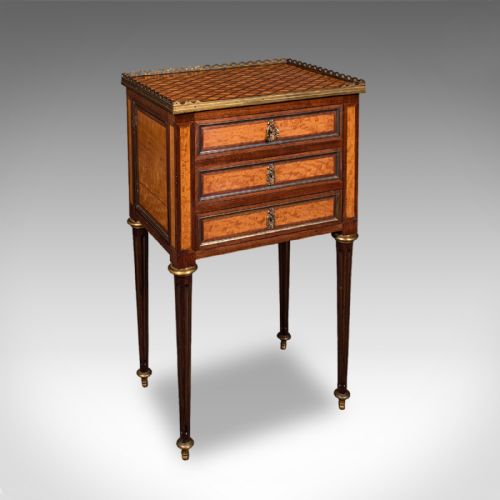
Forms range from intimate bedside commodes and writing cabinets to monumental exhibition-quality armoires and serpentine credenzas. Each item reflects a nineteenth-century enthusiasm for historical continental design adapted for contemporary drawing rooms.
Materials and Construction
Cabinet makers utilised dense structural timbers such as mahogany and walnut as foundations for decorative veneers of kingwood, satinwood, and parquetry. These woods were shaped and inlaid with meticulous precision to create intricate geometric and floral patterns across the surfaces.
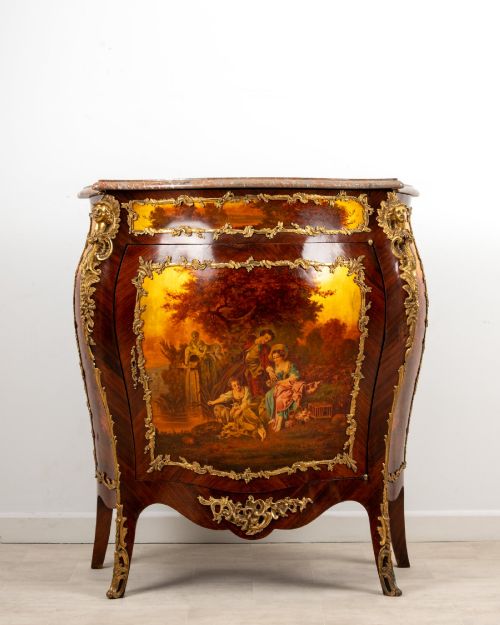
Gilt bronze, known as ormolu, was cast and chased to form mounts that highlighted the structural corners, feet, and friezes of the cabinets. Hand-painted Vernis Martin panels and Sevres style porcelain plaques were frequently integrated into the doors and sides for added colour.
Many pieces incorporate polished marble tops in white or coloured stone, fitted closely to the upper frames of commodes and side cabinets. Glass panels, often curved in bombé or serpentine shapes, were glazed into doors to protect porcelain and collectables displayed within.
Louis Revival Cabinets Retail Price Guide 2026
Typical asking prices for louis revival cabinets among the pieces listed under this phrase on Sellingantiques today, from the lower quarter to the upper quarter. They describe what is for sale here now, not the wider market.
Several bedside cabinets claim royal revival status, proving that nineteenth-century slumber required absolute opulence.
Factors of Quality
Quality rests heavily upon the crispness of the ormolu mounts and the finesse of the marquetry work. Finer examples display deeply chased bronze details and complex, tightly fitted wood veneers rather than simpler painted or stamped substitutes.
The sophistication of the internal mechanism, the weight and thickness of the marble top, and the presence of hand-painted Vernis Martin artwork elevate certain cabinets above standard production pieces. Maker attribution also plays a substantial role, with signed pieces commanding distinct recognition.
Edward Holmes Baldock·François Linke·G. Durand·Paul Sormani
The Louis Revival Cabinets Glossary
- Ormolu
- Gilt bronze mounts applied to furniture for decoration. This technique involved coating cast brass or bronze in gold amalgam to achieve a durable metallic finish.
- Vitrine
- A glass-fronted display cabinet designed for showing porcelain and small objects. These pieces often feature glazed sides to maximise light penetration.
- Vernis Martin
- A simulated Japanese lacquer technique developed in France, used here for painted decorative panels. It created glossy, translucent finishes often depicting pastoral scenes.
- Marquetry
- The art of applying decorative pieces of veneer to a structure to form intricate designs. Craftsmen utilised various tinted woods to construct pictorial or geometric motifs.
- Credenza
- A low cabinet or sideboard, typically featuring multiple doors and sometimes curved serpentine fronts. Victorian examples frequently incorporated extensive ormolu and porcelain plaques.
- Pier Cabinet
- A narrow cabinet designed to stand against the wall space between windows. These slim pieces frequently accommodated marble tops and mirrored backs.
Louis Revival Cabinets: Frequently Asked Questions
What are louis revival cabinets?
These are nineteenth-century and early twentieth-century pieces inspired by French seventeenth- and eighteenth-century royal furniture styles. They incorporate decorative veneers, gilt bronze mounts, and glass panels.
Cabinet makers in France and Britain produced them to satisfy a Victorian appetite for ornate continental interior decoration. They served as functional storage and display furniture for drawing rooms.
How do I style a vitrine cabinet?
Vitrines work well in living spaces or dining rooms to showcase collections of porcelain, glassware, or small antiques. The internal shelving and glazed doors protect items while keeping them visible.
Position the cabinet away from direct sunlight to protect sensitive wood finishes and fabrics inside. Pairing them with contemporary walls allows the detailed marquetry and ormolu mounts to stand out.
What is the difference between a vitrine and a credenza?
A vitrine is primarily a tall, glass-fronted display cabinet intended for showing delicate objects on multiple tiers. Its design prioritises visibility through glazed doors and side panels.
A credenza is a lower, wider sideboard or cabinet featuring solid or panelled doors, sometimes accompanied by marble tops. They provide substantial enclosed storage alongside surface display space.
How do I identify a nineteenth-century piece?
Examine the construction methods, timber choices, and hardware used on the cabinet interior and backboards. Nineteenth-century pieces often employ hand-cut dovetails and specific secondary timbers beneath the veneers.
Stylistic cues such as the specific casting style of the ormolu mounts and the nature of the wood grain help distinguish nineteenth-century revivals from later copies.