


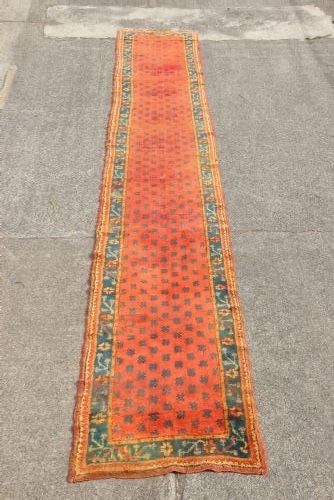
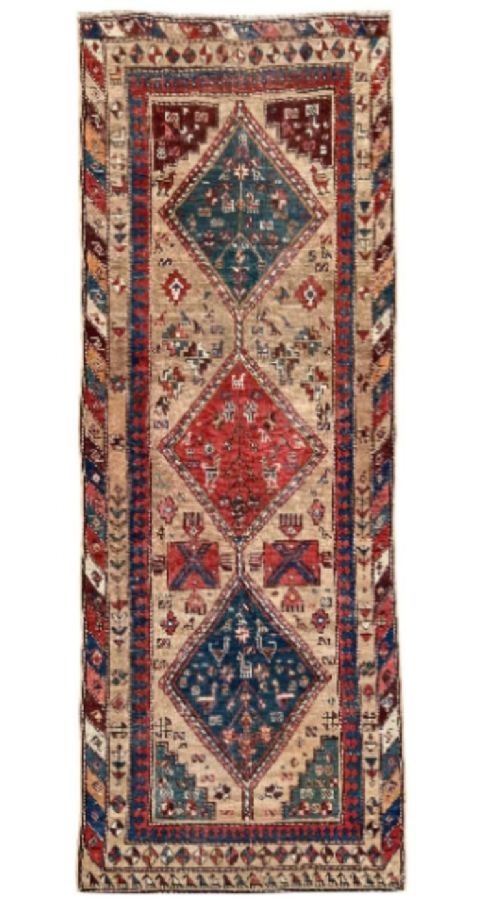
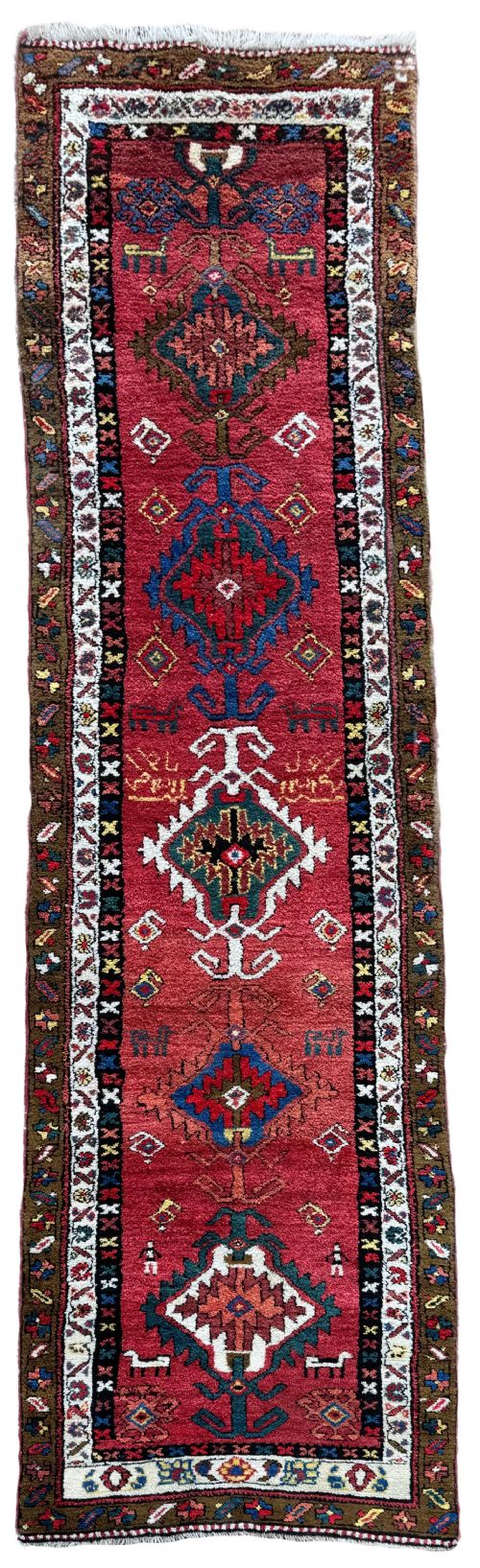
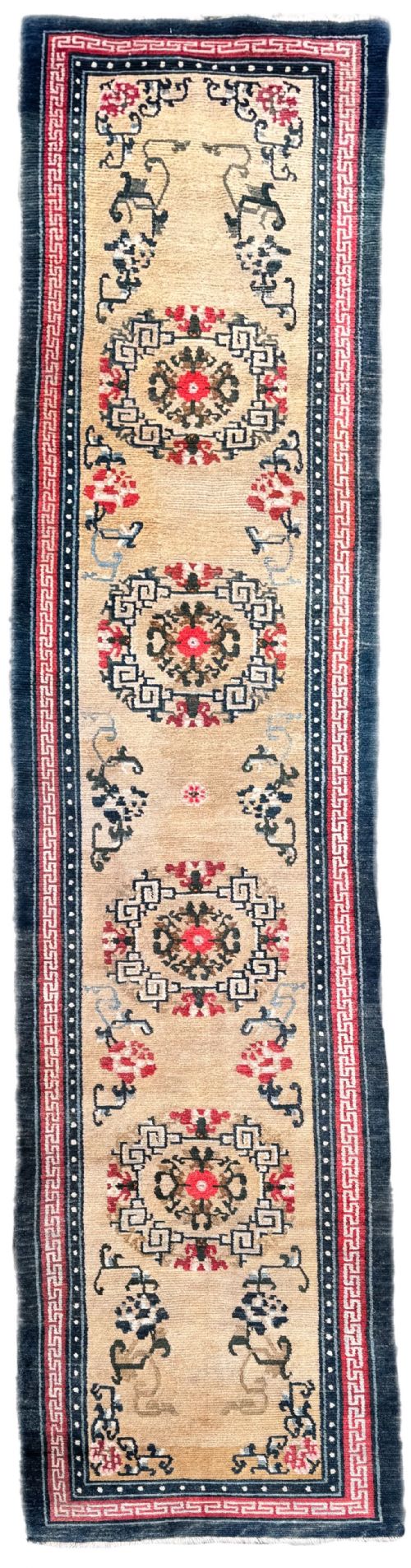

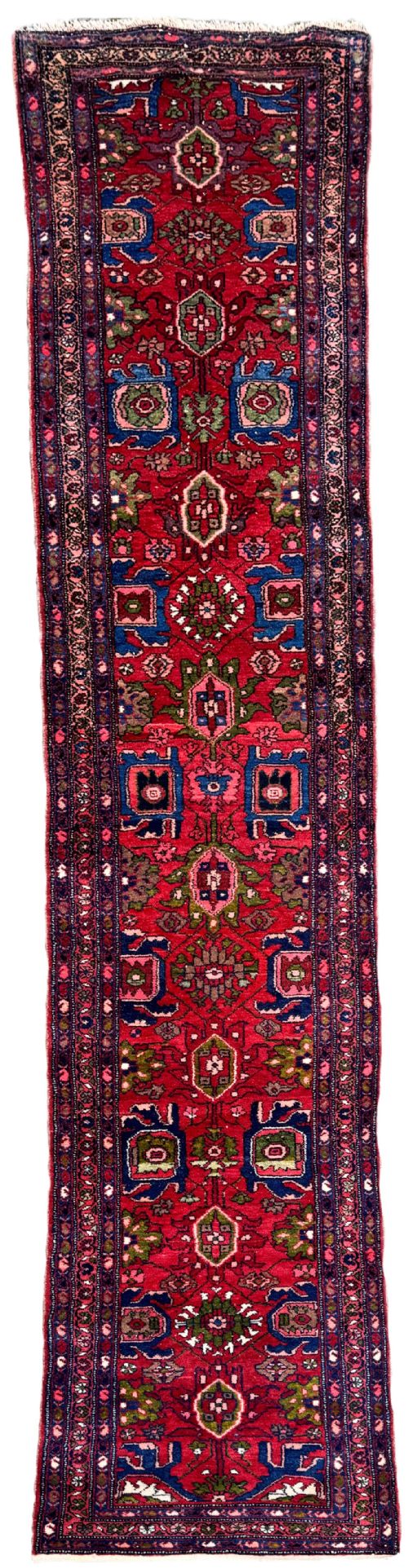
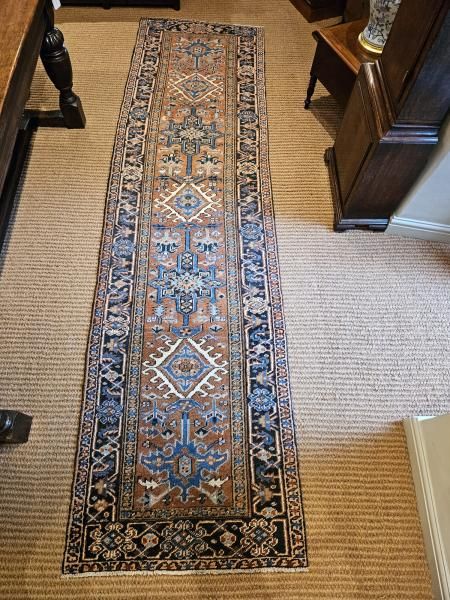
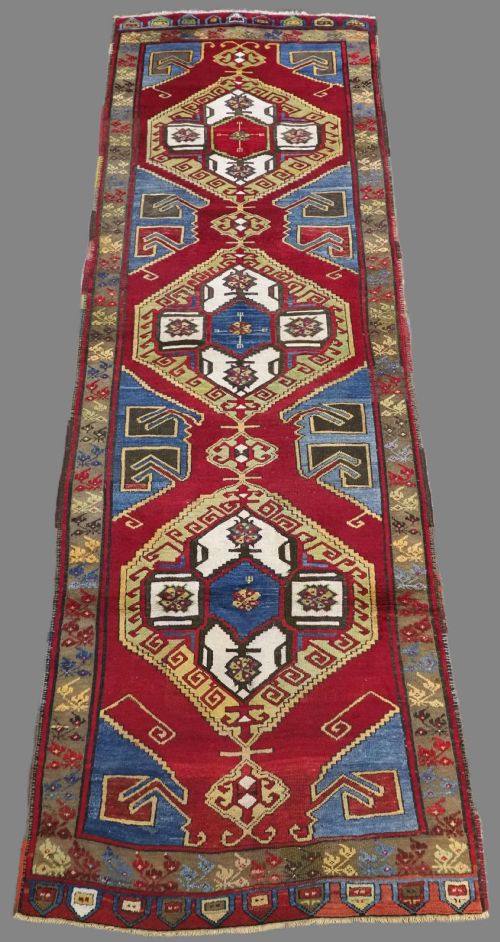
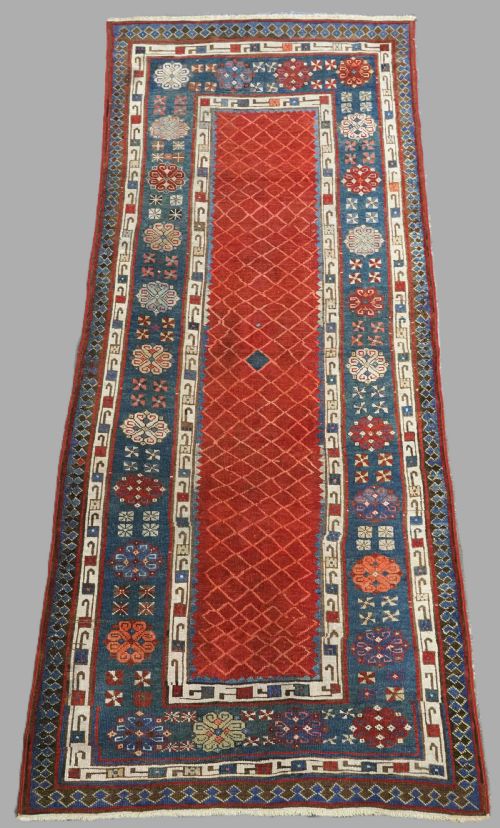
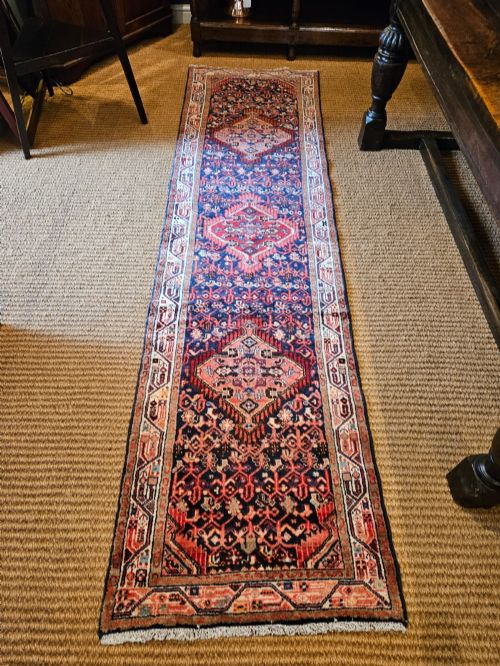
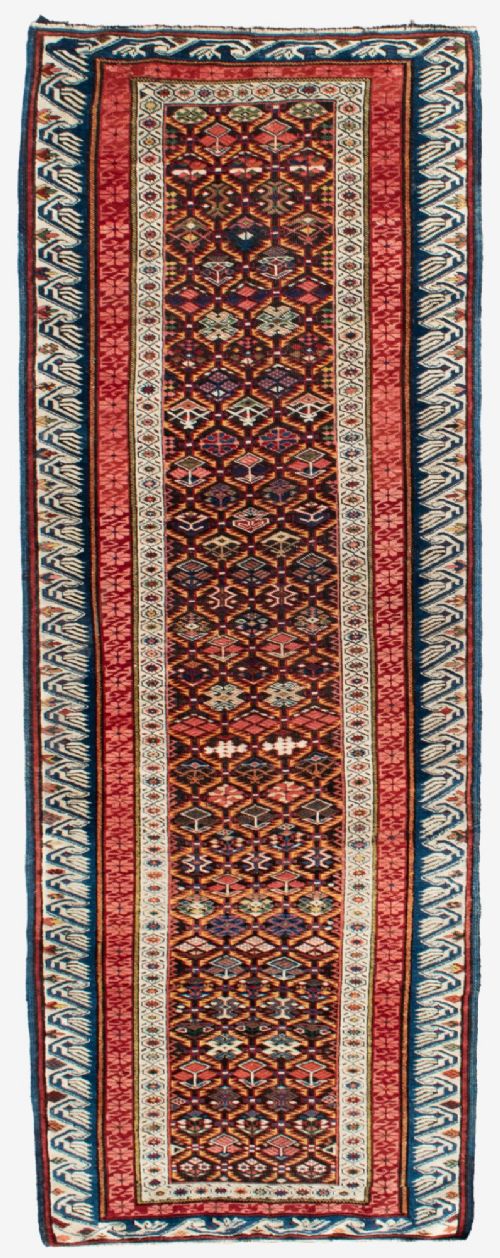
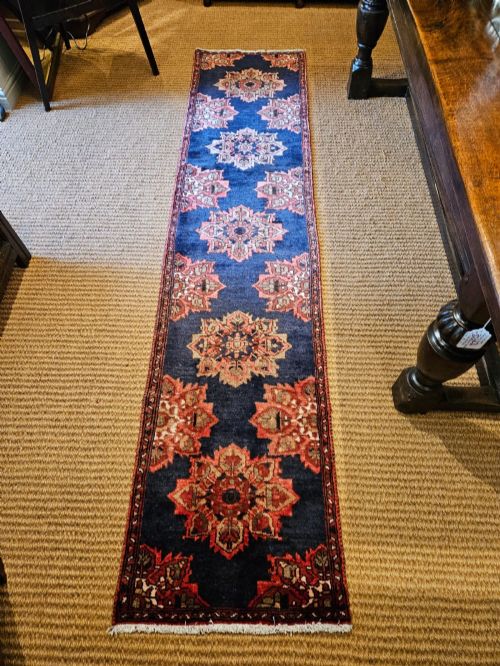
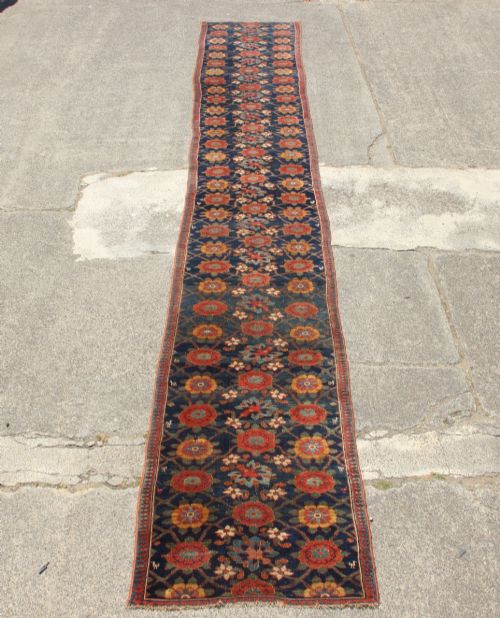
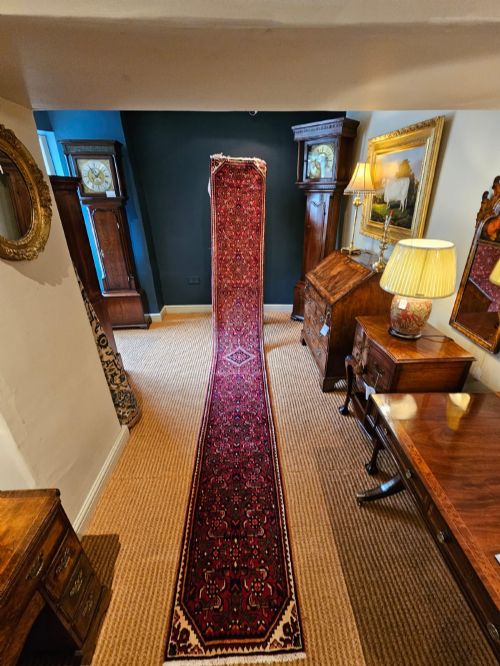
Long Wool Hallway Runner
A long wool hallway runner brings substance and regional design to a corridor, spanning tribal and traditional workshop weaves from the nineteenth and twentieth centuries.
Long Wool Hallway Runner
A long wool hallway runner provides a durable and decorative floor covering designed specifically for narrow spaces, corridors, and landings. These pieces stretch in length while maintaining a narrow width to suit passageways in country houses and town residences.
Most examples found on this page originate from traditional weaving regions including Persia, the Caucasus, and Anatolia, dating from the nineteenth century through to the nineteen-thirties. Buyers encounter tribal pieces alongside geometric village rugs and workshop productions.
The format accommodates heavy foot traffic in domestic settings while displaying regional motifs, medallions, and lattice patterns woven in rich wool piles over cotton foundations.
How they were made
These runners are constructed primarily from wool, utilising the natural resilience and lanolin of the fleece to withstand decades of use in hallways. Cotton often appears as the foundation warps and wefts, providing structural stability for the elongated format.
Weavers knotted the wool pile by hand onto upright looms, employing techniques passed down through generations in Kurdish, Heriz, Caucasian, and Anatolian communities. Vegetable and natural dyes produced the deep navy, olive, and terracotta backgrounds recorded across the inventory.
Some runners stretch beyond thirty feet, requiring considerable determination from the sheep that supplied the wool.
What varies in quality
Quality in a long wool hallway runner rests upon the density of the knotting and the precision of the tribal design work. Finer execution allows complex lattice patterns and geometric borders to remain crisp along extended lengths.
The integrity of the wool pile and the balance of the natural dyes determine the visual depth of the runner. Pieces that retain even wear across long expanses demonstrate superior material selection from the outset.
The Long Wool Hallway Runner Glossary
- Runner
- A long, narrow carpet format designed for corridors, stairs, and hallways. This shape directs movement through domestic interiors.
- Pile
- The upright surface of the rug formed by the ends of knotted yarn. This layer absorbs foot traffic and displays the woven design.
- Warp
- The foundational threads running lengthwise on the loom before weaving begins. Cotton typically forms this vertical skeleton.
- Weft
- The horizontal threads passed across the warp to lock the wool knots in place. These determine the structural firmness of the rug.
- Knot
- The individual loops of wool tied around the warp threads by hand. The count and tightness influence the clarity of the pattern.
Long Wool Hallway Runner: Frequently Asked Questions
Where should I place a long wool hallway runner?
These runners suit narrow corridors, landings, and entrance halls where linear floor coverings soften high foot traffic areas.
The elongated dimensions bridge rooms while protecting timber or stone flooring from daily wear.
How do I care for a vintage wool runner?
Regular gentle vacuuming without a beater bar removes grit from the wool pile without damaging the foundation.
Professional cleaning preserves the natural lanolin and protects the historical dyes used in nineteenth and twentieth-century weaving.
What is the difference between tribal and workshop runners?
Tribal runners display geometric motifs and spontaneous designs woven by nomadic or village communities.
Workshop runners follow structured cartoons with balanced medallions and formal borders produced in centres like Heriz or Bidjar.
How do I determine the age of a hallway runner?
Age is assessed through dye palettes, material composition, structural wear patterns, and traditional regional motifs.
Nineteenth-century examples frequently exhibit softer vegetable dye variations compared to later twentieth-century productions.