


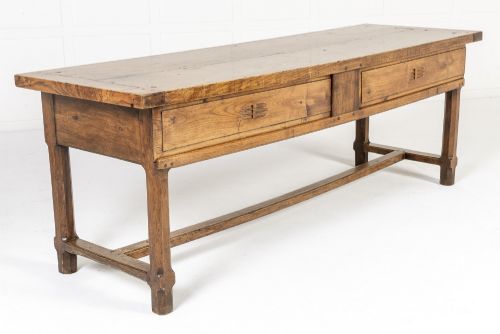
Long Wooden Side Table
A long wooden side table brings proportion and honest utility to a room, offering generous surface space rooted in practical history.
Long Wooden Side Table
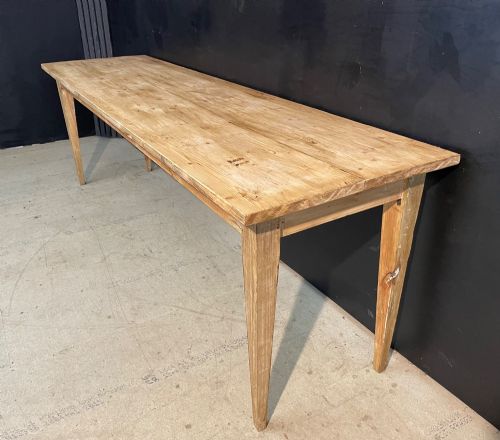
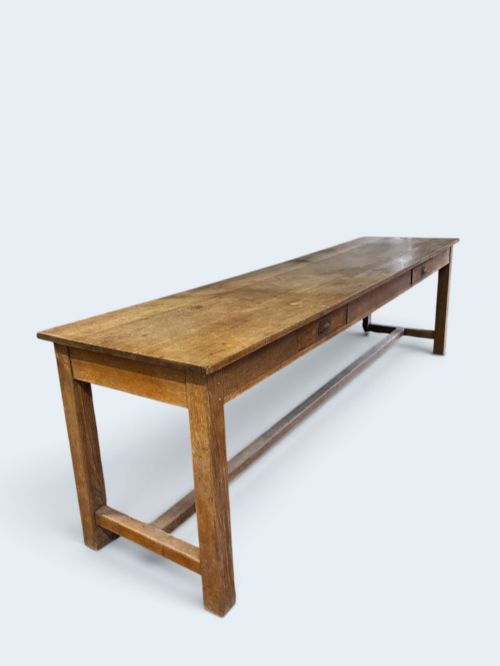
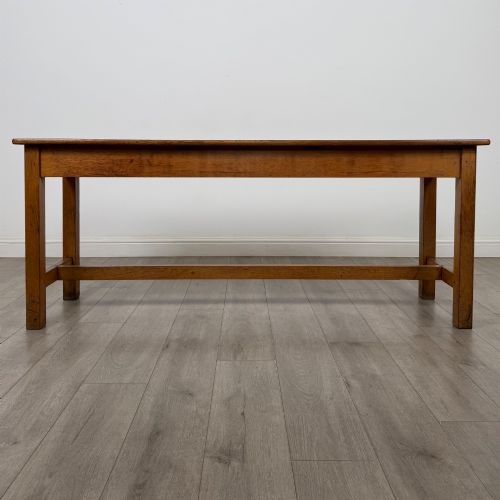
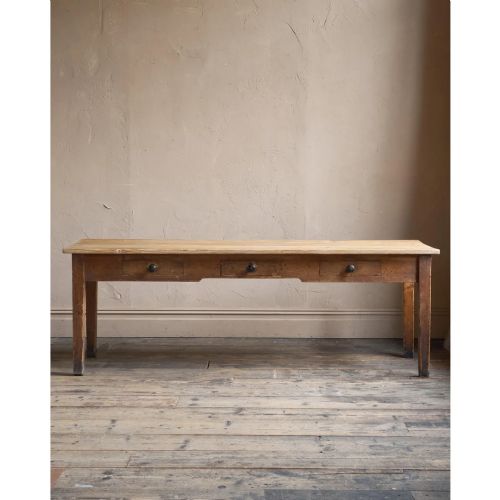
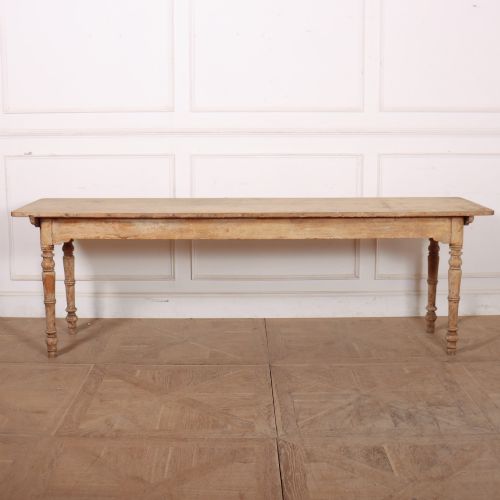
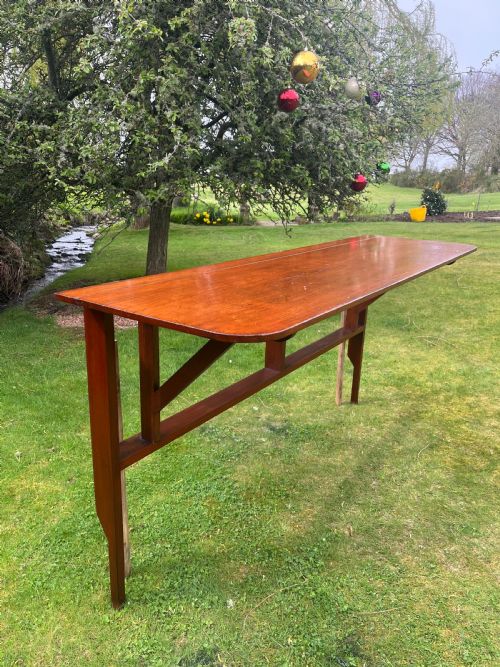
When you search for a long wooden side table, you encounter practical utility forms that served working households, country houses, and commercial spaces across past centuries. These pieces encompass console tables, serving tables, drapers tables, and refectory formats built to span considerable lengths for daily preparation or display.
The version you are most likely to meet on this page originates from nineteenth-century provincial workshops or Edwardian utilitarian contexts. These examples often display country styles such as French Provincial, Rustic Farmhouse, and English Country, reflecting domestic and scullery origins.
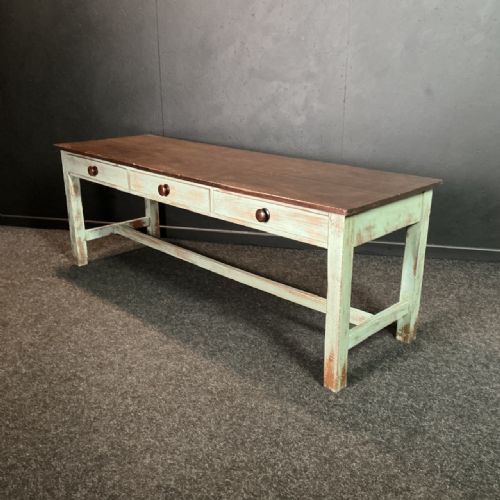
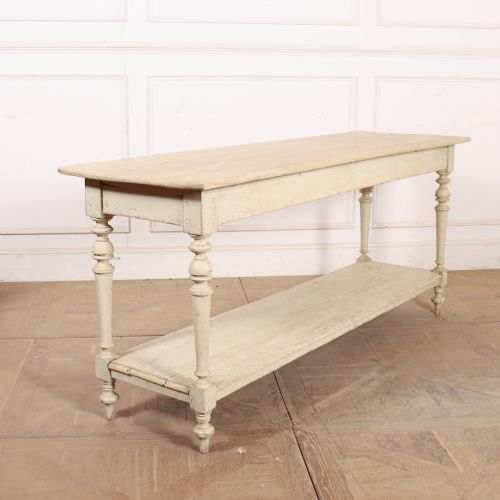
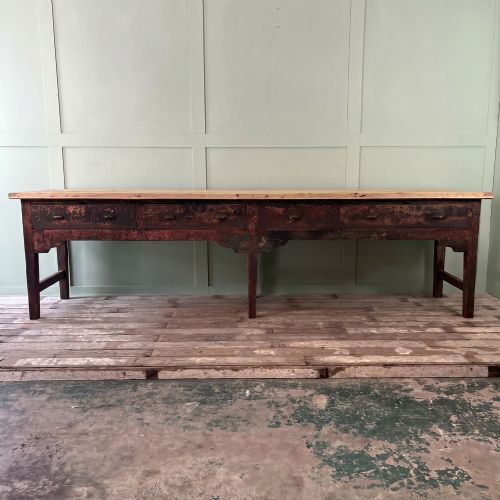
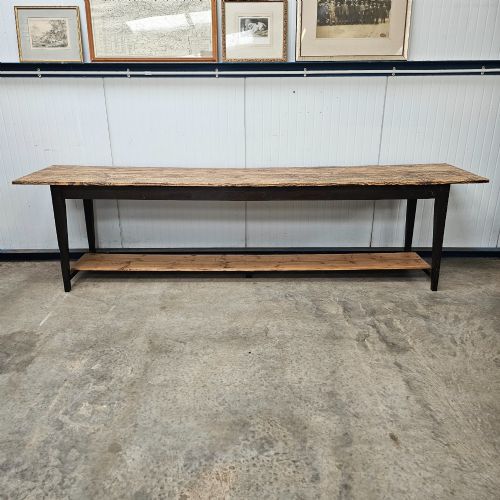
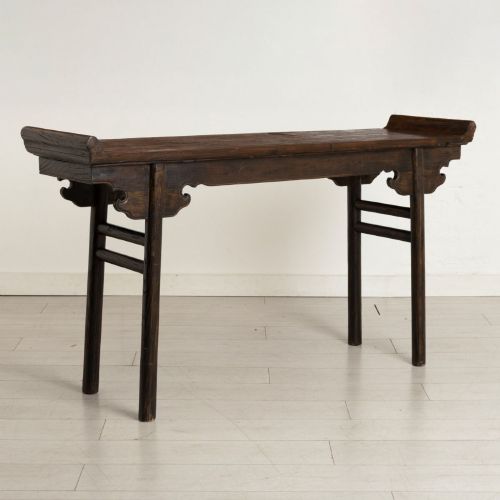
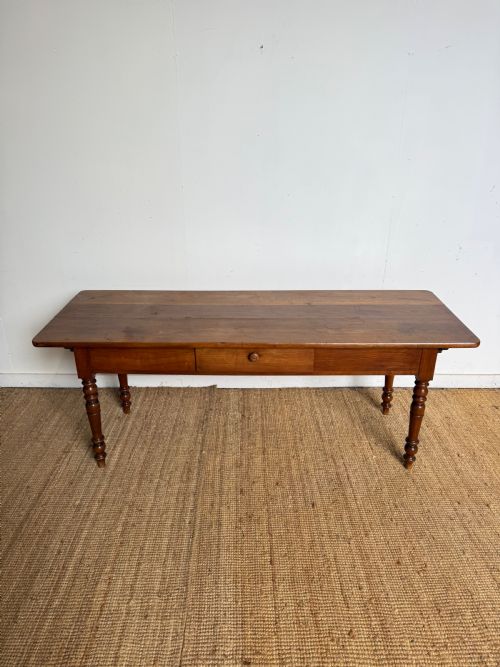
Formations range from narrow potboard servers and two-tier harvest tables to multi-drawer consoles and altar structures. Their extended proportions suit hallways, dining rooms, and kitchens where length provides functional balance.
How they were made
Construction relies heavily on sturdy timbers such as pine, oak, cherrywood, and general hardwood timber, selected for structural endurance under daily domestic or commercial workloads. Joinery techniques prioritize stability, supporting long tops with trestle bases, sturdy legs, or integrated drawer frames.
Surface treatments vary between natural grain finishes, bleached oak treatments, and historic painted layers. Many pieces exhibit original paint, showing the wear of generations of use in sculleries, shops, and country houses.
Some tables retain the exact scullery drawer depth required for hiding stubborn pastry rolling pins.
What varies in quality
Quality in these extended tables rests upon the integrity of the timber and the balance of proportion across significant length. Superior examples maintain structural rigidity without excessive sagging along the top boards, supported by well-joined frames and robust legs.
Originality of surface and finish dictates the distinction between standard utilitarian items and finer decorative pieces. Retained original paint, untouched patination, and period brass hardware elevate the character of a piece compared to later stripped or altered surfaces.
The Long Wooden Side Table Glossary
- Console table
- A table designed to stand against a wall, frequently anchored or proportioned for narrow spaces like hallways. These forms often feature decorative carving or painted finishes.
- Serving table
- A utilitarian surface utilised for food preparation or service in dining rooms and sculleries. They commonly incorporate drawers or pot shelves beneath the main top.
- Refectory table
- A long, narrow dining table historically used in communal dining halls. Examples feature tall timber construction and sturdy underframing.
- Potboard server
- A sideboard or serving table incorporating a lower shelf, known as a potboard, positioned near the floor for storing pots and kitchen utensils.
- Drapers table
- A long counter-height table traditionally used in textile shops for measuring and folding cloth. They frequently feature deep proportions and practical drawer arrangements.
Long Wooden Side Table: Frequently Asked Questions
Where should I put a long wooden side table?
These extended tables fit naturally in wide hallways, behind living room sofas, or along dining room walls where extra surface area is useful. Their narrow depth allows them to sit comfortably in circulation spaces without blocking movement.
In kitchens or sculleries, they serve as prep islands or serving stations. Their proportions help anchor large wall spaces and display decorative objects effectively.
How do I clean a painted wooden table?
Dust the surface regularly with a soft, dry cloth to prevent dirt accumulation on historic paint or bare timber. Avoid harsh chemical cleaners that can strip aged finishes or soften original patination.
For general upkeep, use a slightly damp cloth followed immediately by a dry one. Wax can be applied sparingly to unpainted wooden sections to nourish the timber.
Are these tables suitable for everyday dining?
Many of these pieces originated as dining, drapers, or refectory tables designed for heavy daily use. Their solid wood construction and sturdy legs provide the stability needed for regular seating.
Check the height and leg clearance beneath the apron to ensure chairs fit comfortably underneath. Trestle and refectory designs often offer the most flexible seating arrangements along the length.
How can I tell an older table from a newer reproduction?
Examine the timber for tool marks, seasoning cracks, and wear patterns consistent with age and manual construction methods. Hand-cut joinery and timber shrinkage provide reliable indicators of historic manufacture.
Inspect the hardware, such as drawer pulls and fixings, for period-appropriate materials and methods. Original painted surfaces should show natural craquelure and wear rather than artificial distressing.