

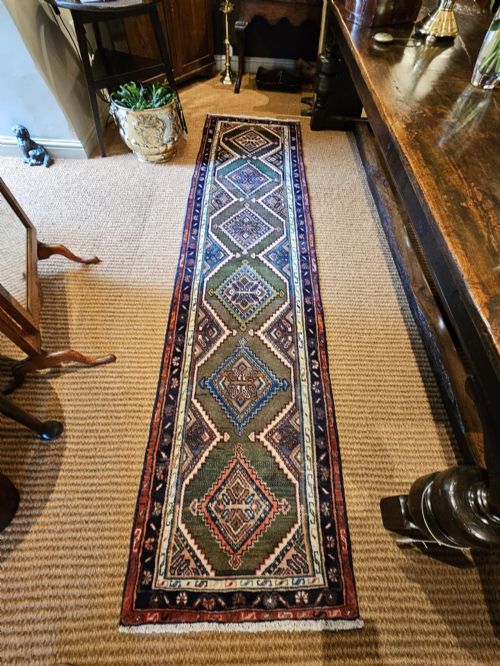


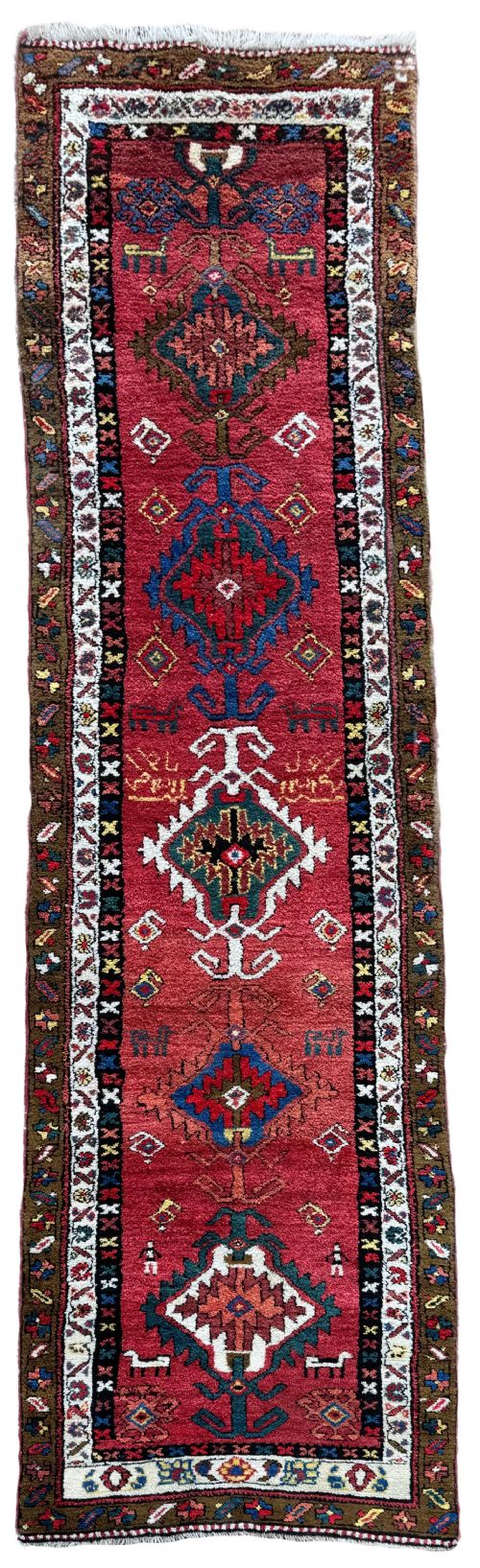
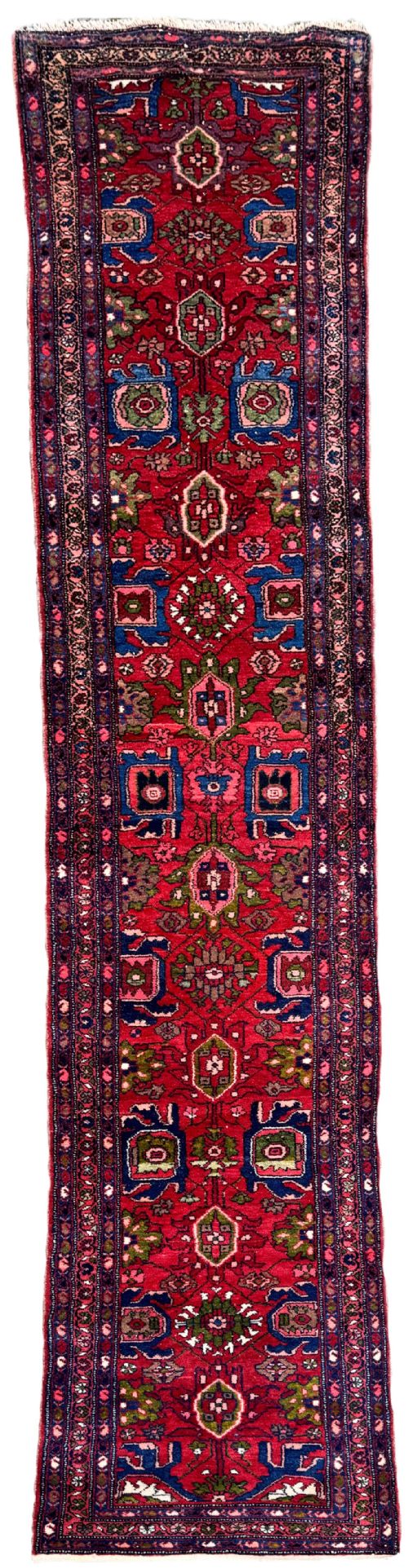
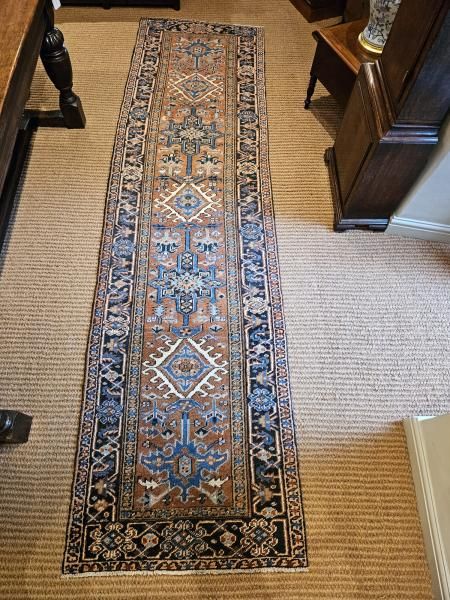
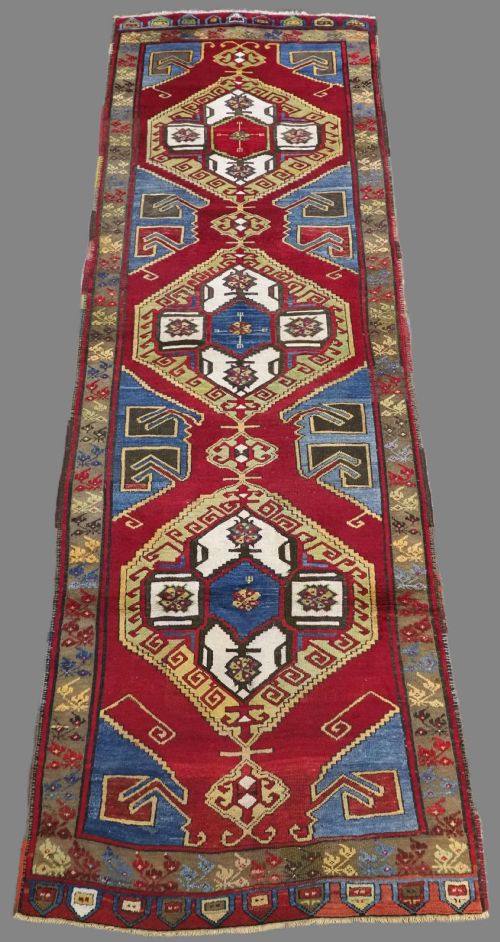
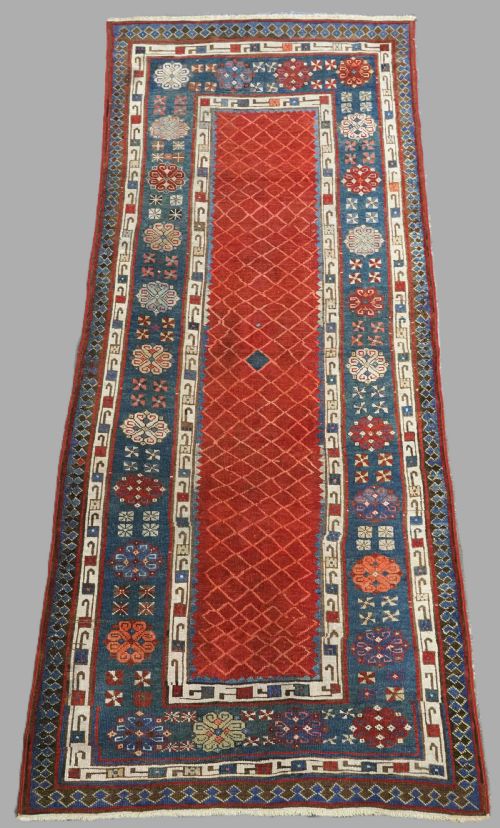
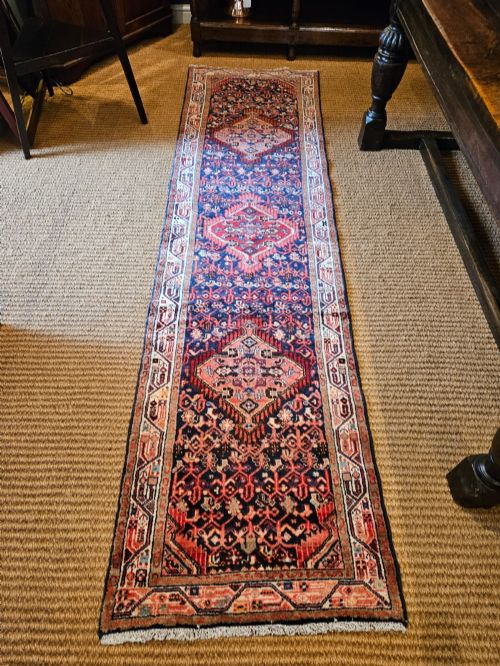
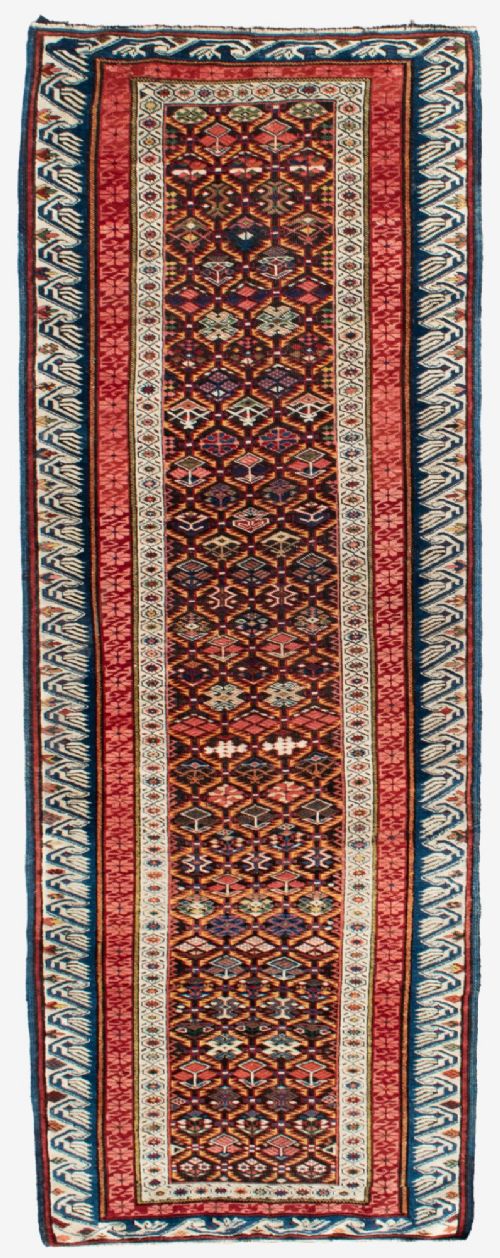
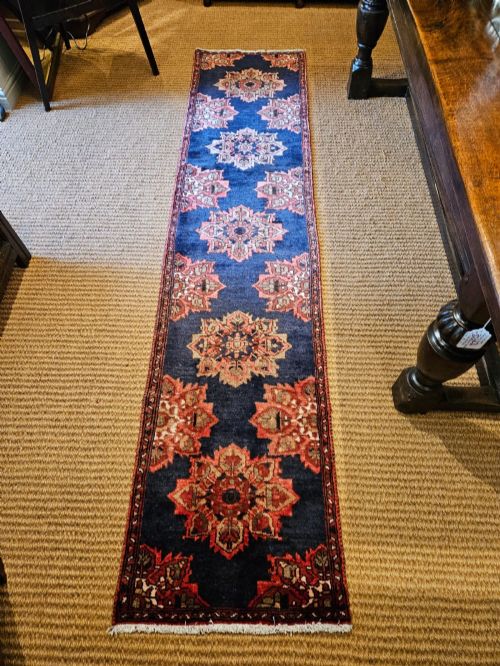
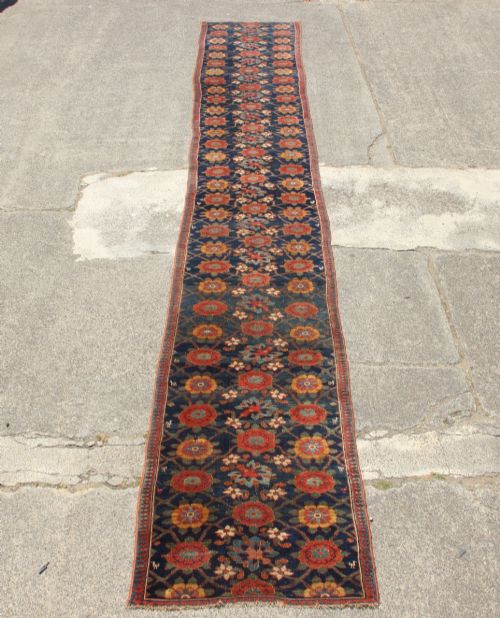
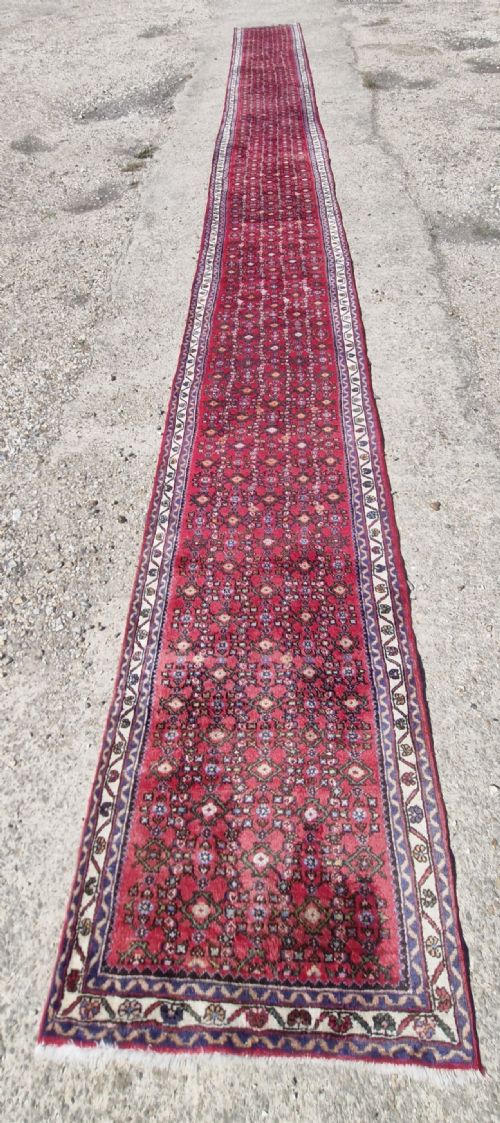

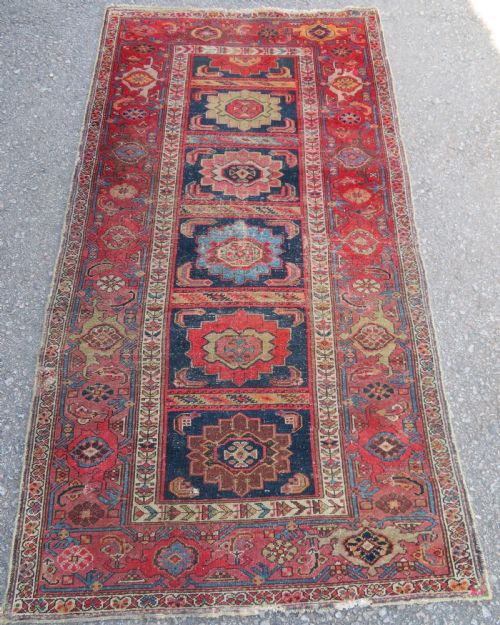
Long Tribal Hallway Rug
When choosing a long tribal hallway rug, you select a floor covering designed to carry foot traffic while displaying regional village patterns.
Long Tribal Hallway Rug
A long tribal hallway rug brings narrow, elongated formats into domestic spaces, originating from village and nomadic workshops across Persia, the Caucasus, and Anatolia. These pieces serve primarily as runners for corridors, halls, and landings, spanning lengths that sometimes exceed thirty feet. The selection draws heavily on nineteenth-century and early twentieth-century production, notably periods from the eighteen-eighties to the nineteen-thirties.
Buyers encounter distinct regional types on this page, including Kurdish, Heriz, Hamadan, and Caucasian pieces like Talish and Seychour runners. Each group brings specific structural proportions and traditional design motifs, such as lattice patterns and geometric field arrangements. These floor coverings bridge practical domestic utility and historic textile art.
How They Were Made
These textiles rely on hand-spun wool and cotton foundations, utilising natural fibres for both pile and structural warp and weft threads. Weavers knotted the wool tightly by hand onto vertical looms, building durable surfaces capable of enduring decades of heavy corridor use.
The dying processes utilise traditional materials to achieve deep tones of olive green, navy blue, and earthy reds. Pile thickness and knot density vary according to the specific tribal origin, balancing resilience with detailed geometric precision.
Some hallways get thirty-two feet of sheep history.
What Varies in Quality
Quality differences stem from the fineness of the knotting and the integrity of the wool, which dictate how cleanly the geometric lines and motifs resolve. Tightly packed wool piles retain structural form and colour vibrancy far better through prolonged wear.
The balance of the design across an elongated format separates standard village weaving from exceptional examples. Superior pieces maintain straight parallel borders and consistent width along lengths stretching several metres.
The Long Tribal Hallway Rug Glossary
- Runner
- A long, narrow carpet format specifically suited for hallways, corridors, and staircases. These pieces measure significantly longer than they are wide.
- Pile
- The upright yarn loops or cut ends that form the soft surface of a rug. This layer absorbs foot traffic and displays the woven design.
- Warp
- The stationary vertical threads stretched onto a loom that form the structural skeleton of the rug. Weft threads pass horizontally through them to secure the knots.
- Kelim
- A flat-woven carpet or rug made without a pile, produced by tightly interweaving warp and weft strands. These constructions often appear in Anatolian pieces.
- Kelleh
- A large, extended format carpet, narrower than a standard room size but broader than a typical hallway runner. These proportions suit grand entrance spaces.
Long Tribal Hallway Rug: Frequently Asked Questions
Where do these long runners work best?
These narrow formats suit extended corridors, entrance halls, and landings where floor space is constrained. Their elongated dimensions guide movement through domestic layouts.
Placing them in high-traffic zones protects underlying flooring while adding traditional texture and colour to plain architectural spaces.
How do I care for an antique wool runner?
Regular gentle vacuuming without a rotating brush roll prevents dust accumulation in the wool pile. Professional cleaning maintains the fibre integrity of nineteenth and early twentieth-century textiles.
Underlays help keep the rug stable on hard hallway floors and reduce friction between the foundation threads and the ground.
How do I identify a Kurdish runner?
Kurdish pieces often feature robust wool foundations and distinctive geometric motifs such as the Mina Khani design. Their structural weight reflects traditional village production methods.
Analysing the border arrangements and the saturation of the dyed wool helps distinguish Kurdish weaving from neighbouring Anatolian or Persian styles.
What is the difference between Heriz and Hamadan runners?
Heriz runners generally display bold, stylised geometric medallions and sturdy, resilient wool structures. Their designs lean toward architectural precision.
Hamadan runners often incorporate all-over lattice patterns or repeated boteh motifs across varied indigo and earthy backgrounds, reflecting diverse village output in western Persia.