
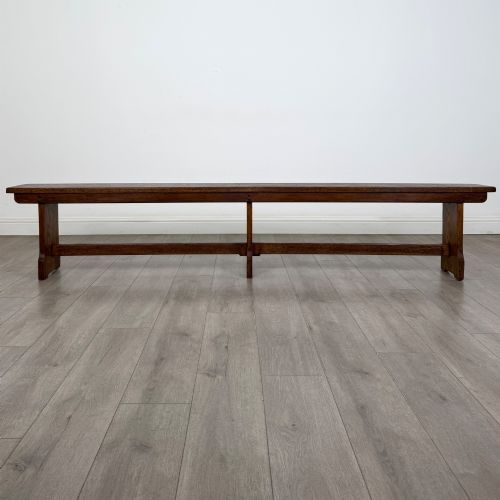
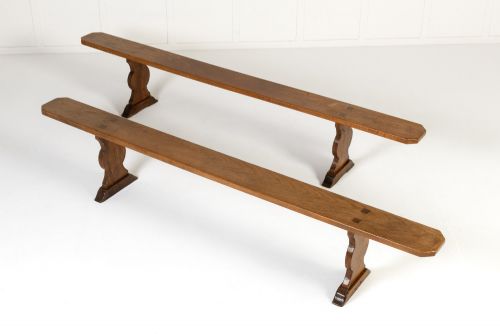
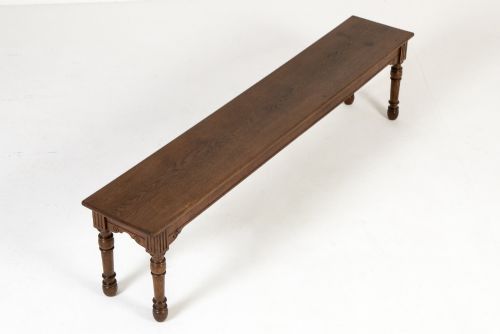
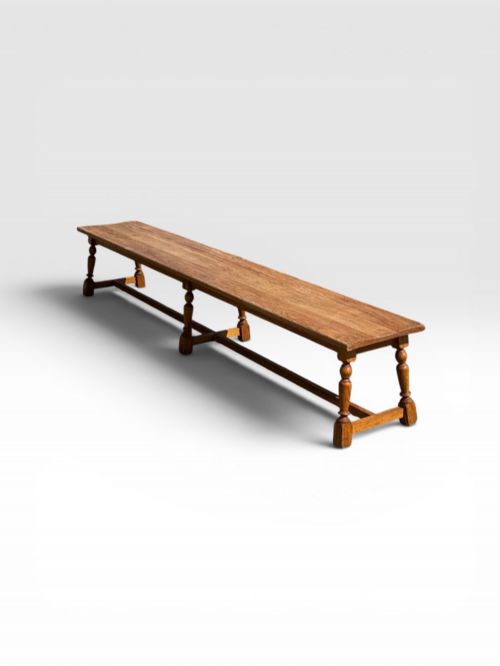
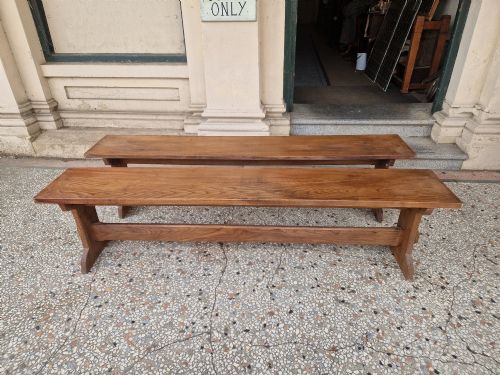
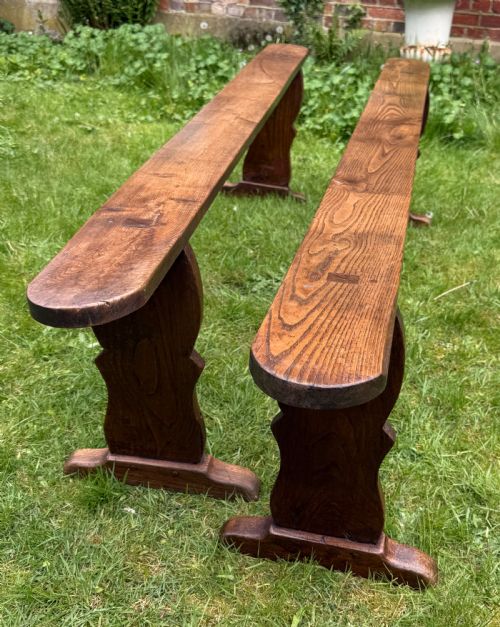
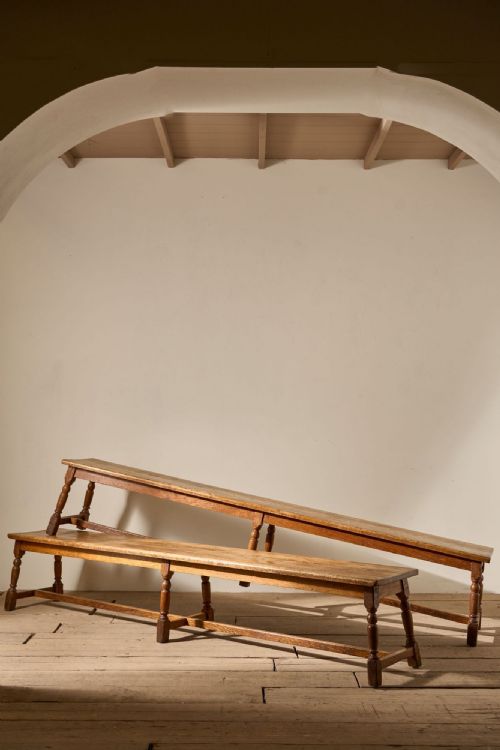


Long Oak Dining Bench
A long oak dining bench brings sturdy character and generous seating to a room, formed from timber that ages gracefully through daily use.
Long Oak Dining Bench
When you search for a long oak dining bench, you encounter seating solutions spanning the 18th century through to the early 20th century. These pieces originate from diverse settings including country houses, taverns, and palaces, reflecting practical domestic and commercial use.
The selections on this page predominantly feature 19th-century and 18th-century examples, alongside solid timber constructions from the 1920s. Forms range from rustic farmhouse and country styles to Georgian and Jacobean revival designs.
Buyers frequently find individual long benches as well as matched pairs designed for extended dining tables. These items utilise hardwood and softwood alongside primary oak constructions to provide robust seating.
What varies in quality
Quality rests in the integrity of the timber selection and the proportional balance of the frame. Early examples with unbroken provenance show superior depth of grain and patination.
The distinction between standard utility items and finer regional pieces lies in the subtlety of the leg turning and edge moulding. Solid construction throughout the stretcher base separates robust survivals from lesser builds.
One recorded bench travelled directly from Bishopthorpe Palace in York into the modern marketplace.
The Long Oak Dining Bench Glossary
- Refectory bench
- A long, narrow seating form traditionally paired with a communal dining table. These pieces provide extended linear seating.
- Tavern bench
- A robust seating piece built for commercial hospitality environments. Such items often feature heavy timber scantlings.
- Trestle
- A structural support system utilising horizontal beams and vertical feet. This method underpins many long dining benches.
- Patina
- The surface sheen and colour developed by wood through age and handling. This characteristic marks genuine antique timber.
- Hardwood
- Dense timber derived from broad-leaved deciduous trees such as oak. This material forms the primary structure of these benches.
Long Oak Dining Bench: Frequently Asked Questions
How do I style a long oak dining bench?
Pair your bench with a complementary refectory or farmhouse table to create a cohesive dining arrangement. Adding simple cushions or sheepskins softens the timber surface for prolonged sitting.
Ensure adequate clearance beneath the table skirt for legroom when positioning the bench. These pieces also function effectively against hallway walls when not in use at the table.
Are these benches suitable for daily family dining?
Solid timber construction makes these benches exceptionally durable for everyday meals and gatherings. The robust nature of oak withstands regular use without losing structural integrity.
Routine maintenance involves simple cleaning with a damp cloth and occasional waxing. The hard-wearing timber resists minor impacts accumulated through family life.
How do I distinguish 18th-century oak from later periods?
Eighteenth-century examples display distinct hand-planed surfaces and traditional peg joinery methods. The timber grain reveals deeper patination and colour variation developed over centuries.
Nineteenth-century and later revival pieces often incorporate machine-sawn elements and standardised fixings. Comparing the underside construction reveals the specific period of manufacture.
What is the difference between tavern and refectory benches?
Tavern benches originate from commercial hospitality spaces and typically feature utilitarian bracing for heavy public traffic. Refectory benches generally align with domestic dining halls and monastic traditions.
Both forms offer generous length but differ in their structural detailing and edge profiles. Examining the leg supports helps clarify the original intended environment.